5. Norway
5.1. Governance structure
National adaptation policy-landscape
Norway is a country of high geographical diversity and challenging weather conditions. As a result, Norway has a long a history of adapting to both weather and climate and to plan for and respond to natural hazards. In practice, Norway has been adapting to the effects of climate change significantly longer than the official strategies and laws indicate. Much of this work has been done at the local level, and to this day the local authorities are the ones with the central responsibility for implementing and monitoring adaptation measures. The first explicit adaptation measures in the early 2000s were thus taken at the local level, with some municipalities introducing adaptation measures and some county authorities adopting climate plans.
At the national level, climate change adaptation has been on the political agenda since the early 2000s with a steady increase in focus during the 2000s and increased manifestation in strategic documents during the 2010s (see timeline below). In 2008, the Ministry of Environment published its first national policy document on climate change adaptation (although not issued as a formal policy note). The document, which outlined the preliminary basis for a national adaptation strategy, established adaptation as a policy area on the national climate policy agenda. Until then, adaptation was only addressed to a limited extent within particularly affected government sector bodies, such as the Norwegian Water Resources and Energy Directorate (NVE). This initial adaptation strategy document led to the establishment of a public committee on climate change adaptation later in 2008, which in 2010 presented a Government Green Paper on climate change adaptation. The Green Paper pointed at the importance of developing national policy and government support towards other actors involved with climate change adaptation (Norwegian Ministry of Climate and Environment, 2010). This work culminated in 2013, when Norway got its first formally adapted National Adaptation Strategy (NAS) in the form of a Government White Paper. NAS lays down the central principles and conditions for adaptation (Norwegian Ministry of Climate and Environment 2013), namely (see also the section on responsibility below):
- Everyone has a responsibility to adapt to climate change, including individuals, businesses, and authorities.
- The government has the overarching responsibility for ensuring that all actors can perform their responsibility for climate change adaptation in the most efficient way possible.
- The government must also facilitate conditions for good cooperation across sectors and levels of authority.
- The municipalities have a special responsibility for identifying needs and implementing adaptation measures locally as the authority with closest proximity to the climate change impacts.
- Climate change adaptation must be based on the precautionary principle, in the sense of taking as the foundation the highest alternatives from the national climate projections when the consequences of climate change are assessed.
- Climate change adaptation necessitates balanced considerations, in the sense of balancing adaptation needs against other important societal considerations in each individual case.
The first steps toward establishing a legal framework on climate change adaptation in Norway were taken as part of the follow-up of the national policy document from 2008. These steps included enabling the county governor to object to local spatial plans if natural hazards were not considered sufficiently, making climate change adaptation an official responsibility of the county governor, incorporating adaptation into national requirements for municipal and regional planning, and implementing the new Civil Protection Act, which among other things requires municipalities to carry out sector-wide risk and vulnerability analyses and develop security targets and strategies in response to natural hazards.
Norway got its first overarching legally binding document on climate change in 2017 with the Climate Act. While not being predominantly about adaptation, the Climate Act requires the Government to report to the Parliament every year on how Norway is preparing for and adapting to climate change.
The Planning and Building Act is of general importance for the work on climate change adaptation. Originally the Ministry of Environment was responsible for the aspects pertaining to planning, but in 2014 this responsibility was transferred to the Ministry of Local Government and Regional Development (MLGRD). In 2018, the Council of State introduced the Central Government Planning Guidelines concerning guidelines for the planning of climate, energy, and climate change adaptation. The guidelines require that municipalities, county municipalities and the state contribute to society’s preparedness for and adaptation to climate change through planning and other governmental and business activities. The guidelines put emphasis on the sub-national level by underlining that climate change adaptation should contribute to society’s ability to face climate change, by ensuring that municipalities and county municipalities avoid or limit risks, vulnerability, and disadvantages, and take advantage of any benefits resulting from changes in the climate (Norwegian Ministry of Local Government and Regional Development 2018).
As adaptation in Norway is guided by a sector-principle of shared responsibility (see section below), regulations on adaptation are found in a wide range of documents, pertaining to different sectors and types of authority. Besides the national strategy and plan, most sectors have their own sector documents that inform adaptation. For the Norwegian Environment Agency (NEA), for instance, adaptation is also informed by the 2015 Government White Paper on biodiversity (Norwegian Ministry of Climate and Environment 2015) and the 2016 Government White Paper on outdoor recreation (Norwegian Ministry of Climate and Environment 2016). In addition, NEA has its own strategy for climate change adaptation (Norwegian Environment Agency 2018), which is to be updated during 2023.
Adaptation strategies and plans are thus far not structured within a set policy cycle but are being revised on an ad-hoc basis. An updated adaptation strategy in the form of a new Government White Paper is presented in June 2023.
Table 5.1: Timeline for adaptation policy in Norway
Year | Item | Description |
2003 | Government White Paper | First mention of climate change adaptation in a Government White Paper (Meld. St. 39, 2003–2004, on civil protection) |
2007 | Government report | Report based on the inputs from a 2005 inter-ministerial seminar on climate change adaptation |
Governmental monitoring report | First governmental monitoring report on climate change adaptation efforts (limited to local civil protection work, issued by the Directorate of Civil Defence) | |
2008 | National policy document on adaptation | First national policy document on climate change adaptation issued by the Minister of Environment, considered to be the frontrunner for the NAS |
Sub-national adaptation strategy | First national strategy on sub-national authority ambitions for addressing climate change adaptation issued by the National Association of Local and Regional Authorities (KS) | |
National institutional unit | Establishment of a national climate change adaptation secretariate at the Directorate of Civil Defence (changed to Norwegian Environment Agency in 2013) | |
National information service | Establishment of a national web-portal on climate change adaptation (www.klimatilpasning.no) run by the Norwegian Environment Agency from 2013 | |
Scientific monitoring report | First scientific monitoring report on climate change adaptation efforts (limited to municipal efforts, issued by Norwegian Institute for Urban and Regional Research (NIBR)) | |
2010 | Government Green Paper | First Government Green Paper on climate change adaptation (NOU 10, 2010) |
National information service | Establishment of the Norwegian Centre for Climate Services (www.klimaservicesenter.no) run by a collaboration of public and private entities (finalized in 2013) | |
2013 | Formal National adaptation strategy (NAS) | Government White Paper on climate change adaptation (Meld. St. 33, 2012–2013), considered to be the first national adaptation strategy |
2017 | Law | Adoption of the Climate Act with requirements for yearly sectoral reporting on climate change adaptation |
National institutional unit | Establishment of an inter-directorate coordination group for climate change adaptation, led by the Norwegian Environment Agency and consisting of representatives from 16 public bodies | |
2018 | Government planning guidelines | Adoption of guidelines anchored in the Planning and Building Act introducing a mandatory requirement for municipalities to integrate adaptation within municipal planning |
2019 | National research centre | Introducing an annual earmarked funding for establishing the National research centre on sustainable climate change adaptation (Noradapt) |
2022 | National investigation | First national investigation into government authorities’ effort to adapt infrastructure and built-up areas to a changing climate, issued by the Office of the Auditor General of Norway |
2023 | Revised National Adaptation Strategy (NAS) | Revision of NAS in the form of a second Government White Paper on climate change adaptation |
Division of responsibility
Adaptation policy in Norway is guided by “the responsibility principle”, introduced in the initial national policy document on adaptation from 2008 and carried forward in NAS from 2013. The principle implies that ‘everyone’ (including individuals, businesses, and all sector authorities) are responsible for adapting to climate change within their area of responsibility. For authorities, this responsibility includes gathering and generating relevant information about risks and adaptation needs, including how climate change will impact their tasks and their ability to enforce rules and regulations, provide services and manage infrastructure (Norwegian Ministry of Climate and Environment 2013). In many respects, this can be considered a mainstreaming approach to adaptation (Interviews, Norway).
The below overview of responsibility at the national and sub-national levels is largely drawn from the website of the Norwegian Environment Agency (n.d.a).
National
The Ministry of Climate and Environment (MCE) has the main responsibility for enabling the government’s cross-sectoral work on adaptation. Up until 2014, the Directorate for Civil Protection (DSB) worked under the auspice of MCE, with the practical mandate of conducting and coordinating the government work on climate change adaptation. In 2014 this task was transferred to the Norwegian Environment Agency (NEA). As part of its coordinating role, NEA supports MCE in reporting on adaptation in Norway to the UNFCCC and developing national systems for reporting. Among other things, NEA is responsible for the scientific knowledgebase on climate change to be used for adaptation planning and implementation, and for following up local adaptation planning guidelines. Through their overview of adaptation instruments, NEA identifies coordination needs and facilitates further development and joint guidance. As an environmental agency, NEA also has the sector responsibility for adaptation related to a number of areas, such as stormwater. MCE and NEA act as respective coordinators of an inter-ministerial and an inter-directorate working group, both consisting of members from a wide range of relevant ministries and directorates.
The Ministry of Justice and Public Security (MJPS) is responsible for coordinating work on public safety, which includes managing climate change related natural hazard risks and, to a lesser degree, issues of adaptation. DSB works under the auspice of MJPS to implement policy on the issues of civil protection. DSB is responsible for having an overview of risk and vulnerability in society and has coordination responsibility in the area of social security across administrative levels and sectors. DSB supports the ability of all levels of administration and sectors to account for social security in their planning, and how the current and future climate affects societal risk and vulnerability.
The Norwegian Water Resources and Energy Directorate (NVE), working under the auspice of the Ministry of Petroleum and Energy (MPE), is responsible for preventing physical damage due to floods and landslides. This involves assisting municipalities and society at large with expertise and resources for mapping, spatial planning, security, monitoring, notification, and preparedness. NVE also conducts climate risk analyses and identifies the need for adaptation measures within the energy sector, with an emphasis on systems for hydropower production and transmission networks for electricity. Given the high focus on floods and landslides within Norwegian climate change adaptation, NVE becomes a particularly central player in the planning and implementation of adaptation measures.
Besides these main national authorities with cross-sectoral responsibility, a range of other authorities have adaptation as one of their focus areas, in accordance with the principle of sector-responsibility. For instance, the Norwegian Building Authority (DiBK), working under the auspice of the Ministry of Local Government and Regional Development (MLGRD), is responsible for ensuring that climate change is considered in the construction of new buildings with regards to location and materials (Norwegian Building Authority n.d.). Similarly, the Directorate for Cultural Heritage (DCH), working under the auspice of MCE, is responsible for assessing and reducing climate change risks on cultural heritage sites (Norwegian Directorate for Cultural Heritage n.d.).
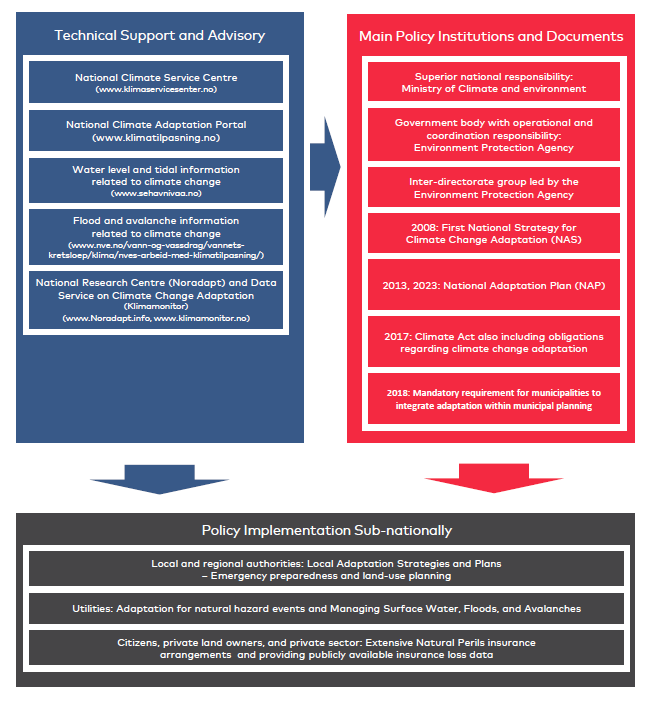
Figure 5.1. Organization of adaptation in Norway
Sub-national
The county governor, the counties, and the municipalities are the most relevant actors for climate change adaptation at the sub-national level. As of January 2023, Norway is structured with 10 county governors, 11 counties, and 356 municipalities.
The county governor is the state's representative in the counties, responsible for following up decisions, goals and guidelines coming from Parliament and the government. The county governor has a mandate to coordinate national climate policy in the municipalities and is an important driver for putting adaptation on the agenda in the municipalities, for instance through exercising their authority to object to municipal spatial plans if climate change adaptation has not been sufficiently taken into account. A recent survey carried out by the government-funded Norwegian Research Centre on Sustainable Climate Change Adaptation (Noradapt) as part of the service “Norwegian Climate Monitor”, shows that 80-90% of the representatives from various county governor departments (incl. civil protection, agriculture, and environment) consider climate change adaptation to be of high priority within their department (Norwegian Climate Monitor 2022a).
The county is the politically elected body at the regional level in Norway. As the regional planning authority in accordance with the Planning and Building Act, the county municipalities also have an important role to play in climate change adaptation. In their capacity as a politically elected body, the county can take a more active role in adaptation than that of the county governor. However, there are considerable differences in how the various county municipalities have utilized their room for action. In some cases, counties have worked in close collaboration with the county governor and municipalities on climate change adaptation through the preparation of regional plans, whereas other counties have taken a more minimalist approach (see box 5.1 below). All counties have developed climate plans that include both adaptation and mitigation. In accordance with the responsibility principle, the counties are responsible for adaptation within the areas of their general responsibility. How and to what degree adaptation is worked with, however, is largely up to the political priorities in each county and therefore varies substantially (Aall et al. 2018).
Box 5.1. Municipal adaptation networks – example from Trøndelag
The Trøndelag Climate Adaptation Network (NKT) was founded in 2017 by Trondheim Municipality, the State Administrator in Trøndelag and Trøndelag County Council with the purpose of creating an arena for cooperation on climate change adaptation in the county across administrative levels to enable climate resilient municipalities.
The network aims to be an arena that motivates municipalities in the region to work on adaptation, and enables exchange of knowledge and experience, contributes to collaboration on adaptation between public and private actors, and supports new expertise on adaptation through dialogue with and use of knowledge communities.
The network makes use of individual visits to the municipalities and regional gatherings. The work is structured using the EU monitoring, reporting and evaluating (MRE) method and focuses on integrating vulnerability analyses and adaptation measures into the ongoing municipal planning work.
Within the first five-year period, the network aimed for its members to:
- Incorporate the development of an adaptation strategy into the municipal planning documents.
- Map vulnerable areas, or areas exposed to climate change, and make concrete plans for adaptation measures.
- Initiate adaptation measures and enable across-departmental organization of adaptation.
A status report from 2021 concluded that much has been learned and much work remains. It finds that particularly the cross-departmental collaboration has increased because of network activities. The report emphasizes the need for continuous networking and support in the years to come.
(Trøndelag Climate Adaptation Network 2021)
The municipalities are Norway’s local administrative authority and have the overall responsibility for local adaptation planning and the practical implementation of adaptation measures within municipal borders. Ever since climate change adaptation was put on the political agenda in the early 2000s, there has been high expectations for the municipalities' efforts in adaptation work, both from national authorities and from the municipalities' own organization (KS). A total of 12 national surveys of the municipalities' work on adaptation have been carried out since 2007, in addition to several more limited sample surveys. According to the latest national survey (Selseng et al. 2021) about 2/3 of the municipalities consider climate change adaptation efforts to be integrated into the treatment of zoning plans and the municipality's overall risk- and vulnerability analysis to a very large or large degree, and around half of the municipalities have a climate change adaptation plan either as a stand-alone plan or integrated within an energy- and climate plan.
Policy themes
The list of prioritized policy themes has varied somewhat since the initial national policy document on adaptation in 2008. This is mainly a matter of linguistic variations. The updated list on the Norwegian Environment Agency's website includes the policy themes that have been on the policy agenda from 2008 onwards (Norwegian Environment Agency n.d.a):
- Construction of buildings
- Fishing and aquaculture
- Health
- Infrastructure and transport
- Cultural monuments and cultural environment
- Agriculture and reindeer husbandry
- Biodiversity and outdoor recreation
- Civil protection and preparedness
- Water supply and wastewater
Climate change adaptation policy has mostly considered local physical climate risks. However, in 2019, the first designated
The theme of transboundary climate risks has been addressed earlier than this report, however. A background report on transboundary climate risks was published as part of the work on the Government Green Paper on climate change adaptation (Buan et al, 2010). The report gave no clear recommendations about TCRs or how to put the topic on the adaptation policy agenda, but pointed out that "this is a policy field in an early phase" and recommended that "the field thus requires constant updating both empirically and analytically (theoretically)" (p. 62).
The two surveys from 2017and 2021 had responses from 27% and 42% of Norwegian municipalities, respectively.
This survey had responses from all county municipalities in Norway.
Risk assessments
Norway does not have a system in place for systematic and periodic production of national climate change risk and vulnerability assessments. At the national level, information on risks and vulnerabilities has been partly covered in the Government Green Paper from 2010, the Government White Paper from 2013, and the report “Climate in Norway 2100” (Hanssen-Bauer et al. 2015), which is limited to describing the hazard-part of the hazard-vulnerability-exposure-risk ‘equation’.
Certain government sectors produce their own risk and vulnerability assessments, which to a varying degree include climate risks. For instance, the Norwegian Water Resources and Energy Directorate (NVE) conducts regular risk and vulnerability assessments for the energy sector, which to some degree includes climate change considerations.
The Civil Protection Act from 2010 and regulations on municipal preparedness obligations from 2011 require municipalities to prepare risk- and vulnerability analyses (RVA analysis) and contingency plans for unwanted incidents, including incidents caused by climate change. This requirement also includes the regional level, with the county governor’s civil defence department responsible for following up this requirement.
Relatively few studies have analysed the socio-economic consequences of climate change in Norway. The studies that exist indicate that the consequences of up to a 2.5 °C increase in the annual average temperature in Norway towards the middle of the century may be relatively moderate, while a continuation of this trend towards a 4.5 °C increase by 2100 is likely to have extensive negative consequences for the economy, and thus for economic prosperity and development in Norway. There is still little knowledge about how the consequences will be distributed across different economic activities and sectors and how this will play out geographically (Aall et al. 2018). A study from 2021 by NVE found that the direct costs associated with not securing existing buildings against floods and landslides will cost the Norwegian society more than 300 million NOK (26 million Euro) annually, amounting to approx. 6 billion NOK (half a billion euro) for the period 2021-2040 (Kalsnes et al. 2021).
The research institute SINTEF has assessed methods and tools for cost-benefit analysis of climate change adaptation measures used within the Norwegian Water Resources and Energy Directorate (NVE), the Norwegian Public Roads Administration (SVV) and the Norwegian Railway Directorate (JDIR). The assessment shows that current cost-benefit analysis does not consider the expected effects of climate change. The assessment therefore concludes that there is a need for better analysis that can help decision-makers plan effectively and long-term given the expected climatic changes (Seljom, 2021). Another assessment conducted only for SVV had a similar conclusion (Handberg et al, 2020). Based on these conclusions, a project was initiated in 2022 which aims to adapt the cost-benefit analysis method currently used by SVV so that climate change adaptation is considered (Handberg et al, 2023).
Climate change is primarily understood to manifest itself locally, with climate risks resulting from local vulnerabilities. However, as described above, recent years has seen an increased attention to the risks posed by climate change related impacts outside of Norway and transboundary climate risks (TCRs) have thus become a theme in several recent reports (e.g., Bardalen et al. 2022; Berninger et al. 2022; Norbø et al. 2019). In part due to its challenging geographical and political scale, however, this increased concern has not yet been translated into concrete strategies or measures (Aall et al. 2018; Interviews, Norway).
Systems for monitoring, reporting, and evaluation
Norway does not have a designated system for monitoring, reporting, and evaluating (MRE) climate change adaptation. Adaptation is included as one of 24 official national environmental policy goals, which are measured using 82 environmental indicators (Environment Norway n.d.a). The goal pertaining to climate change adaptation (“Society must be prepared for and adapted to climate change”) has one official indicator for measuring goal achievement (“Status for the incorporation of routines, measures, strategies, and instruments related to climate change adaptation in central sectors”). However, on the website presenting the Norwegian environmental goals and indicators, it is stated that neither the status nor the development of the adaptation goal is possible to calculate, while the development of the indicator is described as “positive” (Environment Norway n.d.b).
Despite this lack of indicators, adaptation is monitored and reported on to some degree. The Climate Act from 2018 requires the government to present an annual report to Parliament on how Norway is prepared for and adapted to climate change. They do this based on requested inputs from the various ministries and directorates submitted to MCE. In 2022, the government introduced a new procedure for where the reporting on climate policy to Parliament is to be documented, including a separate chapter on preparing for and adapting to climate change, as an annex to the state budget proposal (the ‘government green book’). As from autumn 2022 this will be a separate chapter in the government’s annual report to the Parliament on the status of the government’s environmental and climate work (Norwegian Ministry of Climate and Environment 2022).
At the county and municipal levels, some monitoring and reporting is occurring through the service “Norwegian Climate Monitor”, run by the government-funded Norwegian Research Centre on Sustainable Climate Change Adaptation (Noradapt). Since 2021, Climate Monitor has conducted annual surveys on the progress on climate change adaptation within the public sector, private sector, and households, and published the data for free download on its website. In the absence of a national MRE system, some actors have begun developing indicators for monitoring within their own sectors. In Trøndelag county, for instance, three municipalities in partnership with the county governor and a research institution, have developed their own framework for monitoring adaptation within land-use, buildings, and infrastructure, including the development of indicators for process, action, and results (Sivertsen et al. 2021).
In the 2021 Government White Paper on the plan for achieving the Sustainability Development Goals by 2030 (Norwegian Ministry of Local Government and Regional Development 2021), the government announced that a comprehensive system for measuring and evaluating the effect of climate adaptation measures and efforts nationally, regionally, and locally will be drawn up. In the 2023 instructional letter from the Ministry of Climate and Environment to the Norwegian Environment Agency, the development of an MRE system is identified as a priority (Norwegian Ministry for Climate and Environment 2023).
5.2. Policy instruments
The Government Green paper from 2010 and the Government White paper from 2013 identifies five main categories of policy instruments that are relevant for climate change adaptation (Aall et al., 2018):
- Planning and cooperation.
- Juridical policy instruments.
- Economic policy instruments, covering taxes, duties, and subsidies.
- Physical policy instruments, e.g., the construction of flood or avalanche protection.
- Information and research.
In the following, we focus on information and research as well as juridical and economic policy instruments.
Capacity building
A central aspect of capacity building is to increase the administrative capacity to work with climate change adaptation and increase knowledge about such work within public administration. The knowledge of climate change has increased the past ten years, and according to a mapping of Norwegian climate change impacts and adaptation needs (Aall et al. 2018), this has resulted in increased adaptive capacity of Norwegian society. Lack of knowledge is no longer perceived as a central bottle neck for adaptation. Instead, the report mentions lack of resources and low political priority as important challenges for successful adaptation (Ibid.) (see section on best practices and challenges below).
One of the most central entities for generating knowledge on climate change in Norway is the Norwegian Centre for Climate Services (NCCS), which was established in 2013 by the Norwegian Meteorological Institute (MET), The Norwegian Water Resources and Energy Directorate (NVE) and two private research institutes that specialize in climate change research. The centre collects and communicates climate and hydrological data to be used both for practical adaptation measures and for further research on the impacts of climate change on Norwegian society (Norwegian Centre for Climate Services, n.d.). In recent years, the centre has focused on enhancing the accessibility of local and regional climate change projections for direct use by local actors (Aall et al. 2018), including county-level ‘climate profiles’ (Norwegian Environment Agency n.d.a). Other state entities important for generating knowledge for adaptation include the Norwegian Mapping Authority (NMA), who are in charge of collecting and structuring knowledge on flooding and sea level rise to be used in public management (Ibid.).
To enable collaboration and knowledge exchange between national, regional and local authorities, the network Nature Hazard Forum (Naturfareforum) was established in 2017 as a network between the Directorate of civil protection (DSB), the Norwegian Water Resources and Energy Directorate (NVE), the Norwegian Public Roads Administration (NPRA), the Directorate for Agriculture (DA), the Norwegian Environment Agency, Geological Survey of Norway (NGU), the Railway Directorate (RD), Norwegian Association of Local and Regional Authorities (KS), the Norwegian Meteorological Institute (MET), and the County Preparedness Officers (Norwegian Environment Agency n.d.a).
The Norwegian Environment Agency (NEA) plays a central role in capacity building through offering courses, webinars, and podcasts on adaptation-related themes, often directed at local-level authorities. It also supports knowledge generation through its regular commissioning of reports on a wide range of topics pertaining to adaptation.
The competence on climate change adaptation research has been further enhanced through the establishment of the Norwegian Centre for Sustainable Climate Change Adaptation (Noradapt) in 2019, which consists of eight Norwegian research institutions. Noradapt provides science-based guidance for public and private sector actors, user-driven knowledge and assessments, research and development for industry actors, dissemination of research results and teaching through adaptation-related university courses (Noradapt n.d.). The past ten years, the research partners of Noradapt have contributed to a significant increase in knowledge on the challenges and possibilities for adaptation locally (e.g., Vindegg et al. 2022; Selseng et al. 2021; Westskog et al. 2018). Despite the increase in research on climate change adaptation in Norway, it only accounts for a minority of funds used for climate change-related research. A study conducted by the Nordic Institute for Studies in Innovation, Research and Education (NIFU) for the Research Council of Norway showed that research funds used for climate change adaptation in 2017 made up only 2% of the overall effort on climate, renewable energy, and energy transition that year (Rørstad et al. 2019).
The translation and sharing of knowledge on adaptation is partly enabled through networks at various levels. Some are led by the NEA while others are at the county and municipality levels. The NEA-led network “I front” (in front) is set up as an arena for knowledge development and skills enhancement among the 13 largest municipalities in the country. The networks aim to contribute to strengthening the climate adaptation work across Norwegian municipalities and at the national level through examples and experiences from the network municipalities. (Norwegian Environment Agency n.d.b). The Norwegian Association of Local and Regional Authorities (KS) leads a network for municipalities, which aims at supporting municipalities through capacity building, knowledge sharing and testing out adaptation measures locally (Norwegian Association of Local and Regional Authorities 2021). Besides the practical work with adaptation, these networks are also focused on process and gaining new understandings among municipal authorities about the need and possibilities for adaptation (Interviews, Norway).
Incentive mechanisms
There are no systematic studies on the monetary amount spent on climate change adaptation in Norway, nor on analysing the prioritization of adaptation compared to other policy areas. However, an investigation into public funds provided for local climate policy measures during 2016–2022 shows that funding for climate change adaptation (47 mill. NOK) corresponds to 3 per cent of the funds set aside for mitigating climate change (1.518 mill NOK) (Norwegian Environment Agency n.d.c). The Norwegian Water Resources and Energy Directorate (NVE) has compiled data on registered needs from municipalities and other local actors regarding local security measures against floods and landslides. According to that overview, the total need in 2021 was 3.903 million NOK (Norwegian Water Resource and Energy Directorate 2021).
An analysis conducted by consultants in cooperation with NVE shows that it will cost between 50.000 and 120.000 million NOK if all buildings that are exposed to landslides, floods, erosion, and quick clay landslides are to be secured. By way of comparison, NVE annually allocates security funds in the order of 280 million NOK (average for the period 2014–2021). As an illustration, with this rate it will take between 177 and 426 years before all buildings are insured against this type of natural hazard event.
In general, no ‘negative’ economic policy measures, such as taxes, have been established that specifically focus on enhancing climate change adaptation. Norway has established several insurance schemes that apply to natural perils, partly public and partly public-private cooperation, which overall means that Norway has among the best functioning insurance schemes when it comes to making society robust to climate change (Hauge et al., 2020). In Norway, there are three main types of financial support schemes to compensate for loss (Aall et al., 2015a).
- Insurance: Municipal and county buildings and property is automatically insured against damage from natural hazards through the fire insurance, managed through the Norwegian Nature Damage Pool. Damages not covered by this insurance can be covered through other voluntary insurances. It is not possible to insure roads and sewage systems. In addition, the Directorate of Agriculture has developed a support scheme for crop failures caused by climate events.
- Discretion grants: Municipalities and counties that are severely affected by natural damage can get compensation from the state as part of the discretion funds. The scheme is managed by The Ministry of Local Government and Modernization and the county governors.
- Preventative measures against floods and landslides: NVE provides assistance to municipalities for the preparation, planning and implementation of preventative measures to reduce the risk of flood or landslide hazards in built areas.
There is little systematic research done on the effect of these instruments, but a report from 2015 on efforts to avoid damages from natural hazards investigated how the insurance policies might affect adaptation choices. The report found that while the Law on Natural Damage Insurance enables homeowners to build back after damages from natural hazards, it does not enable them to build back better – for instance in cases where relocation is necessary to avoid damages from future natural hazards (Aall et al. 2015a). This problem is partly resolved in the sense that home insurance from 2018 onwards also covers the property itself. This means that the insurance can, if necessary, cover the expenses associated with moving the home to an area that is less exposed to natural damage, not just the expenses associated with rebuilding the home.
Insurance premiums are not risk-based, entailing a certain element of public solidarity associated with the schemes. But this may change as insurance companies themselves gain a better overview of risk variation, or public information on climate risk becomes better available, supported by the fact that the consequences of climate change materialize in the form of ever-increasing insurance payments. Questions of risk are also relevant in the context of loans (see box 5.2 below).
Box 5.2. Economic incentives for adaptation at the municipal level
The Norwegian Agency for Local Governments is a bank with a public policy mandate from the central government to provide low-cost financing to the Norwegian local government sector. The bank takes an active approach to incentivising adaptation by firstly making publicly available information on local climate risks (both physical climate risks and risks related to climate change mitigation measures), and secondly offering more favourable terms for municipalities that can document that they take climate risk into account (Norwegian Agency for Local Governments, 2022).
The Norwegian Association of Local and Regional Authorities (KS) has proposed a new scheme for insurance and financing of security measures to ensure that reconstruction also takes care of the need for prevention against a changing climate and thus prevent that reconstruction after a natural hazard event only brings the damaged objects back to their original (and climate-vulnerable) state they had before the damage occurred (Local Government Norway, 2015).
In addition, some counties and municipalities have developed their own funding schemes to positively incentivize capacity building on the topics of climate change adaptation as well as climate change mitigation and the protection of biodiversity (e.g., Rogaland County n.d.).
Another important financial instrument is that of aid. While the governing documents on adaptation mainly pertain to climate change-related risks and vulnerabilities that occur within the national borders, the effects of climate change in other countries are also considered within Norwegian climate policy. In recent years, a growing percentage of Norwegian aid is earmarked for climate change adaptation. The newest strategy for adaptation through Norwegian aid draws on the SDG goals of reducing climate vulnerability and hunger through five prioritized areas: 1) warning systems and climate services, 2) Nature-based Solutions, 3) climate-adjusted food production, 4) infrastructure and 5) innovative financing schemes (Norwegian Ministry of Foreign Affairs 2023).
5.3. Best practices and main challenges
According to the 2018 mapping (Aall et al. 2018), Norway (as most high-income and high-consumption countries) has a high adaptive capacity when it comes to addressing local climate risks. The report ascribes this capacity to well-functioning institutions, good state finances and a highly educated population. Additionally, the report finds that the state sector authorities responsible for the most vulnerable areas of society, such as infrastructure and buildings, have integrated climate change considerations in their strategies and evaluation systems, and the same has happened in municipal planning. Several changes in laws and regulations have been implemented, and state coordination in the area has been strengthened. Overall, this helps to enhance the adaptive capacity of Norway.
Cross-sectoral integration of adaptation appears to function well in some counties and municipalities and less well in others. Generally, the smaller municipalities struggle more with integration due to the lack of human and financial resources. The 2019 mapping report found successful integration to be related to municipalities already working in an integrative way to create synergy and save resources. Another reason is that several municipalities have worked actively with adaptation since the early 2000s and thereby have had longer time to develop appropriate systems for cross-sector integration. The Norwegian Association of Local and Regional Authorities (KS) has been important in supporting this work and has in some cases been critical to the lack of prioritization at the national level (Aall et al. 2018).
Some counties and municipalities have begun working actively with nature-based solutions (NbS) to take an integrative approach to climate change adaptation and biodiversity loss (e.g., Rogaland County 2023). The prioritization of NbS is supported through the NEA guide for how to consider climate change in public planning, where it is specified that NbS are to be prioritized whenever possible and that omission of NbS must be justified (Norwegian Environment Agency 2019) The increased focus on NbS in recent years is further supported by the publication of several studies commissioned by the NEA (e.g., Aanderaa et al. 2021; Magnussen et al. 2017). According to our interviewees at the national level, NbS and other integrative approaches to adaptation will continue to receive increased attention in years to come, including how adaptation, mitigation and the SDGs relate and can be worked with synergistically (Interviews, Norway).
While Norway is well situated to adapt to climate change, whether this adaptative capacity is used to its fullest is another matter. A recent investigation into adaptation of infrastructure and the built environment conducted by the Office of the Auditor General of Norway (OAG) (2022) concluded that “In light of the significant consequences that climate change will have, the National Audit Office considers it serious that the authorities have not secured a sufficient overview and implemented the necessary measures to secure existing buildings and infrastructure. This can lead to unnecessarily high costs for society and can also have consequences for citizens' safety.” Furthermore, the report found that the national authorities lack a sufficient overview of climate change related risks and vulnerabilities as well as information on the status of adaptation in Norway. The report further identified weak coordination between national authorities and the lack of adequate systems for monitoring and evaluation as significant challenges to adaptation. Among other things, the OAG recommends that central ministries develop a cross-sectoral plan for adaptation and increase the support of municipal authorities to enhance their ability to map risks and vulnerabilities and plan for adaptation of the built environment (Office of the Auditor General of Norway 2022).
According to one of our interviewees at the local level (Interviews, Norway), the responsibility-principle, which represents a mainstreaming approach to adaptation, has both strengths and weaknesses. On the positive side, it has resulted in most ministries and departments engaging with adaptation and considering how climate change might impact their work. However, the interviewee observed that when everyone is supposed to be responsible, there is a risk that no one is responsible. The interviewee suggested that in order for the mainstreaming approach to result in successful adaptation at the local level, mainstreaming needs to be coupled with high political priority (including sufficient and consistent funding schemes) and the responsibility for mainstreaming needs to be situated within the jurisdiction of a central ministry with significant political mandate. According to the interviewee, it is an “impossible task” for the Ministry of Climate and Environment (MCE) and the Norwegian Environment Agency (NEA) to coordinate adaptation under the current conditions, partly due to their somewhat limited political power within government (Interviews, Norway).
Several Norwegian municipalities have worked extensively with adaptation over several decades and developed best practices for how to integrate adaptation into their work. Yet, many barriers for adaptation at the local level remain. A recent report based on interviews with ten Norwegian municipalities has found that the identification of barriers to adaptation among municipalities has increased steadily during the past ten years (Selseng 2023). According to the report, however, this is likely connected to an equal increase in ambition for adaptation among municipalities. This further points to the state as an important potential bottle neck for reaching the full potential of adaptation at the local level, which is supported by previous studies (e.g., Vindegg et al. 2022; Aall et al. 2018). The report especially points to the lack of cross-sectoral coordination at the national level, which results in sometimes contradicting guidelines. This was also brought up by one of our interviewees (Interviews, Norway), who identified a fragmented responsibility-structure (i.e., the responsibility-principle) and the lack of cross-sector coordination as some of the most significant challenges for municipalities to be able to access the appropriate resources for adaptation (including knowledge and funding).
While much adaptation-related knowledge exists, it tends to be fragmented (a study from 2016 found there to be 84 guides for how to approach adaptation within the built environment alone, see Hauge et al. (2016)). Especially municipalities find it challenging to know where to access the exact information they need in a particular situation (Aall et al. 2018; Interviews, Norway). State-level guidelines published in 2018 have addressed this problem through summarizing adaptation-related knowledge and linking to specific and sector-wise guidelines. It is possible that the experienced knowledge fragmentation could be further mitigated by expanding upon the services offered by existing entities, such as the Norwegian Centre for Climate Services (NCCS), for instance, through functioning as a “help desk” able to redirect municipalities and others to the appropriate entity for help with their adaptation needs (Interviews, Norway).
A related challenge to that of knowledge fragmentation, is the translation of knowledge into strategies and actions. Despite the general increase in knowledge on both risks and vulnerabilities, the 2019 mapping found that such translation remains a challenge. The county authorities have gradually become more proactive in mitigating this challenge through taking on a more supportive role and providing guidance for the municipalities (Aall et al. 2018). The mapping further found a lack of knowledge concerning the need for adaptation within the private sector, with the exception for the sectors that are dependent upon natural resources, such as farming and fisheries (Ibid.).
Several recent reports have been published on the topic of possibilities and barriers for adaptation at the municipal level (e.g., Selseng 2023, Vindegg et al. 2022, Selseng et al. 2021). The studies identify lack of resources (financial and human) as a considerable barrier to municipalities in Norway, which results in frustration and resignation among those working with adaptation locally. According to the most recent of the studies (Selseng 2023), the areas where municipalities struggle most with integration of adaptation is in economic planning and monitoring. Adaptation measures are expensive and are often seen to compete with other important societal areas. The municipal informants in the study point to increasing the priority of adaptation as opposed to mitigation, developing concrete guidelines or tools for integrating adaptation into economic planning, and to implement adaptation into existing economic planning tools to enable monitoring and evaluation (Ibid). Besides more adequate financing, the informants in the study also called for more predictable climate politics, informed by long-term goals and commitments rather than the political priorities of the changing governments (Ibid.).