4. Iceland
4.1. Governance structure
National adaptation policy-landscape
Iceland is prone to natural hazards and has a long history of managing environmental risks due to its unique geographical position and natural landscape, Yet, while this experience has fostered strong local awareness and capabilities among Icelanders to manage the risks from natural hazards, Iceland remains in its infancy with respect to its preparedness to manage both the near and long-term risks of climate change.
Iceland’s climate change strategy published in 2007 included an explicit objective to prepare for adaptation to climate change and led to the creation of a working group that was assigned with the task to compile and summarize the best available scientific knowledge on the likely impacts of climate change on Iceland and to outline policy recommendations for adaptation efforts (Icelandic Ministry for the Environment, 2007) (Interviews, Iceland). However, it was not until in 2019 when a national policy framework for climate adaptation began to be developed with an amendment to the country’s earlier Climate Chang Act (No. 70/2012) which laid down a legal obligation at the foot of the government to produce a national adaptation plan (Alþingi - The National Parliament of Iceland, 2019). Prior to the amendments, the Climate Change Act had entirely focused on policies and action around climate mitigation. The amendment entailed the embedment of a new article that delegated the Minister for Environment, Energy and Climate with the responsibilities to:
- Periodically commission an independent climate risk assessment.
- Supervise the development of national adaptation strategy.
- Present a progress report to parliament on adaptation-related developments and work on a regular basis.
The amendments to the Climate Change Act, however, failed to make any explicit requirements for the conduct of an integrated and forward-looking climate risk assessments or adaptation objectives – let alone measures. A year later, the Icelandic Climate Council published a landmark discussion paper on climate adaptation which pointed out that Iceland was falling behind on climate adaptation compared to other countries and was one of the few countries that had neither developed a national adaptation strategy nor a national adaptation plan (Sigurðsson, 2020). The discussion paper called for an urgent action from the Icelandic government on adaptation, including the development of a policy framework to underpin the country’s policy and work on climate adaptation.
In response to the discussion paper, the government established a working group with the assignment to develop a proposal for a national adaptation strategy (Interviews, Iceland). Subsequently, a White Paper on Climate Adaptation produced by the working group was published in 2021 following a consultation process (Umhverfis- og auðlindaráðuneytið, 2021). The white paper became the backbone for Iceland’s first national adaptation strategy (NAS) that was published alongside the white paper (Icelandic Ministry for the Environment and Natural Resources, 2021), with the view to underpin a national adaptation plan(NAP) that was to follow. The national adaptation strategy sets out the overall aim and guiding principles for climate adaptation work in Iceland, as well as distils a number sector-specific objectives on adaptation. The strategy stresses the importance of climate adaptation to be embedded into all decision-making across authorities, businesses, civil society, and the public, and called on stakeholders across economic sectors to raise awareness and carry out risk assessments in relations to consequences of climate change. Importantly though, the strategy failed to assign any official roles and responsibilities across public and private sector against these actions (Interviews, Iceland). Later that year, a national adaptation plan was enshrined in a partnership-agreement that was jointly signed by a newly elected government coalition at the time (see box 4.1).
Box 4.1. The process of developing Iceland’s NAP
In October 2022, the Government established a steering group which was assigned with responsibility to develop proposals on the substance and the framework for the country’s first NAP (so-called NAP preparatory phase) in line with the national strategy and in consultation with expert authorities and key stakeholders. The steering group includes representatives from the Icelandic Meteorological Office (Icelandic Met Office), the Association of Local Authorities, the Confederation of Icelandic Enterprise, and the Icelandic Youth Environmentalist Association (Interviews, Iceland). A private consultancy was also commissioned to organize a series of cross-sectoral and sector-specific consultation workshops with relevant experts and key stakeholders from each sector on the behalf of the steering group, to support the formulation of the NAP proposals (e.g., provision of insights/information and validations of existing assumptions), ahead of the actual development of the NAP itself (Interviews, Iceland).
While the stakeholder consultations workshops were designed to inform and support the NAP preparation by identifying key cross-sectoral and sector-specific climate hazards, exposures, and vulnerabilities, they have also become particularly valuable in context of general awareness-raising and knowledge exchange on climate adaptation between and across ministries and national agencies, as well as across wider stakeholders in Icelandic society. An important part of this work is to identify and designate roles and responsibilities against different adaptation objectives and measures.
Following the consultation process, which is ongoing at the time of writing, the steering group will compile and synthesize the output from the consultations, and subsequently submit a report with recommendations for the NAP to the Minister for the Environment, expected late-summer 2023. At present, it is currently unknown when the development of the NAP will commence and whether a new steering committee will be established for its development, although NAP’s inauguration and implementation is not expected to take place until late 2024 or early 2025 at the earliest (Interviews, Iceland). It also remains to be determined how regularly the NAP will be updated or the timeframe for the evaluation of its progress.
As reflected above, the policy cycle from climate adaptation in Iceland has largely been adopted from the EU adaptation policy framework. In this context, the Icelandic government is currently in third stage of identifying adaptation option, after having gone through the first two stages of preparing the ground for adaptation and assessing risks and vulnerabilities to climate change. Therefore, subsequent stages will entail assessing adaptation options and implementing them, as well as evaluating its implementation and compliance (Interviews, Iceland).
Table 4.1: Timeline for adaptation policy in Iceland
Year | Item | Description |
2019 | Amendment to the Climate Change Act | A new amendment to the Climate Change Act adds an article on adaptation. |
2020 | The Climate Change Council publishes a discussion paper on climate adaptation. | The discussion paper on climate adaptation calls on the government to produce a policy framework to accelerate climate adaptation work in Iceland. |
2020 | Working group established on national adaptation strategy | The government sets up a working group with the assignment to develop a proposal for a national adaptation strategy. |
2021 | National adaptation strategy (NAS) published | The government publishes the country’s first national adaptation strategy, alongside associated whitepaper. |
2021 | National Knowledge Centre on Climate Adaptation | The government establishes the National Knowledge Centre on Climate Adaptation within the Icelandic Meteorological Office (later termed, Icelandic Climate Service and Adaptation Centre). |
2022 | NAP embedded into a new government coalition agreement | As a new government assumes office, the NAP is embedded into the coalition agreement. |
2022 | NAP steering group established | The government sets up a steering group assigned with the preparatory work ahead of the NAP development. |
Division of responsibility
The legislative power in Iceland is vested in both the Parliament and the President, whereas the Government is the executive authority on implementing legislations passed by the parliament and is responsible for the formulation and implementation of policy on a national level (Prime Ministers' Office, n.d.). On a subnational level, the country has a single tier of local governments, i.e., the municipalities, governed by municipal councils, which are elected every four years (OECD and United Cities and Local Governments, 2016). The municipalities share the same status and responsibilities, which primarily include social welfare, education, traffic and transport, spatial planning, culture, environment protection among other responsibilities. Municipal collaboration takes place through regional boards, regional federations, and economic development agencies co-owned by the municipalities.
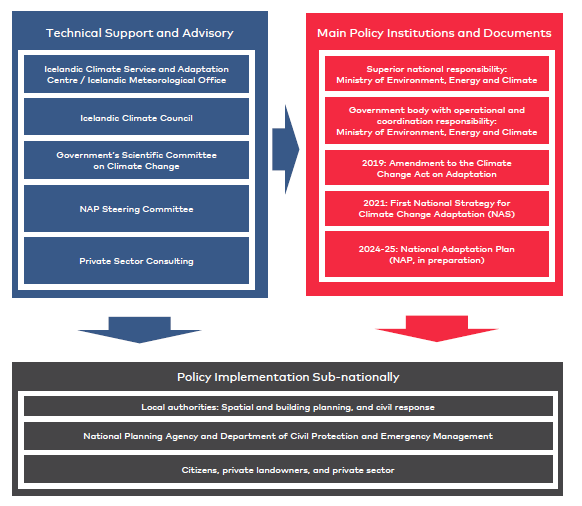
Figure 4.1. Organization of adaptation in Iceland
National
The Ministry of Environment, Energy and Climate is responsible for the national adaptation planning and sets the policies to guide the implementation of adaptation measures across Iceland and evaluation of their effectiveness, as stipulated in the Climate Change Act. Accordingly, the ministry is supposed to work in close collaboration with other relevant ministries to enforce the implementation of adaptation measures within their areas of responsibility and mandate, and in line with the national adaptation strategy (Interviews, Iceland). While all ministries have some touchpoints to adaptation policies, formally or informally, the ministries that are assigned with policy portfolios relevant to adaptation work include: The Ministry of Finance and Economic Affairs, the Ministry of Food, Agriculture and Fisheries, the Ministry of Health, Ministry of Social Affairs and Labour, and the Ministry of Infrastructure.
The Ministry of Environment, Energy and Climate had a supervisory role over the national adaptation strategy that it developed in consultation with the Icelandic Climate Change Council, and with the support of relevant national agencies, including the Met Office, the Marine and Freshwater Research Institute, the Environment Agency, the National Planning Agency, and the Icelandic Institute of Natural History. As mentioned above, the Minister for Environment, Energy and Climate is obliged to commission regular analysis of key climate hazards and their impacts on Icelandic nature and society, to be carried out by the IMO in consultation with relevant authorities and experts. The Minister is also required to present a regular status report to the Icelandic parliament matters related to climate change, including adaptation, as set out in the provisions of the Climate Change Act (Alþingi - The National Parliament of Iceland, 2019).
While the Ministry of Environment, Energy and Climate has some responsibilities around monitoring and surveillance of climate related risks, through its mandates around natural hazards and avalanches, the Ministry of Justice is responsible for emergency response and thus conducts some mapping exercises of hazards. Under the auspice of the ministry, the National Commissioner of the Icelandic Police is involved in some adaptation-related matters as part of its assignment from the ministry to run the country’s Department of Civil Protection and Emergency Management and is thus responsible for operating national command centre for emergency response (Interviews, Iceland).
Other government ministries with mandates relevant to climate adaptation includes:
- The Ministry of Health: The ministry is responsible for the management of the country’s public insurance system.
- The Ministry of Finance and Economic: The ministry is responsible for the legal framework underlying the country’s natural catastrophe insurance system.
- The Ministry of Foreign Affairs: The ministry supervises and coordinates the country’s work on overseas development (including climate adaptation).
The National Planning Agency has an important role to play for climate adaptation in context of spatial planning, as it is responsible for the administration and implementation of national Planning Act, the Act on Marine Spatial Planning, and the Act on the Environmental Impact Assessment (Iceland, Interview).
Sub-national
While the Icelandic Climate Change Act stipulates that local authorities across Iceland’s municipalities are obliged to develop their own climate strategy and greenhouse gas emission targets, the act does not make any requirements of the inclusion of adaptation objectives(Interviews, Iceland). Nevertheless, the municipalities have a legal responsibility for city planning which includes environmental assessments, including some climate-related risk analysis. Due to the weak legal underpinning for climate adaptation on municipal level, much of the attention and work on climate adaptation has hinged on the political interest and will of municipal authorities at any given time. The municipal authority that has been the most proactive in the climate adaptation areas has been the City of Reykjavik. This has been the case because of a strong and broad political interest in climate change in recent years, but also the unique institutional capacity and resources of the country’s capital to develop a coherent climate strategy and implement adaptation measures. In 2021, the City of Reykjavik published a Climate Strategy for the period of 2021–25 (Reykjarvíkurborg, 2021). While the main objectives of the strategy were largely related to mitigation (e.g., walkable city, green structures, and a circular economy), adaptation was highlighted as cross-cuttingconsideration that should be considered across all six of its objectives. Furthermore, the strategylisted eight adaptation-oriented action points which largely focus on the incorporation of climate risks and various adaptation measures (e.g., flood controls and nature-based solutions) into urban planning (see box 4.2).
Box 4.2. Climate change adaptation at the local level: the City of Reykjavik
In 2014 a government coalition agreement for the City of Reykjavik stipulated a plan to formulate a comprehensive climate adaptation policy for the city. The City of Reykjavik published its first climate strategy in 2016 which included two explicit objectives on climate adaptation and a directive to establish a working-group to develop measures around prevention and adaptation in response to the increasing threat from climate change (Reykjarvíkurborg, 2021). The objectives focused largely on mapping key risk areas - including a survey of high-risk flood areas to be incorporated into spatial and infrastructure planning, and the implementation of nature-based and technological measures to reduce flooding risks. The City of Reykjavik also joined the Covenant of Mayors and Mayors Adapt, which subsequently became the catalyst for the city’s work on climate adaptation policy and associated strategy that was inaugurated in 2017. Guided by the work of the European Environment Agency, the City of Reykjavik began to integrate mitigation and adaptation policies, monitored and evaluated under the Global Common Reporting Framework under the Covenant of Mayors through CDP (Global Covenant of Mayors for Climate and Energy, 2018). The city has also sought to obtain a certification on resilience from BREEAM (Bre Group, n.d.).
Reykjavík’s climate strategy for 2021–25 stipulates the requirement to incorporate a risk assessment on rising sea-levels into city planning. In this context, the City of Reykjavik has begun to incorporate rudimentary data on flooding risk from rainfall and rising sea-level into its open-access internet tool, City Web Sight, which provides various types of geographical information about Reykjavik and its surrounding area. The online tool provides comprehensive visual data on urban division, streets and paths, demographics and real estate, measurement points, natural heritage, and traffic services, to name a few. The City Web Sight plays an important role in aiding the incorporation of risk data around flooding in decision-making around spatial and building plans.
Policy themes
In a report published by the Icelandic Government’s Scientific Committee on Climate Change in 2018 on climate change and its consequences for Iceland, several climate risks were underscored as being of particular concern in the domestic context - having already begun to materialize, such as implications of increased precipitations and rainfall, flooding and storm frequencies on roads, transmission lines and other infrastructure (Björnsson, o.fl., 2018). The report also raised concerns over the risks of landslides and mudslides, permafrost melting on mountain slopes and glacial retreats, and their implications for villages and rural settlements (see box 4.2 below). The increased risk of wildfires because of increasing droughts was also noted. Similarly, a white paper produced by the Climate Council in 2021 which enumerated seven climate hazards that were of relevance for Iceland, which are the following (Sigurðsson, 2020):
- More frequent vegetation and forest fires as result of increasing droughts and their implications for human lives, buildings, and infrastructure.
- Increased flooding risk due to greater precipitation intensity and their implications for infrastructure and furnishing.
- Increased flooding risk from rising sea levels and their implications for infrastructure and settlements.
- Increased risk to transport infrastructure (e.g., roads and bridges) from changing riverbeds stemming from shrinking glacial volume.
- Increased risk from disease transmission and allergen exposure from invasive species, as a result from warming climate in Iceland.
- The effects of thawing permafrost on the frequency of landslides and mudslides, and their consequences for human lives and infrastructure.
- The risks from ocean acidification and warming on marine ecosystem and fish migrations, and their implication on the Icelandic fish industry and its revenues.
The Icelandic public officials and policy advisors we consulted highlighted many of the same themes as the ones above, with a special emphasis on flooding and mudslides and ocean acidification. They also pointed to areas which they perceive to be of significant threat to Iceland in the years to come.
One of these is glacial melt and retreat, which has been a subject of attention in the context of Iceland’s sizable tourism sector as the Icelandic glaciers have been a strong attraction for both foreign and national tourists. Furthermore, climate change-influenced glacial retreats along with permafrost melting could also pose a significant risk to the tourism industry as these can leave behind newly unbuttressed slopes that are unstable and of heightened risk of landslides (Interviews, Iceland).
Government officials and climate policy experts have also consistently highlighted transboundary climate risks (TCR) as a serious concern for Iceland and a major blind spot for Icelandic authorities – particularly in relations to implications for trade due to country’s high import reliance but also regarding human migration and tourism (Interviews, Iceland). In 2021, a report published by the National Security Council under the auspice of the Prime Minister’s Office raised concerns over the transboundary impacts on Iceland’s food security and political stability in vulnerable countries with implications for human migration (Þjóðaröryggisráð, 2021). The report also outlined some policy recommendations to address these risks. The national adaptation strategy also stressed the importance of TCR and their implications on human migration and Iceland’s tourism sector (Icelandic Ministry for the Environment and Natural Resources, 2021). Despite the concerns raised over transboundary climate risks in these reports, few if any assessments have been carried out to gain better understanding of Iceland’s exposure to transboundary effects of climate change and no adaptation measures have been implemented to reduce these risks at present.
Risk assessments
Even though the government’s Scientific Committee on Climate Change produced a preliminary climate risk assessment which importantly identified many of the key climatic drivers facing Iceland and their consequences on the country’s ecosystem and society (Björnsson, o.fl., 2018), the risk assessments that have been carried out on the impacts of climate change in Iceland to date, have neither been comprehensive, integrated nor detailed in most cases. Most of the risk assessments provide only a snapshot of the current climate hazards, exposures, and vulnerability, but fail to incorporate different climate scenarios. Even the more comprehensive and sophisticated risk assessments for avalanches, mudslides, and landslides, do not take different climate scenarios into account, whereas assessments for other climate risk suffer even more fundamental shortcomings regarding subpar methodological frameworks and indices of measurements.
The Icelandic Met Office carries out ad hoc assessments for the Icelandic Avalanche and Landslide Disaster Fund when there is ground for concern over risks from avalanches and landslides to human settlements (Interviews, Iceland). Furthermore, the Met Office in partnership with the Icelandic Institute of Natural History, collects data on landslide and associated dangers, as required according to national legislation (Article 3, No. 49/1997) on protective measures against landslides and avalanches (Alþingi - The National Parliament of Iceland, 1997). In relation to other hazard and risk assessments, the Met Office establishes links with the municipalities to ensure that they are informed about the work and its progress, as well as to provide feedback (Interviews, Iceland).
The Icelandic Climate Service and Adaptation Centre (ICSA, see below for details), operating within the Met Office, expands on its role in managing surveillance of risks from extreme weather events and natural catastrophes, and regularly conducts and assembles various scenario analysis on the impact of climate change (Interviews, Iceland).
As alluded to earlier, the Icelandic Government has also periodically appointed specific scientific committees, termed Scientific Committee on Climate Change (Vísindanefnd um Loftslagsbreytingar), ad hoc, with the role to produce an assessment report to summarize the current state of understanding on climate change and assesses the main climate hazards and exposure to Iceland. The reports also identify critical knowledge gaps and provides guidance on priorities for further research and assessments (Icelandic Meteorological Office, 2022a). The current scientific committee is currently working on a new report that will be published in 2023.
In other words, while there has been some risk- and vulnerability assessments carried out for a small number of climate-related hazards in Iceland by the Met Office, there have not been conducted any integrated or detailed climate risk assessments against different future climate scenarios. In fact, the Met Office as part of a broader working group, recently published a Green Paper on Natural Hazards that stressed the urgent need to incorporate different climate scenarios into risk assessments, as existing risk assessments only provide a snapshot of the current climate-related hazards, exposure and vulnerabilities facing Iceland (Icelandic Ministry of the Environment, Energy and Climate, 2023)
As in other Nordic countries, the municipalities in Iceland are in many ways best placed to carry climate risk assessments, both with respect to the responsibilities of the local authorities to ensure the safety and security of its citizens, as well as their proximity with the areas of impacts from climate change. The municipalities indeed conduct some risk assessments that are relevant for climate adaptation as part of their work on spatial planning and in context of civil protection (Interviews, Iceland). For instance, the City of Reykjavik procured an external consultant agency to conduct a high-level analysis of key climate hazards and adaptation options in 2017 (Alta, 2017), in line with the Mayors Adapt requirements and expanding on the national risk assessment carried out earlier by the Government’s scientific committee. As mentioned above, the Ministry for Environment, Energy and Climate is leading a pilot project in partnership with the Met Office, Icelandic Regional Development Institute, and the National Planning Agency (as implementing bodies), where five municipalities have been selected to receive funding and support to develop their own local climate risk assessments, as well as a small-scale adaptation strategy. The project will also bring together other relevant ministries, the municipal authorities, as well as the Icelandic Association of Local Authorities and the Department of Civil Protection and Emergency Management, with the aim to establish an institutional framework and toolkits for municipalities to adopt to adopt for future climate adaptation work.
Systems for monitoring, reporting, and evaluation
There is no formal reporting system or systemic collection of information being conducted on climate risks and adaptation measures in Iceland. However, the consultation workshops conducted as part of the NAP development have played a critical role in providing valuable insights and a broad overview on some of the adaptation work that is underway across the public and private sector.
4.2. Policy instruments
In absence of a NAP, the policy instruments available to support climate adaptation work are few and relatively untargeted. Although policies and other efforts on climate adaptation have seen significant progress in only the last few years, much of the focus thus far has been on developing knowledge inventory on climate adaptation and awareness-raising activities. As such, dedicated financial resources for climate adaptation are limited and incentive mechanisms are few if any.
Capacity building
The establishment of the Icelandic Climate Service and Adaptation Centre (ICSA) within the Met Office in 2021 was a significant milestone for climate adaptation in Iceland, as it created a much-needed domestic platform to facilitate awareness raising and knowledge exchange on climate adaptation. Modelled on existing European knowledge hubs on adaptation, ICSA centre operates under the auspice of the Ministry of Environment, Energy and Climate and provides the Icelandic Government and its Scientific Committee on Climate Change (see details, below), with important support for its policy and actions on climate adaptation, alongside its work on climate hazards and risk areas (Icelandic Meteorological Office, 2022b).
The Icelandic Climate Council, formed by the Climate Change Act, on the other hand, is an independent advisory body with an assigned responsibility to provide expert advice on climate adaptation to the government and to evaluate the government’s adaptation plans in the early stages of the preparations (Loftslagsráð, n.d.). In addition to supporting the government’s work on adaptation, the council has an important role in building a knowledge inventory on climate adaptation through the collection and consolidation of research and assessment from relevant expert authorities across the public and private sector. The council also proactively engages in awareness-raising efforts and facilitates knowledge exchange among the public, businesses, civil society, and local authorities.
As mentioned above, the government’s Scientific Committee on Climate Change has also played a key role in catalysing the momentum for climate adaptation when it published its preliminary climate risk assessment in 2018 (Björnsson, o.fl., 2018). The committee is appointed by the Minister for Environment, Energy and Climate and is assigned with the responsibility to compile and assess the current knowledge on climate change and its impact on Iceland, as well as identify knowledge gaps and research priorities (Icelandic Meteorological Office, 2022a). As mentioned above, the committee is currently working on a new report on the consequences of climate change in Iceland.
The National Knowledge Network for Climate Adaptation launched by the Ministry of the Environment, Energy and Climate in 2022 was an important milestone. The network’s main purpose is to strengthen knowledge exchange and partnership building around climate adaptation between the government, national agencies, and local authorities, with the view to construct a better national overview and collective understanding of known climate risks and existing knowledge gaps, as well as to improve the visibility of adaptation efforts underway in Iceland (Umhverfis-, orku- og loftslagsráðuneytið, 2022). The forum brings together experts from key institutional bodies, including the Met Office, the Environment Agency of Iceland, the Marine and Fresh Water Research Institute, the Icelandic Institute of Natural History, and the Government’s Directorate of Health of Iceland. The forum is also expected to serve as an important function to compile information, develop expertise and establish a strategic stakeholder network around climate adaptation, though both cross-sectoral and sector-specific seminars and workshops (Interviews, Iceland).
Incentive mechanisms
Aside from the government’s assignment to the national agencies to ensure that their strategies and work are aligned with the aims and objectives of the national adaptation strategy, there are not many tangible incentives and instruments to ensure that climate adaptations measures are being implemented to any significant degree or at scale (Interviews, Iceland). At present, most funding instruments and economic incentives that the government has put in place have been centred on decarbonization and other mitigation work. As such, the funding resources available to support climate adaptation in Iceland are few and modest.
The Icelandic Centre for Research (i.e. the Icelandic research council) operates the Icelandic Climate Fund under the auspice of the Ministry of Environment, Energy and Climate, which has modest financial resources for climate adaptation related work in the past, but the funding programme for 2023 has been entirely earmarked for work related to emissions reduction efforts (Loftslagssjóður, n.d.). The Icelandic Avalanche and Landslide Fund (Ofanflóðasjóður) funds research into landslides with the view of surveying landslides in the country and assesses the characteristics of the most common types of avalanches (Icelandic Institute of Natural History, n.d.). The fund also provides financing for new protective infrastructure and measures against avalanches and landslides and maintenance of existing ones (Interviews, Iceland). A temporary authorization has allowed the fund to be used to procure risk assessments for climate-related hazards. Similarly, the Icelandic Road and Coastal Administrations and the Natural Catastrophe Insurance body of Iceland (NTI) have also occasionally funded projects related to natural and climate hazards (Icelandic Ministry of the Environment, Energy and Climate, 2023). On the contrary, the Icelandic government has to date not put in place any bespoke financial instruments or other economic incentives for business or households for the purpose of supporting climate risk assessments or the implementation of adaptation solutions. In addition, most of the domestic funds that have been used to fund adaptation related work have match-funding requirements that limit access to adaptation finance for many actors. At the local level, the City of Reykjavík has incentivized and provided support to households and businesses for the adoption of blue-green surface water solutions in new city districts and in cases of renovation of older systems.
4.3. Best practices and main challenges
The policy development on climate adaptation remains in its infancy in Iceland, and as such, efforts on adaptation to date have been significantly hampered in absence of a NAP, to give a clear signal on climate risk ownership and responsibilities on adaptation. In fact, one of the main challenges for the progression on climate adaptation across policy and practice in Iceland, relates to the weak legal basis for adaptation on both national and subnational level at present (Interviews, Iceland).
The weak policy framework for adaptation work in Iceland relates to the fact that the legal mandate assigned to national authorities and municipalities focuses entirely on policy objectives and actions to bring down greenhouse gas (GHG) emissions and carbon offsetting, and the Environmental Agency of Iceland is thus only tasked with the evaluation and compliance around mitigation effort. This imbalance between mitigation and adaptation policy ambitions and efforts, is also reflected in Iceland’s national climate action plan, also entirely centred on decarbonization and carbon offsetting (Icelandic Ministry for the Environment and Natural Resources, 2020). Although the municipalities have responsibilities for protecting its citizens and conduct spatial planning which include some environmental assessments, the fact that the municipalities do not have legal obligation to prepare for climate change and engage in climate adaptation work, means that municipal actions on adaptation largely hinge on the political interests and will of the municipal authorities at any given point in time (Interviews, Iceland).
Until recently, the has been a limited number of climate change adaption experts with the relevant experience, knowledge, and skills to comprehensively and properly address the risks that Iceland faces from climate change. This limited understanding of climate risks and subject matter expertise is reflected in the different levels of knowledge among government officials, civil servants, and other public sector bodies who are responsible for managing these risks. More broadly in society, there is also generally a lack of awareness and understanding of the consequences from climate change in Iceland, with respect to domestic threats from storms, flooding, and rising sea levels. A commonly expressed concern by policy advisors and adaptation experts has been the lack of understanding of the impacts of climate change on ocean acidification and its implications for marine life, especially given Iceland’s economic reliance on the fish industry (Interviews, Iceland).
Because of the recency of the relevant policy framework to support adaptation work in Iceland, municipalities have been struggling in their ability to conduct risk assessments and implement adaptation solutions, especially in absence of any financial assistance or practical support for adaptation. Considering the current absence of institutional expertise and capabilities among municipalities to conduct integrated and forward-looking climate risk assessments, capacity building will be a high priority for both national and subnational authorities in the coming years. In fact, there are some excellent opportunities to leverage some of the world-class marine and glacial research capabilities that exists in Iceland to build stronger expertise on climate hazards in these areas (Interviews, Iceland).
The lack of an integrated approach on climate adaptation is another considerable hinderance for the progression of climate adaptation work in Iceland. On a governmental level, the integration of climate adaptation across other relevant ministries and related policy portfolios, such as those covering biodiversity, sustainable development, civil response, and emergency management, is limited due to both institutional silos between ministries and capacity constraints. While many ministries have designated policy-leads for climate change matters, their capacity is spread thin and often tilting in favour of mitigation related work. Although some cross-ministry consultation occasionally takes place on an ad hoc basis around cross-cutting and converging topics (e.g., adaptation and nature-based solutions), the mainstreaming of adaptation across the government’s wider policy and work does not take place in a systematic manner, at present (Interviews, Iceland).
Yet, there has been a growing awareness among national authorities and other key stakeholders in recent years on the importance of an integrated approach to climate adaptation and thus the forthcoming NAP is expected to address the issue of mainstreaming adaptation across the government’s wider policy and work. On a municipal level, the City of Reykjavík does (both mitigation and adaptation) across different policy and sectoral domains. As an example, the unit within the city authority that is responsible for managing the CityView interactive mapping tool is required to consider and embed climate related information into their work, whereas the city officials working with the municipality’s schools are required to consider resilience aspect in the built environment to ensure alignment with the requirements of the BREEAM certification. The Met Office also takes an integrated approach towards climate adaptation and adopts a cross-disciplinary process with respect to stakeholder consultation and wider evidence gathering (Interviews, Iceland).
Finally, climate risks are largely approached from a domestic perspective in Iceland and has thus far not assessed the impacts of transboundary climate risks to the country’s economy and wider society. For instance, there is insufficient contingency planning and anticipatory policymaking to anticipate the challenges from climate-related human migration and populations displacement, but this is an area that is likely to become of increased concern on the subnational level as the national government usually needs to negotiate with the municipalities around the settlement of refugees. Similarly, there has been a lack of assessment carried out to assess the country’s exposures to climate-related shocks through its trade channels, in particular in context of import reliance and its implications for food and other commodity-security.
In summary, a slow progression around climate adaptation over the years in Iceland has stemmed from its absence in the political and public discourse, resulting in the lack of political ownership, which in turn, has hindered the acknowledgement of these risks both horizontally across different ministries and veridically across the national and subnational level, as well as across society at large. Nevertheless, there has been a watershed change in the level of awareness around climate adaptation only within the last year, largely due to the preparatory work that is underway ahead of the development of the NAP work, such as the stakeholder consultation workshops (Interviews, Iceland), as well as the important advancements of the work by the Climate Council, Scientific Committee, and the Met Office/ICSA that is taking place in tandem with the NAP development. The inauguration of the NAP will play a pivotal role in further raising the importance of climate adaptation and making it more salient in the wider societal sphere. However, only time will tell if the growing awareness of climate risks both domestic and transboundary will translate into serious policy ambitions and resources to deliver effective adaptation.