7. Concluding panel discussion: How can the Nordic countries better promote labour market integration among migrant mothers and fathers?
Adam Alfredsson, State Secretary to Minister for Employment and Integration Mats Persson, Sweden
Glenn Gassen, Director of Migration Affairs, City of Helsinki, Finland
Muneeza Rosendahl, Director, Lige Adgang, Denmark
Kristian Tronstad, Head of Research, NIBR, Norway
The conference concluded with a panel discussion on future solutions and key takeaways. Moderated by Nedjma Chaouche, the discussion focused on how the Nordic countries could better promote labour market integration among immigrant mothers and fathers.
In its new integration goals, the Swedish government emphasises that integration goes beyond simply securing employment.
– It is also about learning the Swedish language and promoting our liberal views and values as expressed in the fundamental law. All these aspects are equally important for successful integration, Adam Alfredsson explains.
A new reform in Finland aims to give municipalities significant responsibility for labour market integration. Glenn Gassen describes the reform as a major game-changer that went into effect at the beginning of 2025.
– The municipalities will be responsible for employment and integration services. We’ve long advocated this, as it ensures that resources and accountability are in the same place. We will have new responsibilities and services, and we need to work on how to deliver all the necessary information to our customers.
– The municipalities will be responsible for employment and integration services. We’ve long advocated this, as it ensures that resources and accountability are in the same place. We will have new responsibilities and services, and we need to work on how to deliver all the necessary information to our customers.
Policy changes are essential to promoting equal access to the labour market for immigrants. Kristian Tronstad emphasises that the primary focus for Nordic countries should be bridging the skills gap for newly arrived immigrants and refugees, a challenge that is particularly pronounced for individuals with low levels of formal education.
– Much of the work that has already been done concerning language training, recognition of skills, and anti-discrimination policies is very important. However, we must keep in mind that the Nordic labour market is quite challenging for refugees and low-skilled individuals to enter, as our labour productivity is very high compared to other countries.
– Much of the work that has already been done concerning language training, recognition of skills, and anti-discrimination policies is very important. However,
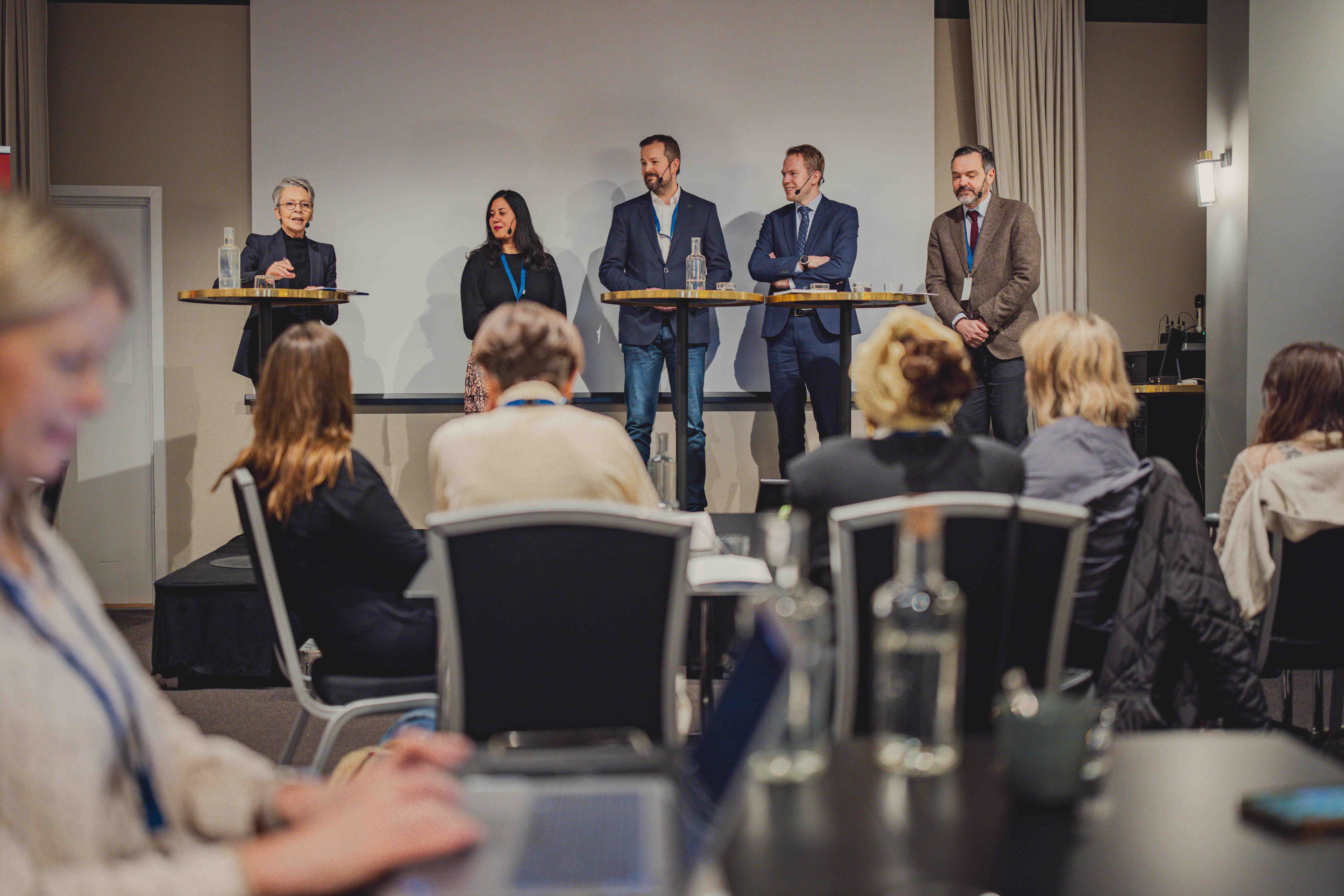
From left to right: Adam Alfredsson, Glenn Gassen, Muneeza Rosendahl, Kristian Tronstad
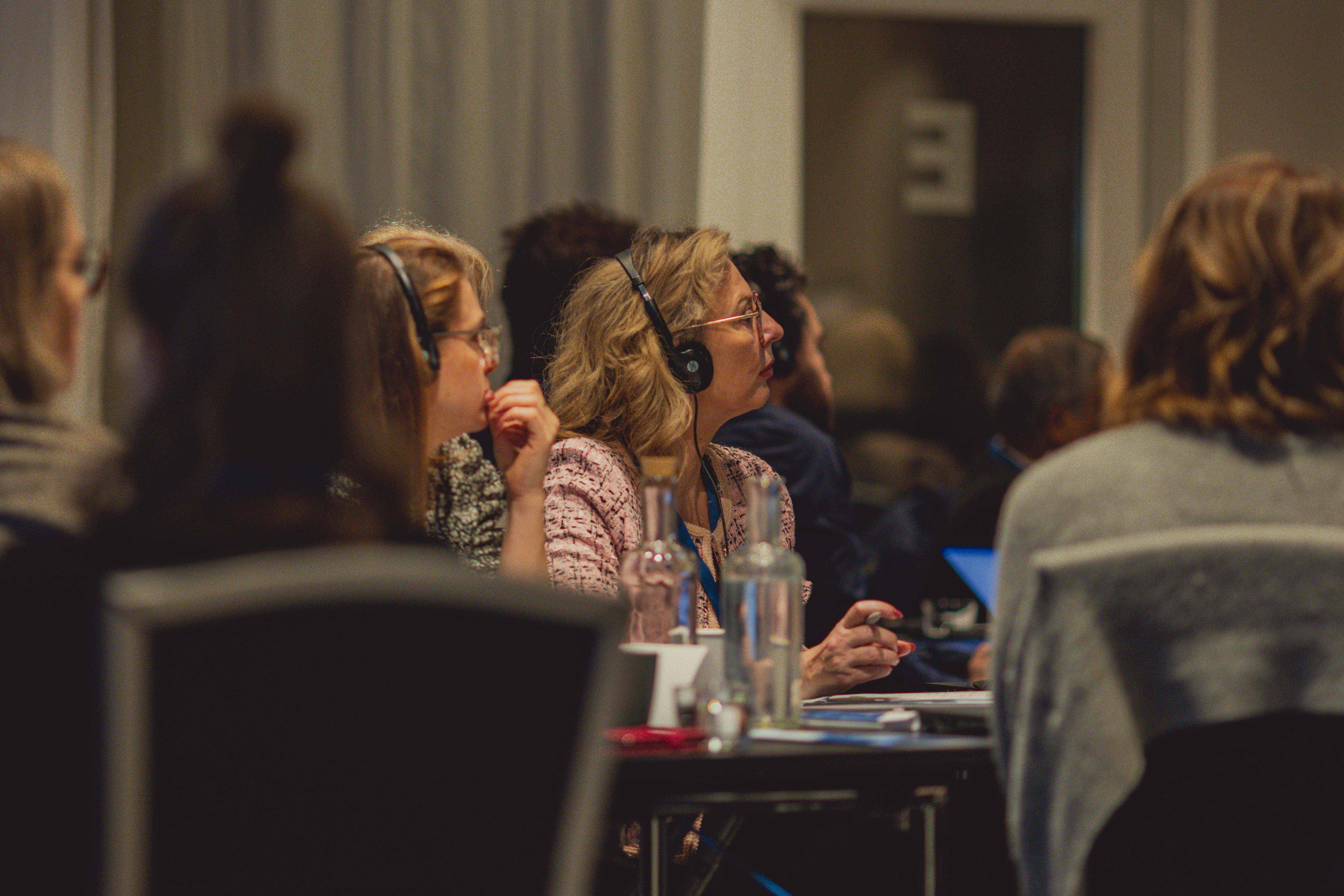
Photos from the event: José Calvente
Photos from the event: José Calvente
Kristian Tronstad says wage subsidies could help bridge the skills gap. In the long run, providing primary school introductory programmes, especially for refugee women, is effective for the very low-skilled. According to Tronstad, cash-for-care schemes where mothers and fathers get financial support to stay home with their children should, on the other hand, be abolished.
– Instead, we should provide preschools and kindergartens. The parents really need to be out in the labour market, and the children really need to learn the language, Kristian Tronstad says.
Adam Alfredsson believes that all children should be given the opportunity to attend preschool, particularly those children who don’t have sufficient language skills in Swedish.
Adam Alfredsson believes that all children should be given the opportunity to attend preschool, particularly those children who don’t have sufficient language skills in Swedish.
The research shows that children who have not learned the language in preschool start primary school at a much lower level, and that gap continues through the whole school system, Adam Alfredsson says.
From an NGO perspective, Muneeza Rosendahl from the Danish NGO underscores the importance of identifying migrants’ professional skills to ease their integration into the labour market. While the primary responsibility for this lies with the government, both at the municipal and state level, NGOs can play a crucial role as intermediaries, connecting the government with businesses and organisations that can offer potential workplaces for immigrants.
– We are also focusing significantly on high-skilled immigrants because we want to see representation at all labour market levels.
A reform in Denmark aims to engage immigrants by offering activating jobs specifically for women with so-called non-Western backgrounds. Muneeza Rosendahl emphasises the importance of considering the substance of such jobs in these reforms and collaborating with NGOs and employers, ensuring that the work helps integrate them into society rather than merely keeping them occupied.
– I would like to see governments and municipalities think of what would actually have an effect on these women. These reforms need to make sense, not just on a symbolic level. Done right, they could minimise the gender gap, Rosendahl says.
Both Glenn Gassen and Kristian Tronstad agree that more focus needs to be placed on working with potential employers. The panellists also emphasised the importance of increasing measurements of immigration policies to better understand what works and what does not. In this regard, the Nordic countries are uniquely positioned to collaborate and learn from one another, as their countries and political systems are very similar.
A reform in Denmark aims to engage immigrants by offering activating jobs specifically for women with so-called non-Western backgrounds. Muneeza Rosendahl emphasises the importance of considering the substance of such jobs in these reforms and collaborating with NGOs and employers, ensuring that the work helps integrate them into society rather than merely keeping them occupied.
– I would like to see governments and municipalities think of what would actually have an effect on these women. These reforms need to make sense, not just on a symbolic level. Done right, they could minimise the gender gap, Rosendahl says.
Both Glenn Gassen and Kristian Tronstad agree that more focus needs to be placed on working with potential employers. The panellists also emphasised the importance of increasing measurements of immigration policies to better understand what works and what does not. In this regard, the Nordic countries are uniquely positioned to collaborate and learn from one another, as their countries and political systems are very similar.
Muneeza Rosendahl also stressed the need to change public opinion on immigration.
– A story we almost never hear in the media is that integration is actually working very well. In Denmark, crime rates are falling, and more immigrants are pursuing education. While problems remain, we need to see migrants as individuals, not as a homogenous group.