3. Parenthood and labour market integration. New Nordic research and commentaries.
Keynote: How does parenthood affect employment among migrants and how are the Nordic countries responding?
Thomas Liebig, Senior Migration Specialist, OECD
Thomas Liebig presented research from the new report The labour market integration of migrant mothers and fathers in the Nordic countries, which was delivered at the conference.
The report was published in December 2024 by the OECD and is supported by the Nordic Council of Ministers.
The report shows that having young children disproportionately affects the employment of migrant women. Migrant parents are more likely to hold temporary job contracts than their native-born peers, and compared to fathers, mothers also rely on part-time employment to a greater degree despite, in many cases, wanting to work full-time.
– Being a foreign-born mother, you have lower employment probabilities to begin with and a higher likelihood of being in part-time employment. A temporary job also puts you in a more vulnerable situation when you take extended leave due to childbirth, Thomas Liebig says.
– Being a foreign-born mother, you have lower employment probabilities to begin with and a higher likelihood of being in part-time employment. A temporary job also puts you in a more vulnerable situation when you take extended leave due to childbirth, Thomas Liebig says.
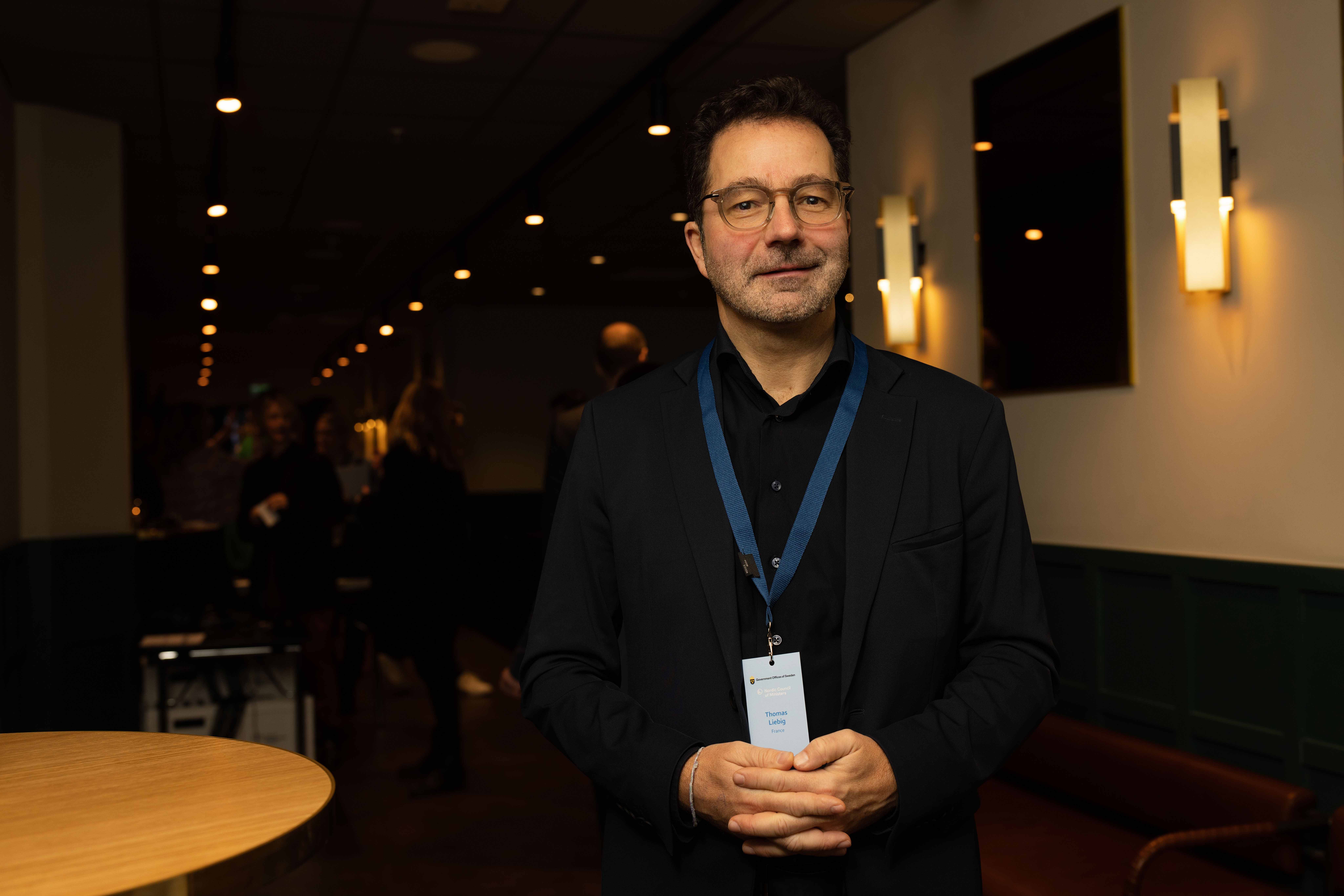
Thomas Liebig, Senior Migration Specialist, OECD
Today, migrant parents use formal childcare to a high degree in Nordic countries. Thomas Liebig sees this as a positive development, as participation in early childhood education and care strongly impacts the literacy of immigrant children and affects their long-term education outcomes.
As to the policies detrimental to integration, Thomas Liebig is particularly critical of cash-for-care schemes, which pay mothers to stay at home and care for their children. The Nordics are trending towards abolishing these schemes.
Paying mothers to stay at home with their children has a very negative impact on integration. Firstly, the mothers do not enter the labour market, and secondly, the children do not attend public institutions and, therefore, do not learn the language as well as their peers.
Another way to help migrant mothers participate more in the labour market is to encourage migrant fathers to participate in childcare. Migrant parents, particularly migrant fathers, use parental leave at lower rates than native-born parents.
As migrant women’s fertility rates tend to peak soon after the migrants arrive, women are more commonly unable to take part in the extensive Nordic introduction policies on labour market integration that the migrants are offered.
To address this, the Nordic countries have introduced a number of measures, such as allowing maternity leave during enrolment in integration programmes, providing flexibility around participation, offering childcare options during courses, and introducing individual integration benefits to ensure that migrant mothers also participate.
The Nordic countries have also recently focused much on the labour market participation of mothers at later stages through specific outreach programmes providing individualised support and assistance in matching employers with employees. Thomas Liebig underlines the importance of taking a whole-of-family perspective on integration.
To address this, the Nordic countries have introduced a number of measures, such as allowing maternity leave during enrolment in integration programmes, providing flexibility around participation, offering childcare options during courses, and introducing individual integration benefits to ensure that migrant mothers also participate.
The Nordic countries have also recently focused much on the labour market participation of mothers at later stages through specific outreach programmes providing individualised support and assistance in matching employers with employees. Thomas Liebig underlines the importance of taking a whole-of-family perspective on integration.
International comparisons show that maternal employment rates in Nordic countries are high. The focus on family policies and gender norms in the integration process has a positive impact on the employment of migrant mothers.
Given that gender equality is the trademark of the Nordic model, Thomas Liebig says the host country’s values are also partly reflected in the values of the immigrant population.
Keynote: Migrant perspective on work and family in the Nordics
Muneeza Rosendahl, director of the NGO Lige Adgang
Muneeza Rosendahl, director of the NGO Lige Adgang (in English: Equal Access), raised perspectives from civil society and migrant perspectives in her keynote speech. She argued that many factors contributing to immigrants’ unequal access to the labour market in Denmark, compared to native-born individuals, are structural.
Public discussion on the topic often centres around individual factors that can limit labour market access for immigrants, and the structural barriers are forgotten.
– Our experience as an NGO is that people really want to work. But they feel they don’t have access to the labour market.
– Our experience as an NGO is that people really want to work. But they feel they don’t have access to the labour market.
Throughout her career, Muneeza Rosendahl has focused on connecting ethnic minorities with the Danish labour market.
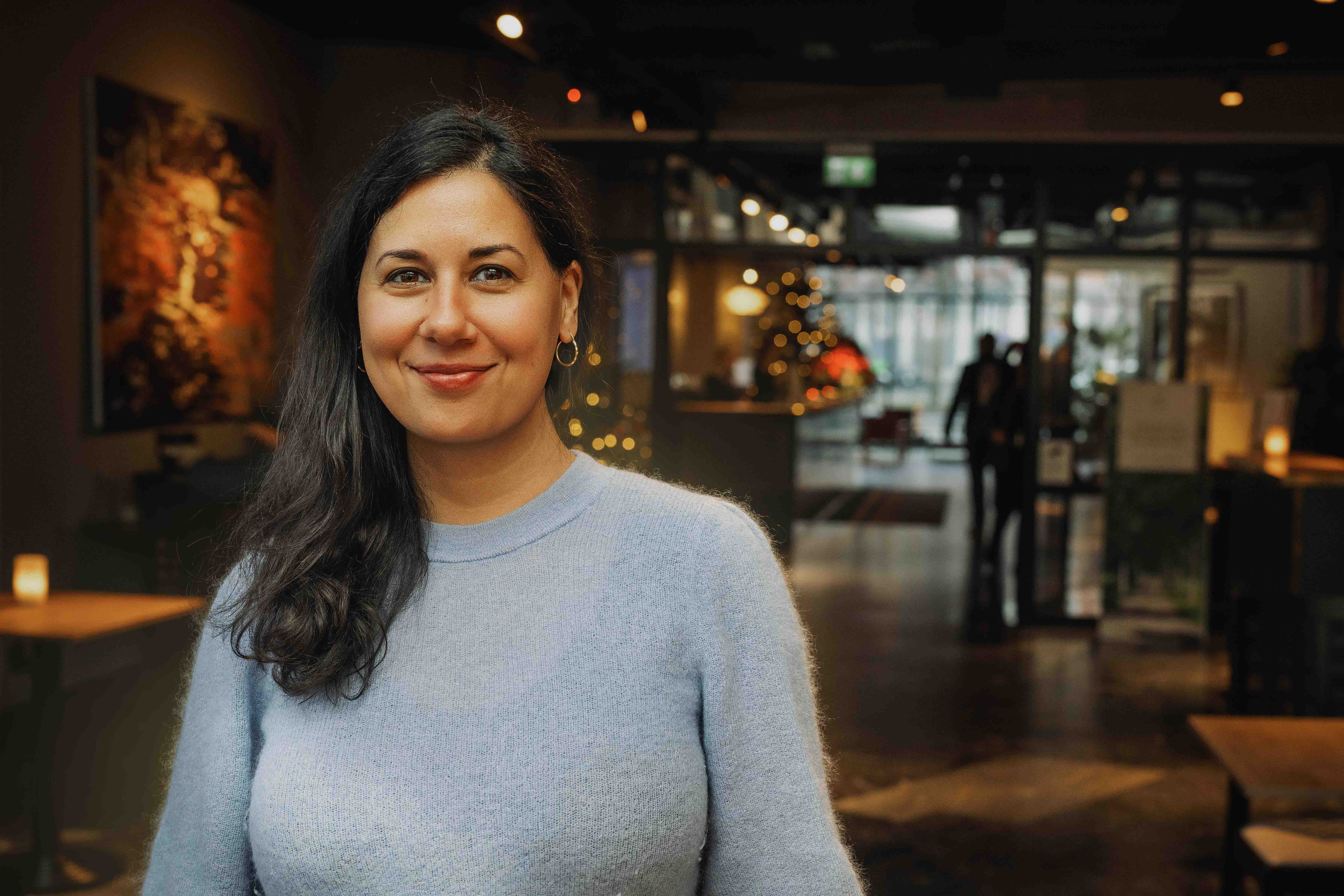
Muneeza Rosendahl, director of the NGO Lige Adgang
Danish Prime Minister Mette Frederiksen has compared the labour force to a new currency and emphasised the need to attract international labour. However, according to Rosendahl, the need to attract new labour from abroad is not as great as the prime minister suggests.
– We already have them in the country. We just need to become better at utilising the talent and resources available to us.
Rosendahl says some structural barriers have historical roots that no longer fit modern society. For instance, the tendency to refer to immigrants as ‘guest workers’ has also been detrimental to integration, as the term implies they will eventually leave the country, even though many wish to stay. Looking back in time, there was also a tradition of offering traumatised refugees early retirement or telling them that they cannot or should not work despite their expressing a desire to do so.
– We already have them in the country. We just need to become better at utilising the talent and resources available to us.
Rosendahl says some structural barriers have historical roots that no longer fit modern society. For instance, the tendency to refer to immigrants as ‘guest workers’ has also been detrimental to integration, as the term implies they will eventually leave the country, even though many wish to stay. Looking back in time, there was also a tradition of offering traumatised refugees early retirement or telling them that they cannot or should not work despite their expressing a desire to do so.
– Geographically, we have placed people in areas where they have formed subcultures. And we should remember that many people have been denied the right to work. For instance, I’ve heard stories about individuals in asylum centres, who, a week after arriving, say, ‘I want to get a job; I want to work’. However, when you see the same individuals six months later, they feel they cannot work because they have been mentally broken down.
Muneeza Rosendahl notes that not all obstacles to accessing the Danish labour market are structural. For instance, in some cultures, women do not view themselves as part of the workforce. Personal trauma can also contribute to difficulties in learning the language, which in turn may lead to isolation and mistrust of the authorities.
Other factors hindering immigrants’ access to the Danish labour market include bias and prejudice. According to Muneeza Rosendahl, this is particularly evident for immigrants from countries with predominantly Muslim populations.
Language barriers also frequently hinder access to higher-paying jobs requiring advanced skills, as the native language of the country is often a prerequisite, even though most Nordics speak good English.
– In Denmark, immigrants are overrepresented in the lowest-paying jobs and underrepresented higher up in the hierarchy. It is important to remember that we need representation at all levels of the labour market.
Muneeza Rosendahl says the strength of civil society and NGOs such as Lige Adgang is their ability to see individuals as whole people and tailor information about cultural and workplace norms to each individual. Lige Adgang works extensively with mentorships.
Someone working as a mentor on a voluntary basis can help immigrants overcome barriers. It makes a huge difference when we recognise individuals for their unique talents, skills, and needs. If we aim to treat everyone equally, we must treat different people differently.
Commentaries and discussion:
Annika Sandlund, UNHCR Representative to the Nordic and Baltic Countries
Andreas Højbjerre, HBS Economics, Denmark
Áshildur Linnet, Ministry of Social Affairs and Labour, Iceland
Thomas Liebig, Senior Migration Specialist, OECD
Moderated by Elin Landell, Ministry of Employment, Sweden
The first part of the conference – parenthood and labour market integration – was concluded by a group discussion. The moderator for this discussion was Elin Landell from the Swedish Ministry of Employment.
Landell stressed the importance of a knowledge-based integration policy, which all Nordic countries strive for. She asked the panellists for their views on the newly published OECD report, which Thomas Liebig had presented earlier.
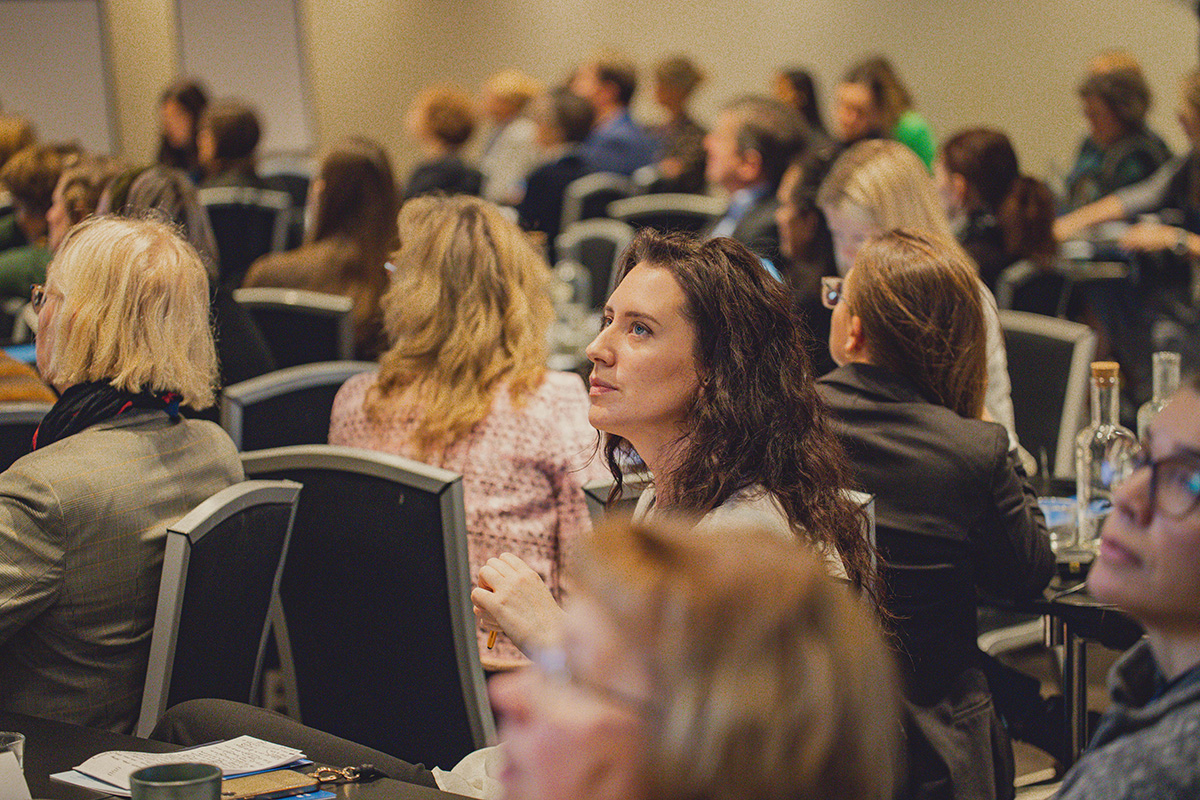
Photos from the event: José Calvente
Andreas Højbjerre pointed out that the report’s findings highlight the challenges of increasing migrant women’s labour market participation. The report’s recommendations – individual benefits, effective outreach programmes, and flexible introduction programmes – may work locally but could pose challenges when scaled up to the national level. Højbjerre asked Thomas Liebig for advice on how to better scale them up.
– It’s an important question, as there are many small projects that work well. The good news is that there are always motivated migrants and natives who want to participate. Often, we think these projects depend on one single person, but if this is the case, it’s not sustainable. You have to design a course or a national framework. The infrastructure should be nationalised, but the action could still be local, Thomas Liebig responded.
Annika Sandlund reminded the audience of the enormous scale of the global refugee crisis. According to the UNHCR, the number of forcibly displaced people worldwide has doubled in the last ten years and now constitutes 1.5% of the global population.
Annika Sandlund noted that employment is seen as a key measure of success in Nordic countries. Over time, migrants in Sweden have increasingly aligned with local values, contributing more to society and achieving significantly higher employment rates.
Thomas Liebig agreed and provided data to emphasise the point that policies and institutions play a crucial role in establishing norms that align with Nordic values such as gender norms. Refugees often come from countries where women are not seen as equal to men. When asked if men should be prioritised over women if jobs are scarce, 10% of immigrants in Sweden agreed, compared to only 2% of natives.
– Politicians in Sweden may see this as alarming, but if you look at the whole range of countries, between 30 and 40% of the native population in Italy, Poland, or Greece think men should have rights to jobs before women. The immigrants in Sweden are still much more gender progressive than native-born Greeks, Italians, and Poles.
Thomas Liebig says these graphs are among the most positive he has produced in his research career: they show that the old notion that culture always trumps migration policy is wrong.
Thomas Liebig agreed and provided data to emphasise the point that policies and institutions play a crucial role in establishing norms that align with Nordic values such as gender norms. Refugees often come from countries where women are not seen as equal to men. When asked if men should be prioritised over women if jobs are scarce, 10% of immigrants in Sweden agreed, compared to only 2% of natives.
– Politicians in Sweden may see this as alarming, but if you look at the whole range of countries, between 30 and 40% of the native population in Italy, Poland, or Greece think men should have rights to jobs before women. The immigrants in Sweden are still much more gender progressive than native-born Greeks, Italians, and Poles.
Thomas Liebig says these graphs are among the most positive he has produced in his research career: they show that the old notion that culture always trumps migration policy is wrong.
– This shows that you can do something, and what you do matters.
Áshildur Linnet raised the question of whether labour participation is the same as integration. Despite the integration courses and the family-oriented approach, she noted that the Scandinavian countries have a problem when it comes to putting to use the skills and education of migrants, who, in many cases, are overqualified for the jobs they do.
– We are losing out because other countries have invested in these people. Neither from a political nor a social point of view is it wise not to maximise the benefits of the migrants’ skills. What you do, why you do it, and a sense of belonging are most important for successful integration and for a successful Nordic region.
– We are losing out because other countries have invested in these people. Neither from a political nor a social point of view is it wise not to maximise the benefits of the migrants’ skills. What you do, why you do it, and a sense of belonging are most important for successful integration and for a successful Nordic region.
Áshildur Linnet noted that the native population in the Nordics tends to focus on immigration issues too much from their own point of view.
– If you want effective policy changes, you have to ask the people who are affected by the policy and include them. The solution might differ from what you perceive as the challenge, and if we do that, we would have much more effective policies and a more inclusive society.
Moderator Elin Landell also highlighted that strictly linking family benefits to employment could widen the inequality gap between migrant and native parents, increasing the risk of poverty. However, such a link could also boost the incentives to seek employment. Landell asked Thomas Liebig for his perspective on these conflicting positions.
– We are aware of the conflict and are just pointing out the risks. Usually, the women affected by this are not employed even before they have the child. What is most important is to give women some attachment to the labour market before childbirth so they don’t lose it for a very long time after having a child.
Thomas Liebig reiterated the importance of policies, emphasising that attitudes can shift despite traditional cultural values. Considering all factors, he highlights that programmes targeting refugee women have the most significant impact.
Thomas Liebig reiterated the importance of policies, emphasising that attitudes can shift despite traditional cultural values. Considering all factors, he highlights that programmes targeting refugee women have the most significant impact.
– What you do specifically for refugee women has a much greater payoff later in terms of employment gains than for any other group.
Workshop: Navigating challenges and shaping policy
Led by Ahmed Abdirahman and the Nordic Migrant Expert Forum

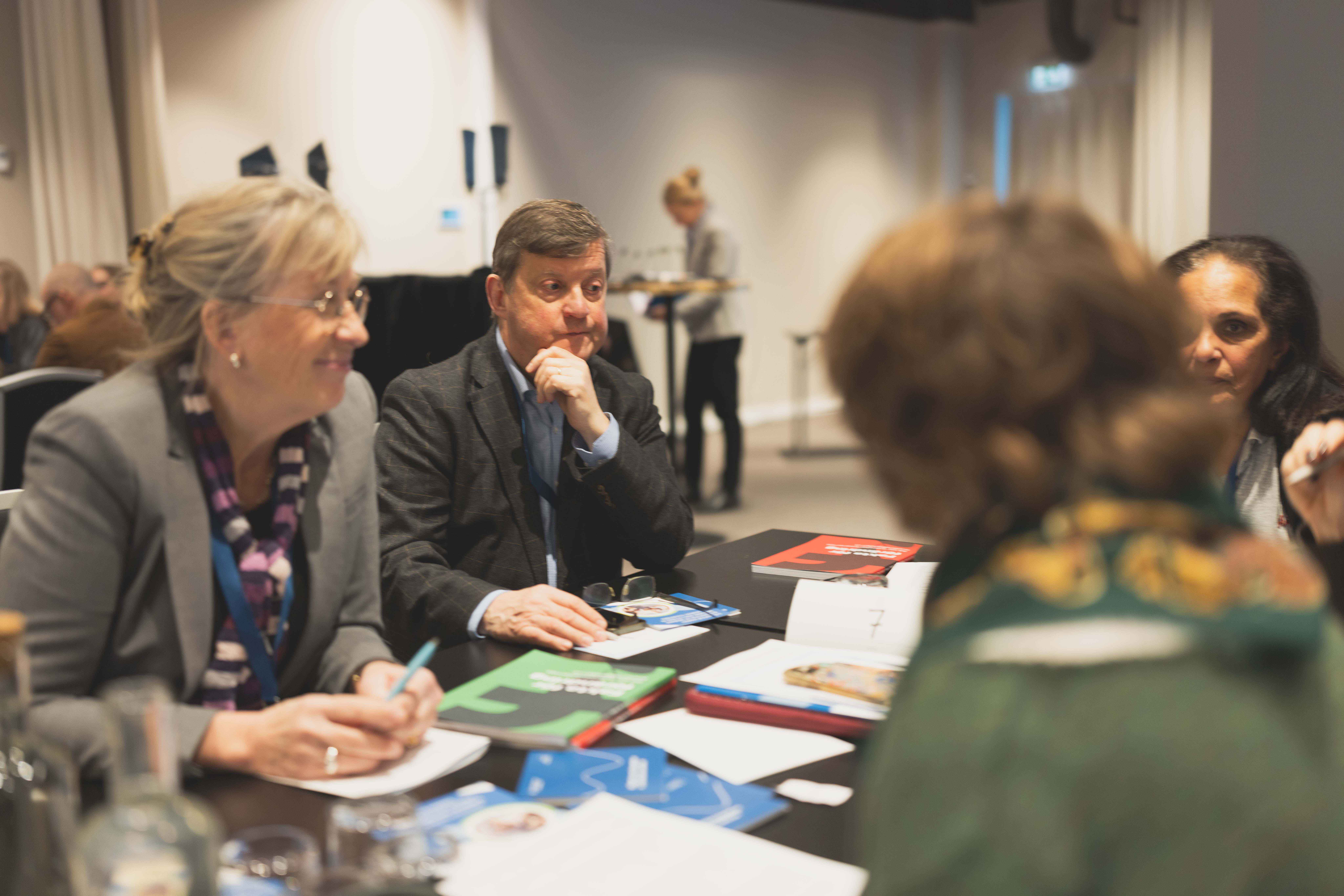
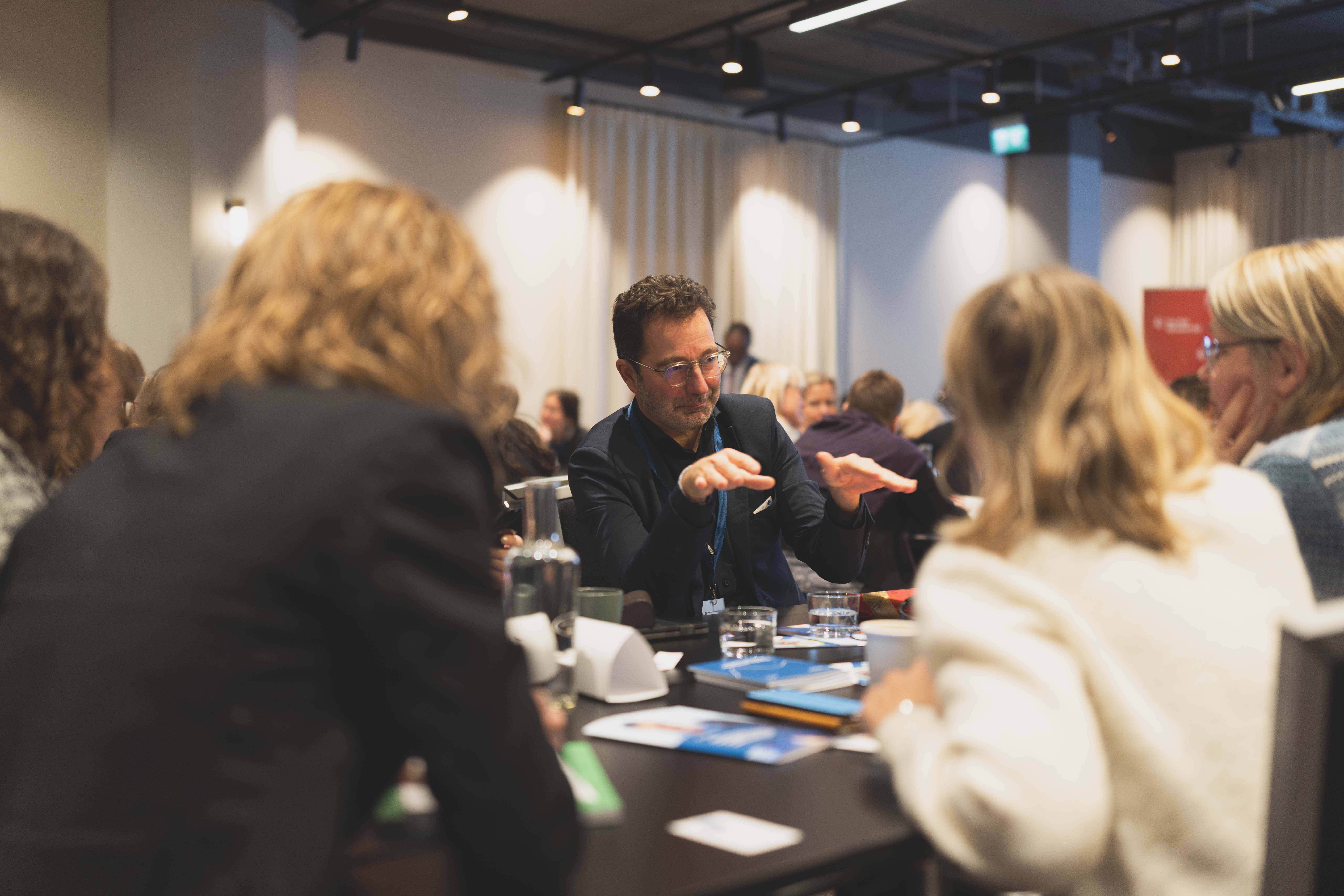
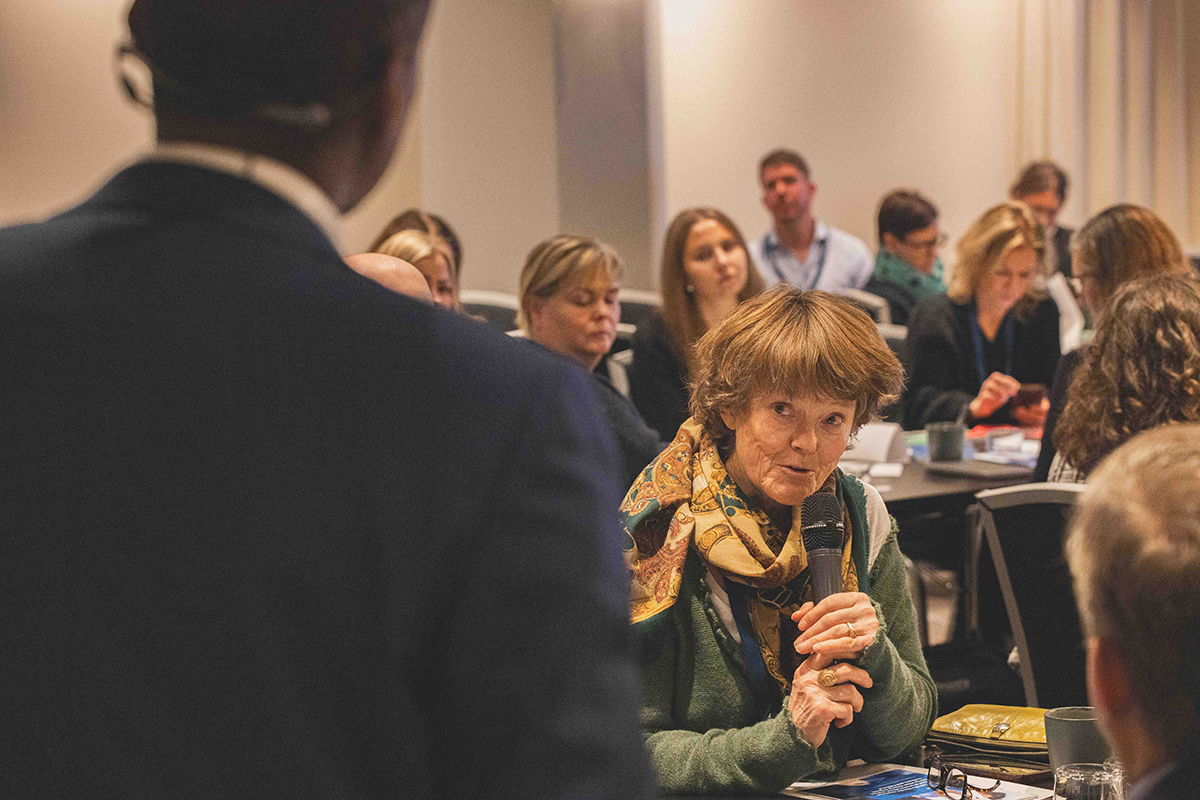
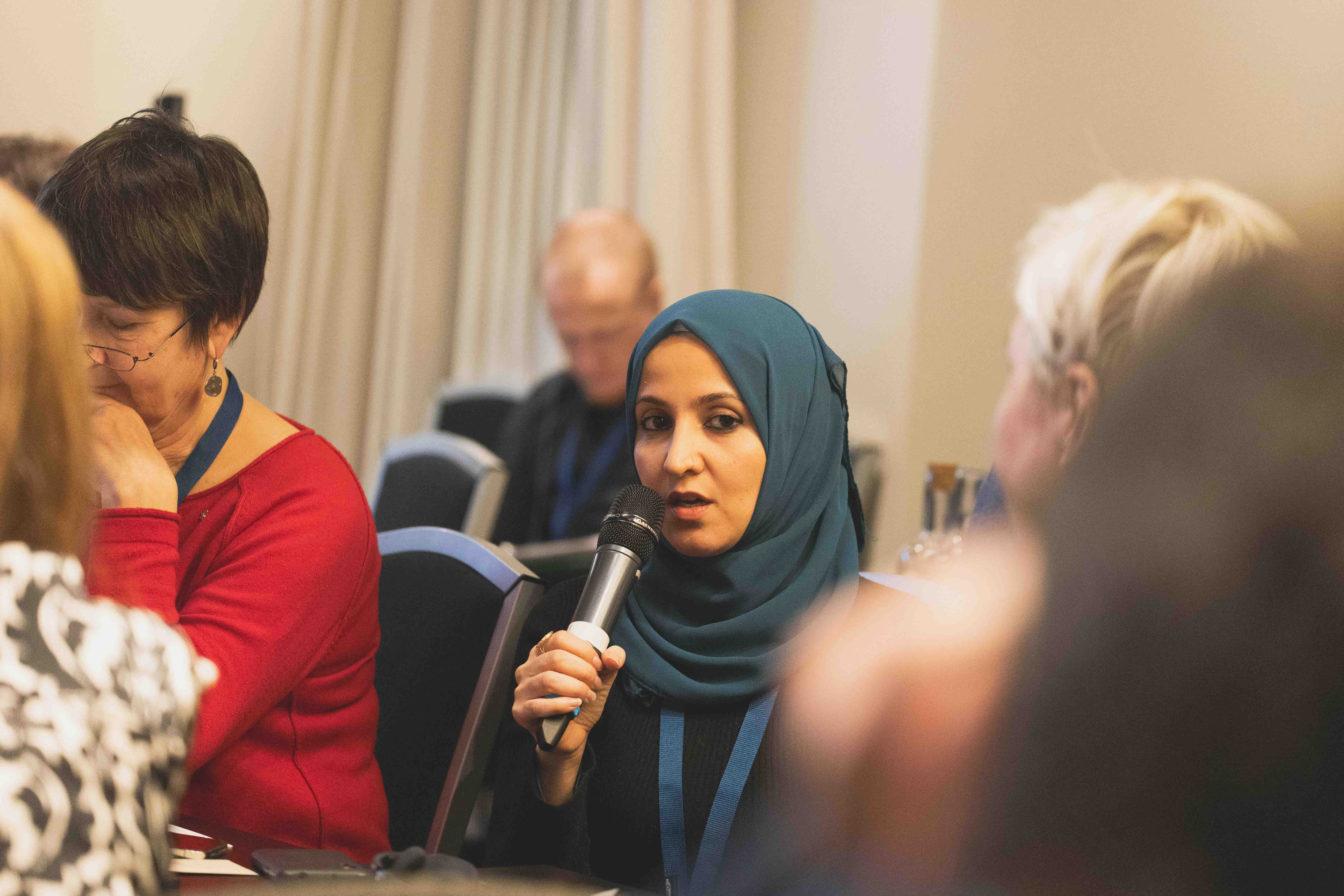
Photos from the event: José Calvente
After lunch, the attendees were invited to take part in a workshop of group discussions. Its aim was to address the challenges faced by migrant parents in integrating into the labour market and to explore ways of ensuring that both mothers and fathers share childcare responsibilities more equally.
The workshop was divided into two sessions. The first session highlighted two key challenges for the attendees to address: migrant fathers’ lower use of parental leave compared to native-born fathers and immigrant families’ lower labour market participation rates.
In the second session, the workshop attendees were asked to develop actionable solutions (policy or legislative) to address the challenges.
The Nordic Migrant Expert Forum, which consists of integration experts with a migrant background, facilitated the workshop. Swedish forum member Ahmed Abdirahman introduced the workshop and reminded the audience of the best way to discuss a sensitive topic like immigration.
– Framing really matters. No one is an expert on everything, and we are all human and can make mistakes. The way we discuss integration, particularly around costs and benefits, is crucial. The discussion should be open and honest and not be based on fear or worry. Context is also key. Every aspect of society involves costs. But migration and integration also bring opportunities that should be highlighted alongside the challenges.
– Framing really matters. No one is an expert on everything, and we are all human and can make mistakes. The way we discuss integration, particularly around costs and benefits, is crucial. The discussion should be open and honest and not be based on fear or worry. Context is also key. Every aspect of society involves costs. But migration and integration also bring opportunities that should be highlighted alongside the challenges.
The Chatham House Rule was applied to encourage open dialogue. This rule allowed information to be shared while keeping participants’ identities and affiliations confidential.