5. Political changes and integration policy in the Nordic countries
Keynote: Towards more restrictive, selective and temporary policies
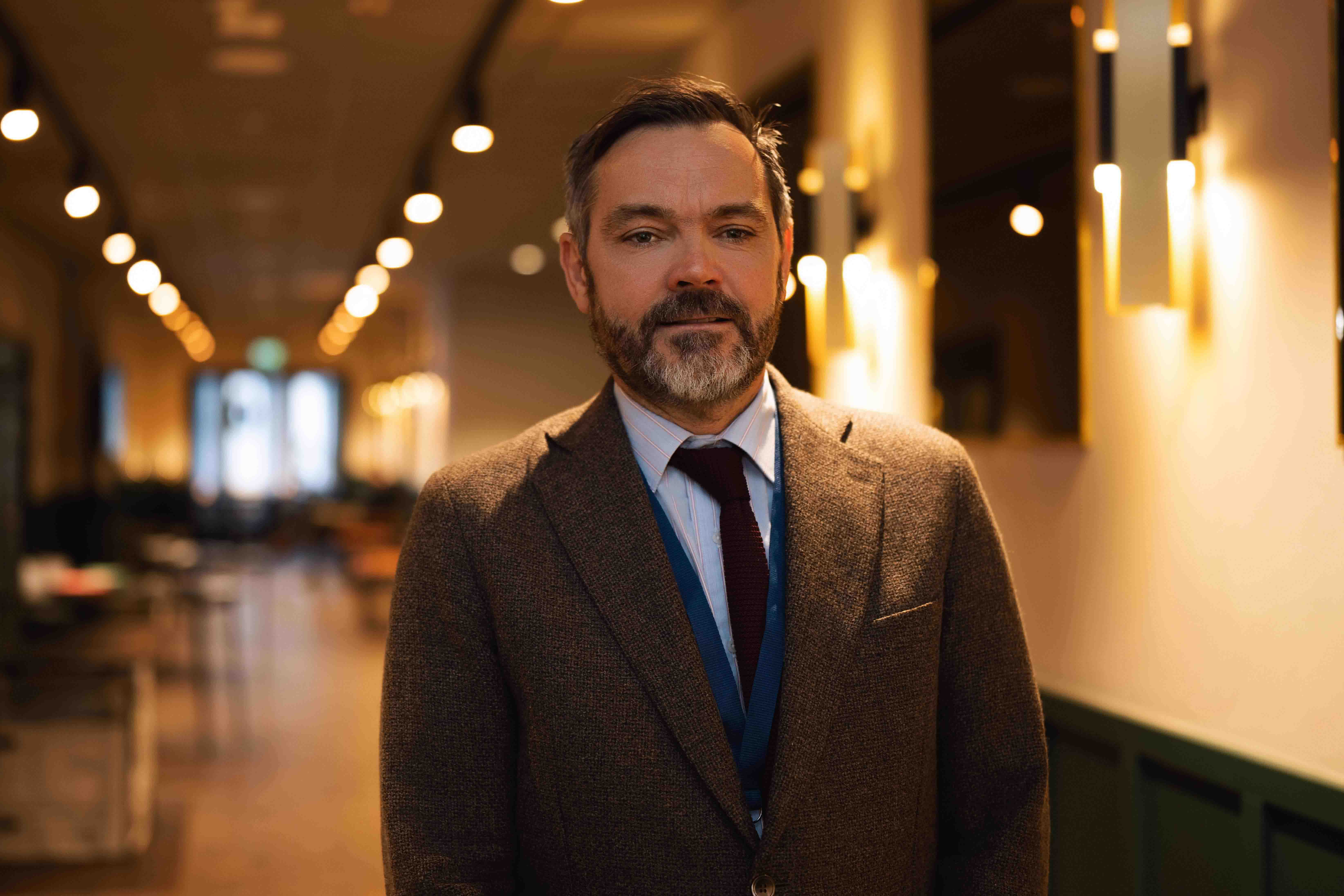
Kristian Kronstad, Head of Research, Norwegian Institute for Urban and Regional Research (NIBR), OsloMet, Norway
In his keynote speech, Kristian Tronstad focused on how the political winds regarding immigration have been blowing in the Nordic countries over the past few years, particularly since Russia’s full-scale invasion of Ukraine and the resulting increase in the number of Ukrainians seeking refuge. Tronstad specifically examined the immigration and integration politics of three countries: Denmark, Sweden, and Norway.
– Overall, the Nordic integration politics has become more restrictive, selective, and temporary.
To characterise the differences in policies on immigration and integration, Kristian Tronstad presented a scale ranging from restrictive to inclusive. Historically, Denmark has been on the restrictive side, compared to Norway in the middle and Sweden at the more inclusive end
To characterise the differences in policies on immigration and integration, Kristian Tronstad presented a scale ranging from restrictive to inclusive. Historically, Denmark has been on the restrictive side, compared to Norway in the middle and Sweden at the more inclusive end
Since 2022, immigration and integration policies in Denmark, Sweden, and Norway have shifted dramatically.
Sweden has experienced a paradigm shift. Once the most inclusive country in the Nordics and Europe, it has become one of the more restrictive nations for refugees from Ukraine.
Denmark, on the other hand, has shifted slightly towards greater inclusivity, while Norway initially followed suit but made a U-turn in the autumn of 2023, becoming more restrictive than it was initially. The relatively large influx of Ukrainians shifted the political debate in Norway, and the Norwegian government introduced restrictions aimed at making Norway less attractive to Ukrainian refugees.
– The Norwegian government removed temporary liberal exemptions for Ukrainians. For instance, Ukrainians were no longer allowed to bring their pets, several financial benefits were reduced, and settlement policies were made more restrictive.
In summary, Kristian Tronstad noted that the general trends in the Nordics lean towards more restrictive policies. In Sweden, this shift has been particularly pronounced. The paradigm shift relates more to broader political trends and a significant change in Swedish immigration policy since 2015. Unlike Norway, the political debate in Sweden regarding Ukrainian refugees has not been particularly prominent.
Denmark, on the other hand, has shifted slightly towards a more liberal settlement model but has largely maintained its existing immigration and integration policies despite the increased number of Ukrainian refugees. Kristian Tronstad notes that while the political debate on immigration in Denmark is highly polarised, it has not specifically focused on Ukrainians.
In summary, Kristian Tronstad noted that the general trends in the Nordics lean towards more restrictive policies. In Sweden, this shift has been particularly pronounced. The paradigm shift relates more to broader political trends and a significant change in Swedish immigration policy since 2015. Unlike Norway, the political debate in Sweden regarding Ukrainian refugees has not been particularly prominent.
Denmark, on the other hand, has shifted slightly towards a more liberal settlement model but has largely maintained its existing immigration and integration policies despite the increased number of Ukrainian refugees. Kristian Tronstad notes that while the political debate on immigration in Denmark is highly polarised, it has not specifically focused on Ukrainians.
Kristian Kronstad concluded that questions regarding refugees will remain on the political agenda for the foreseeable future.
– Politics and the world are changing rapidly. What we are witnessing now, not only in Ukraine but also in Syria, Gaza, Lebanon, and Sudan, suggests that the global flow of refugees will not decrease.
– Politics and the world are changing rapidly. What we are witnessing now, not only in Ukraine but also in Syria, Gaza, Lebanon, and Sudan, suggests that the global flow of refugees will not decrease.