Getting started with PSS

Establishing a strong foundation in circularity is key to beginning your PSS journey. This involves learning the key concepts of PSS, how it fits into business models, and its role in sustainability. In this section, you will find five introductory resources that explain these concepts and help you begin developing your PSS. These resources include toolkits, guides, handbooks, and interactive platforms designed to provide a solid foundation for building your PSS business.
The Nordic Circular Economy Playbook Toolkit
This toolkit offers a comprehensive guide to achieving circular advantages for businesses. Companies can use the playbook to better align with customer expectations, deliver outcome-oriented solutions, and enhance efficiency through technology and digitalisation. The playbook is particularly valuable in the Nordic manufacturing industry, covering five key sub-sectors: machinery and equipment, maritime, energy, transportation, and construction.
The Nordic Circular Economy Playbook includes nine tools and templates to help businesses develop, evaluate, and refine their PSS models. Four of these tools are automated Excel files that provide outcome calculations:
A Business Model Development tool A Value Case Tool A Capability Maturity Assessment Tool
A Technology Maturity Assessment Tool
In addition to these, the toolkit includes five organisational development templates:
Culture Gap Analysis: Ecosystem Partner Identification: Funding Requirement Analysis: Roadmap Development : A practical planning tool that outlines key activities, estimates timelines, and prioritises goals from short-term to long-term, helping companies chart their path towards circular transformation.Business Model Canvas:
The Circulator
The Circulator is a web-based tool that provides an overview of companies successfully implementing circular business models. Its core concept is that circular business models often involve a combination of strategies, organised into three main types:
Circular Value Creation: Value Proposition: Value Network:
In addition to these, the Circulator offers archetypes representing four key organisational focuses: customer relationships, product/process development, value network building, and sustainability. These archetypes help companies understand the different approaches to circular value creation.
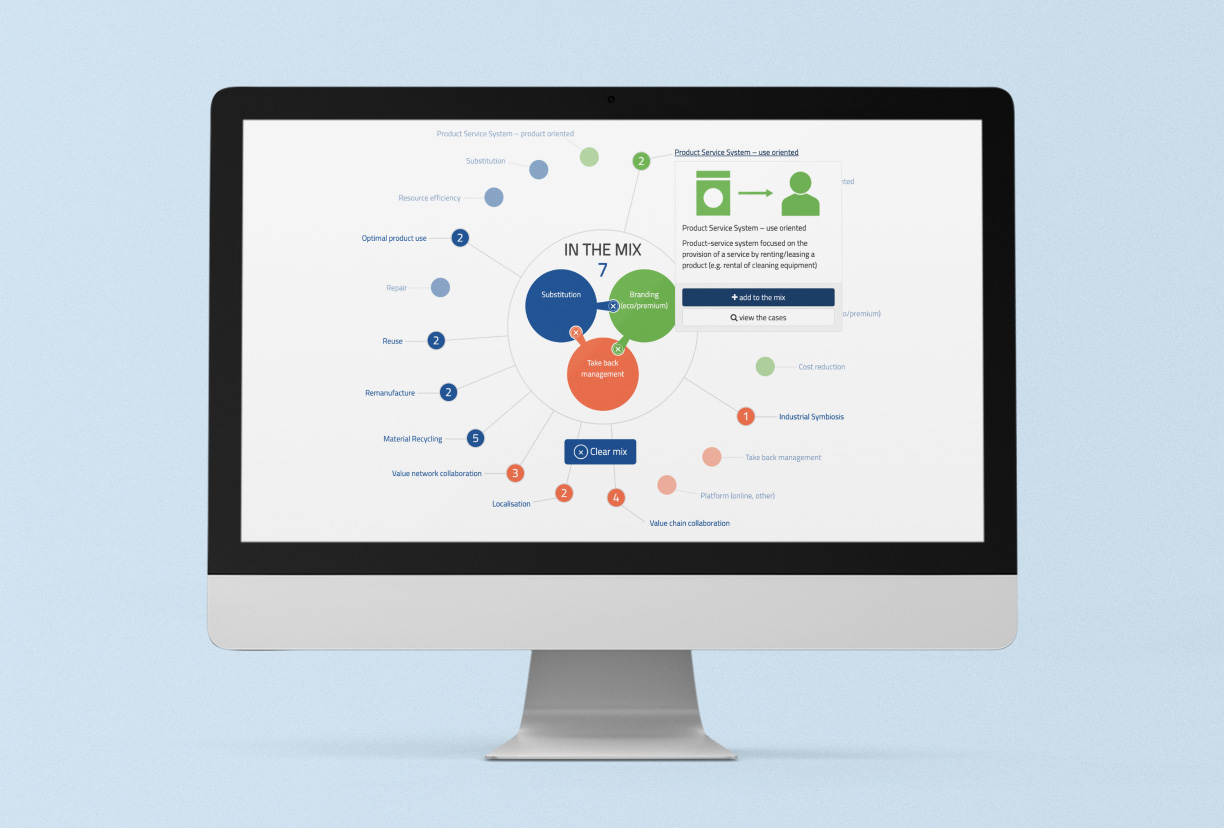
The Circulator mixer tool can be used to filter relevant cases.
Guide for Developing Product as a Service Business
The Guide for Developing Product as a Service Business was developed as part of the Paas Pilots research project (2021–2022) and incorporates practical insights from two Finnish companies, Pure Waste and Image Wear. Their real-world examples, drawn from the textile sector, showcase how to implement and develop a PSS model successfully. While the guide focuses on textiles, it offers valuable tools and tips that can be applied across industries, including B2C and B2B markets.
The guide offers practical advice on preparing for and implementing a PSS, illustrated through case studies. It covers the economic, societal, and environmental benefits of PSS and introduces a structured approach through its “Developer’s Path,” which consists of five key steps:
Getting Started: Understanding: Developing and Prototyping: Shifts attention to the concept itself, involving price setting, customer testing, visualising customer journeys, and identifying potential gaps.Refining:
Piloting and Scaling:
Each step highlights key considerations and actions for developing a product-as-a-service business and recommends suitable tools to support each phase.
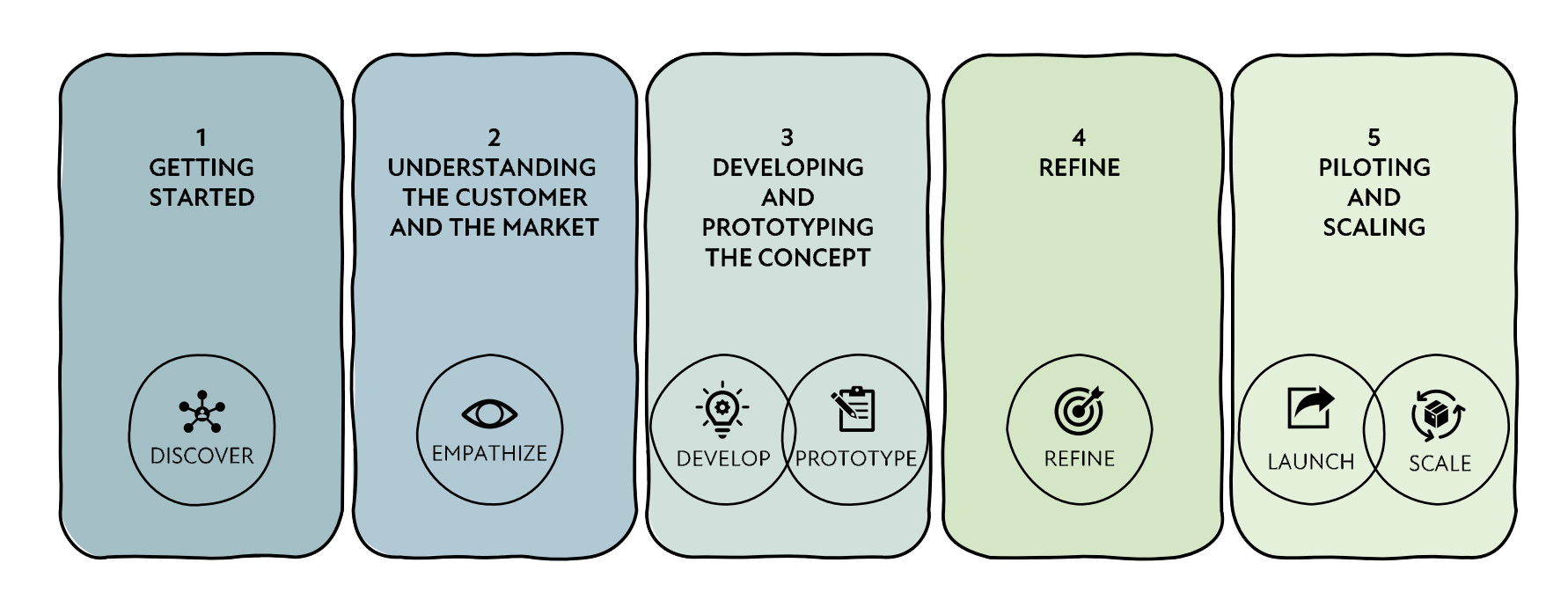
The five steps outlined in the Guide for Developing a Product-as-a-Service Business.
The Circular Design Guide
The guide’s primary aim is to shift the mindset of business owners, developers, and innovators towards circular approaches. By leveraging the Design Thinking methodology, it encourages businesses to explore sustainable, resilient, and long-lasting value creation within the Circular Economy (CE).
The Circular Design Guide offers a wide range of methods to support businesses as they transition to CE. These methods are grouped into four main categories – Understand, Define, Make, and Release – with six key activities within each category:
Understand: Define: Make: This category focuses on creating circular business designs. Activities include user-centred research, circular brainstorming, feedback mechanisms, material selection, concept development, and rapid prototyping. The User-Centred Research activity is especially valuable for PSS providers with B2C models. Interview templates help engage stakeholders to better understand their needs during the product’s lifecycle, ensuring that services are relevant and user-centric.Release:
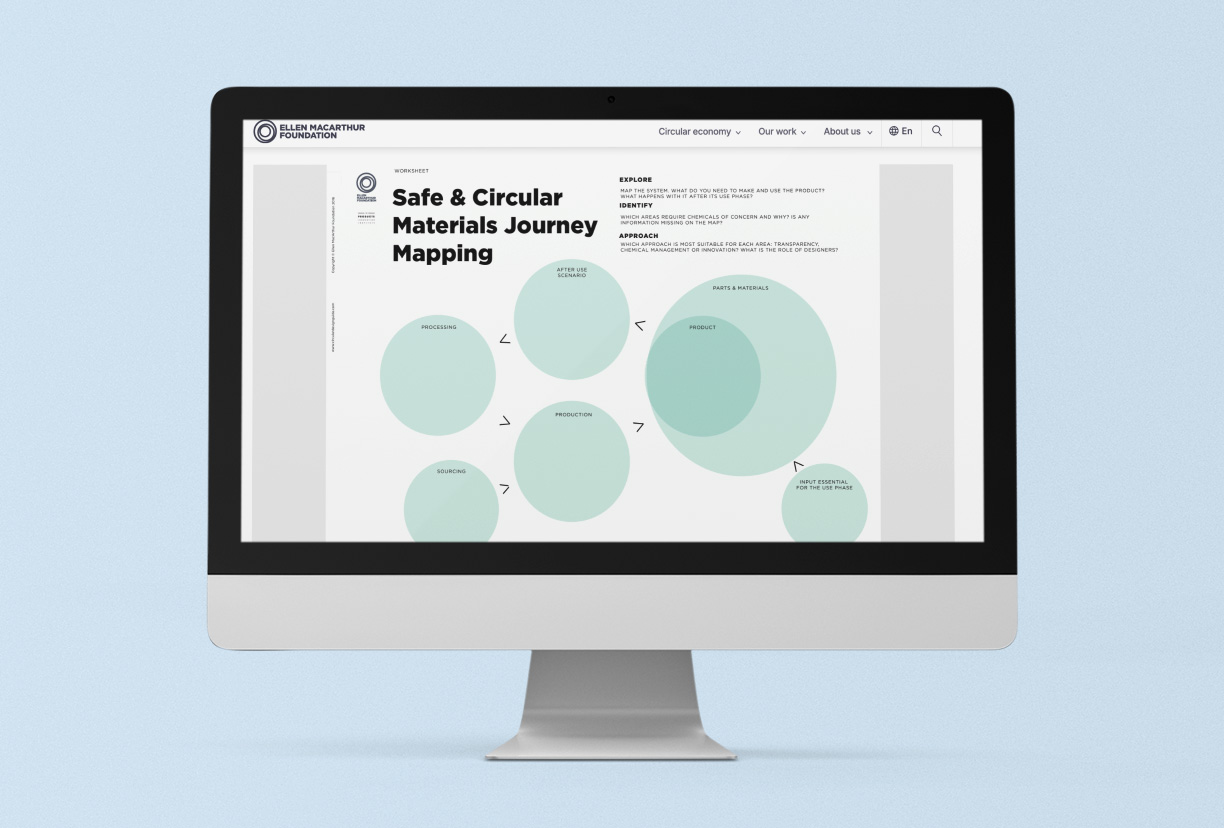
The Circular Design Guide also includes advanced activities like Materials Journey Mapping, Product Redesign Workshops, Material Selection, and Moving Forward with Materials. These methods, accompanied by descriptions, videos, templates, and exercises, are highly applicable to PSS providers, offering valuable tools for developing and improving circular practices.
Lean Service Creation (LSC) Handbook
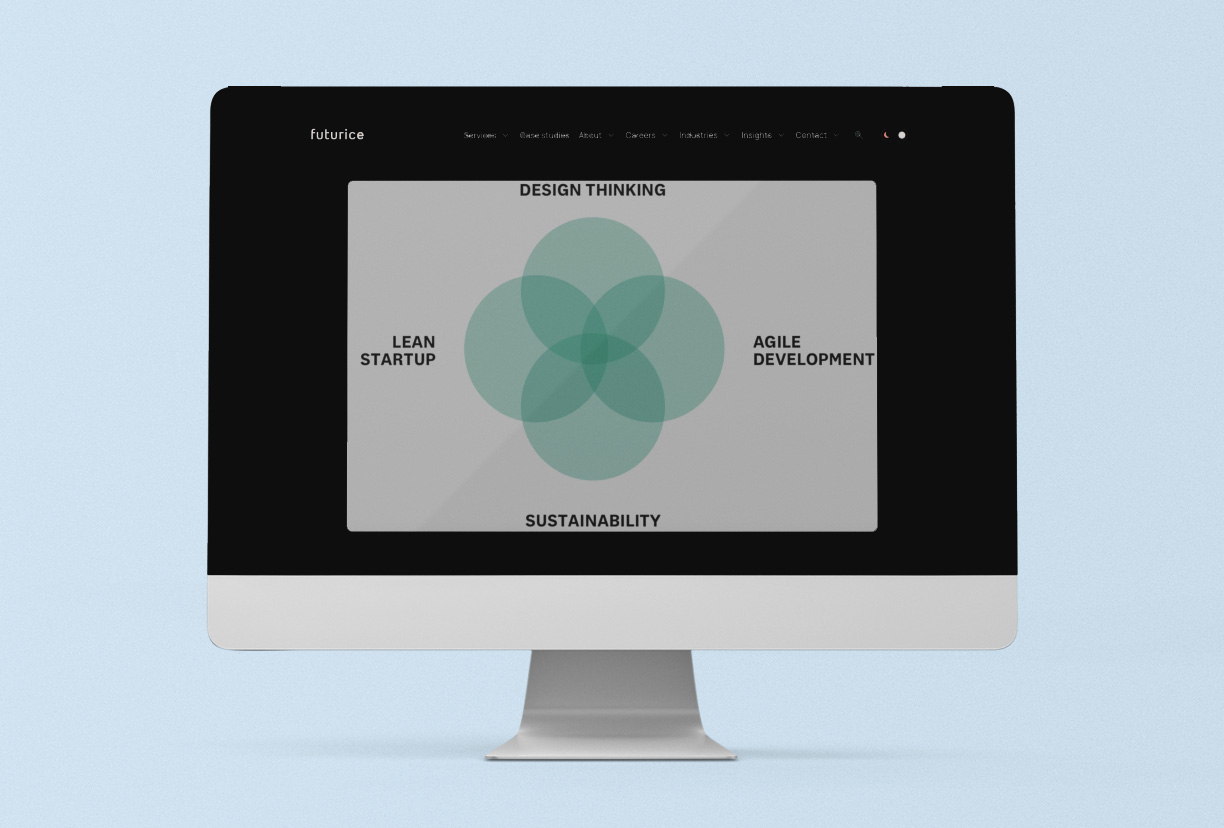
The Lean Service Creation (LSC) method is a well-established, open-source framework that combines lean business thinking, agile development, user-centric design, and start-up methodologies. Developed by Futurice, the LSC Handbook helps companies create innovative digital services that balance commercial viability with user needs – while also considering social and environmental impact. It can be used to build new businesses or iteratively improve existing services.
The handbook features seventeen different canvases, organised into seven phases, providing a structured approach to business development. These canvases guide companies through key processes such as co-creation, prototyping, experimentation, and problem-solving. They ensure that the right questions are asked and that solutions address real challenges. The canvases also facilitate teamwork, turning abstract ideas into actionable solutions.
The LSC process is centred around a business objective – often referred to as the design phase – where the entire team sets a common goal to ensure effective collaboration. The process is broken down into the following sub-phases:
User Needs: For PSS providers, this phase focuses on deeply understanding customers’ needs, emotions, motives, and values to create services that truly resonate with them.Ideation:
Concepting: Ideas are refined and strengthened to create more compelling and viable solutions.Business Model: Validation: Assumptions underlying the new concept are tested to ensure they lead to the desired outcomes and objectives.Wrapping it all up:
The broad set of canvases can be used as a complete step-by-step guide or selectively, depending on specific business needs. The handbook also includes tips for improving teamwork and a handy “cheat sheet” for conducting customer interviews, enhancing both the development process and user research.