8. Implications for Continued Work
To teach sustainability is a complex task, requiring multidisciplinary content knowledge, both from the natural sciences (physics, chemistry, biology, ecology) and social sciences (economy, political science). In addition, sustainability education has an ethical component, urging people to reflect on moral issues and political values, which traditionally have been the subject matter of ethics and political philosophy. But in this unsustainable contemporary time, values cannot be the subject of mere academic reflection but must be actively engaged with; some may need to be revised, others abandoned, and new values adopted.
SE can also be emotionally challenging, requiring students to learn how to feel compassion for ways they did not know existed. All in all, SE requires not only much learning, but might also require much unlearning, abandoning old ways of relating and behaving. If this was not enough, SE also has an active component where people learn to situate themselves and participate in local and global environments and processes, often challenging entrenched habits and consumer patterns, uprooting traditions and customs, and learning to share the world anew. To complicate things even further, the changes that are required are often controversial, met with resistance inside and outside of school, and opposed by propaganda backed by fake news. It is, therefore, not surprising that we see teachers in our survey say they lack competence and support for teaching sustainability and that their students are not interested in the topic.
Although complex and even frightening when viewed in this way, SE can also be addressed in a more piecemeal way. Almost everything we do has consequences for sustainability: what we eat, how we travel home and to work, what we wear, the things we buy, how we dispose of old things, what we do to add colour in our lives, etc. In everything we do, there is a learning opportunity which is relevant from the point of view of SE. But to see these opportunities, develop them, and follow them through requires skills, attention, collaboration inside and outside of schools, and time. Some of the inspiring examples that we describe in Chapter 3 might give insight into where such opportunities lay and how they can be cultivated into real educational moments.
8.1 Policy, Curricula, and Educational Vision
Sustainability-related education policies have often aimed at changing the students’ attitudes and behaviour to match predefined aims. But what are these aims? And what are the values on which those systems are based?
Some scholars have been sceptical about the promise of education as a response to current crises, pointing out that as a response it is slow and, also, that it may actually be moving things in the wrong direction. Sterling is among such scholars, arguing that conventional education seems to be sustaining unsustainable values and practices (2001). Thirty years ago – the same year the first Eco-Schools were founded – David Orr wrote that if we would listen carefully, it might “even be possible to hear the Creation groan every year in late May when another batch of smart, degree-holding, but ecologically illiterate, Homo sapiens […] eager to succeed are launched into the biosphere” (1994/2004, p. 5). These are not mere pessimistic remarks from the past; it is actually well-documented that there are “clear, positive correlations between educational accomplishment and per capita CO2 emissions” (Rappeley et al., 2024). The data is truly discomforting as shown in Figure 17.

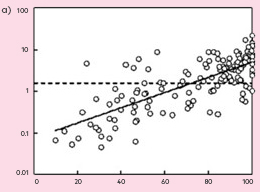
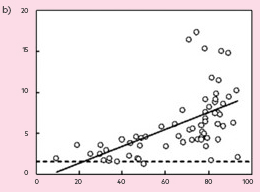
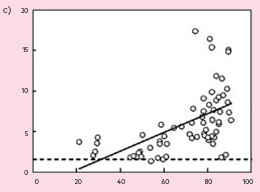
Figure 17: Relationship of (a) the lower-secondary completion rate with CO2 emissions per capita. Relationships between the ratios of fifteen-year-old students having (b) basic literacy and (c) numeracy and CO2 emissions per capita. A dotted line denotes the CO2 emission per capita in 2050 in the IPCC scenario leading to 1.3–2.1 Celsius degree temperature increases. (Rappleye et al., 2023, p. 2)
The modern educational paradigm follows the conventional understanding of the PACK model described in Chapter 3. Within this paradigm, the aims of education are brought in from outside the education system, often catering to various social and economic forces that may be contrary to the aims of education or what teachers find important. When asked about possible hindrances to teach sustainability, 47% of the respondents in our survey say that ‘the curriculum is full of other things’. David Hursh et al. argue that educational systems have been shaped by neoliberal tenets.
Teaching that is constrained by prescribed curricula and standardised tests is neither in line with the idea of transformative learning nor educational ideas grounded in the Bildung tradition. Whether at the practical level of classroom teaching or as school leaders, administrators, or researchers, educators must reflect critically on what education is aiming at and how it proceeds towards whatever aims are deemed worthy.
Even if people believe they have good reasons (knowledge) to change their own behaviour, and want to do so, they do not always act that way. In a large meta-study, Heimlich et al. (2014) have examined why knowledge-based belief does not appear in practice. Action requires the intention to act, but it is influenced by the prevailing norms and attitudes in society, the context, and elements like values, emotions, and experiences. Sustainability issues are complex and difficult to understand, and it is not always easy to know what the most sustainable choice in private life is, let alone in society. If the answers to the questions How can we live sustainably? and How can we educate towards sustainability? were easy, the world would have become sustainable long ago.
The language of competencies has become mainstream in educational policy discourse, with competencies sometimes further defined in terms of values, attitudes, skills, and knowledge. We see this in international programs such as the GreenComp of the European Commission and the Competences for Democratic Culture of the Council of Europe, but also in the OECD Educational Compass. But if we look around us in the so-called well-educated countries of the affluent north, it is obvious that people are too competent, have too much agency, and are too powerful. It is in virtue of our competencies that we are ruining the living conditions for humans on the planet. Has the success of education turned into horrors for humanity?
Perhaps the question is not about how much competence we have, but which competencies or what kind of competence. Have we possibly developed the wrong competencies? Perhaps we lack competencies related to caring for nature, appreciating the beauty of the world, and of being satisfied with what we have and who we are. We thus agree with The International Commission on the Future of Education.
8.2 Educational Leadership for Sustainability
Educational leaders are in a key position to promote change in the world through education. While grand programs such as the UN SDGs, GreenComp, or the OECD Compass aim at change from the top-down – or outside-in – educational leaders play a crucial role for changing the educational frameworks from the inside out. A tree won’t grow fresh leaves if the root system is dying. The roots of the educational systems are in the daily practices in schools. When teachers report lack of facilities, time, and support, they are reporting lack of nourishment for the roots of the entire system. This may entail initiating change processes on many levels, like global, national, and institutional (Wolff et al., 2024). Leaders must be willing to promote change of legacy, strategies, but also didactics, and the daily life in schools and other educational institutions. But leadership comes in many forms and the importance of peer learning also indicates that individual teachers can become leaders in their narrow circles. Educational leadership is “about shaping institutional educational cultures in which people can safely mature and flourish together” (Wolff et al., 2024, p. 82).
Real change will not happen unless policies and practices are simultaneously and steadily reshaped from the top to the bottom and the other way around. Therefore, everybody can become a leader of the educational process, a pedagogical leader towards sustainability, who promotes others by pedagogical means.
When the teachers who responded to our survey reported that they lack time and support, that the curricula are overloaded, and that they cannot find time to engage in meaningful work towards sustainability, we see this as an indication of a lack of professional agency which curbs the potential for educational leadership. Therefore, even if Wolff et al. (2024) address higher education, the quotation below is relevant for all educational institutions.
Greta Thunberg, a schoolgirl who started the global movement Fridays for Future, is an example on how change can be initiated. Other movements have been small scale in the beginning, such as the Eco-Schools movement which began in only four countries but has grown without being led by a single leader but by commitments to values and a vision. In the book Blessed Unrest: How the Largest Movement in the World Came into Being and Why No One Saw It Coming, Paul Hawken describes a similar kind of leadership (2007). We might refer to this as leadership without leaders, since there is no single charismatic leader who kindles the spirit but rather shares a devotion to a common cause. Today, when so many world habitants are digitally connected, the power networks develop further possibilities for movements to grow. Curriculum development is usually much slower; conventional policy processes are vulnerable and may be left behind if they do not acknowledge what people call for.
At times when leadership without leaders is important, the teachers’ role is perhaps more important than ever; in the classrooms, they have the power to choose the teaching topics and shape the space as an educational setting. They also have an obligation to teach students about what is most urgent to know in the world today. Sustainability is not only about learning, but also about re-learning and un-learning. And the learning that needs to take place concerns not only knowing; it is also about feeling and being. Thus, when we talk about educational leadership, we must also include what we might refer to as ethical and emotional leadership.
8.3 Conflicting Norms and Traditions
SE has its roots in environmental education which became a distinct discipline in the 1960s, prompted by increased awareness of environmental problems (Gough, 2013). The first UN conference on the environment was the Stockholm Conference in 1972 (UN, 1973). In 1977, the UN organised a special conference on environmental education in Tbilisi (UNESCO, 1977). Environmental education was by and large based on scientific content and skills; it was not political and emphasised spending time in nature, assuming ‘awareness of nature would lead to changes in individuals’ attitudes and behaviours’ (Jordan et al., 2023; Stevenson et al., 2016; Tryggvason, et al., 2022). This has changed and SE is not only multidisciplinary – i.e. bringing together content from diverse disciplines such as natural science, social science, and philosophy – but is conceived of as transdisciplinary where the traditional boundaries between disciplines begin to fade away and a new kind of understanding emerges.
In the context of SE, transdisciplinarity entails a complex collaboration across the traditional academic boundaries of the natural sciences, social sciences, and humanities, as well as between the boundaries between scholarly work, public activities (and even activism), and personal life. Orla Kelly and colleagues highlight this transdisciplinary nature of SE in a paper titled “A transdisciplinary model for teaching and learning for sustainability science in a rapidly warming world.”
From the survey, it is difficult to infer directly how teachers work. However, given that 79% of the respondents in the survey focus on ‘environmental issues’ while only 46% mention ‘social issues’ and as little as 14% ‘political values’, the approaches that teachers take are perhaps more in the spirit of multidisciplinary work than transdisciplinary. These numbers are at least not indicative of a widespread practice of using social science “to situate considerations of power, justice, and historical responsibility at the centre of sustainability discussions” as Kelly et al. suggest. Likewise, the half of the 15% who do not teach sustainability give the reason ‘It is not part of my subject’, indicating firm disciplinary boundaries.
Many of the results in our study correspond with Sundstrøm et al.’s (2019) study among Norwegian teachers. The teachers in that study declared a lack of competence and support when it came to teaching sustainability issues, and they especially felt a lack of confidence in cross-disciplinary teaching. Therefore, their teaching was more about telling facts than triggering the students’ own thinking. The results also match with a study by Bjønnes and Sinnes (2019) among staff and students at four Norwegian secondary schools. Their study uncovered a lack of resources and time for the implementation of sustainability as a cross-disciplinary topic in schools. They found that responsibility for sustainability was dispersed, and no one took the initiative but kept waiting for others to do the work.
Educational policies and curricula are often a conglomerate of several traditions and theories (Schaffar & Wolff, 2024), a compromise between conflicting views or even an aggregation without any unifying view of what they are addressing. Carlsson (2024) sees the twinning of the ideas of competence and Bildung as a general Nordic problem. The Finnish National Curriculum for Basic Education is a case in point. The basic principles of the curriculum are based on the Bildung tradition, whereas other parts include a skill/competency conception of education and a constructivist conception of knowledge. All these perspectives are tricky to combine for the teachers, who often must implement the curriculum alone in their own classrooms. If the curricula contain various worldviews, views of knowledge, and what it means to be a citizen of the country or the world, this brings a mixed message to both teachers and students and makes their daily work difficult. No wonder the pupils, who are forming their own identities and their conceptions of the world withing this chaotic environment, are often confused about their role.
Teachers must make choices, often on the go in the flow of their work which may take sudden and surprising turns, several times a day. In such circumstances, it may be easier to hold on to the subjects and leave behind cross-curricular, vaguely formulated, or complex topics like sustainability and democracy. Even if cross-curricularity is a recommendation (as in the Finnish curriculum) or sustainability is defined as a fundamental pillar of all education (as in the Icelandic curriculum), the curricula give few tools on how to implement this approach (Schaffar & Wolff, 2024).
To implement cross-curricular topics like sustainability, teachers need support from the teaching community.
The PACK model discussed in Chapter 3 speaks directly to this reality; a sustainable school and the didactic implementation of sustainability is the work of many people and cannot be imposed as an expert advice from outside. Educational design and reform must be firmly grounded in the practical reality of teachers and other educators; cross-curricular teaching will only be developed where teachers have the possibility to discuss, plan and try out new ways teaching together. The role of experts in the field, whether those generating the scientific knowledge or providing pedagogical and technical skills, must be in the form of support in the learning process and not simply in the form of prescribed knowledge or skills to be transferred to the students. The same applies to administrative staff and others who form the educational community with teachers and students. The emphasis on whole school approach and learning communities reflects this view.
8.4 Weak Status of Sustainability in Teacher Education
SE is certainly demanding. So far, we have mainly been talking about what happens when the teachers and other players in the educational system have, so to speak, already arrived at the scene. But how are they prepared for the diverse tasks that await them? In the report Mapping Education for Sustainability in the Nordic Countries, programs on teacher education in the Nordic countries were scrutinised, revealing lack of emphasis on sustainability in teacher education.
In a study on teacher education in three Nordic countries (Finland, Iceland, and Sweden), Seikkula-Leino et al. (2021) similarly found that sustainability and pro-environmental issues were very limited in the primary teacher education curricula and not in line with urgent problems like climate change. In the three years since 2021, things have improved but the fact remains that a majority of teachers who work in schools, from preschools through upper secondary education, have had little or no formal training in SE. This may, in part, explain why NGOs play such a big role when it comes to teaching sustainability and developing a more sustainable school culture.
When teachers in the survey were asked what influenced their understanding of sustainability, almost 70% mentioned ‘the news’ and ‘documentaries and science programs’ while less than 20% indicated that ‘sustainability’ was part of their teacher education and ‘my own children’ (22%) score slightly higher than ‘courses on sustainability’ (21%). Given the complexity of the topic, not only the complexity of sustainability as such – or SD – but also the complexity of SE, these numbers are particularly worrisome. But these numbers are not surprising, given the weak status of sustainability in teacher education. Although it is important to improve teacher education in this respect, teacher education is a slow way of remedying the situation for the teacher profession as a whole. Along with pre-service sustainability teacher education, in-service teacher education is also needed. The same is true for principals and people in other leadership positions within the education system. Their education, both initial education and continued education, must include a clear fucus on sustainability as an educational aim and practice.
Continuing or in-service education for teachers and educational leaders can take various forms, and probably must take various forms if the required change is to take place. This can include formal education, such as specific courses and programs, but also informal education through peer learning and collaborative work within or across institutions.
As we finish this report, an article relating to SE is published in the Norwegian journal Utdannelsenytt (“educational news”). The text is very critical of the schools today, and the authors Gitte Cecilie Motzfeldt (teacher educator and researcher) and Judith Klein (researcher and international and national developer of SE) (2024) ask: “Is it possible to create inner motivation and real commitment to the big questions of our time when we measure, assess and compete at the same time?” Even if the schooling takes much longer than before, there is no time to think and discuss big issues, the authors claim. They state that, to be able to equip the rising generation with the means to handle burning global problems and search for their solutions, “we as educators must … take it seriously to think critically and act ethically, and free ourselves from obedience to the hamster wheel and competence goals.” To rephrase their worries, we might say that they see great challenges to meaningful SE while schools are stuck in the conventional educational paradigm.
8.5 Continued Research
The survey presented in this report is an attempt to understand what the general situation is regarding SE in compulsory education in the Nordic region. Our survey must be seen as a first step, and as such it has raised more questions than answers. Moreover, SE in compulsory schools is a moving target – and a target that needs to be moved – for responses to be in line with the reality of educational practice. The information gathered through a survey like this must be collected on a regular basis. Evaluations of SE need to guide the development of didactics and teaching approaches. Pretty words like strategies and curricula in policy documents are not enough to make a change. Without evaluations, no one knows the outcome of revised curricula regarding sustainability.
The inspiring examples in Chapter 5 show that teachers and other educators in the Nordic region are working creatively towards sustainability, and the same can be seen in small-scale research. However, to move things in the right direction, we also need to know where the fault lines are. Thus, perhaps the most important data in the current survey is on how many teachers do not teach sustainability and why. In the survey, 15% of the respondents said they did not teach sustainability. This number is probably lower than the actual percentage since one can assume that those not teaching sustainability are less likely to take the time to answer a survey on SE than those engaged in such teaching. But whether the numbers are accurate, 15% is still too high a number, not least when half of those say that sustainability is not their subject. It is understandable that some do not know how to relate sustainability to their subject or that they lack time and find the curricula overloaded. This, we believe, points to a systemic challenge that individual teachers should not be left alone with. In an extremely unsustainable situation, saving the planet must be the highest priority but no one can save the world alone.
Like strategies, curricula, and other policy documents, textbooks tend to focus on individuals and their efforts towards more responsible living. At least Malmberg et al. (2018) found this tendency in Swedish textbooks. Their study shows that textbooks often depoliticise sustainability issues and only see individuals as responsible, instead of viewing the responsibility as a societal and political issue. The complex sustainability dilemmas definitely cannot be solved by merely trying to change individuals and their lifestyles. Individuals are parts of greater systems in which they are entangled, and students of all ages need political insight, empowerment, and to learn how to become participants in decision-making and solving of joint social, and even global, sustainability problems. Therefore, a topic that also needs thorough examination and development are Nordic textbooks in various subjects and how they deal with sustainability issues.
What our survey clearly shows is that Nordic teachers are a diverse group, some working creatively with the whole school and even the whole community towards sustainability, while others need help and guidance in how to implement sustainability in schools. They need training in both theories and methods, and they need knowledge. In addition, they need support from experienced teachers and opportunities to work in teams with colleagues. To become an experienced and confident sustainability teacher takes time, and the teacher must have that time. A lot of resources and efforts have been offered on digital training, and sustainability cannot be regarded as less worthy than the development of digital skills. Sustainability cannot be compared with school subjects either. The topic overshadows everything else students need to learn in school, since without a planet nobody needs a school.