13 Space
13 Space, Sweden
Building use | Office | Stories above ground | 5 |
Location | Rydbergs torg 11, Lund | Basement area | — |
Client | Wihlborgs Fastigheter AB | Structural system | Prefabricated concrete beams, with wood and steel pillars |
LCA consultant | Projekt Engagemang (PE) and Solenco AB | Façade type | Glass and wood |
Year of completion | 2023 | Roof type | Flat roof |
Reference area | 7,400 m2 (gross floor area) | Heat demand /source | District heating |
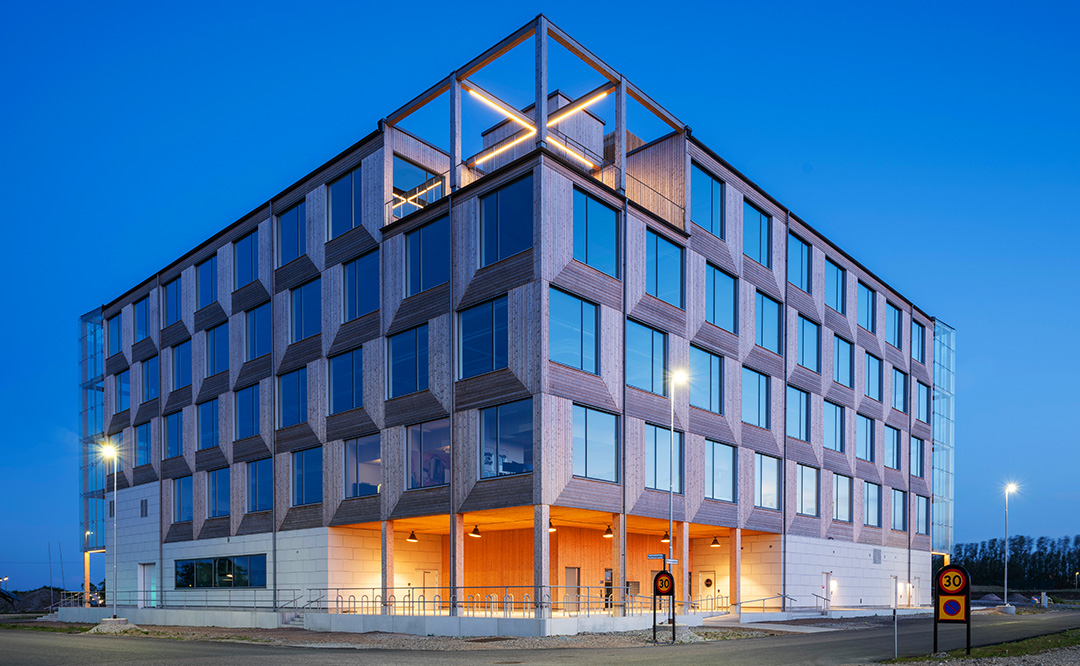
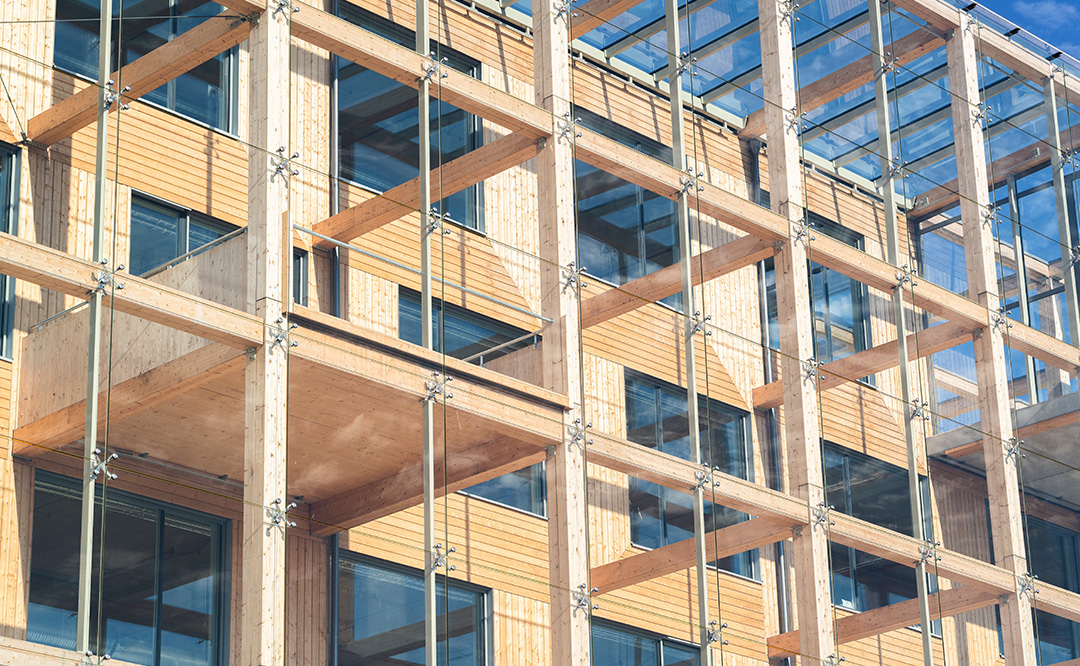
Space is an innovation centre with offices and lab activities. It has achieved NollCO2, Miljöbyggnad GOLD and WELL certifications. Reducing the climate impact of phase A1-A3 has been pursued at various levels throughout the project. Such efforts include using steel with a high recycled content, using of climate-enhanced concrete, constructing the façade in-situ with cantilever walls instead of installing a material-intensive façade system, and using a glulam and steel combination for the frame system. In general materials have been chosen based on a thorough comparison focusing on climate impact and costs. Steps were taken to reduce climate impacts during the construction phase (A4-A5), for example, using prefabricated solutions for the HDF joists to reduce waste and spillage, ensuring that the building was airtight before starting the dehydration process thereby reducing energy consumption, purchasing renewable electricity from hydropower and district, and raising project stakeholder awareness of the energy, water and waste generated by the project. Space is built with modular dimensions that provide flexibility for future floor plan changes in connection with tenant adaptations. The building layout and the building’s ventilation system design enhance this flexibility. The protection and durability of materials have also been considered, for example by protecting the wooden façade structure with a double façade and using durable and high-quality surface finishes.
Assessment method
LCA scheme compliance | Miljöbyggnad, WELL, and Noll CO2 certification |
LCA tool version | One Click LCA |
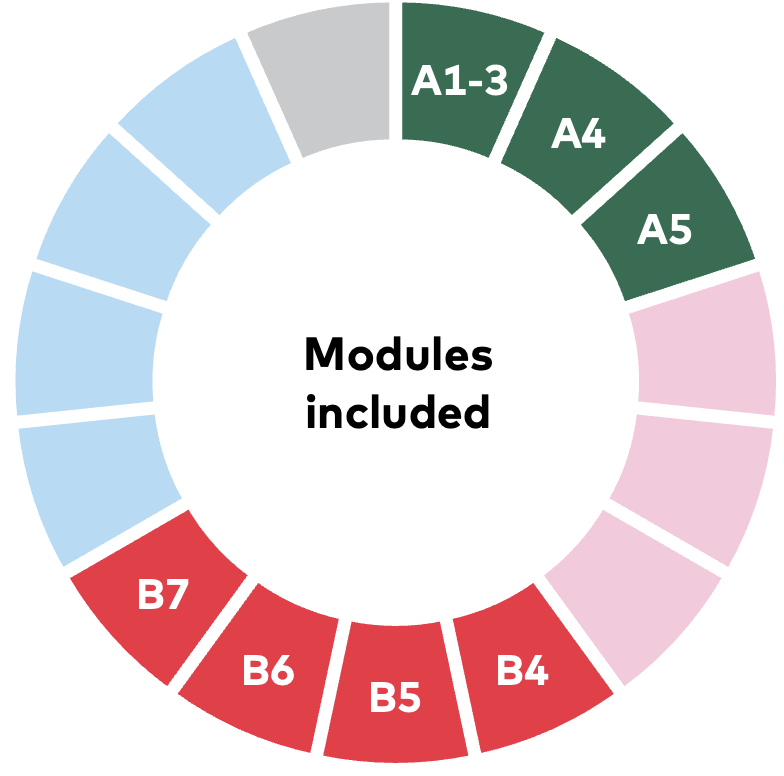
Life cycle stages included | A1-A5, B4-B7 |
Material emission data | Generic Swedish database, EPDs |
Material decarbonisation scenario | — |
Energy calculation method | Energy simulation method for Noll CO2 certification |
Energy, dynamic scenario | Noll CO2 certification |
LCA results: Life cycle modules
[kgCO2e/m2 reference area * year]
%
[kgCO2e/m2 reference area * year]
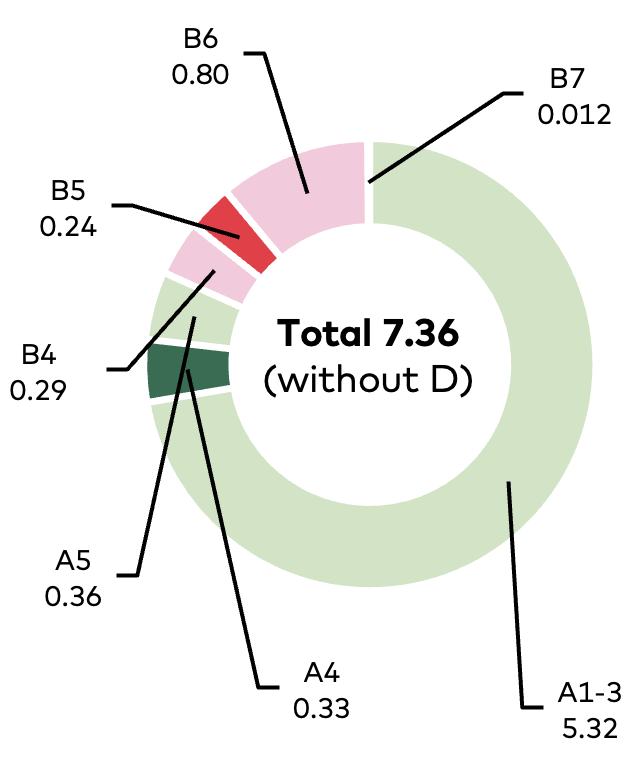
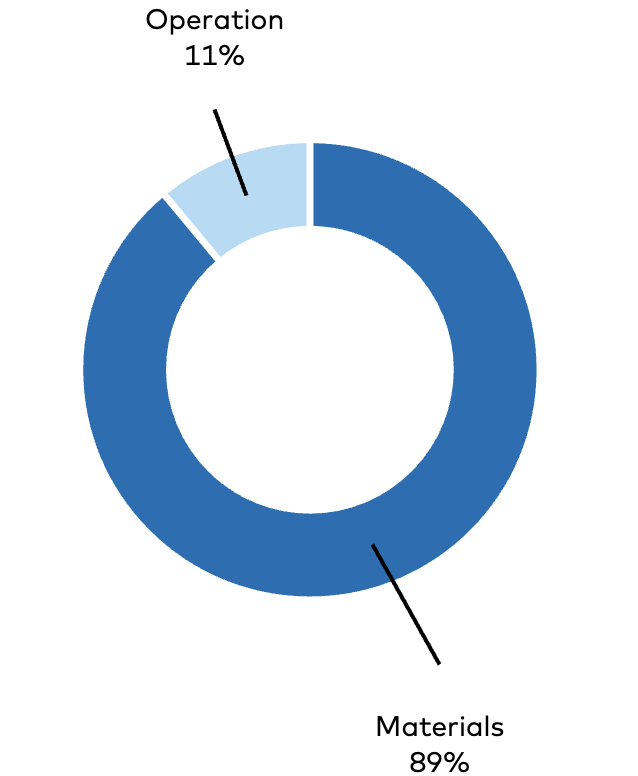
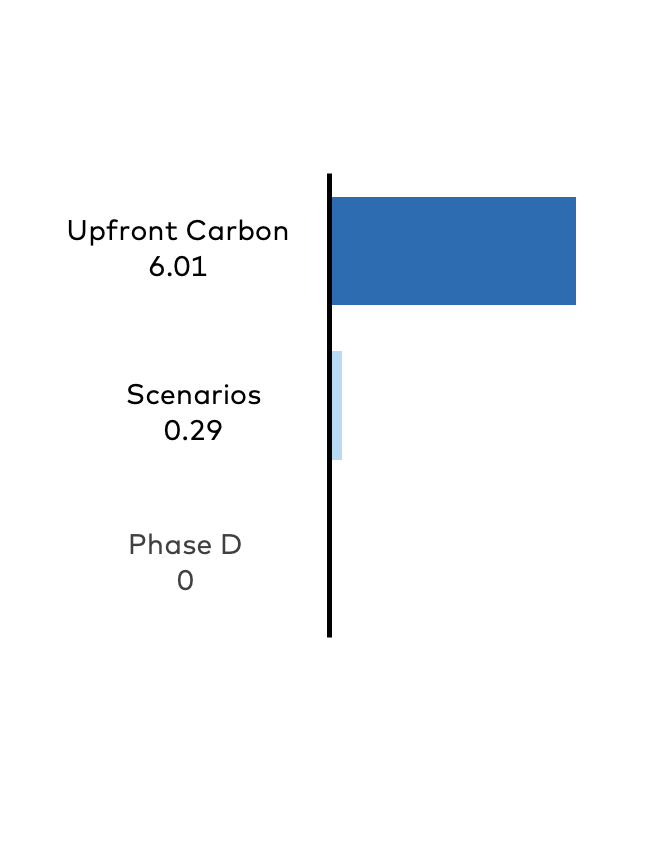
The results shown here are from the NollCO2 certification. The system boundary covers almost all life cycle modules, where the product stage is dominating followed by energy consumption. All materials are reported, including building energy systems/installations such as electrical cables, HVAC, water pipes, sewage pipes, heating systems, lifts and solar PV panels. The NollCO2 report states that end-of-life stages, C1-C4, are included in the assessment. However, the impacts are all set to zero.
In the second figure, Operation includes B6 and B7, while materials include A1-A5, B4-B5.
B6 and B7 have very low impacts, mainly because in the used version of the NollCO2 certification the impact from energy use is reduced annually until assumed zero in 2050.
In the third figure, Upfront includes A1-A5, scenarios include B4-B5, and D is shown separately had it been included in the assessment.
In the second figure, Operation includes B6 and B7, while materials include A1-A5, B4-B5.
B6 and B7 have very low impacts, mainly because in the used version of the NollCO2 certification the impact from energy use is reduced annually until assumed zero in 2050.
In the third figure, Upfront includes A1-A5, scenarios include B4-B5, and D is shown separately had it been included in the assessment.
LCA results: Building elements
GWP / reference area [kgCO2e/m2 reference area]
The results shown here are based on the Miljöbyggnad certification. All materials are included, but technical components and piping for heat, water etc. are not included
Material inventory: All materials
Life cycle modules: A1-A3
Life cycle modules: A1-A3
The internal frame also contains internal balconies in the atrium.
Building element quantity / reference area [kg building element / m2 reference area]
GWP of building element / building element quantity [kgCO2e / kg building element]
The results shown here are based on the Miljöbyggnad certification. All materials are included, but technical components and piping for heat, water etc. are not included.
Material inventory: All materials
Life cycle modules: A1-A3
Life cycle modules: A1-A3
Building element quantity per building reference area is a measure for the material intensity, while element impacts per element quantity is a measure for the elements’ carbon intensity relative to their weight.
The internal frame also contains internal balconies in the atrium.
LCA results: Products
Product quantity / reference area [kg product / m2 reference area]
GWP of product / reference area [kgCO2e/m2 reference area]
The results shown here are based on the Miljöbyggnad certification. All materials are included, but technical components and piping for heat, water etc. are not included.
Material inventory: Top 10 products with the highest impacts
Life cycle modules: A1-A3
Life cycle modules: A1-A3
Construction product quantity per building reference area is a measure for the material intensity, while product impacts per building reference area is a measure for carbon intensity.