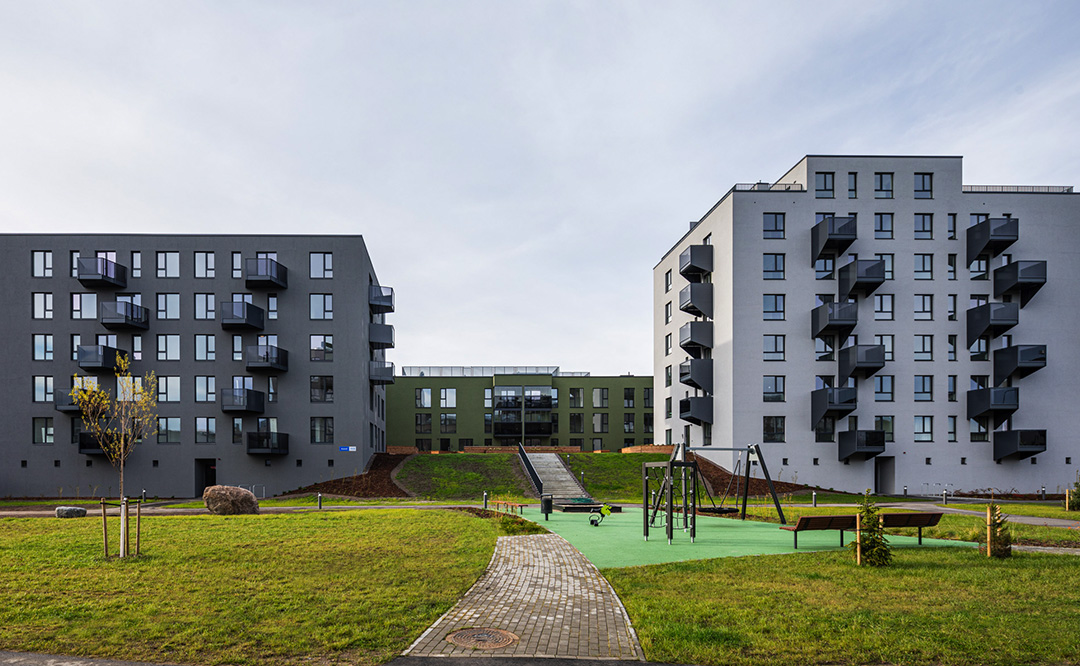
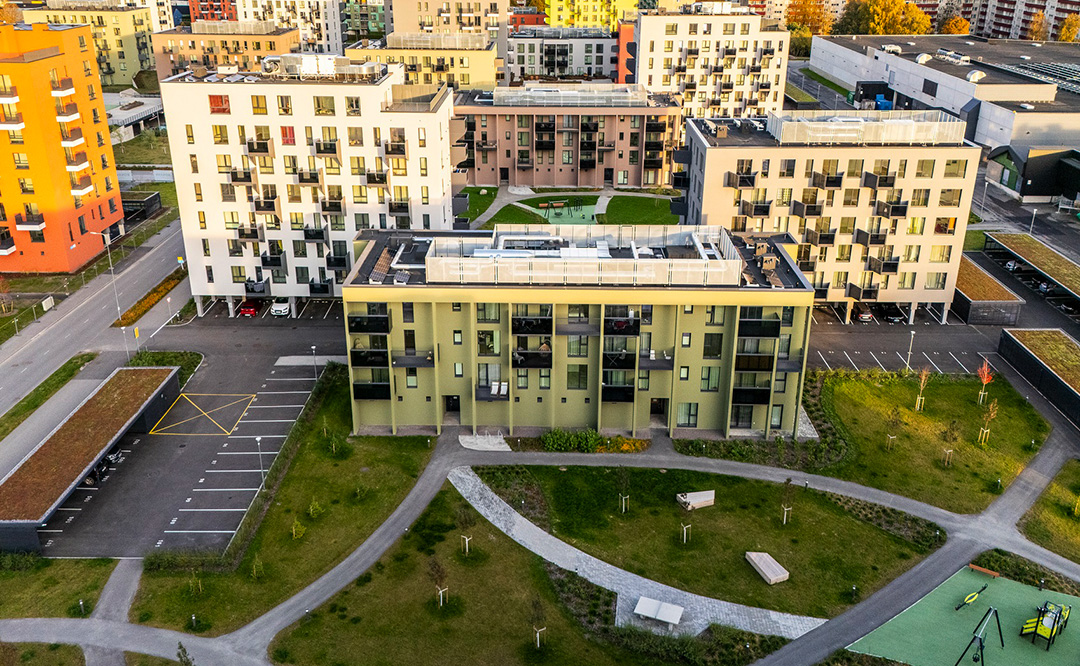
06 Aiandi street 11 Mustamäe Tallinn
06 Aiandi street 11 Mustamäe Tallinn, Estonia
Building use | Apartment building | Stories above ground | 8 |
Location | Aiandi tn 11/1 Mustamäe LO Tallinn 12915, Estonia | Basement area | — |
Client | Bonava Estonia OÜ | Structural system | hollow core panels+ load bearing walls |
LCA consultant | Bonava Latvia (tbc) | Façade type | EPS+ plaster |
Year of completion | 2024 | Roof type | Flat roof |
Reference area | 2305 m2 (gross floor area) | Heat demand /source | District heating and solar cells |
The Aiandi 11/1 residential building is located in the Mustamäe area of Tallinn, which was previously occupied by greenhouses and a flea market. This particular plot consists of three different houses varying in size and number of floors. An LCA (Life Cycle Assessment) calculation has been conducted as a pilot project for the 8-floor building. The project marks Bonava Estonia’s first endeavour into calculating the CO₂ footprint. The CO₂ calculation was performed in the late phase of the project, so no direct measures were implemented to reduce the footprint. However, several measures have been incorporated into the building. Solar panels are installed on the roof to generate electricity for common areas and electric cars. Bicycle spaces and charging options for electric devices were added to encourage the use of light scooters and low-emission vehicles, reducing CO₂ emissions. Faucets with limited flow were used to reduce water consumption. We explored energy-efficient designs and included features such as heat retention, air tightness, efficient district heating and ventilation with heat recovery. Green roofs were used to mitigate the heat island effect caused by asphalt surfaces. The project was undertaken to understand the content and methodology of CO₂ calculation and to explore the principles of its implementation, aiming to make smarter decisions in the early phases of future projects. Currently, we are also pursuing BREEAM certification and are achieving the ‘Excellent’ level. However, the certification application is still in progress and has not yet been issued.
Assessment method
LCA scheme compliance | — |
LCA tool version | One click LCA |
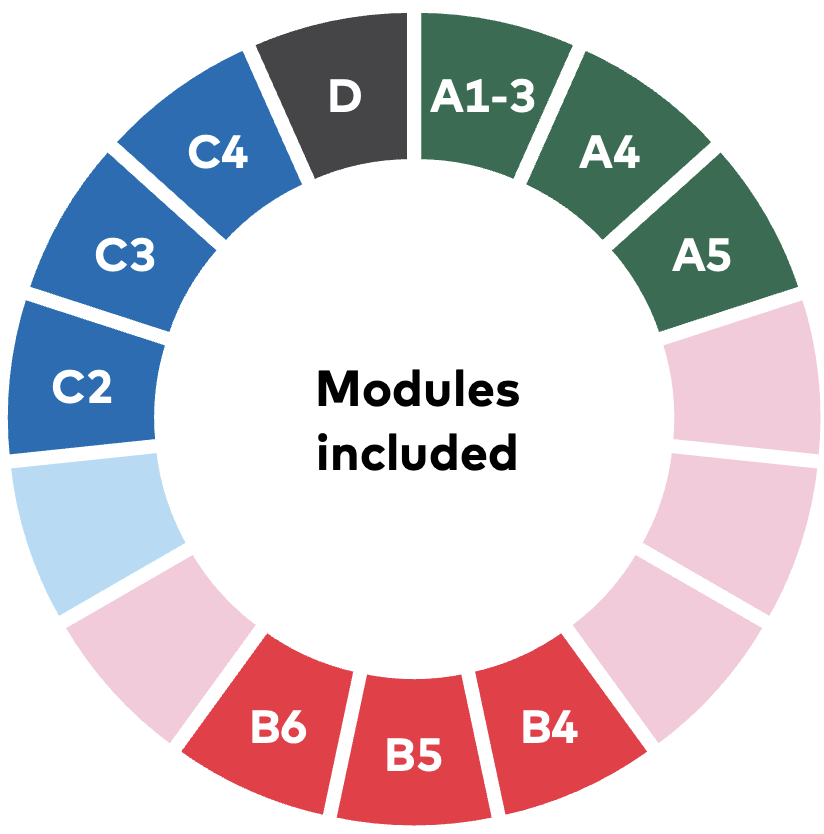
Life cycle stages included | A1-A5, B4-B5, B6, C2-C4 |
Material emission data | OneClick LCA database and EPD’s |
Material decarbonisation scenario | — |
Energy calculation method | — |
Energy, dynamic scenario | Dynamic development of energy supply. For district heat, LCA study for country-specific district heating based on IEA, OneClick LCA 2023. For electricity, Ministry of the Environment of Estonia 2020-2070 CO2 values |
LCA results: Building elements
[kgCO2e/m2 reference area * year]
%
[kgCO2e/m2 reference area * year]
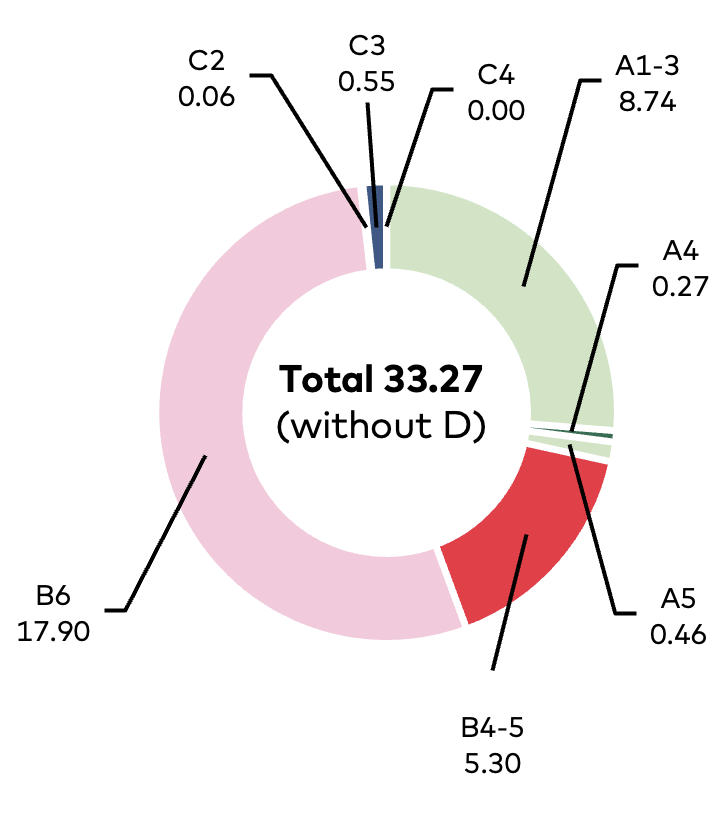
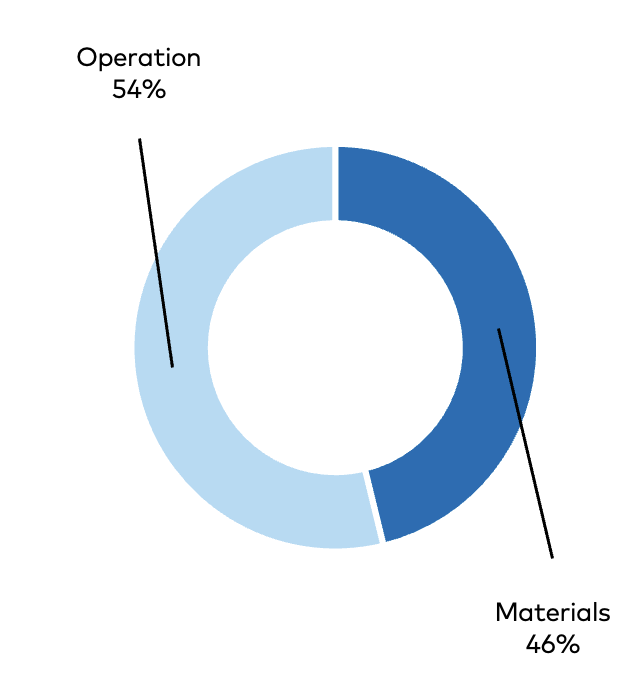
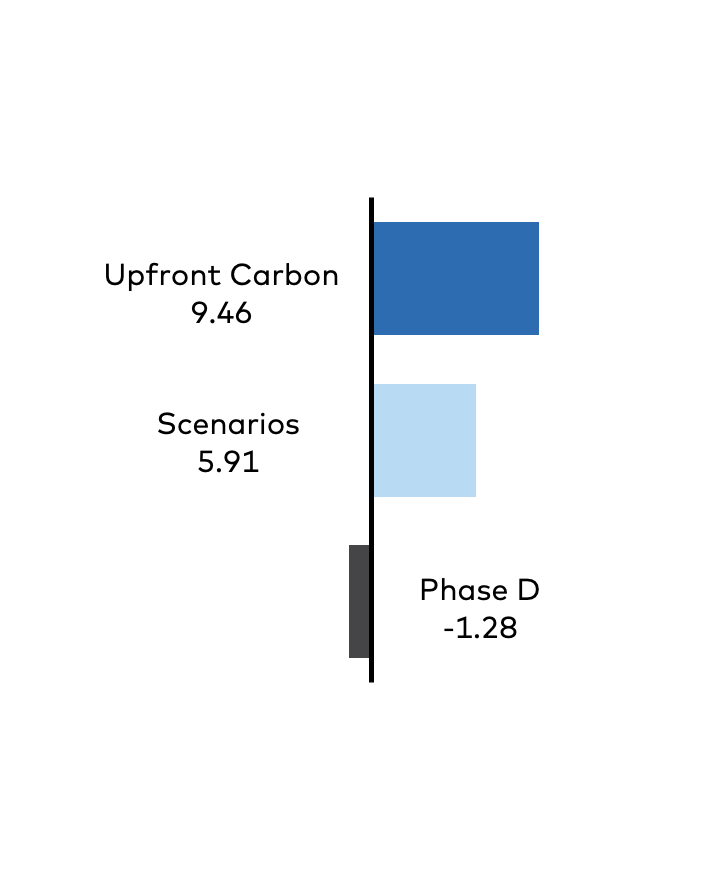
The system boundary includes a share of all life cycle stages.
In the second figure, Operation includes B6, while materials include A1-A5, B4-B5, C2-C4In the third figure, Upfront includes A1-A5, scenarios include B4,-B5, C2-C4 and D is shown separately.
In the second figure, Operation includes B6, while materials include A1-A5, B4-B5, C2-C4In the third figure, Upfront includes A1-A5, scenarios include B4,-B5, C2-C4 and D is shown separately.
LCA results: Building elements
GWP / reference area [kgCO2e/m2 reference area]
Material inventory: All materials
Life cycle modules: A1-A5, B4-B5, C2-C4
Life cycle modules: A1-A5, B4-B5, C2-C4
The structural system including load-bearing walls, floor slabs and foundations have the highest impacts.
Building element quantity / reference area [kg building element / m2 reference area]
GWP of building element / building element quantity [kgCO2e / kg building element]
Material inventory: All materials
Life cycle modules: A1-A5, B4-B5, C2-C4
Life cycle modules: A1-A5, B4-B5, C2-C4
Building element quantity per building reference area is a measure for the material intensity, while element impacts per element quantity is a measure for the elements’ carbon intensity relative to their weight.
LCA results: Products
Product quantity / reference area [kg product / m2 reference area]
GWP of product / reference area [kgCO2e/m2 reference area]
Material inventory: Top 10 products with the highest impacts
Life cycle modules: A1-A5, B1-B5, C1-C4
Life cycle modules: A1-A5, B1-B5, C1-C4
Construction product quantity per building reference area is a measure for the material intensity, while product impacts per building reference area is a measure for carbon intensity.
Also at product level, the structural system including concrete for the foundations and prefabricated floor slabs are dominating.