05 Lõunakeskus Commercial Building
Estonia
05 Lõunakeskus Commercial Building, Estonia
Building use | Retail and restaurant / Office | Stories above ground | 2 |
Location | Ränirahnu tee 21 Räni, 61708, Estonia | Basement area | — |
Client | Lõunakeskus OÜ | Structural system | Steel beams, columns and concreate slabs |
LCA consultant | LCA Support | Façade type | Wood composite, aluminium panels |
Year of completion | 2024 | Roof type | Flat roof |
Reference area | 4043.5 m2 (heated floor area) | Heat demand /source | District heating and solar cells |
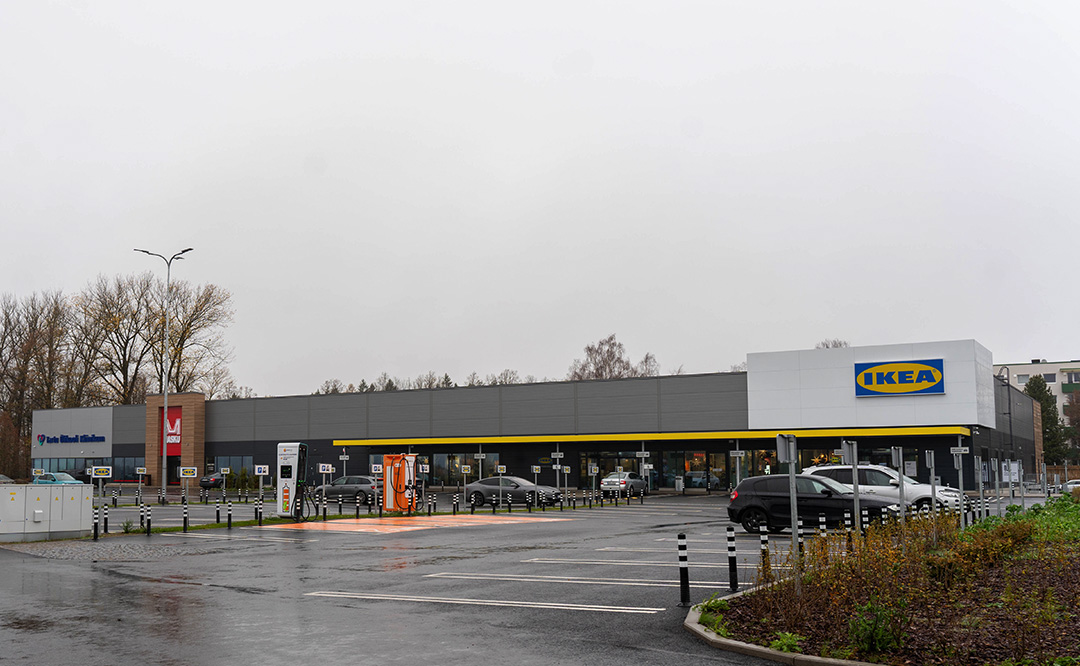
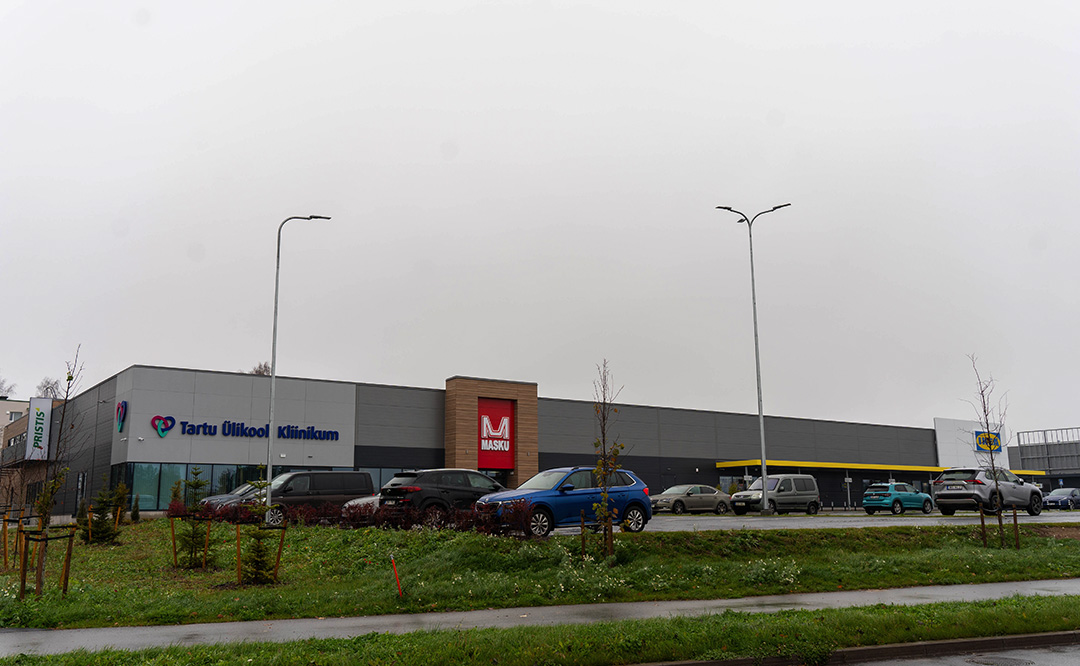
Estonian retail property developer Astri Group built a new standalone building Ränirahnu tee 21 in the Lõunakeskus retail park for an IKEA plan and order point, the Masku furniture store, the Tartu University Clinic radiology clinic and laboratory and a Pristis office. As Estonians’ residual energy mix is one of the dirtiest in Europe, the most effective way to lower CO2 emissions for new buildings, is to invest in energy generation and savings. For energy generation, Astri Group’s energy company Roheline Astri OÜ built a 350-kW solar park on the roof of a building, which will produce more electricity than the building consumes. The surplus electricity will be directed to the Lõunakeskus shopping park via a local distribution grid. Ränirahnu tee 21 is hooked up to Gren’s district heating and cooling network in order to lower emissions. The new building also uses Estonian-based R8 software, which uses AI to lower overall energy consumption and provide grid services via virtual power plant. The building has received an energy rating of A, with an energy efficiency rating of 33 kWh/m²a, which is several times better than the required level. Astri Group was one of the first in Estonia to voluntarily calculate the life cycle assessment (LCA) of climate impact for new buildings, and a similar analysis was also done for Ränirahnu tee 21. The parking lot is prepared for up to 30 electric vehicle charging stations, with two 50 kW and 2,150 kW chargers installed in the first phase.
Assessment method
LCA scheme compliance | — |
LCA tool version | One Click LCA |
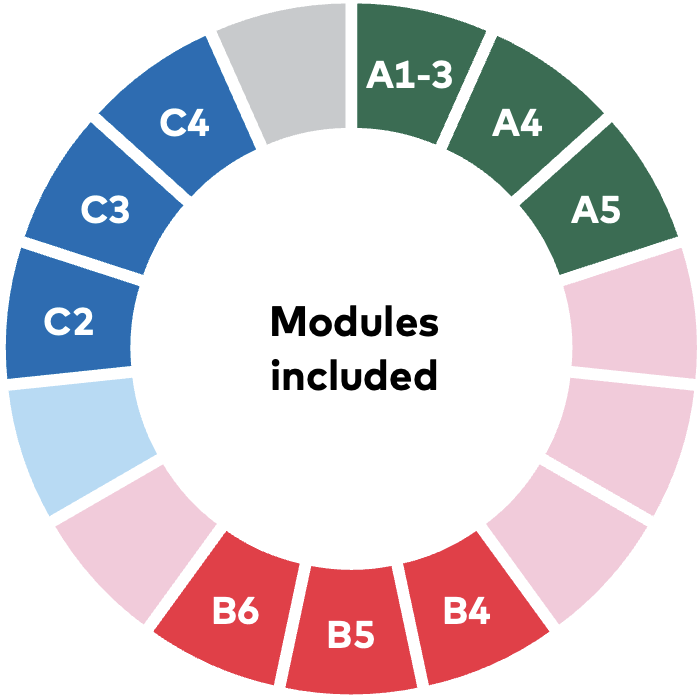
Life cycle stages included | A1-A5, B4, B4-B6, C2-C4 |
Material emission data | OneClick LCA database 7.6 |
Material decarbonisation scenario | — |
Energy calculation method | — |
Energy, dynamic scenario | Dynamic development of energy supply. Ministry of the Environment of Estonia 2020-2070 CO2 values. |
LCA results: Life cycle modules
[kgCO2e/m2 reference area * year]
%
[kgCO2e/m2 reference area * year]

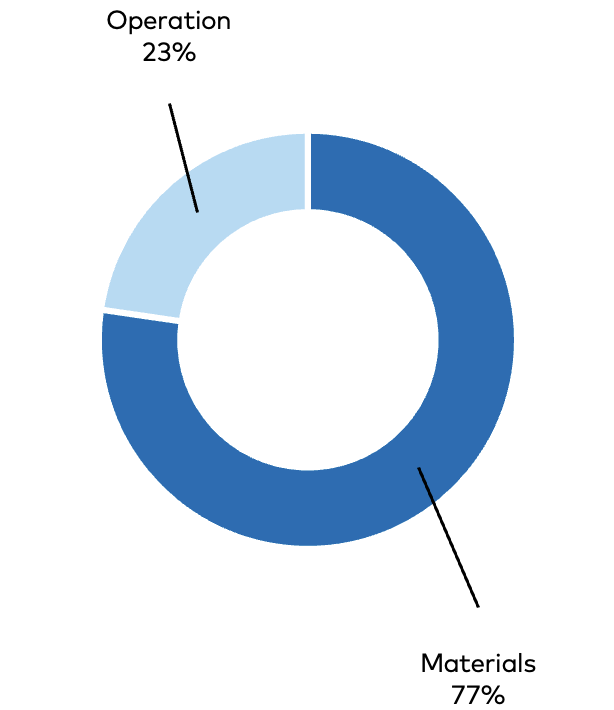
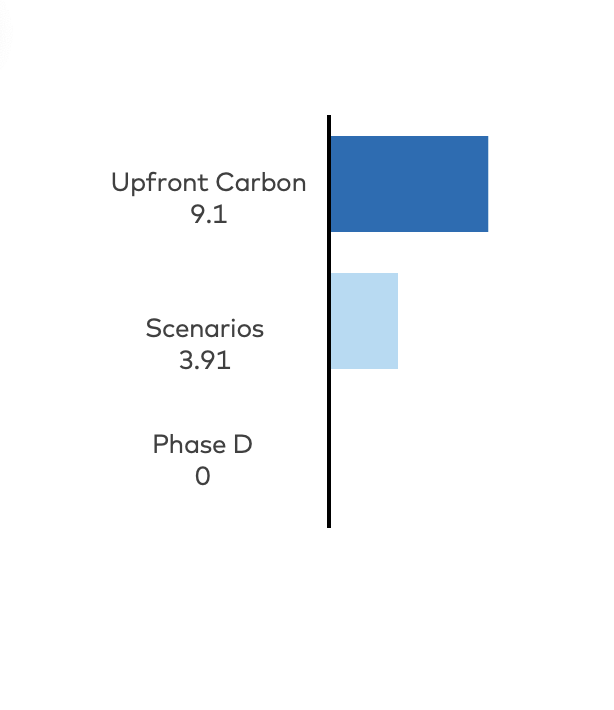
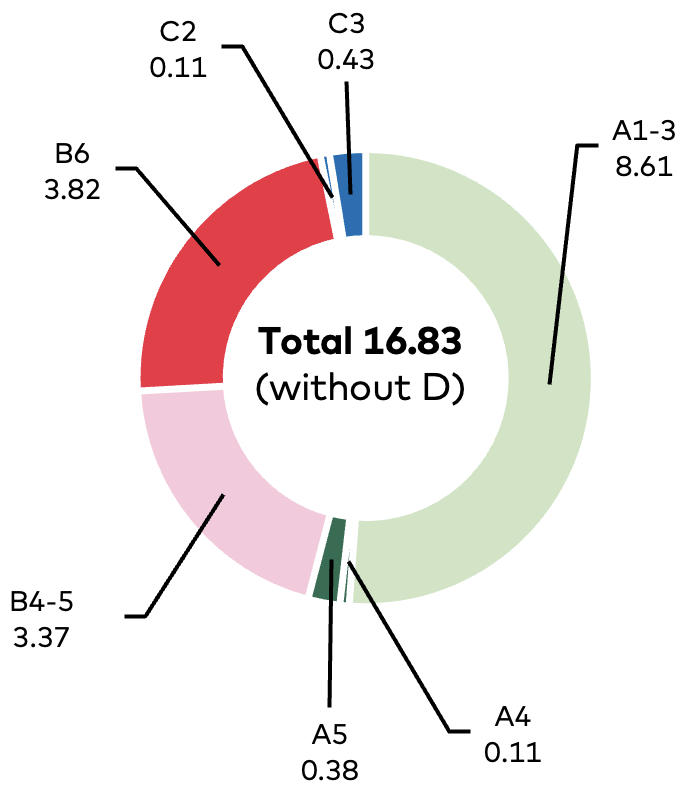
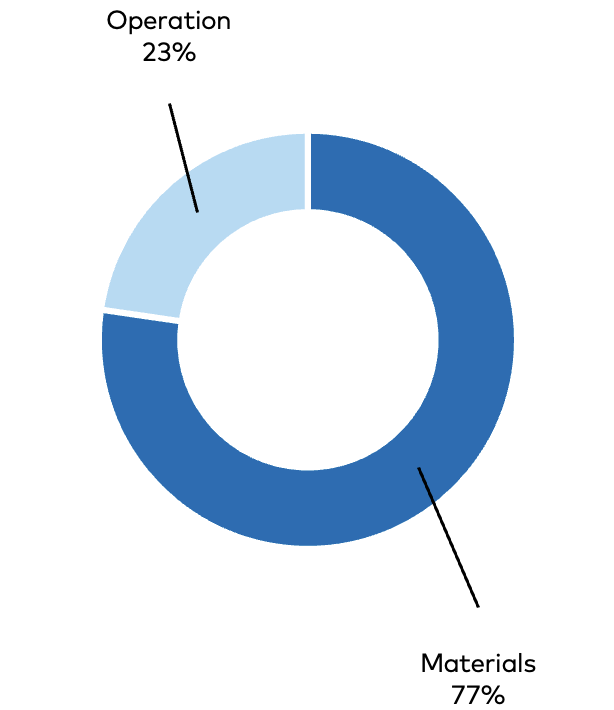
The LCA includes a range of modules from all life cycle stages. The product stage is slightly higher than the use stage. In the second figure, Operation includes B6, while materials include A1-A5, B4-B5, C2-C4. In the third figure, Upfront includes A1-A5, scenarios include B4-B5, C2-C4, and D is shown separately. Upfront and scenarios are relatively balanced due to the inclusion of future replacements and refurbishment.
LCA results: Building elements
GWP / reference area [kgCO2e/m2 reference area]
Material inventory: All materials
Life cycle modules: A1-A5, B1-B5, C1-C4
Life cycle modules: A1-A5, B1-B5, C1-C4
The dominating impacts stem from the extensive photovoltaic system on the flat roof of this department store. Other characteristic impacts relate to foundations and the structural frame, followed by the roof.
Building element quantity / reference area [kg building element / m2 reference area]
GWP of building element / building element quantity [kgCO2e / kg building element]
Material inventory: All materials
Life cycle modules: A1-A3, B4, C3-C4
Life cycle modules: A1-A3, B4, C3-C4
Building element quantity per building reference area is a measure for the material intensity, while element impacts per element quantity is a measure for the elements’ carbon intensity relative to their weight.
LCA results: Products
Product quantity / reference area [kg product / m2 reference area]
GWP of product / reference area [kgCO2e/m2 reference area]
Material inventory: Top 10 products with the highest impacts
Life cycle modules: A1-A5, B1-B5, C1-C4
Life cycle modules: A1-A5, B1-B5, C1-C4
Construction product quantity per building reference area is a measure for material intensity, while product impacts per building reference area are a measure for carbon intensity.
Solar cells are the dominating product due to the size of the photovoltaic roof system. The structural steel members have a high recycled content, reducing impacts of this potential hot spot.