02 Kirkehøjgaard
Denmark
02 Kirkehøjgaard, Denmark
Building use | Detached home | Stories above ground | 1 |
Location | Kirkevej, 5600 Faaborg | Basement area | 0 m2 |
Client | The Agency for Culture and Palaces | Structural system | Half-timbered |
LCA consultant | Henning Larsen Architects | Façade type | Half-timbered |
Year of completion | 2023 | Roof type | Pitched roof |
Reference area | 219 m2 (heated floor area) | Heat demand /source | Heat pump |
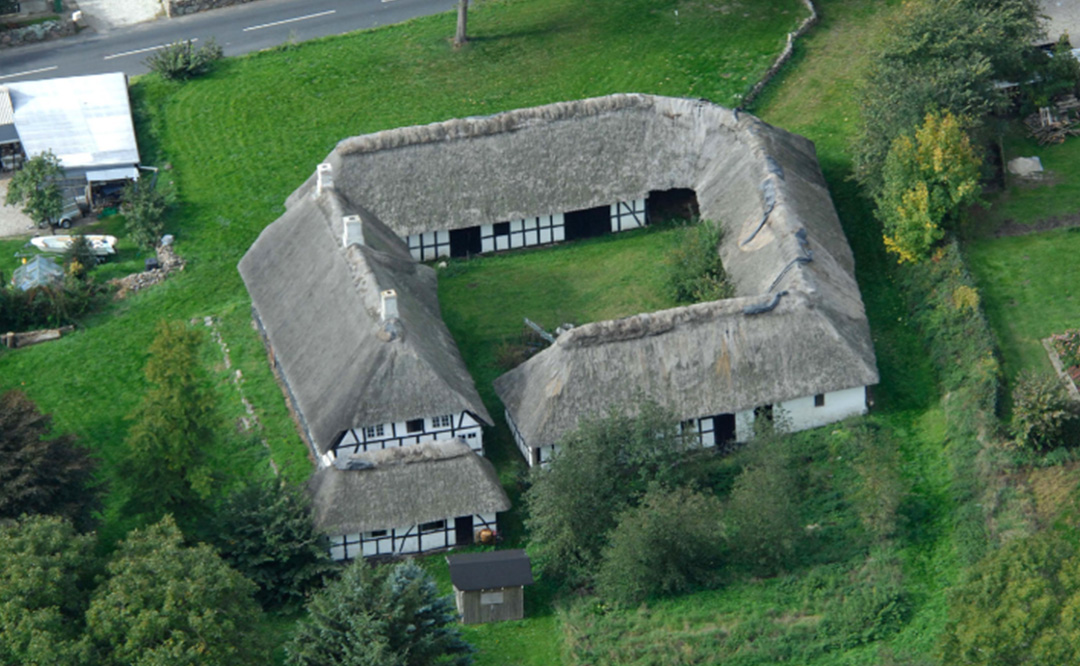
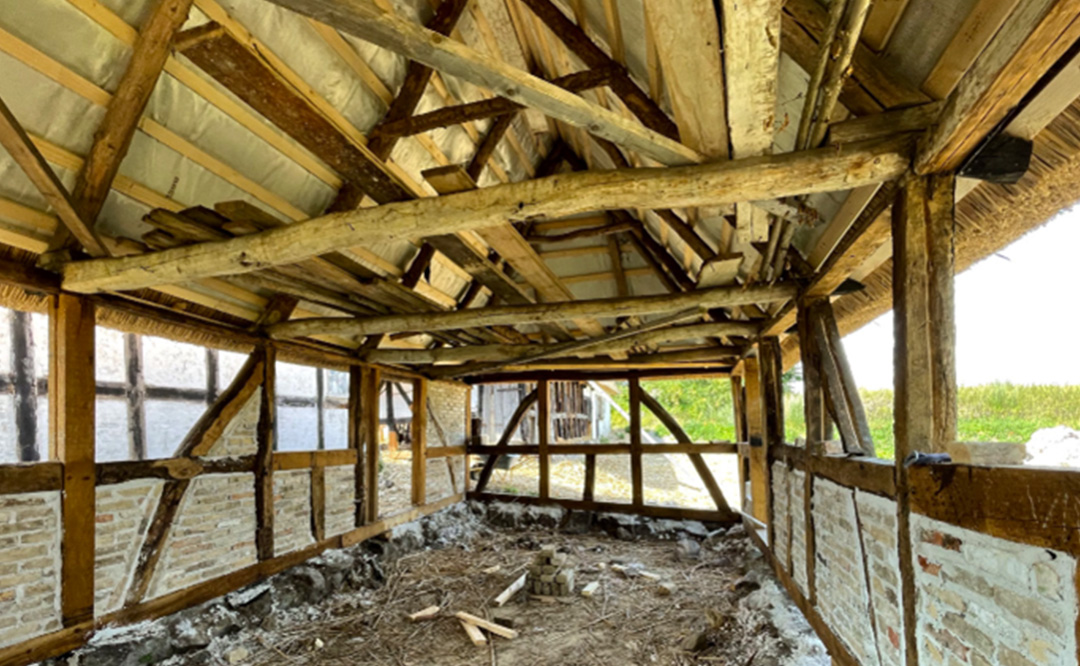
In collaboration with Henning Larsen Architects, the Danish Agency for Culture and Palaces has worked on the restoration of the listed four-long farm Kirkehøjgård. It is part of a pilot project to save distressed listed buildings. The analysis compares the completed restoration with a hypothetical conventional restoration. The purpose is to measure the effect of using biogenic materials and low-carbon emission materials for restoration. Three different LCA methods for building renovations are also explored. In the assessment shown here, only new added materials are considered. The farm consists of the detached farmhouse, three connected outbuildings and one detached outbuilding, constructed between 1178 and 1853. The condition of the farm was such that the decay was accelerating and there was a danger of collapse. The project can also shed light on whether reusing local building materials rather than replacing them with new ones can help strengthen the conservation values of a restoration project. Especially a restoration as extensive as this one, where up to 80% of the original materials are replaced. The project focuses on, amongst others, ensuring the following aspect craftsmanship, traditions, processing and moisture (incorporation of permeable materials that contribute to more stable moisture conditions for preservation and for increased comfort).
Assessment method
LCA scheme compliance | Industry guidance in LCA for renovation 2017 |
LCA tool version | LCAbyg 2023 (version 5.4.0.5) |
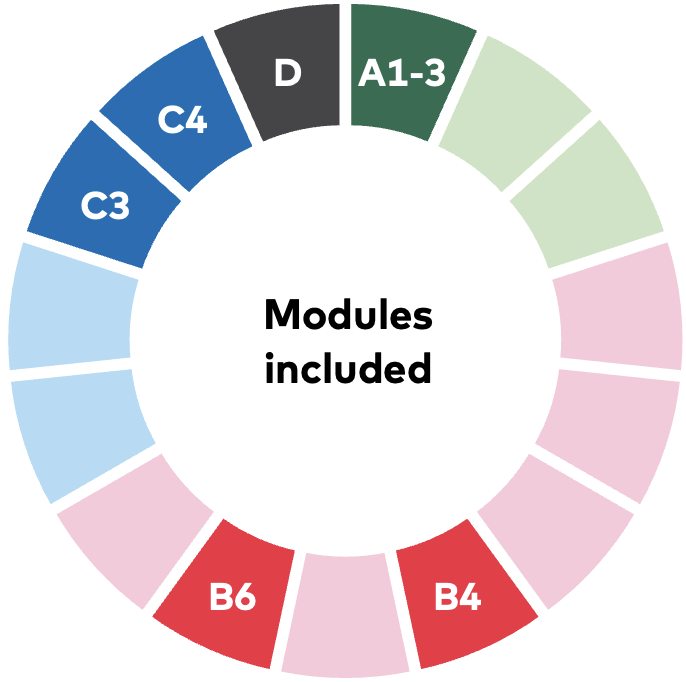
Life cycle stages included | A1-A3, B4, B6, C3, C4, D |
Material emission data | Generic Danish database according to Danish building regulations and EPDs |
Material decarbonisation scenario | — |
Energy calculation method | According to building regulations |
Energy, dynamic scenario | Dynamic development of energy supply according to frozen policy, based on an official national report from 2020 |
LCA results: Life cycle modules
[kgCO2e/m2 reference area * year]
%
[kgCO2e/m2 reference area * year]

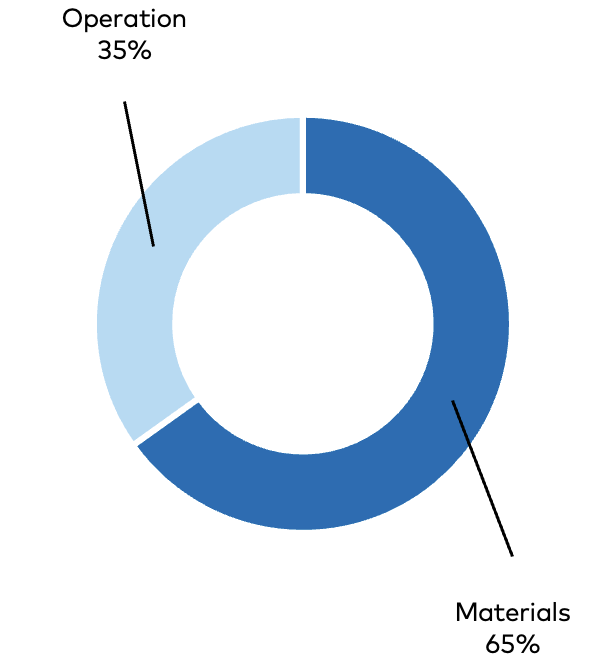
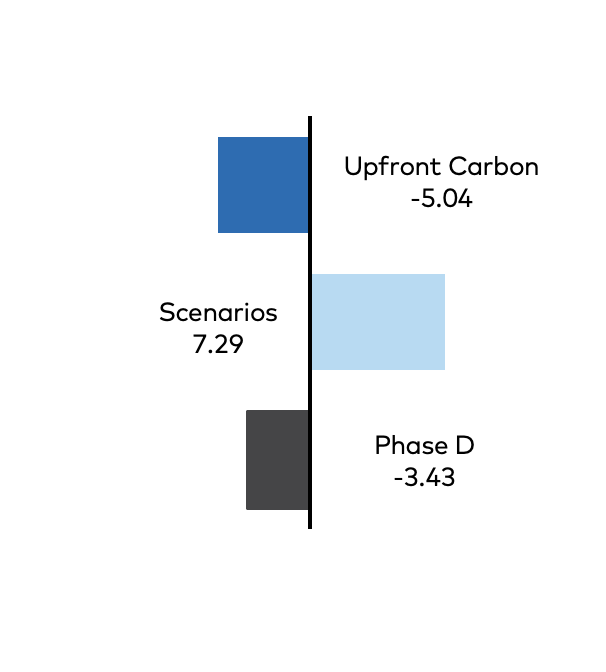

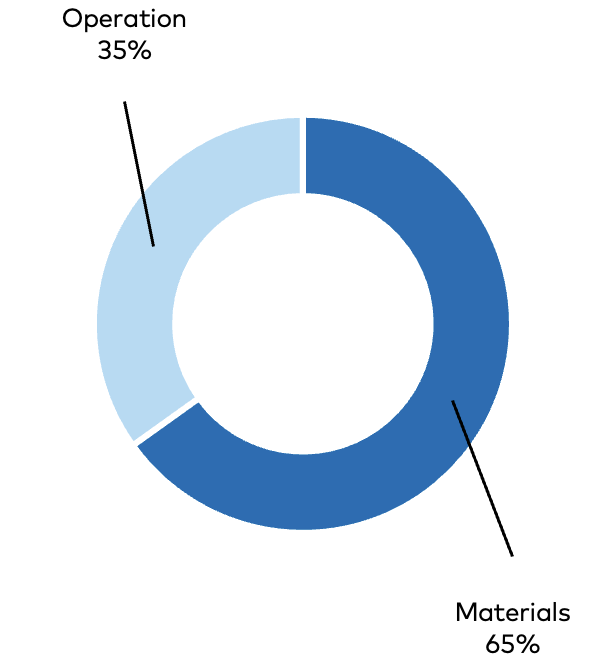
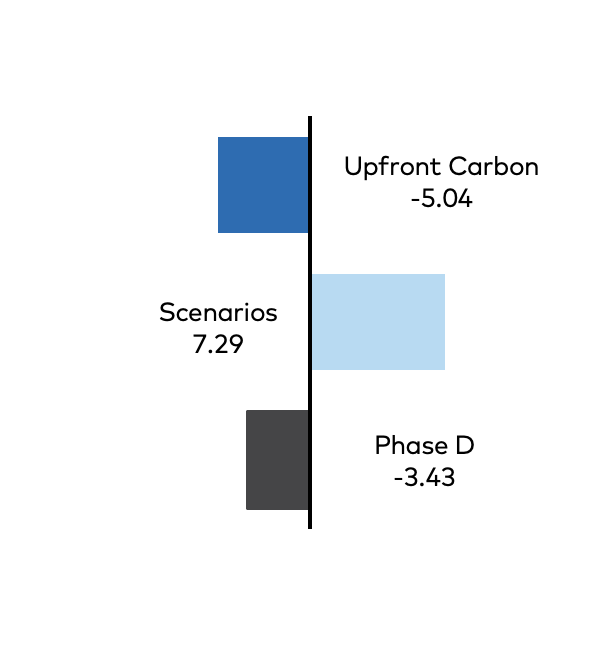
Material impacts only include new added materials. The remaining life cycle of existing materials is not included. Modules A1-3 have negative emissions of 5.04 [kgCO2e/m2 reference area * year] due to the dominating biogenic materials used, while the effect is reversed in C3. This should also be seen in light of the fact that this is a project to restore the building, not completely transform it, which means that a relatively small amount of materials have been used. In the second figure, Operation includes B6, while materials include A1-A3, B4, C3-C4. Despite the historic character of the building, impacts from energy use are very low, because of the after insulation of the outer constructions and change to heat pump. In the third figure, Upfront includes A1-A3, scenarios include B4, C3-C4, and D is shown separately. Upfront impacts are negative due to the biogenic content of the added materials.
LCA results: Building elements
GWP / reference area [kgCO2e/m2 reference area]
Material inventory: All materials
Life cycle modules: A1-A3, B4, C3-C4
Life cycle modules: A1-A3, B4, C3-C4
The high amount of GWP in wall and ceiling is a result of outer wall insulation being allocated to the inner wall finishes.
Building element quantity / reference area [kg building element / m2 reference area]
GWP of building element / building element quantity [kgCO2e / kg building element]
Material inventory: All materials
Life cycle modules: A1-A3, B4, C3-C4
Building element quantity per building reference area is a measure for the material intensity, while element impacts per element quantity is a measure for the elements’ carbon intensity relative to their weight.
Life cycle modules: A1-A3, B4, C3-C4
Building element quantity per building reference area is a measure for the material intensity, while element impacts per element quantity is a measure for the elements’ carbon intensity relative to their weight.
The Frame shows high density and smaller GWP/quantity do to the biobased materials. Areas where the insulation materials have a higher QWP/ quantity compared to quantity/ area in the building.
LCA results: Products
Product quantity / reference area [kg product / m2 reference area]
GWP of product / reference area [kgCO2e/m2 reference area]
Material inventory: Top 10 products with the highest impacts
Life cycle modules: A1-A3, B4, C3-C4
Life cycle modules: A1-A3, B4, C3-C4
Construction product quantity per building reference area is a measure for the material intensity, while product impacts per building reference area is a measure for carbon intensity.
Both in quantity and impacts, the added timber frame members have the highest share, followed by wood fibre insulation and lime mortar.