01 Erlev Skole
Denmark
01 Erlev Skole, Denmark
Building use | School | Stories above ground | 2 |
Location | Gammel Hørregårdsvej 29, 6100 Haderslev | Basement area | — |
Client | Haderslev Municipality | Structural system | Column-beam timber frame |
LCA consultant | Arkitema | Facade type | Wood |
Year of completion | 2021 | Roof type | Flat roof |
Reference area | 6,014 m2 (gross floor area) | Heat demand /source | District heating |
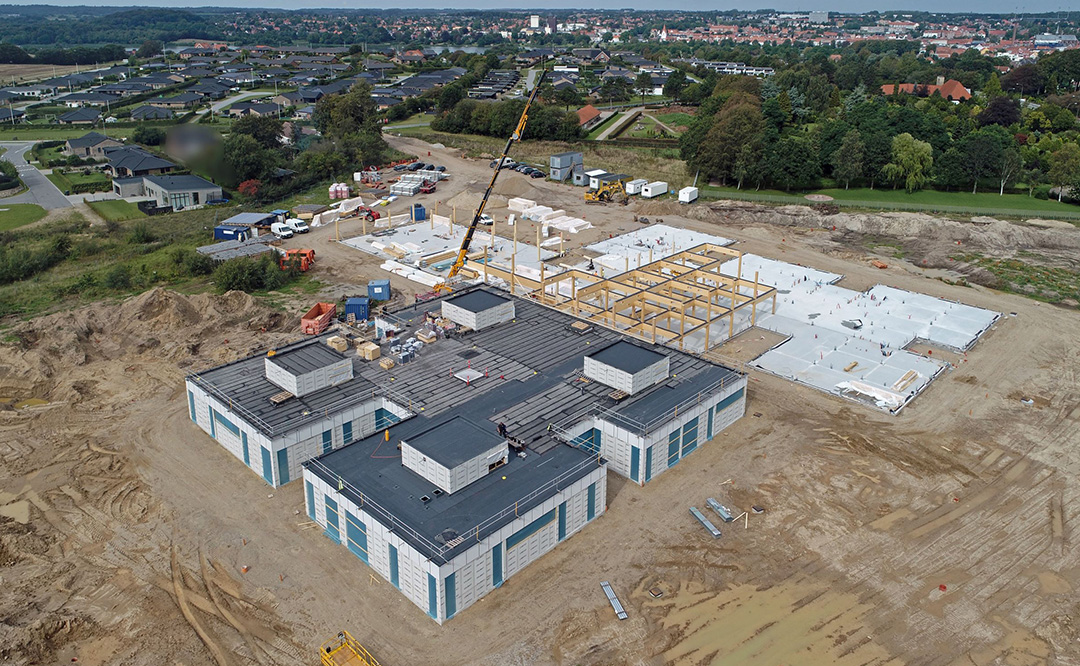
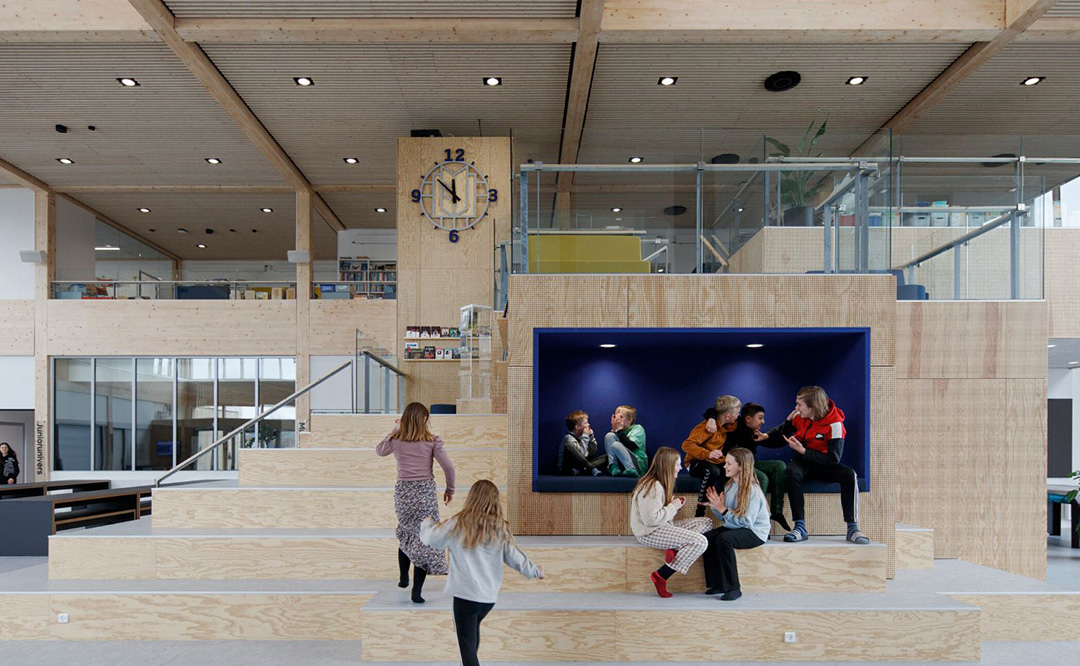
The school was designed as timber construction, making it one of the country’s first wooden schools in recent times. The school’s shape is not optimal in terms of achieving a low climate impact per m², as due to daylight requirements for virtually all rooms there is a need for a large façade area per m² floor area. At the same time, the building is in 1-2 storeys, which significantly impacts the roof and terrain decks per m² of floor area. Therefore, the materials have been optimised considerably with a wood column-beam construction, wood on interior surfaces and wood as façade cladding. To support the pedagogical ideas and learning attitudes, the architecture is designed as a series of simple and open geometries – a tight grid of columns where each part has been designed with different elements together with users in a co-creation process. The school is characterised by a multitude of different types of spaces that support the activity-based teaching method. Large common rooms, typical classrooms, small learning spaces and small niches.
Assessment method
LCA scheme compliance | — |
LCA tool version | LCAbyg 5 |
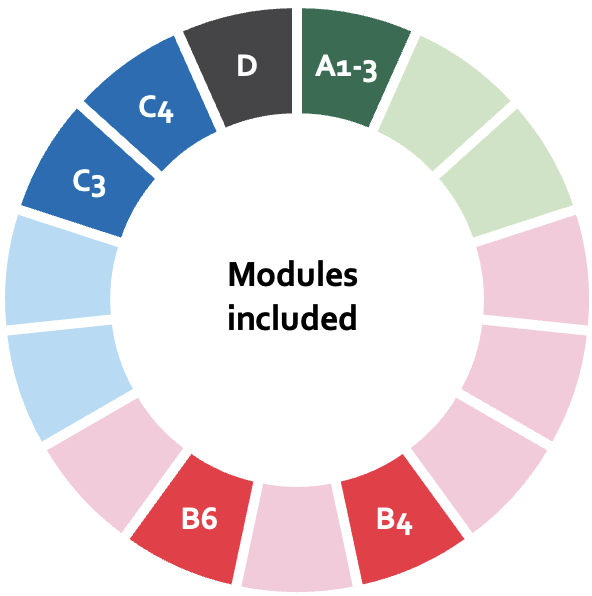
Life cycle stages included | A1-A3, B4, B6, C3, C4, D |
Material emission data | EPD and generic Danish database (from LCAbyg and DGNB) |
Material decarbonisation scenario | — |
Energy calculation method | According to building regulations |
Energy, dynamic scenario | Dynamic development of energy supply according to frozen policy, based on an official national report |
LCA results: Life cycle modules
[kgCO2e/m2 reference area * year]
%
[kgCO2e/m2 reference area * year]

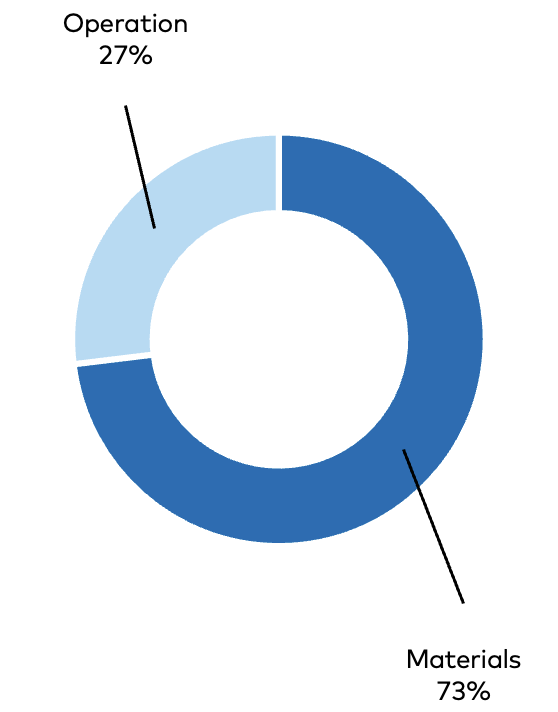
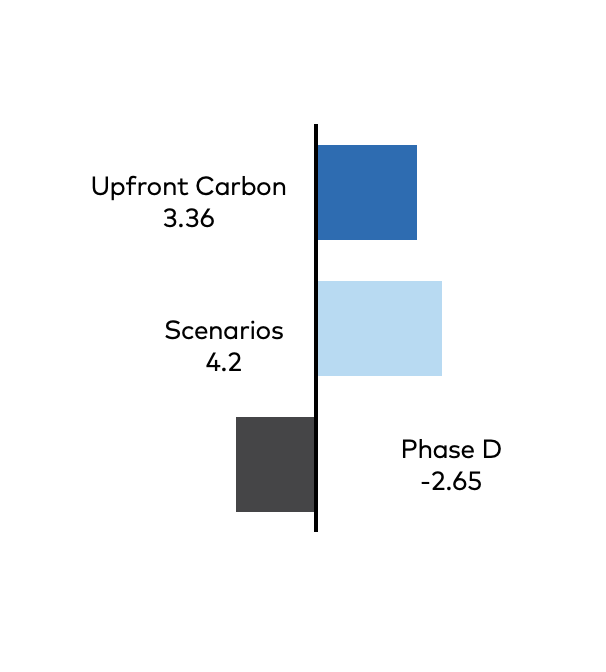
The system includes key modules from the product, use and end-of-life stages according to Danish industry practice by the time. The project lies below the current limit value of 12 kgCO2e/m2a specified in the building regulations. Generic values for building services are included to complete the inventory.
In the second figure, Operation includes B6, while materials include A1-A3, B4, C3-C4.
In the third figure, Upfront includes A1-A3, scenarios include B4, C3-C4, and D is shown separately.For a timber construction, upfront carbon is low while high in the end-of-life stage due to the biogenic carbon balance.
In the second figure, Operation includes B6, while materials include A1-A3, B4, C3-C4.
In the third figure, Upfront includes A1-A3, scenarios include B4, C3-C4, and D is shown separately.For a timber construction, upfront carbon is low while high in the end-of-life stage due to the biogenic carbon balance.
LCA results: Building elements
GWP / reference area [kgCO2e/m2 reference area]
Material inventory: All materials
Life cycle modules: A1-A3, B4, C3-C4
Life cycle modules: A1-A3, B4, C3-C4
The low-rise structure results in the highest impacts from the roof and the ground floor deck.
The timber column and beam frame are low-carbon optimised.
The timber column and beam frame are low-carbon optimised.
Building element quantity / reference area [kg building element / m2 reference area]
GWP of building element / building element quantity [kgCO2e / kg building element]
Material inventory: All materials
Life cycle modules: A1-A3, B4, C3-C4
Building element quantity per building reference area is a measure for the material intensity, while element impacts per element quantity is a measure for the elements’ carbon intensity relative to their weight.
Life cycle modules: A1-A3, B4, C3-C4
Building element quantity per building reference area is a measure for the material intensity, while element impacts per element quantity is a measure for the elements’ carbon intensity relative to their weight.
The ground floor structure and foundation products dominate the GWP ranking due to the low building height.
LCA results: Products
Product quantity / reference area [kg product / m2 reference area]
GWP of product / reference area [kgCO2e/m2 reference area]
Material inventory: Top 10 products with the highest impacts
Life cycle modules: A1-A3, B4, C3-C4
Life cycle modules: A1-A3, B4, C3-C4
Construction product quantity per building reference area is a measure for the material intensity, while product impacts per building reference area is a measure for carbon intensity.
Also at product level, ground floor structure and foundations rank the highest, followed by roofing material and windows.