8. Conclusion and next steps
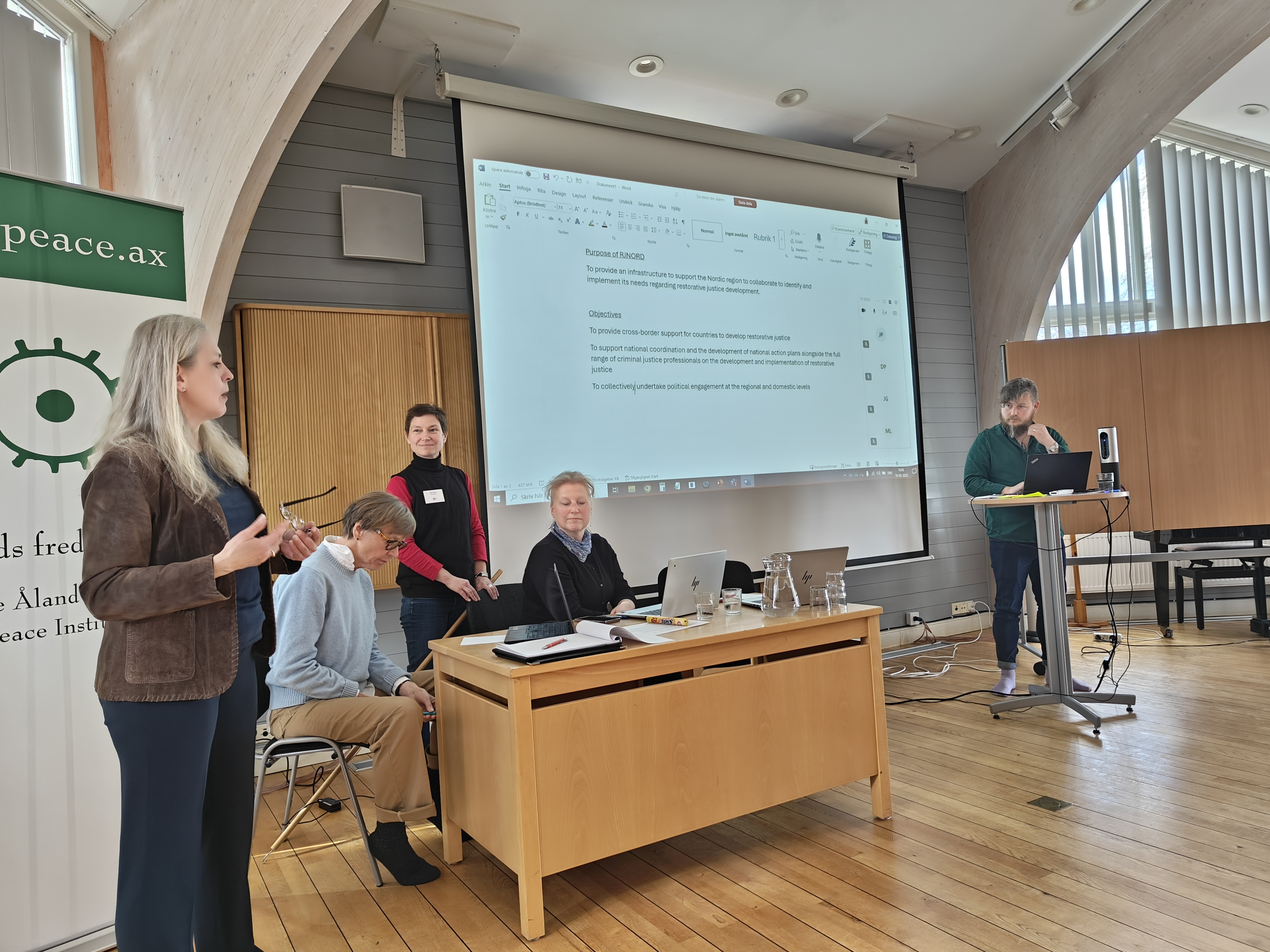
The Åland declaration in the making.
Photo: Petra Granholm
Photo: Petra Granholm
Before beginning the final discussion, which focused on summarizing the seminar’s content, identifying key takeaways, and outlining future steps, we heard a presentation by doctoral researcher Aino Jauhiainen. She shared findings from her doctoral thesis and presented the outline for a current Nordic research proposal “Restorative justice in action: A Nordic comparative study on practitioners’ challenges, needs and solutions concerning restorative facilitation in criminal cases”. The aim of the proposal is to explore what challenges, needs and solutions to implementing RJ aims Nordic RJ practitioners face in their work.
In this event we wanted to achieve a sustainable rebuilding of a Nordic network, that will hopefully continue to promote RJ practices and learn from and support each other. This last plenary was dedicated for this purpose. In the discussion several needs as well as concrete steps forward were identified. Participants stressed the importance of creating a process and identifying objectives for the Nordic network. Topics that were suggested were: need of cross-border support in promoting restorative justice; securing funding; increasing political engagement, especially in creation of Nordic action plans that take into account the recommendations of the Council of Europe; enable the sharing of experiences, obstacles and innovations of practitioners; ensure accessibility to restorative justice services for the public; enhance public awareness of these services; strengthen cross-sectoral networks (police, prosecutors, municipalities, social workers, etc.)
The participants of the seminar agreed that arranging this type of seminar biannually would be beneficial. Optimally the Nordic seminar would alternate with the European Forum for Restorative Justice biannual international Conference. The Nordic network could also contribute to EFRJ conference with a Nordic current topic or arrange a Nordic spin-off event in connection to the conference.
It was considered important not to compete with EFRJ, but support it and function as a regional partner, sharing EFRJ information within the Nordic network.
One idea was to create a smaller group consisting of each country´s mediation service coordinating authorities. The Norwegian National Mediation Service (Konfliktrådet) is willing to host this group.
Other ideas that were presented were that the network could arrange webinars and arrange happenings during the annual Restorative Justice week in November. More ideas that were put forward were to create a databank for information, a joint digital platform and a LinkedIn group. Regarding the three latter ideas it is still open how, who and with what funding this could be done.
Lastly the discussions moved towards strategies and common goals. Can the Nordic region identify a joint vision, objectives and aspirations for RJ practices? A joint vision became clear: Restorative Justice should be available to all who want to participate in a process.
The participants of the seminar had a mutual understanding that we are stronger together and were encouraged by the European experts to put this understanding in writing. From this thought arose the Åland Declaration that was co-created on-site.
Photo: Petra Granholm
Photo: Petra Granholm
Photo Petra Granholm
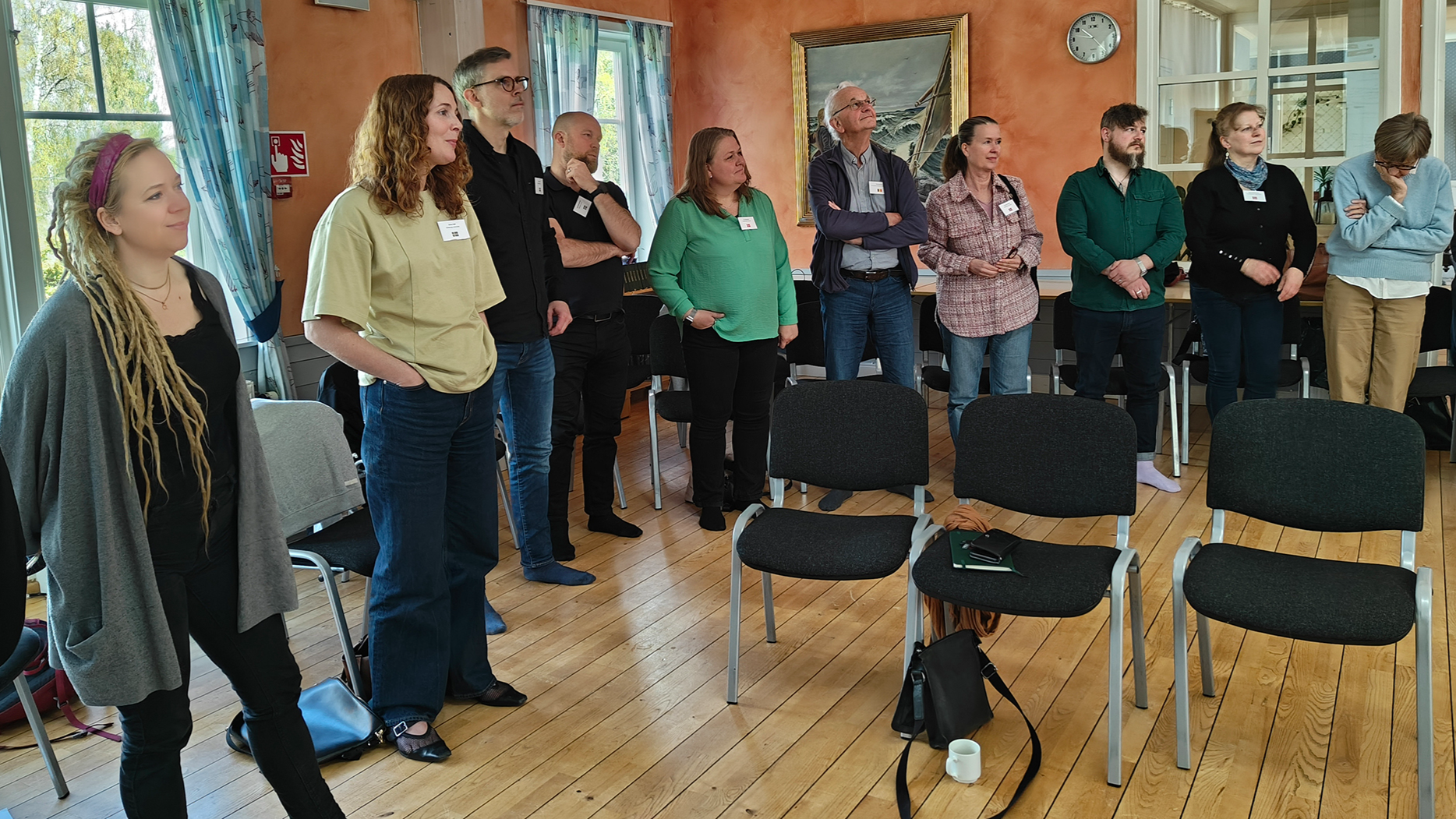
Photo: Petra Granholm