7. Lunch seminar
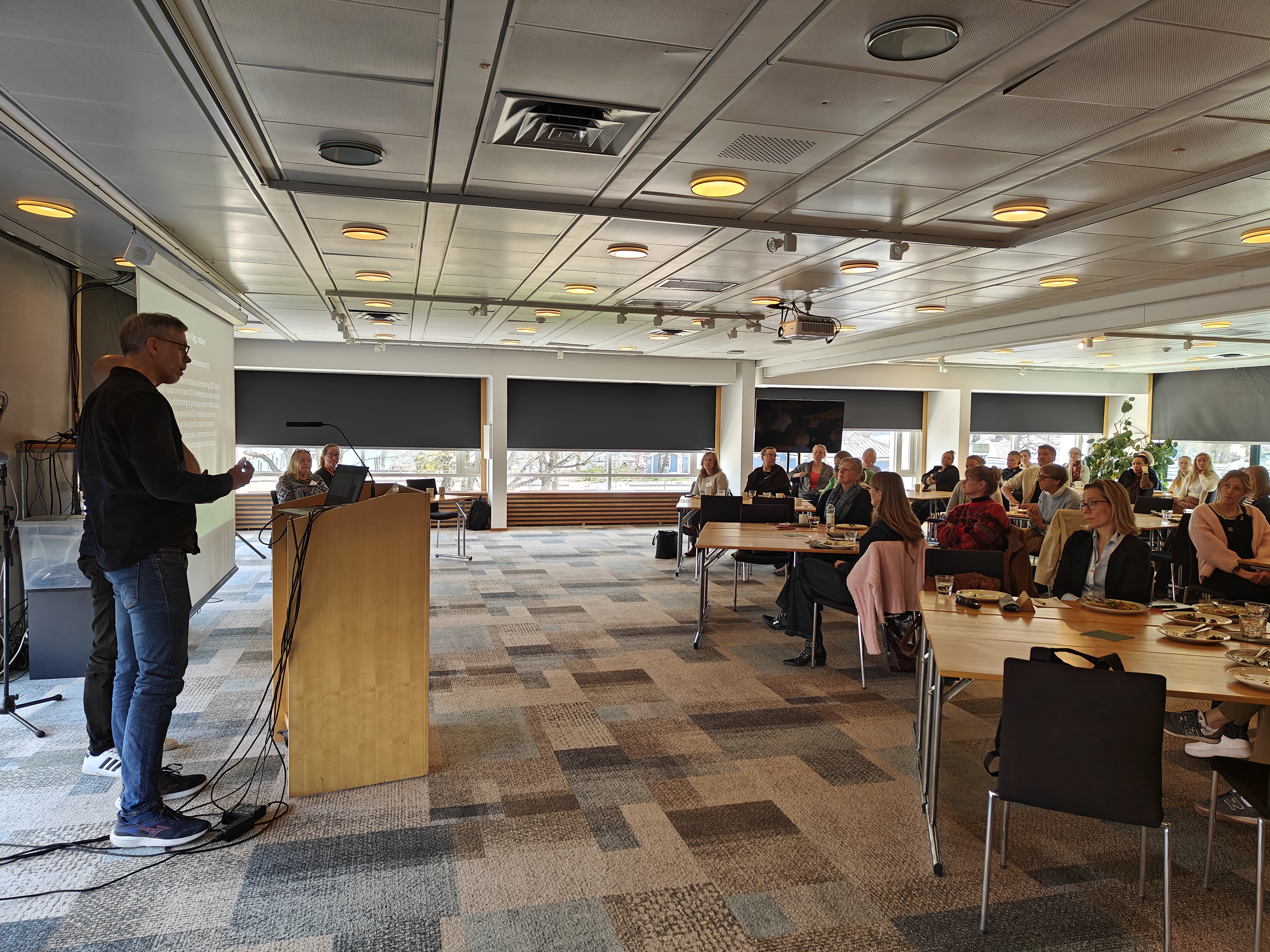
Lunch seminar at Hotell Arkipelag.
Photo: Petra Granholm
Photo: Petra Granholm
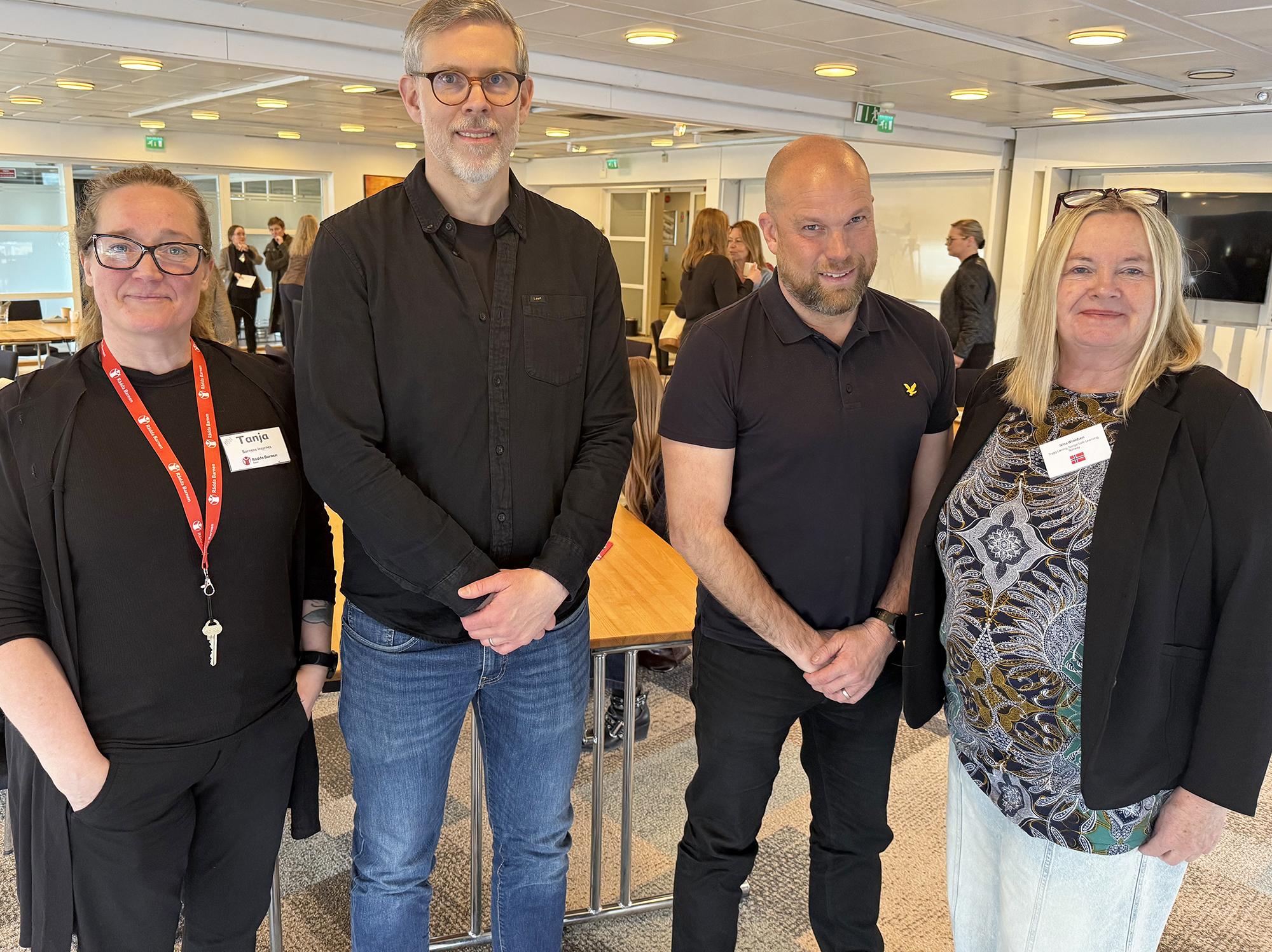
Photo: Liz Lindvall
To mark the conclusion of the expert seminar, a public lunch seminar was held in Mariehamn on the theme “Conflict management as life skills – how to create child-friendly justice?” . This lunch seminar was held in Scandinavian and attracted an audience of local persons working with children and youth as well as the expert seminar participants, in total around 60 persons.
The idea of the seminar was to let experts in youth conflict management comment on real-life conflict scenarios developed in advance by a panel of youths from Åland. The Åland Peace Institute and Save the Children Åland collaborated around involving youth in a workshop that discussed conflicts in their everyday lives, to then decide on two scenarios- one involving girls and one involving boys.
To open the seminar, the Åland Deputy Head of Government Annika Hambrudd was invited to speak.
Minister Hambrudd emphasised that conflicts are experienced in all dimensions of human life and should not be seen as inherently good or bad – rather a natural part of life. What matters is how we handle and resolve them. Conflict resolution is a vital skill that fosters an environment of understanding and respect. When managed constructively, disagreements and differences can lead to change, learning, and growth. At their core, conflicts are about people’s desires and the will to meet their interests and needs.
RJ is about creating dialogue between those involved, with the goal of understanding each other’s perspectives and finding a way forward together. For children and young people, this means having an active role in the process, helping them feel heard, respected, and taken seriously in conflict situations.
Mediation based on restorative principles is a lifelong learning process in empathy, where we are all encouraged to take responsibility for our own conflicts and learn to manage them. Developing conflict resolution skills early in life has long-term positive effects. It can improve relationships, reduce stress, foster meaningful dialogue, and increase trust and a sense of justice and respect. These skills better equip young people to face future challenges in both personal and professional contexts.
To conclude, Minister Hambrudd took the opportunity to echo the words of Astrid Lindgren: “Give children love, more love, and even more love – and common sense will come by itself.”
Tanja Rönnberg, who is an expert in digital lives of children and youth at Save the Children Åland, has vast experience in talking to young people and their parents about the use of social media, including the conflict that are often exacerbated by social media. She presented the scenarios developed by the youth at the lunch seminar.
Contemporary youth conflict scenarios often involve multiple dimensions and several individuals, either directly or indirectly. Identifying the exact starting point of a conflict is rarely straightforward, as underlying power dynamics frequently influence the situation. Many young people engage in these dynamics to avoid becoming targets themselves. These events typically unfold both in physical spaces and across various social media platforms.
The following two scenarios were developed by a dedicated youth panel consisting of four Ålandic young persons aged 14–16 during a workshop held on April 29. One scenario primarily involves girls – according to the panel, conflicts among girls tend to be more prolonged and revolve around gossip and social exclusion. In contrast, boys’ conflicts are often shorter but more physically aggressive, as illustrated in the second scenario. The youth panel later had a chance to watch a recording of the lunch seminar and further discuss the expert solutions from their perspective.
Conflict Scenario 1: “The Gossip”
Amanda is the popular girl everyone wants to be or be around. She’s considered the “boss”—at the top of the social hierarchy in both her class and school. This position gives her influence over what others say and do. Her closest friend is Felicia. Amanda is dating Hugo, another popular student known for being a bit of a flirt.
One day, Felicia is at Amanda’s house when Amanda starts gossiping about their mutual friend Sara.
Amanda: “Felicia, I heard a rumour that Sara has a crush on Hugo. What if it’s true??”
Felicia: “No way… do you really think so?”
Amanda: “Yeah, I heard she was flirting with him. With Hugo! He’s my boyfriend! Doesn’t she get that?”
Felicia: “Are you sure? I don’t think Hugo is even her type…”
Amanda: “What are you saying? How can you question me? Of course, he’s her type. He’s everyone’s type! Everyone knows he’s the hottest guy in school – he’s mine!”
Felicia: “Right… maybe it’s true. Ugh, Sara’s such a slut!”
Felicia: “No way… do you really think so?”
Amanda: “Yeah, I heard she was flirting with him. With Hugo! He’s my boyfriend! Doesn’t she get that?”
Felicia: “Are you sure? I don’t think Hugo is even her type…”
Amanda: “What are you saying? How can you question me? Of course, he’s her type. He’s everyone’s type! Everyone knows he’s the hottest guy in school – he’s mine!”
Felicia: “Right… maybe it’s true. Ugh, Sara’s such a slut!”
The next day, Felicia sees Sara and feels guilty about the gossip. She tells Sara about the rumour involving Hugo. Sara denies it and is hurt that her friends believe a rumour over her own words.
The rumour quickly spreads throughout the school. Someone picks it up and “ships” Sara and Hugo on the trending social media account “Åland Shippar.” “Shipping” is a current trend in Finnish schools where people pair others together on social media, often using photos taken without permission from personal accounts or school portraits.
This “shipping” intensifies the rumour. A few days later, during recess, Amanda gathers a group of followers who surround Sara and verbally attack her with accusations and questions about her supposed interest in Hugo. No one, not even Felicia, stands up for Sara.
Sara returns home devastated and eventually tells her parents, who contact the school.
Expert comment scenario 1
This scenario was commented by Nina Wroldsen from the Norwegian organisation Safe Learning (Trygg Laering). Nina has worked in the education sector throughout her professional life at all levels, from higher education to primary school. She has also used this method, which is based on Safe Learning, in her work as headmistress of a public international school.
Nina Wroldsen shared three key reflections on conflict resolution in schools. First, she emphasized the importance of involving parents early, especially when they are deeply concerned about their children. She advocated for a restorative approach, where students are given a safe space to share their experiences and needs, and where conflicts are resolved through dialogue and mutual understanding.
Second, she stressed the need for structured school-wide practices in conflict management. Without consistent methods, responses to conflict can become unpredictable, leading to escalation and legal involvement. She called for clear systems – such as visual aids and classroom rules – to ensure predictability and emotional safety for all students.
Third, she expressed a strong desire for more research into the psychological effects of unresolved conflicts, particularly those that may resurface over time. She highlighted the importance of integrating conflict resolution into teacher education and making restorative practices a standard part of school culture.
Nina Wroldsen concluded with a personal reflection, referencing the book Touching Spirit Bear by Ben Mikaelsen, which inspired her vision for alternative justice for youth. She ended with a hopeful message from the Beatles: “All you need is love – and we can work it out.”
Conflict Scenario 2: “The Fight”
The second conflict scenario involved three boys: Adrian, Emil, and Viljam, who are 16-year-old friends. They’re no strangers to sneaking alcohol from their parents’ liquor cabinets. This particular Friday night in downtown Mariehamn is special – Adrian has managed to get a fake ID and uses it to buy beer from a grocery store.
Outside the store, Adrian proudly shows off his fake ID and the beer to Viljam at a bus stop. Emil, who has already been drinking vodka at home, is also there. While Adrian is bragging, Emil sneaks behind him and grabs the beer from his backpack.
Adrian notices and confronts him:
Adrian: “Hey Emil – what are you doing!? That beer’s mine!”
Emil: “Come on, bro, you’re sharing, right?”
Adrian: “You idiot, give me the beer! I said give it back!”
Emil: “Come on, bro, you’re sharing, right?”
Adrian: “You idiot, give me the beer! I said give it back!”
When Emil refuses, Adrian shoves him to the ground, causing the beer bottle to break. Adrian throws the broken bottle at Emil but misses. Then he attacks Emil with full force – punching and kicking him.
Meanwhile, Viljam pulls out his phone, grinning and cheering them on while filming the fight. He quickly uploads the video to his Instagram story, and it spreads rapidly among their peers.
Some observant parents, who monitor their children’s social media activity, see the video and realize the situation must be reported to the police. There are grounds for criminal charges – not only for the assault but also for Adrian’s use of a fake ID. Additionally, Viljam filmed and shared the incident without consent.
Expert comment scenario 2
To comment on this scenario Niklas Hägg and Jacob Wennerholm, mediators from Södertälje Municipality in Sweden, were invited. They have worked together in youth services since the late 1990s and in mediation since 2014. Their mediation services are first and foremost offered to individuals under 21 and are based on principles of RJ.
They emphasize strong collaboration between schools, police, and social services. Typically, a case comes to their attention through schools, which often notice conflicts or crime first. Once informed, they assess whether mediation can begin even if a police investigation is ongoing. Their office is uniquely located within the police station, facilitating close cooperation.
The mediation process is voluntary and begins with separate pre-meetings with each party, often involving parents. They aim to understand each individual's perspective and needs, especially focusing on the victim's sense of safety. They also consider the broader social impact, including family and peer networks.
In cases involving violence or public humiliation (e.g., being filmed and posted online), they may treat it as two separate mediation cases. They also offer additional support through in-house counsellors for both victims and offenders. For offenders, they may use acknowledged methods for impulse control and social skills training to address impulse control.
Their goal is to help students coexist peacefully in school, even if they don’t reconcile. Agreements often include practical arrangements like agreeing to ignore each other in the future, if that is what the parties wish. They stress the importance of early intervention to prevent escalation and long-term consequences like school avoidance.
They also advocate for integrating restorative practices into schools and ensuring follow-up to measure the effectiveness of interventions. While they see positive outcomes, they call for more research to support and expand their approach.