6. Workshops
To ensure the event was inclusive and dialogic, we organized three workshops that addressed key topics. The aim was to gather insights from various Nordic countries to deepen our understanding of national practices and promote mutual learning. Each workshop was designed and led by a different country, with the presenter also arranging table hosts to document the group discussions. The summaries from the workshops build on notes taken during the discussions, reflecting the participants perspectives in the workshop and is not necessarily a full picture of status in each country. All participants joined all three workshops, but were divided into small groups, each composed to reflect as diverse a representation as possible from across the Nordic region.
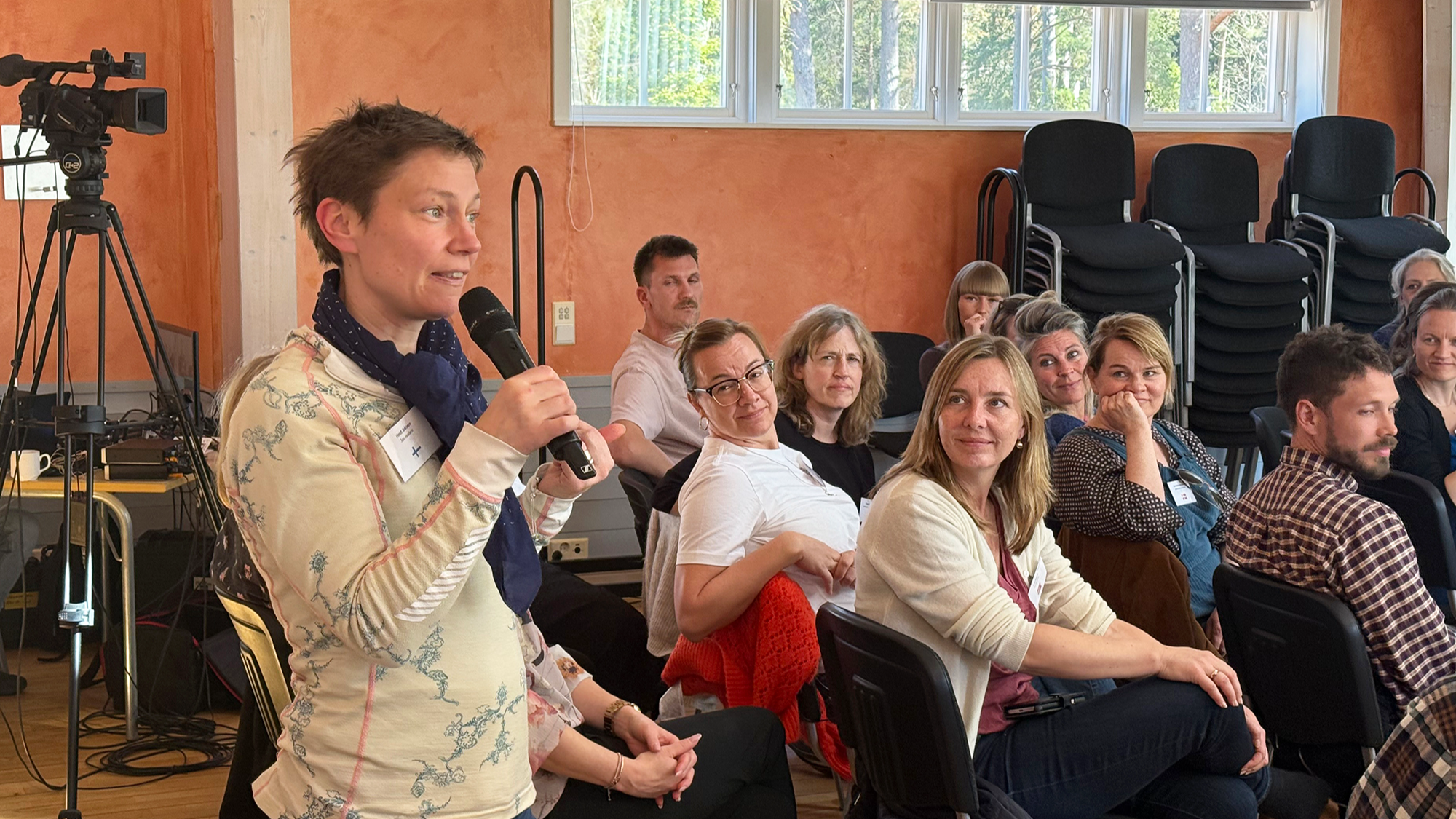
Thematic workshops were led by Finland, Denmark and Norway.
Photo: Liz Lindvall
Photo: Liz Lindvall
6.1 Restorative Justice Theory. Values and principles, legislation and understanding in the Nordic countries
Restorative Justice offers a way of dealing with crime and other conflicts. RJ is based on values like respect, inclusion, voluntariness and dialogue.
The European Forum for Restorative Justice (EFRJ) defines RJ as an approach of addressing harm or risk of harm through engaging all those affected in coming to a common understanding and agreement on how the harm or wrongdoing can be repaired and justice achieved.
The first workshop, led by university lecturer Heidi Jokinen from Åbo Akademi University in Finland, explored our understanding of RJ in the Nordic countries, focusing on the following themes.
How do we practice restorative justice, or do we?
The group discussed the role of RJ in both personal and professional contexts. They unanimously agreed that restorative values are embraced in their everyday lives, at home, among friends, and in hobbies. These values come naturally in daily interactions and relationships.
Embracing RJ can be seen as a strength, especially in personal relationships. It’s reflected in a mindset of curiosity, a desire to ask questions, seek understanding, and remain open to personal growth and new perspectives. As a life skill, these values encourage compassion, offer space for second chances, and promote non-judgmental attitudes.
At the heart of restorative practice is radical, deep listening. When we truly listen, we make others feel heard. The focus shifts to how our actions affect others, and we begin to reflect on our own behaviour, even when emotions run high.
What are the objectives of the current practice?
This question is broad and multifaceted. The group agreed that there are many different objectives, and these vary significantly depending on context. Practices differ between countries and regions, shaped by legal frameworks and the roles of various authorities. Additional variation arises from mediators' understandings of RJ, their professional backgrounds, and the way they approach and deliver RJ processes.
The group reflected on whether a single, unified understanding of RJ objectives is achievable – or even desirable. It was noted that the language used to describe victim-offender mediation affects perceived goals. Should we instead speak of restorative, reparative, or even preparatory dialogues? The term preparatory dialogue may be particularly appropriate in cases involving intimate partner or domestic violence, where careful framing is crucial. Ultimately, the group emphasized that objectives must be flexible and responsive to the specific needs of the parties involved.
RJ objectives can encompass a range of themes depending on the level of focus. In individual cases, goals may centre around healing, understanding, and accountability. Societal-level objectives, however, might include reducing reoffending and victimization, lowering costs for the criminal justice system, improving standards and practices, and enhancing the quality of dialogue.
The group urged a shift in public discourse—from reactive, punitive approaches to forward-looking, problem-solving perspectives. A cultural transformation is needed. Instead of teaching future generations to assign blame and exclude, we should inspire the values of empathy, accountability, and constructive conflict resolution.
How are restorative justice and mediation practices challenged by the political climate in the Nordic countries?
One of the key challenges facing RJ and mediation today is the lack of sustained political attention, which results in inadequate guidance and limited political will. In several Nordic countries, a punitive mindset seems to have pushed RJ further to the margins than before.
To counter this trend, we need to build stronger, localized evidence of RJ’s effectiveness through long-term collaboration between practitioners and researchers. By forming lasting partnerships, we can produce data that not only supports RJ but is also rooted in real-world outcomes.
Equally important is shifting the public narrative: we should focus more on the transformative stories and values of RJ, rather than framing justice solely through punitive responses. At the same time, we must be aware of crime trends and statistics to ground our arguments in clear, factual context. Policymakers and the media need accessible and clear answers to the question: What does successful RJ look like?
A practical step forward would be co-creating effective policy frameworks in dialogue with decision-makers. Listening to politicians and understanding their priorities can help ensure that RJ is conceptualized more clearly and consistently across national contexts.
What kind of legal obstacles or challenges are there to the development of RJ practices?
The challenges that RJ and mediation face differ significantly across Nordic countries due to varying stages of legal development and legislative frameworks.
In Iceland, a major barrier is the absence of RJ in statutory law. While the state prosecutor permits RJ through a directive, the concept of who qualifies as a mediator is narrowly defined and is currently limited to police officers. Moreover, a full police investigation must precede any mediation referral, placing police in the dual role of investigator and mediator. This arrangement is seen as a conflict of interest in other Nordic countries and is therefore not permitted. The justice system in Iceland remains rooted in traditional thinking, making it difficult to introduce new ideas or expand the scope of mediation. Broader legal reasoning and a more inclusive understanding of who can act as mediators are needed.
In Norway, mediation in criminal cases is politically and institutionally supported. Police are both encouraged and obliged to refer cases. The use of mediation is widespread and is applied in criminal and civil matters, as well as in prisons and schools. Legislation allows RJ at different stages in the criminal procedures, included during prisons sentences – between prisoners and victims, or with prisoners own families, communities, and workplaces, this practice is however still limited. Need for Information, priorities and resources may challenge even broader application in practice.
In Denmark, the mediation system lacks national coordination. Regional authorities have the autonomy to organize and develop mediation services, leading to inconsistencies in access and implementation. Barriers include the perception that mediation is "soft on crime" and the dependence on highly motivated individuals, rather than institutional support. Sustainable mediation practices need to be integrated into organizational structures. Prosecutors, police, and judges should be trained continuously to enhance the understanding and use of mediation in criminal cases.
Common obstacles identified were inconsistent terminology that can lead to confusion about the purpose and goals of mediation and RJ. Legislative barriers restrict the application of mediation in criminal cases, while others hinder expansion and development. Existing laws are often underutilized, with narrow definitions regarding who may serve as a mediator and what kinds of cases qualify. A clearer, more coherent conceptualization of RJ is essential for its broader implementation and development.
How have we translated RJ in the Nordic Countries? Where have we drawn inspiration from?
Translations used are “reparativ rättvisa” and “restorativ rättvisa” in Swedish, “genoprettende Ret” in Danish, ”gjenopprettende prosess” in Norwegian, “korjaava oikeus” and “restoratiivinen oikeus” in Finnish and “uppbyggileg réttvísi” in Icelandic. The word “mediation” or “Victim-offender mediation (VOM)” is often used as a synonym for RJ.
Consistency in terminology is vital, especially to prevent confusion around what we mean by RJ. While the concept is clear in English, to translate it into Nordic languages is a complex issue. The term “restorative” can be interpreted in several ways.
In Nordic languages the term carries different meanings, which can make communication difficult, it can be difficult to find native words that accurately describe the meaning.
The term “mediator” poses its own challenges. It often suggests two equal parties in a conflict, which doesn’t always reflect RJ dynamics. While “facilitator” might be more accurate, it doesn’t always resonate well, particularly with younger audiences. Interestingly, in our work with children and youth, we've found that “mediator” feels approachable and non-threatening – they often see a mediator as someone with good intentions.
When discussing RJ, it's important to emphasize the reparative dimension especially with youth. They tend to connect well with the idea of “repairing” something, like a damaged relationship.
Of course, the most effective terminology can vary widely from person to person and situation to situation. That’s why it’s essential that those of us working in mediation develop a strong conceptual vocabulary.
One important question we might ask ourselves: Are we explaining restorative justice clearly enough, given how often people struggle to grasp what it really means?
What terminology do we use and why?
The language we use to describe those involved in conflict or harm is important, both ethically and practically. While some refer to the individuals involved as “parties,” this term may imply an equal standing that doesn’t always reflect the dynamics of a given situation, for instance in cases of domestic violence, where power imbalances can be significant.
At times, it is necessary to use more direct terms like offender and victim to acknowledge responsibility. Recognising the harm and who is accountable can be important to achieve justice.
Terminology also shifts depending on the stage of the legal or mediation process. For instance, in Finland, early on the terms victim and suspect are commonly used. In Norway, there is an emphasis on not assigning roles, which influences language choices.
Ultimately, careful and context-sensitive language supports the integrity of mediation and ensures that everyone involved is approached with respect and accuracy.
The “Elevator Pitch” or how to describe RJ simply and clearly?
This group discussed how to clearly and concisely describe RJ or how to craft an effective “elevator pitch.” The group agreed that the message can be tailored to its audience. It should adapt depending on whether it’s directed at the general public, policymakers, professionals in partner organizations, authorities, or individuals directly affected by crime or conflict who may take part in a RJ process.
Despite these variations, some key principles apply. The message should use simple, clear language and emphasize dialogue and addressing needs. It’s important to avoid framing issues in terms of opposites, while still acknowledging harm and its appropriate seriousness.
Visuals or symbols like a “big ear” to symbolize the importance of listening can enhance understanding. The tone should be hopeful and encouraging, yet grounded in realism by addressing concerns like safety, thorough preparation, and evidence-based possible outcomes, such as acknowledgement and empowerment.
Lastly, the message can be made more personal by inviting reflection: “What would you like to achieve?” Phrases such as “Your voice is heard,” “You can express your needs,” or “You have the right to ask and answer questions” help convey a sense of respect, inclusion, and agency.
Concluding remarks
To summarise the workshop, all countries, despite their differences, agreed that RJ holds untapped potential across the Nordic region. There was a shared recognition of the need to broaden the scope of practices, strengthen structures, and enhance cross-sector collaboration. Public awareness remains limited, and a deeper understanding of the objectives, values and principles of RJ is needed. The importance of using clear messaging and consistent terminology was also strongly emphasised.
6.2 Quality Assurance in Restorative Justice Practice
What can people reasonably expect when they choose to participate in a RJ process? Providing high quality services require that practices have standards and are committed to providing a service that is safe, beneficial, and upholds the values of RJ. The topic of the second workshop was quality assurance in restorative practices.
The workshop was led by Karin Sten Madsen, facilitator and a member of the Danish Association for Restorative Justice and Practices. The purpose of this workshop was to reflect on and share how institutions and organizations work with quality assurance – from setting standards to aligning with values and learning from practice. Quality assurance means ensuring that the service provided is evidence-based, ethical, and effective.
The European Forum for Restorative Justice recognizes that “The restorative justice practitioner and organization are tasked with creating and sustaining the optimal conditions in which participants can engage in generating the outcomes that are most satisfactory to them.”
Therefore, the workshop was framed around a set of key questions:
- Where are we at in terms of quality assurance? What have we already succeeded with?
- What are we missing – and what could we wish for?
- What can we learn from each other?
- What would be useful to discuss further in a Nordic context? What specific follow-up actions would we suggest for the topic of quality assurance?
What were some of the main points of discussion in the groups?
In the groups, there was great interest in sharing and learning how RJ is organized and practiced across the different Nordic countries. Participants were particularly interested to know about:
- national laws and regulations governing the implementation of RJ
- institutions and organizations responsible for carrying out RJ
- visions and values guiding the practice
- training and forms of RJ processes
- measures to ensure the delivery of high-quality RJ processes.
One group focused on desired standards and guidelines: Who defines the standards? How do we balance process expertise and professional knowledge with the participants’ ownership of their conflict? How do we ensure consistency across teams and regions? Sweden, which has no national coordination of RJ, no centralized training for facilitators, and no system for quality management, highlighted the lack of a coherent framework for quality assurance as a major challenge. In contrast, Norway’s Konfliktråd has for many years developed national standards and guidelines, which are implemented and publicly available on their website.
In another group, ways of collecting qualitative data and actively using data to improve practice and inform research were discussed.
An example from Norway highlighted the fact that facilitators in the Konfliktråd are required to complete a standard reflection form at the end of each process, which is submitted to the coordinator. In Finland, Iceland and Norway participants are asked to fill out a questionnaire at the end of the process. In Denmark a questionnaire is in progress. The importance of gathering feedback and reflections from partner agencies and referral sources was also highlighted.
A solid basic training as well as specialized training and ongoing support of facilitators were recognized as central to ensuring high-quality RJ processes. To enhance facilitation quality, several methods were mentioned, such as the use of pre-meetings, co-facilitation, and a reflective practice after each session.
At the end of the workshop, participants were asked to write down their personal takeaways on a Post-it note. Here are a few quotes:
- The value of a reflective practice
- Being explicit about values
- How the ten core values of RJ are implemented in mediation in Norway
- Pre-meetings are an important quality assurance tool
- I will bring back the idea of collecting learning from each case to better understand what works and what doesn’t
- The importance of soft quality assurance through supervision, reflective practice, etc.
- Interesting how we receive feedback – and how we use it
- A solid evaluation system for practice ensures safe development
- Evidence that practice is working and improving people’s lives is key
- Inspiration to share more about quality assurance in Nordic cooperation
- Being intentional about foregrounding RJ values as a way to ensure quality
- We need to share more examples of good practice.
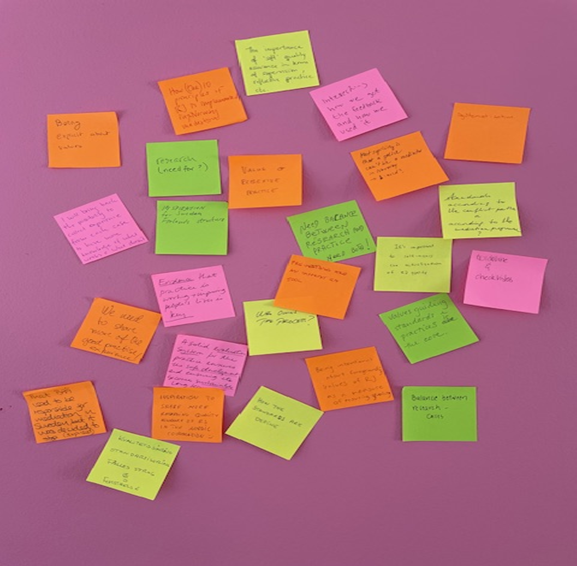
Post-it notes from workshops.
Photo: Karin Sten Madsen
Photo: Karin Sten Madsen
Concluding remarks
In sum, this workshop focused on how organizations across the Nordic region ensure safe, effective, and values-based RJ practices. Participants explored national differences in standards, facilitator training, and data collection methods. Key discussions included the need for clear guidelines, reflective practice, and consistent evaluation systems. Furthermore, participants stressed the importance of this topic and the continuation of discussions about quality assurance within the Nordic network.
6.3 Restorative Child Friendly justice in the Nordic Countries – scope of application, practices, challenges and potential
The principles of RJ align closely with the Convention on the Rights of the Child and its goal to minimize punitive measures for children and young people. RJ is widely regarded as a form of justice that is child-friendly, based on values such as voluntariness, active participation, and shared ownership of both the process and its outcomes. Central to RJ is its flexibility and ability to adapt to the unique needs of each individual.
The third workshop was led by Senior Advisors Karen Kristin Paus and Frøydis Heyerdahl at the National Mediation Service Norway, and the aim was to address questions of what is needed to safeguard the key principles and values of RJ regarding children and young people. The workshop addressed how Nordic co-operation can be beneficial to further development of RJ practices with children and young people.
RJ after offences for children under the age of criminal responsibility
This group explored RJ practices involving children involving children 14 years old or younger. Following the discussion, participants suggested topics for further, in-depth conversations within the Nordic network. Restorative approaches with this age group tend to be less formal, as the criminal justice system is not involved. The benefits for the children were emphasized, along with the importance of further developing and expanding these practices.
Participants expressed a strong interest in learning from other countries' experiences and best practices in implementing restorative processes for younger children. A recurring concern was the challenge adults face in granting agency to the children. There was a recognized need to better understand how to engage parents and caregivers in supporting, rather than dominating, the process.
Upholding restorative values was seen as essential, even though parental involvement can complicate matters. Parents, driven by concern, may unintentionally take control of the process rather than allowing the child to handle the situation with support. It's important to balance the needs of both children and adults, ensuring one does not take away focus from the other.
Restorative practices were identified as a promising way to counteract societal trends of violence and negativity, offering children opportunities to learn constructive, cooperative responses to polarization, crime, and bullying.
In conclusion, restorative processes for this age group show great promise. However, additional research and practitioner training are needed. Professionals should be equipped to facilitate child-friendly dialogues, build trust, and ensure children understand and voluntarily consent to the process.
RJ in combination with penal sanctions for children over the age of criminal responsibility
This group discussed whether RJ is applicable to all types of crime and concluded that it is important to distinguish between cases where mediation serves as the main form of punishment or part of the sentence, and those where it functions as a complementary or alternative measure. Some research indicates that RJ can be highly effective even in very serious offenses. However, these references often relate to mediation used as a supplement or integrated component of the broader justice response, rather than as the sole consequence.
The group continued to explore how to determine whether a case is appropriate for mediation. One significant concern was ensuring participant safety and preventing power imbalances – especially when minors are involved. The term “suitable” itself sparked debate: What qualifies a case as suitable? And who has the authority to decide?
The group also stressed the importance of thorough preparation, which may be time-consuming but is often critical to upholding the core principles of RJ. This need for deliberate groundwork can sometimes conflict with external pressures to resolve cases quickly and efficiently.
Ultimately, mediators must carefully assess, in dialogue with the parties, whether facilitating a direct meeting is safe and aligned with RJ values – or whether an alternative approach to dialogue would be more appropriate. Several dilemmas arise in this process. Some participants shared that they rely on highly experienced mediators for complex cases, and others mentioned using structured checklists as part of their assessment.
It’s important to examine cross-sectoral cooperation throughout the various stages of the RJ process. Without effective collaboration between criminal justice and other relevant agencies, referrals of cases may be lacking. Continued cooperation is just as essential following the RJ or mediation process. Children involved often require support not only after the process to manage their agreed-upon responsibilities, but also before and during the proceedings.
The group concluded by exploring how these discussions could be expanded within the Nordic context. Emphasis was placed on the value of sharing information. Several participants expressed interest in learning more about how RJ is implemented across different countries – both in general and specifically for young people. There was also an interest in exchanging details about frameworks, guidelines, and best practices. One idea raised was to further discuss commonalities and differences between national approaches.
RJ practices in communities related to conflicts and crime prevention in civil society
In Denmark, RJ practices are implemented in residential areas, communities, shops, and libraries. Additionally, SSP-Samrådet – an interdisciplinary collaboration between schools, social services, and the police – organizes mediations involving young children. Schools also use mediation, and experience shows that integrating it into school activities has a positive impact on reducing conflicts.
In Finland, mediation is practiced in schools and includes peer mediation as well as mediation between parents and teachers. Street mediation and community-based mediation are also available.
In Norway, the Trygg læring (Safe Learning) initiative facilitates school mediation, while the Red Cross organizes street mediation. A form of Family Group Conferencing, known as Familieråd, is available through child protection services.
Sweden does not currently implement RJ in schools, but it offers “Dialogue for Peace” training for young people. Starting in 2026, civil society organizations will begin working with youth through restorative circles.
In Ireland, four organizations provide training in RJ. Implementation occurs through local multi-agency cooperation and ad hoc initiatives. RJ conferences can be arranged in response to conflicts.
This group called for a united Nordic effort to strengthen RJ through concrete actions: creating a shared digital platform for exchanging RJ resources; organizing themed virtual meetups to share best practices and success stories; launching a youth-led peer mediation network to foster cross-border cooperation; connecting Denmark’s SSP and Norway’s SLT (Samordning av Lokale rus og kriminalitetsførebyggande Tiltak) models to enhance community coordination; inviting Nordic policymakers to witness RJ sessions firsthand through an Observer Program; presenting a joint RJ statement to the Nordic Council of Ministers; and initiating collaborative research on RJ’s long-term impact to inform policy and secure sustainable funding – altogether forming a collective push to amplify RJ’s reach and resilience across the region.
How to ensure that a restorative process is child-friendly
Children and young people seek the same dignity and respect as adults. A non-judgmental, compassionate approach – especially during mediation – helps them feel safe and heard. Consistent empathy, reflective practice, and involving parents can reveal broader dynamics influencing behaviour. Children are often open to change when treated with trust and respect, and they benefit from opportunities to take responsibility and resolve conflicts. However, they must not bear the burden alone: adults play a crucial role in shaping their environment. Emotional education and restorative practices in schools are essential to equip children with tools for growth, healing, and non-violent conflict resolution.
Concluding remarks
To sum up the content of this workshop participants stressed the agency and respect of children and their voices. Further cooperation was considered vital, especially to develop practices of RJ also outside the criminal justice system and for children under the age of criminal responsibility.