3. Going beyond GDP
Some alternative metrics have already been incorporated into the policy mainstream, most notably the Satellite Accounts and System of Environmental and Economic Accounting which sit alongside the SNA. These can prove instructive when exploring the role alternative metrics can play in policy.
However, there are many other metrics and frameworks which sit outside this official system entirely, with recent research identifying over 300 beyond-GDP metrics developed across the world (Jansen et al, 2024). The major challenge is to embed the most useful of these into official systems of measurement and governance so they can translate to policy impact.
The following sections discuss the SEEA as an extension of the official accounting infrastructure, and a number of influential frameworks outside the official systems comparing these dual approaches to alternative measurement.
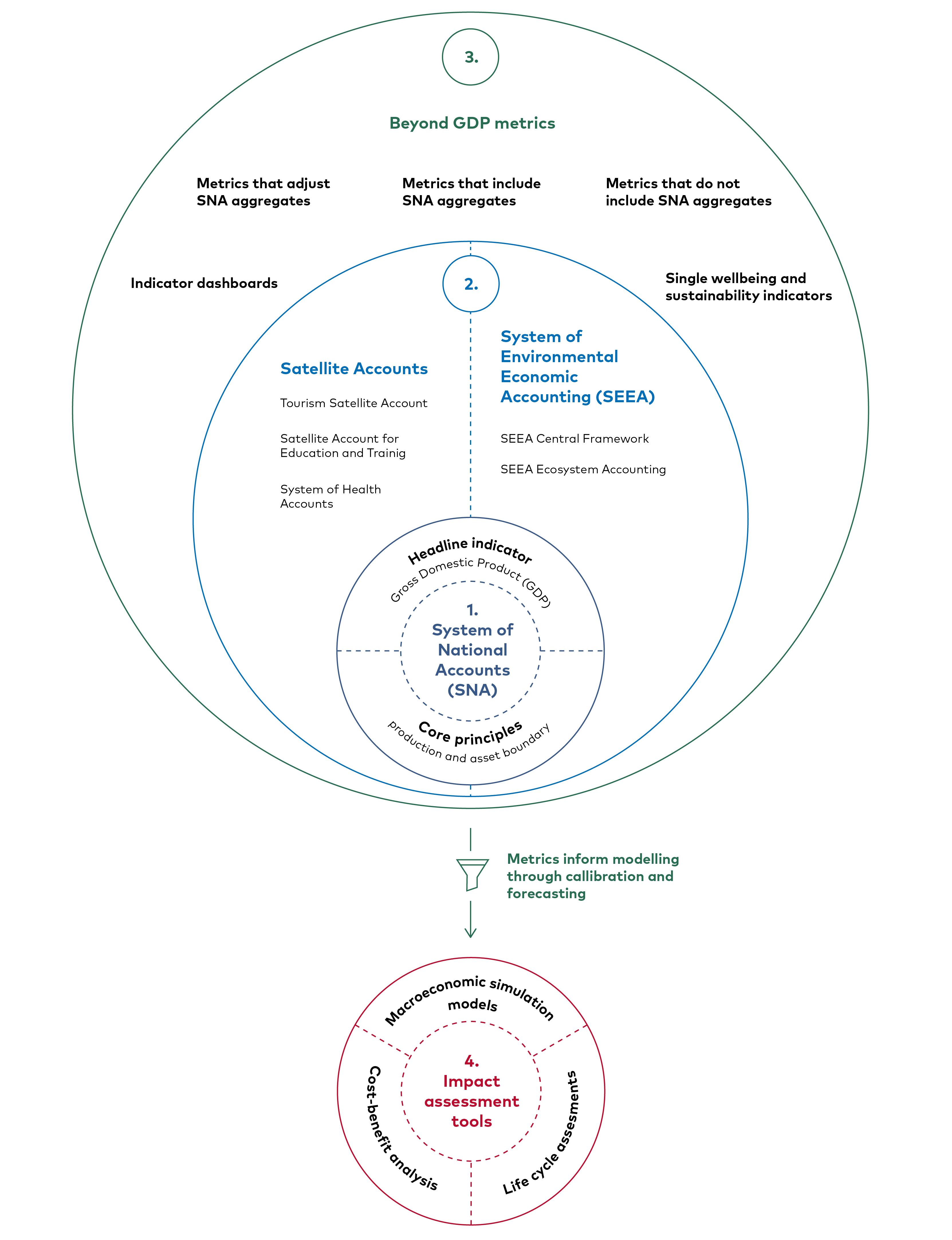
Figure 1: The relationship between established and alternative metrics.
Source: (ZOE Institute for Future-fit Economies, 2023).
3.1 Extending the SNA: System of Environmental-Economic Accounting Central Framework (SEEA-CF)
In March 2020, the UN Statistical Commission held its 51st session meeting, where it was decided to develop a roadmap for the revision of the 2008 SNA (System of National Accounts). During 2025, for the first time in SNA history the guideline/handbook will be revised and updated and will contain chapters related to wellbeing, distributional aspects, informal economy and much more (United Nations, 2024a).
In the final draft of the SNA 2025, it cites that “the SNA can be adapted and extended to organize data on the environmental and social dimensions of well-being and sustainability” (United Nations, 2024a). Examples such as the system of environmental-economic accounts (SEEA) is mentioned as an important source of information. However, it further highlights that SNA data can significantly contribute to the understanding of well-being and sustainability, it does not provide an inclusive framework that covers all the various aspects of well-being and sustainability. Rather it provides pieces of a larger puzzle.
Within the SNA 2025 update, it mentions that in future updates, the SNA framework remains open to new statistical developments related to the aspects of well-being. The updated handbook sheds light to the aspects of well-being with the figure 2 below.
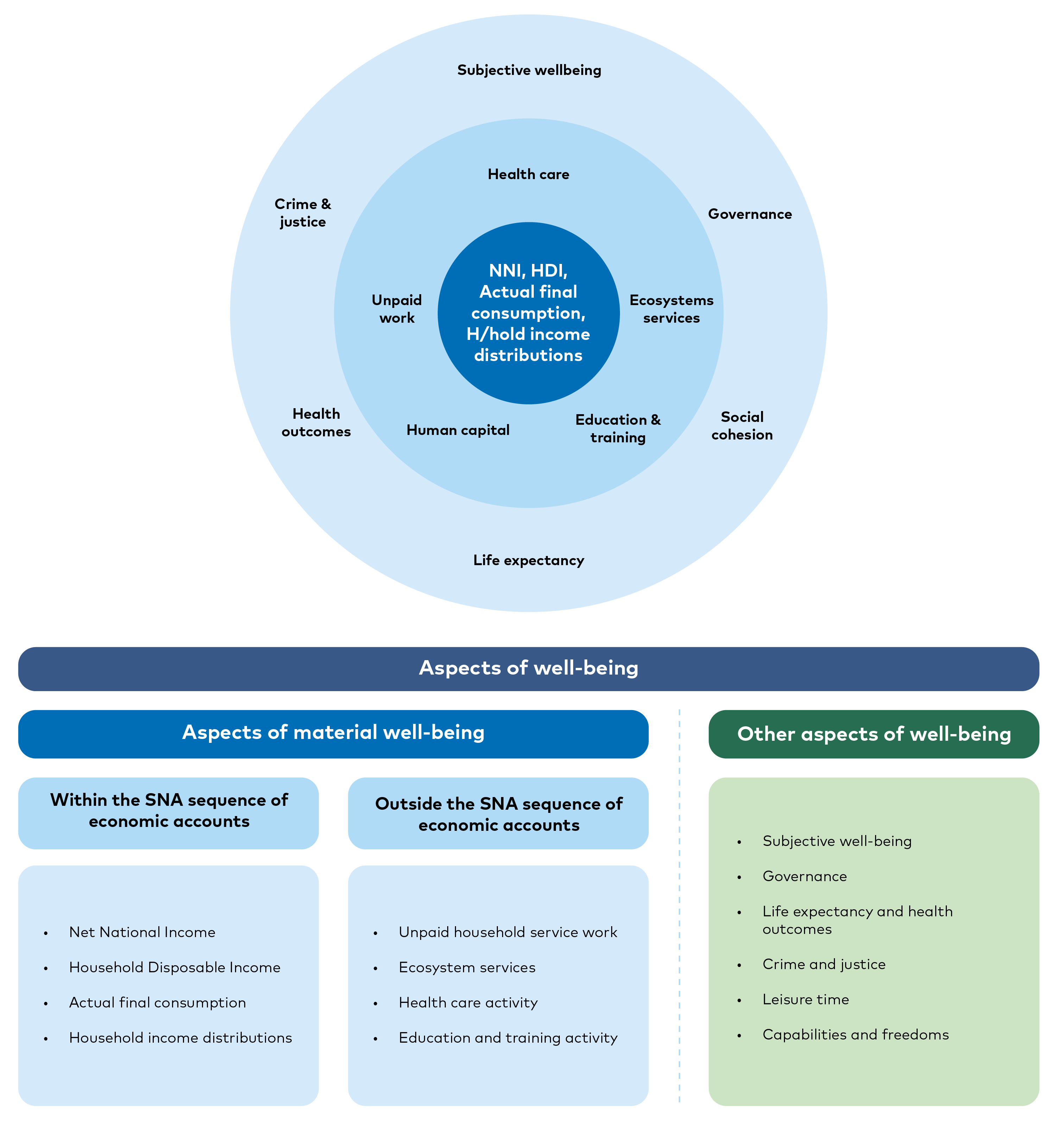
Figure 2: forms of wellbeing that may be considered in future SNA updates.
Source: https://mdgs.un.org/unsd/nationalaccount/SNAUpdate/2025/2025SNA_CH34_V11.pdf (United Nations, 2024a).
To measure the relationship between the economy and the environment and highlight the significance of natural capital for economic performance, reliable statistics are essential. The System of Environmental-Economic Accounts Central Framework (SEEA-CF) addresses this need by extending and supplementing traditional national accounts. SEEA-CF provides a crucial information source for analysing issues, assessing policy options, and implementing national policies. By using internationally agreed delimitations, definitions, and classifications, SEEA-CF logically illustrates the connections between economic activities and environmental impacts across industries and households (United Nations, 2024b).
Ecosystem accounting is one element of the broader framework of environmental accounting identified above. It is also one of the most developed measurement frameworks, building on the traditional SNA. More and more countries around the world have started to develop natural capital accounting and/or ecosystem accounting frameworks, and ecosystem accounting is thus instructive when considering the role of alternative metrics in policy more widely. Recent years have seen an uptick in research further developing the field of ecosystem accounting. For example, a five-year EU Horizon Europe project, Selina, was launched in 2023 to focus on the protection, restoration, and sustainable use of the environment. This initiative involves collaboration among 50 partner organisations from all 27 EU member states. It aims to set new standards for international cooperation to promote ecosystem services and biodiversity conservation and enhance ecosystem conditions. The research project contains a specific work package on Ecosystem Accounting, that aims to facilitate insights to how it can be used to support evidence-based public decision-making processes in a wide range of sectors such as urban and regional development, agriculture, energy, forest, green infrastructure and nature conservations (Selina, 2024).
Another long-term research project funded by the EU Horizon Europe, A-Track, was launched in the spring of 2024. This project focuses on accelerating actions for nature by businesses, financial institutions and governments. One of its aims is to mainstream and advance natural capital assessments and accounting across societies (A-track, 2024).
Ecosystem accounting is a subset of natural capital accounting, thus it focuses specifically on ecosystems and the services they provide, such as carbon sequestration, water purification, pollination, and recreational benefits. It integrates environmental data with economic data to reflect the contributions of ecosystems to human well-being and economic activity. It involves quantifying and valuing ecosystem services, which are the benefits humans derive from ecosystems.
Ecosystem accounting can be viewed as an important policy tool that links the health of natural systems directly to human well-being. By providing a comprehensive understanding of the value of ecosystem services, it supports sustainable development, enhances health outcomes, reduces poverty, and helps in climate resilience and biodiversity conservation. Integrating these accounts into national policies can lead to more sustainable and equitable development, improving the overall well-being of individuals and countries (Natural Capital Coalition, 2023).
The SEEA Ecosystem Accounting (SEEA EA) comprises five core accounts that utilise spatially explicit data and information on the functions of ecosystem assets and the ecosystem services they generate. Its strength lies with the fact that SEEA EA is based on internationally agreed-upon concepts, classifications, accounting rules and tables (United Nations, 2021, 2024a).
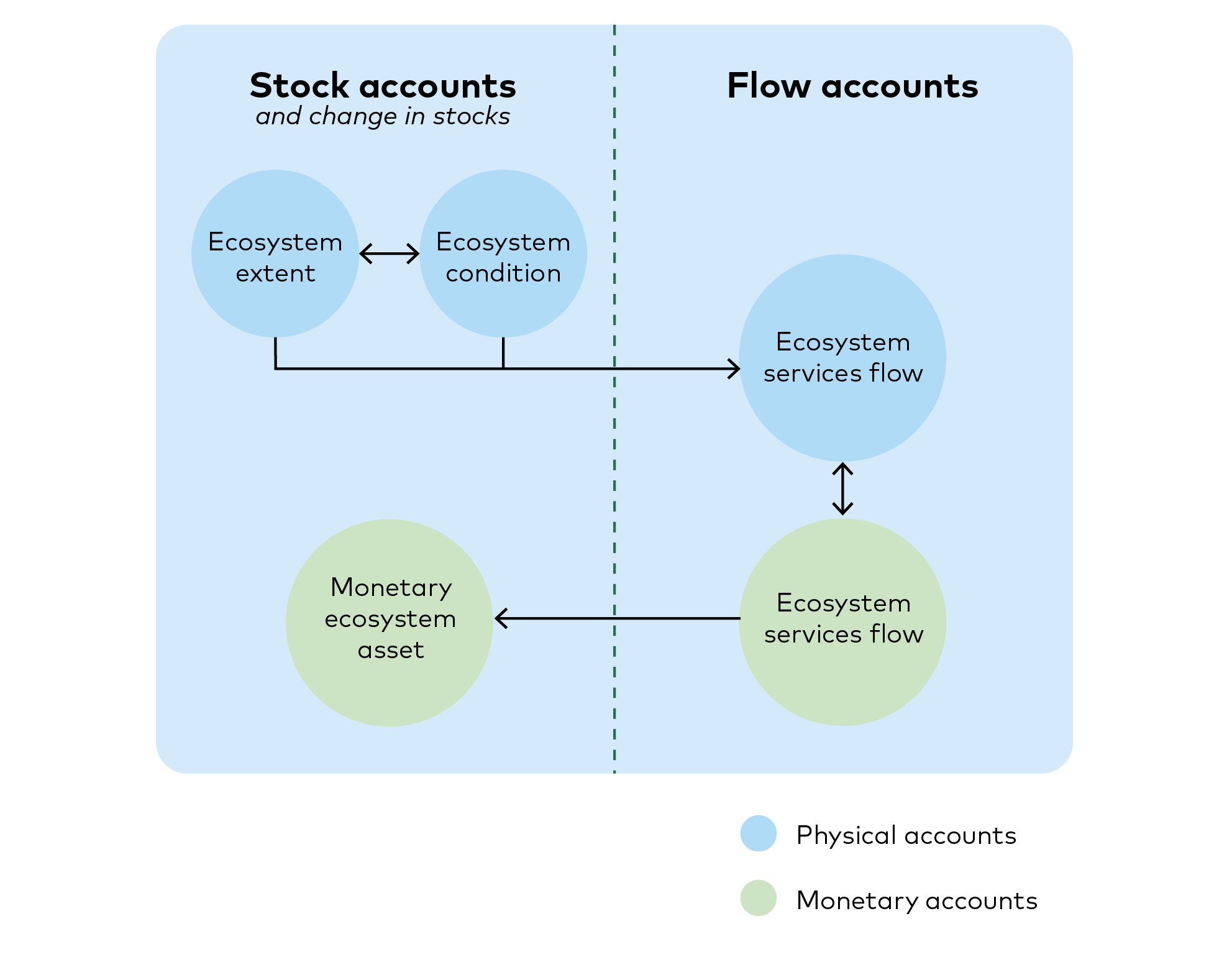
Figure 3: connections between ecosystems accounts. Source: (Mattson, Eriksson, Malmaeus et al., 2022)
Priority data are data points of which are foreseen as mandatory in the EU Commission proposal to amend regulation 691/2011 to add new modules of environmental economic accounts. Ecosystem Extent Account is likely to be mandatory from the year 2026. Data should be provided per area of 1000 ha (Eurostat, 2023a).
From Ecosystems such as area of cropland, grasslands, forest, inland wetlands, coastal beaches etc. As well as report data to these ecosystems, a supply and use table based upon ecosystem services. (Eurostat, 2023b). See figure 4 below.
… TO ECOSYSTEM | ||||||||||||||
1 | 2 | 3 | 4 | 5 | 6 | 7 | 8 | 9 | 10 | 11 | 12 | |||
FROM ECOSYSTEM… | Settlements and other artificial areas | Cropland | Grassland | Forest and woodland | Heathland and shrub | Sparsely vegetated ecosystems | Inland wetlands | Rivers and canals | Lakes and reservoirs | Marine inlets and transitional waters | Coastal beaches, dunes and wetlands | Marine ecosystems | TOTAL REDUCTIONS | |
1 | Settlements and other artificial areas | |||||||||||||
2 | Cropland | |||||||||||||
3 | Grassland (pastures, semi-natural and natural grasslands) | |||||||||||||
4 | Forest and woodland | |||||||||||||
5 | Heathland and shrub | |||||||||||||
6 | Sparsely vegetated ecosystems | |||||||||||||
7 | Inland wetlands | |||||||||||||
8 | Rivers and canals | |||||||||||||
9 | Lakes and reservoirs | |||||||||||||
10 | Marine inlets and transitional waters | |||||||||||||
11 | Coastal beaches, dunes and wetlands | |||||||||||||
12 | Marine ecosystems (coastal waters, shelf and open ocean) | |||||||||||||
TOTAL ADDITIONS | 0 | |||||||||||||
Figure 4: The supply and use table for ecosystems.
Source: (Eurostat, 2023b).
Cell shading:
White: Priority data.
Grey: The calculation is automatic when data are provided. These cells cannot be unlocked and edited.
Black: Not applicable.
White: Priority data.
Grey: The calculation is automatic when data are provided. These cells cannot be unlocked and edited.
Black: Not applicable.
Relevant data on ecosystem extent-, conditions, and services accounts are related to multiple areas such as land, urban recreation areas, forest, outdoor recreation, agricultural ecosystems. The current availability of these types of data differs among the Nordic countries. For instance, Norway and Finland have long-time series of outdoor recreation data. Long time series data on land cover is available in Sweden, Denmark, Finland and Norway. Norway has time series data on urban recreation areas. (Mattson, Eriksson, Malmaeus et al., 2022).
The pertinence of the SEEA central framework and ecosystems accounting is, therefore, two-fold. First, because it is an alternative metric that grasps nature as a form of capital on equal footing with human, physical, social and economic capital. It therefore permits us to see and monitor the harms caused by human behaviour as well the various benefits of nature for human wellbeing. Second, as the alternative metric arguably best integrated into national and global policy, it provides lessons for how we might expand the scope of welfare measurement yet further still.
3.2 Moving beyond the SNA: Beyond-GDP frameworks
Recent years have seen a marked uptick in research activity in beyond-GDP measurement and policy across Europe. For example, a number of explicitly Beyond-GDP initiatives have also been launched under the Horizon Europe instrument in recent years. These include WISE Horizons (WISE Horizons, 2023), ToBE (ToBe, 2023), SPES (SPES, 2023), and MERGE (MERGE, 2024), the latter of which is a coordination and support function bringing together 16 partners and €17 million to cohere learning and activity across the other projects to advance beyond-GDP measurement and policy across the EU. These projects are further bolstered by related projects dealing with post-growth measurement and policy such as the MAPS (MAPS, 2024) and WISER (WISER, 2023) Horizon Europe project and the REAL project (REAL, 2024), which received a European Research Council grant worth almost €10 million. By virtue of their aims to move beyond growth driven economies more widely, these projects also engage and support work around questions of alternative measurement. This spate of research activity demonstrates a growing consensus that business as usual economics will be insufficient in delivering environmental and social sustainability, and that policy programmes which move beyond the paradigm of GDP growth must be explored.
The WISE Horizons project has produced a framework–known as the WISE framework–which synthesises several beyond GDP-initiatives by making use of an interdisciplinary approach. The authors of the WISE framework argue that the development of a nation’s economy and economic policy has profound impacts on quality of life, income distribution and long-term sustainability. Furthermore, the authors argue that a country’s economic system is not the sole determinant of well-being. Non-economic factors within society, for instance social connections, neighbourhoods, the education system, lifestyles, and health, also significantly impact well-being and contribute to inequalities. These insights have policy implications: social policies, even those not traditionally considered 'economic,' play a crucial role in transitioning toward a society that prioritises well-being, inclusion, and sustainability (Jansen, Hoekstra et al., 2023).
The WISE framework presents an overview of terms and concepts related to wellbeing, inclusion and sustainability.
Term | Wellbeing | Inclusion | Sustainability |
Clarification | Wellbeing is a multidimensional concept which encompasses both experienced wellbeing and factors such as social relations, mental health, and living standards. | Inclusion is a multidimensional concept which encompasses the distribution of wellbeing determinants and opportunities across spatial scales (within countries, between countries, and globally) and social groups (gender, background, race, etc.). | Sustainability is a multidimensional concept which encompasses social and economic conditions for future wellbeing, such as education and infrastructure, as well as environmental conditions, such as planetary boundaries. |
Associations | Happiness, quality of life, prosperity, welfare, life satisfaction, flourishing, fulfilment | Equality, fairness, equity, opportunities, minorities, poverty, social floors, subsistence, (global) disparities | Resilience, long term, wealth, planetary boundaries, natural limits, resources, natural capital, human capital, social capital |
Typical policy domains | Health, social connections, housing, air pollution | Poverty, Gender and racial disparities, global north-south divide | Climate change, biodiversity, ageing society, Research and Development, Infrastructure |
Figure 5: Overview of WISE framework terms and concepts related to wellbeing, inclusion and sustainability.
Source: Adapted from (Jansen, Hoekstra et al., 2023).
This framework, alongside its umbrella term of ‘sustainable and inclusive wellbeing’, is gaining increasing traction across Europe (Benczur et al., 2024). For this reason, the present research paper has drawn on the framework extensively when selecting and analysing indicators, as outlined in the methodology contained in Section 4.1.
There are a large number of alternative metrics in existence, developed by a range of actors. For an overview and history of the field see Jansen, Hoekstra et al., (2023). It has been recognised that the disparateness of the field hinders progress in influencing policy (Hoekstra, 2022) and work is underway to explore the possibilities for convergence across metrics (Rum et al. 2024).
Alongside individual metrics themselves, the beyond-GDP movement is advanced by a number of wider frameworks which encompass not only measurement but also other aspects of policy and more widely how we think about the economy and its role in society more widely. It is often these frameworks which gain the most traction in wider discourse and which have made significant contributions to the push for alternative measurement and policy-making. We therefore discuss a number of the most prominent ones below.
3.2a The Sustainable Development Goals
The UN SDGs and associated indicators can thus in many ways be considered the prototypical attempt to measure progress beyond-GDP. The groundwork for measuring progress towards environmental and social sustainability, via the Sustainable Development indicators, were created in relation to the adaptation of Agenda 21, during the first Rio conference in 1992 (Giovannini, E., & Rondinella, T., 2018). The SGDs consist of 231 indicators, and each UN Member State develops their own version of suitable metrics corresponding to these. This means progress can look different across countries depending on the measurement approaches they use.
At the EU level some progress has been made in integrating the SDGs into policymaking, including the 2019 inclusion of the SDGs into the European Semester, the coordination framework of Member States’ economic and fiscal policies (Kormann da Silva et al., 2023).
The EU also produces a range of statistics on SDG performance across the region, a practice also shared by the non-EU Nordic nations of Norway and Iceland. However, most activity takes the form only of monitoring, and there has been little penetration into shaping policy objectives and actions (Ibid.). Further, funding for SDG monitoring is dependent on governmental decisions, making consistency and quality of work uncertain.
Despite the widespread adoption, institutional support and considerable investment in the SDGs–including into their measurement–the world is on track to fall woefully short of achieving the SDGs by the stated deadline of 2030 (United Nations, 2024c).
3.2b The wellbeing economy
A wellbeing economy seeks to use wellbeing metrics going beyond GDP to inform and guide policymaking, and this can be done in different ways. According to the Wellbeing Economy Alliance (“WEAll”):
“A Wellbeing Economy is an economy designed to serve people and the planet, not the other way around. Rather than treating economic growth as an end in and of itself and pursuing it at all costs, a Wellbeing Economy puts our human and planetary needs at the centre of its activities, ensuring that these needs are all equally met, by default.”
Different metrics may be used to this end and may include objective as well as subjective wellbeing measures. According to Birkjær et al. (2021), a wellbeing economy may operate at three levels: 1) to passively monitor the reality of people’s wellbeing, 2) to actively inform governments’ wellbeing priorities, and 3) to actively guide policy-making towards most wellbeing impact. To be considered a wellbeing economy a government must operate above the first level of merely collecting and measuring wellbeing indicators. According to the same report only New Zealand, the UK, Bhutan, and Iceland are engaged in all three levels. Among these, the Treasury in the United Kingdom and New Zealand have adopted measures for their policy appraisal procedures, with New Zealand’s Wellbeing Budget perhaps being the most prominent example. For the case of Iceland, see section 5.3a below.
In the report Towards a Nordic wellbeing economy (2021) it highlights how the Nordic countries can adopt the wellbeing economy model to enhance social, environmental, and economic progress. The authors of the report conclude that GDP is a useful metric, but it is not sufficient to capture broader aspects of wellbeing. The authors argue that there is a great need to include additional indicators that reflect quality of life. Some countries that have integrated wellbeing measures into their government priorities and policymaking includes New Zealand, the United Kingdom, Bhutan and Iceland. However, even when governments have introduced progressive wellbeing policies, these are threatened by governmental changes after elections; given the challenges of wellbeing-based approaches to standard economic norms they are often not resilient to political changes, especially where these shift countries back in a more conservative direction.
In addition, the report acknowledges the complexities and challenges involved in this transition. Some of the identified challenges are related to lack of standardisation of monitoring wellbeing frameworks, use of different elicitation methods
E.g., monetised wellbeing values v.s subjective wellbeing coefficients
Championed particularly by the NGO the Wellbeing Economy Alliance (WEAll), the wellbeing economy has arguably been one of the most successful beyond-GDP frameworks in terms of uptake, particularly in Europe and the Nordic countries. Alongside a number of governmental initiatives 16 WEAll national hubs have been established, including in Sweden and most recently Denmark (WEALL, n.d.). What is more, 2024 has seen a number of conferences around the theme of the Wellbeing Economy including in Iceland and Denmark while Sweden also hosted a similar gathering in 2023.
Distinct from the civil society activity of WEAll, six governments around the world are currently members of The Wellbeing Economy Governments partnership (WEGo) – Scotland, New Zealand, Iceland, Wales, Finland, and Canada. Among these, Wales may be considered particularly successful by embedding the goals of its policies into laws, and by enacting policies that are ‘red lines’, such as a total ban on construction of new roads. Wales has also passed the SDGs into law and established the world’s first Commissioner for Future Generations to represent the interests of the future within the institutions of government. This means that the wellbeing economy of Wales is less susceptible to political cycles (Kormann da Silva et al., 2023).
A means for governments to promote wellbeing, famously pioneered by New Zealand, is by making wellbeing budgets. These use a range of social and environmental indicators as well as economic ones to guide government investment decisions. Iceland has also adopted a gender budgeting approach based on similar principles (Weber et al., 2024). A wellbeing budget is a technocratic measure that has a clear policy impact. A drawback may be the annual timeline which can prevent long-term planning (Kormann da Silva et al., 2023). Kormann da Silva et al. (2023): “the gender budgeting approaches of Iceland and Finland are clear-cut cases where governments signal to both civil society and the private sector where the money will be flowing, and as such strengthening wellbeing in the process.”
The stability of WEGo is not a given but can be affected by political changes. Now champion figureheads such as Jessica Arden in New Zealand and Sanna Marin in Finland are no longer in their political posts, their countries have seen a marked downturn in the use of the wellbeing economy frame and associated policy activity. Even where governments remain enthusiastic, limitations remain in how far governments have been able to enact significant change through the use of the wellbeing frame (Mason and Büchs, 2023).
3.2c Doughnut Economy
Doughnut economics (DE) first emerged as a global theoretical model and economic mindset – not as a set of policies and institutions – fit for the challenges of the 21st century (Raworth 2012). It delineates an ecologically safe and just space (SJS) for humanity to operate within and is simultaneously a basis upon which to evaluate these operations (Raworth 2017). DE comprises both: (a) an ecological ceiling defined in terms of the earth’s planetary boundaries, as conceived by the Stockholm Resilience Centre (Rockström et. al 2009), necessarily being translated to a given territorial scale; and the complementary concept of (b) social foundations which are a human rights informed social floor for basic human development needs, a floor below which human deprivation may occur.
The SJS exists when a society functions within the ecological ceiling and above the social foundation. The ceiling and floor are portrayed as two concentric circles forming a doughnut shape.
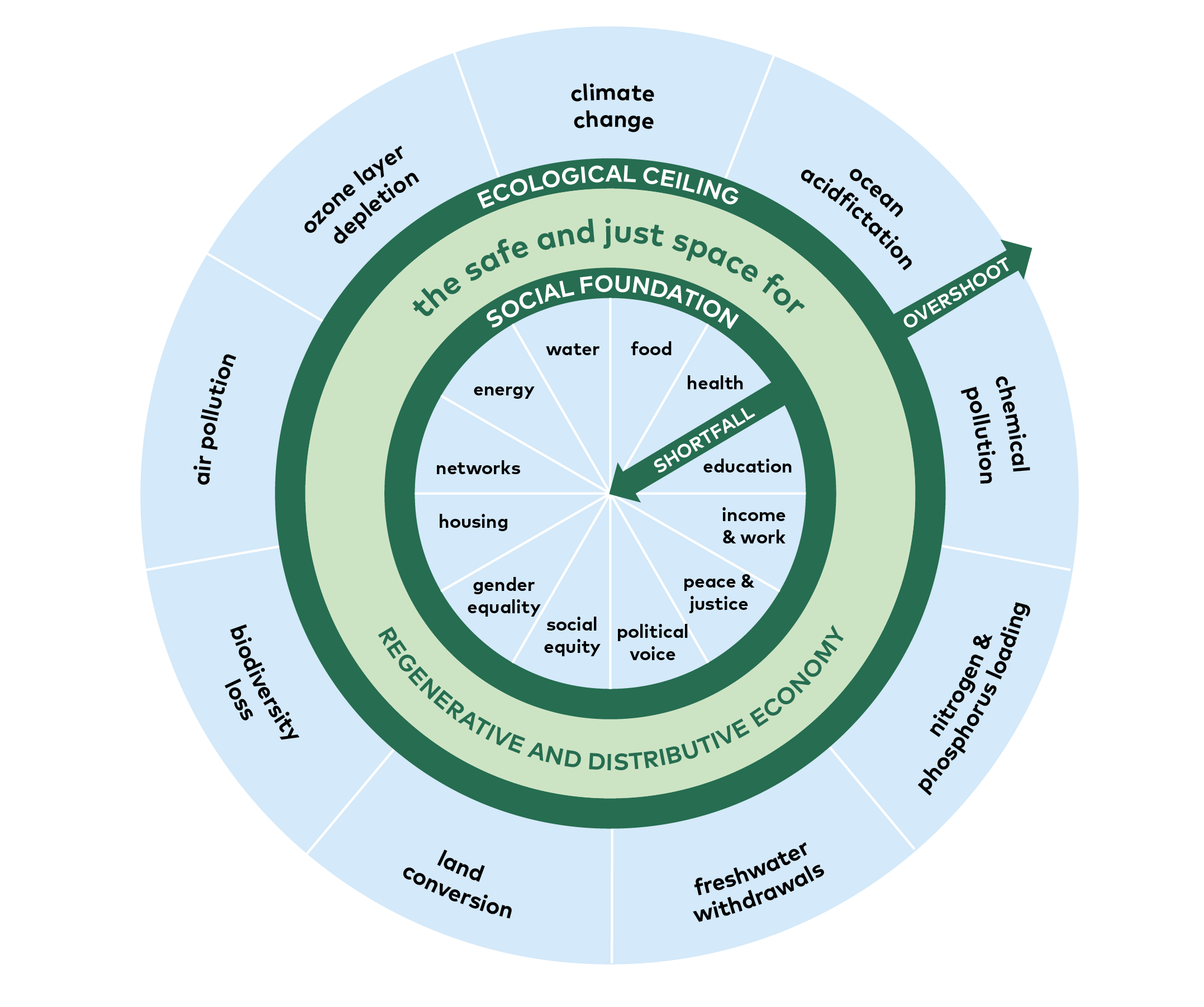
Figure 6: The Doughnut of social and planetary boundaries.
Source: Doughnut Economics Action Lab. https://doughnuteconomics.org/
As well as comprising a global economic mindset and evaluative model, DE has seen a shift in both function and applicable territorial scales. Capturing the imaginations of policymakers alongside NGOs, the private sector and citizens, it has become a tool for governance. As such, it is applied across multiple levels of governance. For instance, as sustainable development needs and large-scale just transition processes have come to fore, there has been a renewed focus on local governance institutions, as well as how they relate to regional, national and supranational actors. This has thrown up difficult questions regarding how the planet’s ecological ceiling and the SJS can apply, or be translated, to and across smaller scales (Turner and Wills 2022).
These governance challenges are being confronted by several municipalities and regions that have begun to adopt DE in their strategic planning and policymaking. Notable and oft-cited cases include Amsterdam, Brussels region and Melbourne. In the Brussels city-region for instance, DE allowed a comprehensive review and reorientation of economic strategy and a redefinition of what constitutes best practices for business models, as well as the emergence of a multi-level approach. New regional legislation set new standards for environmental and societal exemplarity for businesses seeking government support. In recent years, these well known examples can be complemented by the adoption of DE within the City of London and, since March 2020, there has also been a concerted effort to explore the strategic use of DE within the European Union. The aim, here, is to use DE to monitor a beyond GDP agenda within the EU. Building on the momentum of the Doughnut4EU group, policymakers at the European Commission have shown considerable interest in DE, especially since it aligns with the EU’s environmental priorities (Barth et. al. 2021).
This report identifies a number of cases of Nordic application of DE at municipal and regional levels – in both Copenhagen, Denmark (section 5.1a), Tomelilla municipality in Sweden (section 5.5a) and the region of Pirkanmaa in Finland (section 5.2a). Indicators specifically constructed around the SJS framework have been developed and were selected for inclusion in our analysis. These are discussed in section 4.2c.
3.3 Beyond-GDP Adjacent Frameworks
A number of other economic frameworks and concepts exist which are adjacent and relevant to the field of beyond-GDP measurement. Most famously is the concept of post-growth economics, an umbrella term for a range of schools advocating for a shift away from organising economies around GDP growth. The wellbeing economy and doughnut economy are both post-growth frameworks, advocating for a structural shift in the focus of our economies away from the prioritisation of economy growth.
A related but more radical position is degrowth, which argues that the only path to meaningful sustainability is a planned reduction in the material and energy throughput of at least the world’s largest economies. Degrowth explicitly advocates that traditional economic growth across the global south will remain necessary to ensure that the basic material needs of inhabitants are met. The reductions of global north throughput should be understood as making space for the global south to meet basic needs within planetary boundaries.
Finally, the burgeoning field of sufficiency studies chimes strongly with the concept of the SJS in doughnut economics, exploring how to shift to economies centred around providing “enough” for all rather than the maximisation which currently sits at their heart. Finland has emerged as a leader in sufficiency studies, for example with the SISU project being funded by the Finnish Strategic Research Council to explore the role of sufficiency solutions in Finland’s ecological transition.
While all of these fields go further than just looking at measurement beyond-GDP, there are significant overlaps particularly when it comes to policy prescriptions and even key figures working on both alternative welfare measurement and also other issues in related fields above. Each of the above schools is likely to endorse moving beyond-GDP as a measure of progress, and a number of important metrics have emerged from their key associated actors. For example, the Sustainable Development Index, one of the metrics selected for analysis in this report, has been developed by leading degrowth academic Professor Jason Hickel, who also leads the REAL ERC project mentioned in section 3.2.