5. Ecosystems
Here we describe six ecosystem types (coastal, cultural landscapes, forests, mountains, urban, and freshwater ecosystems including rivers, lakes and wetlands) and give examples of NbS that can be implemented in these ecosystems. In the earlier S-ITUATION project we also developed facts sheets for agricultural landscapes,
5.1 Coastal
Coastal ecosystems include areas affected by the tide (intertidal zone) as well as those further out on the continental shelf. They also include adjacent land areas. The Nordic coastal region includes the Northeast Atlantic coasts of Norway, Denmark, the Faroe Islands, Iceland and Greenland along with the Baltic Sea coasts of Denmark, Sweden, Åland and Finland. Key coastal habitats here include soft bottom habitats, blue mussel beds, seagrass meadows, kelp forests and seaweeds.
Coastal ecosystems as nature-based solutions
Well-functioning coastal ecosystems provide a range of benefits to humans. These include i) climate change mitigation and adaptation through, for instance, carbon storage, erosion control, wave attenuation, ii) economic development from, for instance, harvesting marine resources and tourism, iii) food security from sustainable fisheries and aquaculture, iv) human health and well-being through a myriad of cultural ecosystem services such as aesthetics, recreation, social relationships, spiritual values, along with resources to tackle medical societal challenges through marine bioprospecting.


Figure 6. Infographic for coastal ecosystems, before and after NbS
NbS that can be implemented in coastal areas
- Eelgrass meadow restoration: the restoration of eelgrass meadows. Example in Horsens Fjord in Denmark.
- Artificial blue forests: the active cultivation of kelp forest. For example, North Sea Farm 1: a pilot project to cultivate seaweed within an offshore wind farm.
- Sea urchin removal: sea urchin removal for passive kelp forest restoration. For example, in Norway, Troms County, there is a project that is using sea urchin removal as a tool to connect people with nature conservation, and science with the rest of society, facilitating regenerative travelling.
- Soft and hard bottom marine gardens: constructing underwater landscapes and terrain to allow for the restoration of diverse and robust marine habitats and communities.
Examples of coastal and marine NbS from the S-ITUATION project can be found here
5.2 Cultural landscapes
Cultural landscape is a term used to describe the interaction between human activity and the environment and falls into three main categories according to the World Heritage Committee:
- "a landscape designed and created intentionally by man"
- an "organically evolved landscape" which may be a "relict (or fossil) landscape" or a "continuing landscape"
- an "associative cultural landscape" which may be valued because of the "religious, artistic or cultural associations of the natural element."
Cultural landscapes are found throughout the Nordic countries. In highland, stony, and mountainous areas you can find mainly low-productive grassland areas used for animal husbandry. In the lowlands you tend to find more intensively managed agricultural fields, with crops such as wheat, rapeseed and sugar beets.
Cultural landscapes as nature-based solutions
The main purpose of cultural landscapes is to provide food; hence they are essential for the societal challenge food security. Nature-based solutions within the cultural landscape are meant to counteract negative impacts of agricultural activities. This includes biodiversity protection by supporting flora and fauna, for example meadow flowers, birds, and insects, as well as reduced eutrophication, greenhouse gas emissions, soil erosion and degradation.
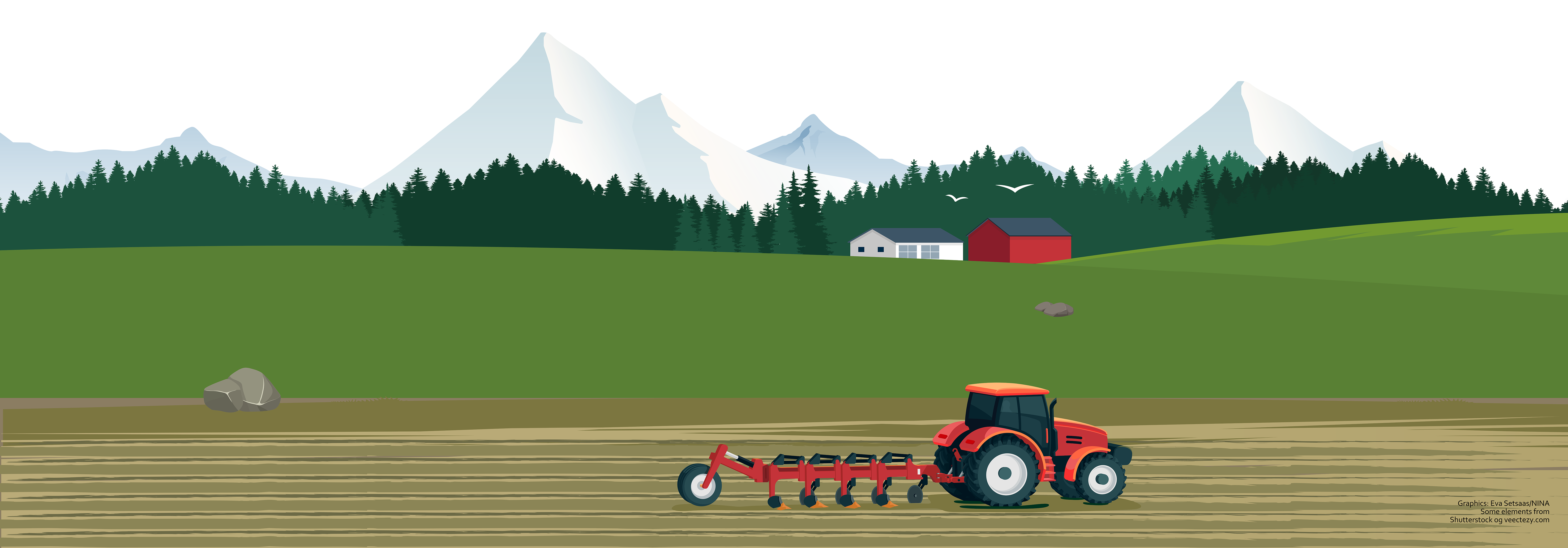
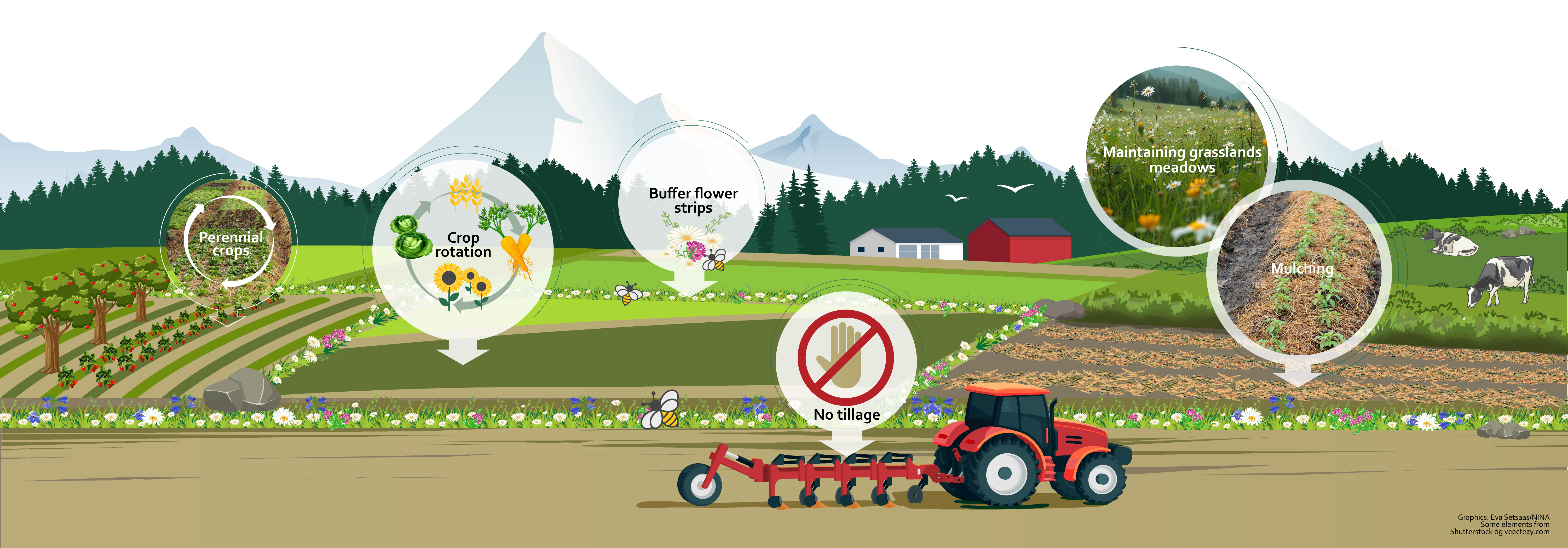
Figure 7. Infographic for cultural landscapes, before and after NbS
NbS that can be implemented in cultural landscapes
- Flower strips/buffer zones: Buffer zones and flower strips are types of vegetation structure planted to serve a specific purpose. This can be, for example, to protect a water course by taking up excess phosphorus from field run-off, provide floral resources to insects, provide food and shelter to animals, or protect against soil erosion.
- Maintaining grasslands and meadows: Maintaining and creating grasslands and meadows is an important conservation measure for semi-natural and natural ecosystems in the cultural landscape.
- Crop rotation and intercropping: Crop rotation is the change of crops between harvests. This can be from one year to another or, depending on climate and crop type, several times over a season. Intercropping refers to when two or more crops are grown at the same time on the same piece of land.
- No tillage: No, or reduced, tillage refers to the practice of sowing or planting the new crop after harvest without first tilling the soil.
- Perennial crops: Perennial crops are crops that are not tilled after harvest but planted and then harvested year after year without replanting the crop. Most used examples are fruit trees and berry bushes. Perennial cereal crops have not yet been fully developed.
- Mulching: Mulching is a collection of NbS that focuses on covering the soil and adding nutrients and organic matter to it. This can be compost, chopped plant material, or even living mulch in form of intercropping plants that grow under the main crop.
Examples of NbS in the agricultural landscape can be found here
5.3 Forest
A forest is a complex ecological system where trees are the dominant life-form. Forests can develop under various conditions, with various soil types, plant and animal species.
Forests and other wooded land cover 55% of the Nordic countries. In Finland and Sweden, this figure exceeds two-thirds, making them the most forested countries in Europe. The percentage of forested land in Norway and Denmark is 38% and 15%, respectively. Forest cover in Iceland is approximately 0.5% of the total land area.
Coniferous species dominate Nordic forests, with pine and spruce accounting for 78% of the standing stock. Pine is the dominant species in Finland and Sweden, while spruce is the most common species in Norway. Seventy-one percent of the broad-leaved species are birch, with the remaining 29% being smaller volumes of aspen, alder, maple, oak, and beech. Forests in Denmark and Iceland are dominated by broad-leaved species.
Forests as nature-based solutions
Nordic forest is a significant player in the combat against climate change, both as a carbon sink and as a provider of substitutes to fossil-based products. Forests are also home to thousands of species, some unique to the Nordic region, and provide a popular recreation area for people.
Afforestation or forest-related NbS can be located in forests, but also urban areas or abandoned agricultural lands, for example. Forest NbS can address multiple societal challenges: biodiversity enhancement (creating habitat for forest species), climate change mitigation and adaptation (via carbon sequestration), economic development (timber production and other services), food security (a source of local berries, mushrooms, medicinal plants etc.), human health and wellbeing (e.g. recreational areas, fresh air, medicinal plants), and water management (restored or improved hydrology and better water quality).
Seventy-five percent of the Nordic countries’ forestland is privately-owned. Finland has the highest share of publicly owned forests (31%), and Norway has the smallest percentage (20%).
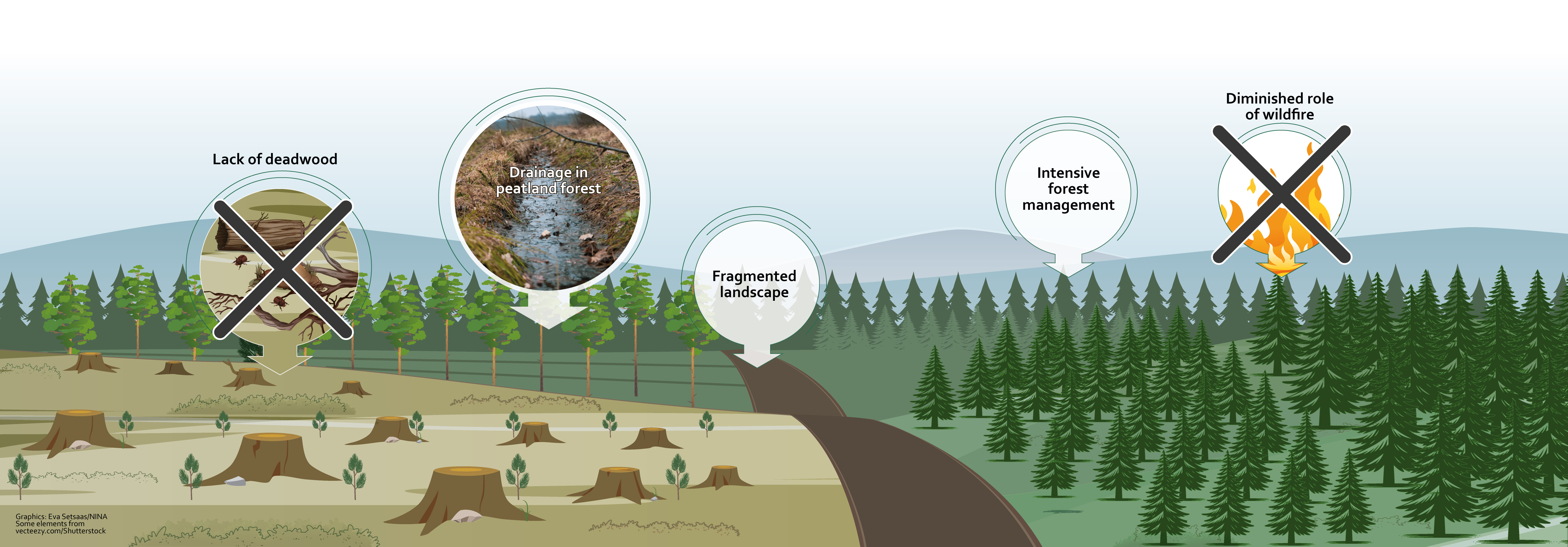
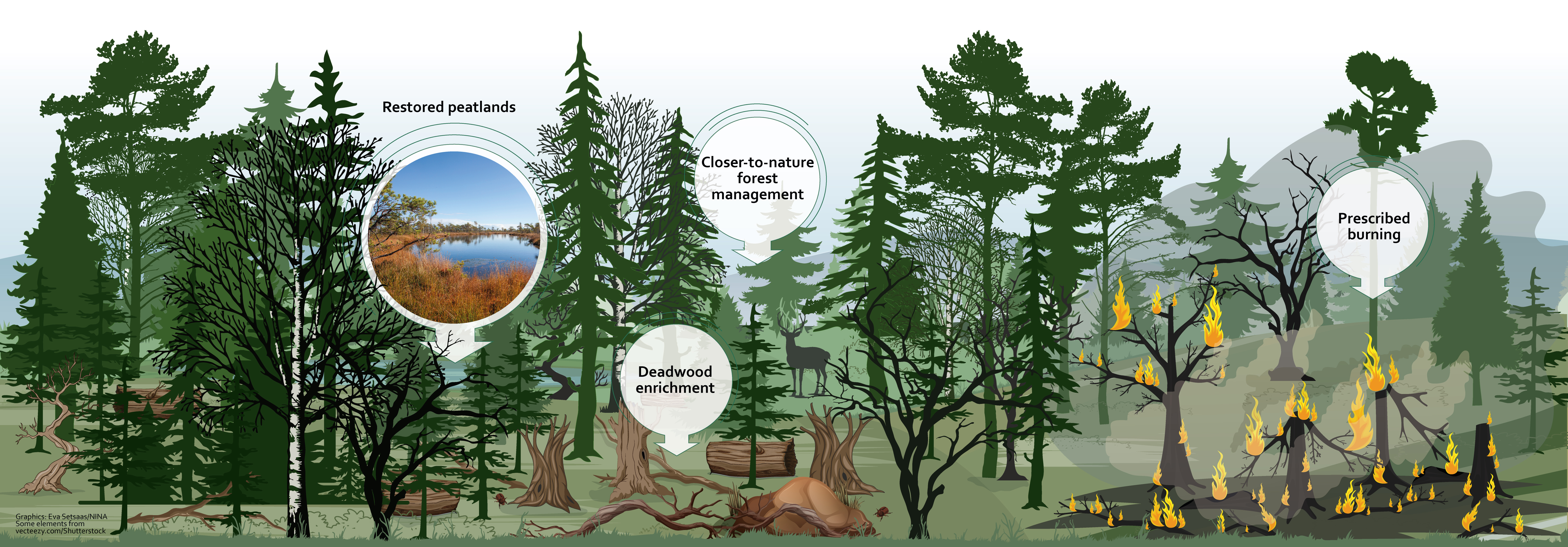
Figure 8. Infographic for forests, before and after NbS.
NbS that can be implemented in forests
- Closer-to-nature forest management: multipurpose forest management that addresses global societal challenges.
- Deadwood enrichment: retaining and creating deadwood as a part of closer-to-nature management and ecological restoration. For example, the EVO experiment in southern Finland, which focuses on the effects of prescribed burning, tree retention and downed deadwood creation on the deadwood profile in managed boreal Norway spruce forest stands over a 16-year period (Shorohova et al, 2024).
- Prescribed burning: an intentional and controlled burning of an area for ecological restoration or silvicultural purposes (in Nordic countries).
- Restoration and closer-to-nature management of drained forested and afforested peatlands: rehabilitation of forested peatlands’ nature and ecosystem functions and services. For example, see the best practice report on ecological restoration in drained peatlands from Finland (Similä et al 2014)
Examples of NbS in forests can be found here
5.4 Mountains
Mountain or “montane” ecosystems are found on the slopes of mountains. Because the climate gets colder with elevation, the composition of the flora and fauna depends on elevation. As such, bands or zones of similar vegetation can be distinguished at similar elevations. These zones were already observed by early explorers such as Alexander von Humbolt and described as similar across the globe, although species identities differ regionally. At moderate elevations forests dominate, while small-stature plants are the only ones that endure the harsh conditions at high elevations. The ecosystems above the tree line are referred to as “alpine”. The very highest regions of the alpine are permanently covered by snow and ice.
A variety of ecosystems covered elsewhere in this handbook can occur in steep terrain, for example forests and lakes. Mountains can also include wetlands and mires, as well as cultural landscapes. Mountains in the Nordic countries are used extensively as grazing areas for reindeer, sheep and cattle.
The Scandinavian mountains stretch from southern Norway to Northern Finland and include the western and northern parts of Sweden. Mountains up to an elevation of 880 m a.s.l. are also found on the Faroe Islands.
Mountains as nature-based solutions
Mountain ecosystems provide a wide range of ecosystem services3 and thereby contribute to the societal challenges biodiversity enhancement (e.g., creating habitat for species), climate change adaptation (e.g., carbon storage), disaster risk and preparedness (e.g., landslides, floods), and water management (e.g., access to drinking water). Where mountain areas are used for grazing or hunting, they contribute to the societal challenge of improving food security.
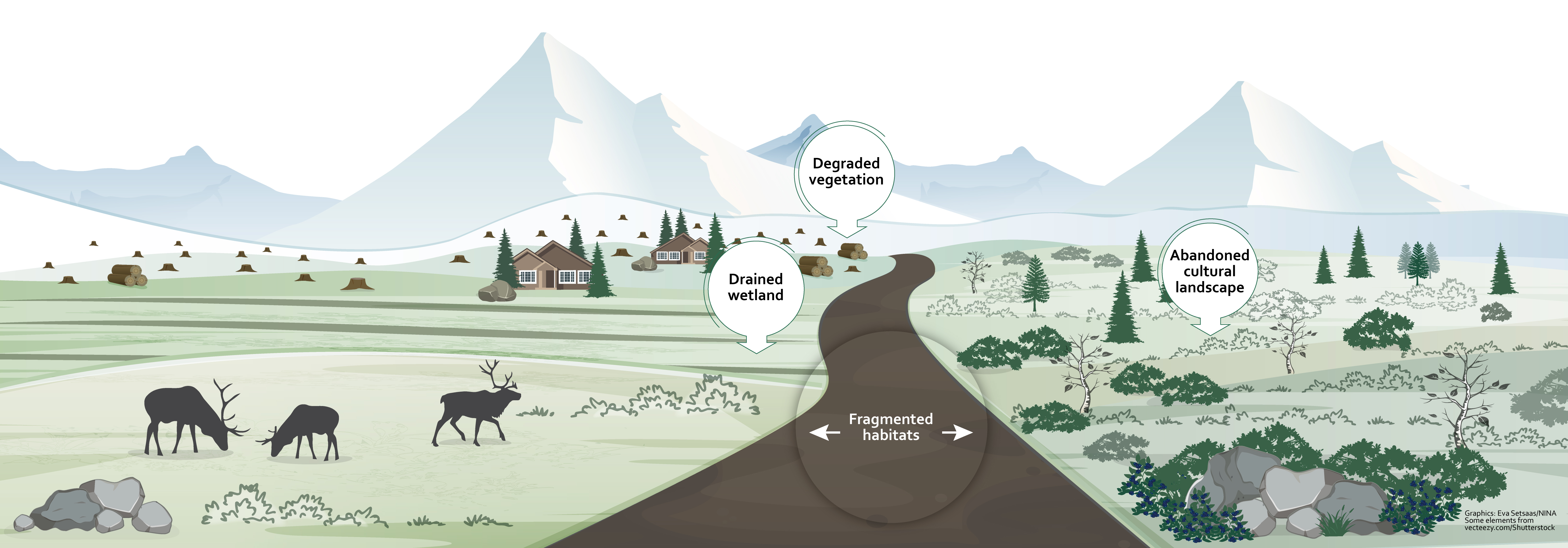
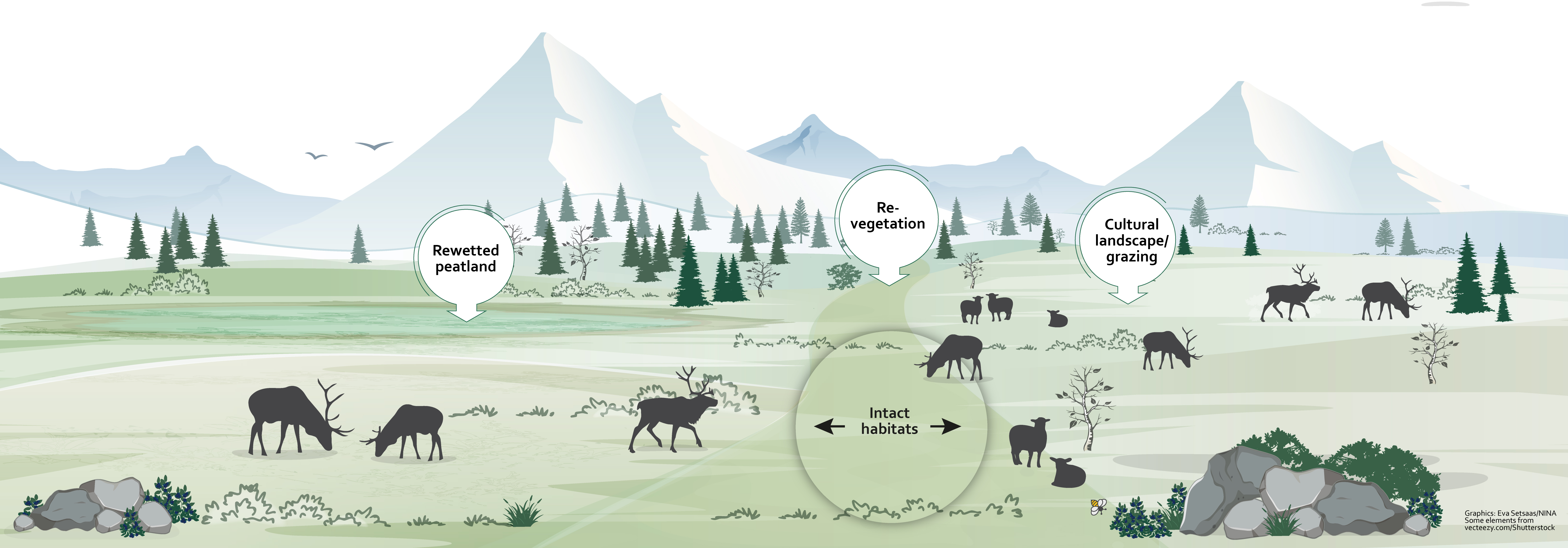
Figure 9. Infographic for mountains, before and after NbS.
NbS that can be implemented in mountains
- Restoration and revegetation: restoring vegetation where vegetation has completely disappeared or restore degraded vegetation. See for example the restoration project at the shooting range in Hjerkinn, Dovrefjell in Norway,
or the Lendisbati project on the Faroe Islands. - Other NbS can also be implemented in mountain ecosystems, for example: remeandering of rivers, rewetting of mires, maintaining grasslands and meadows and closer-to-nature forest management.
Further examples on NbS can be found in the online handbook.
5.5 Urban
An urban ecosystem refers to the interaction between natural processes and human activities within a city or urbanised area. In the Nordic region, urban ecosystems are shaped by a unique blend of cultural and environmental factors, including seasonal variations and proximity to natural landscapes such as forests, lakes, streams and fjords. Urban ecosystems are strongly influenced by human activities that have modified the once natural environment. The interplay and mosaics between built infrastructure and natural spaces creates habitats to species that can adapt to such urban environments. However, the species composition may differ from those in more natural environments.
Urban ecosystems in the Nordics face challenges such as air and water pollution, as well as noise and light pollution, from transportation, industry, burning of wood for heating and other human activities. As cities and urban areas expand, natural habitats are often replaced by buildings, roads, and parking lots, fragmenting ecosystems and impacting biodiversity. However, urban environments also offer unique opportunities for nature-based solutions. Making nature a part of cities through parks, green rooftops, community gardens and blue features like ponds, streams and raingardens has become increasingly important.
Urban ecosystems and nature-based solutions
Integrating NbS into urban areas can enhance biodiversity, reduce pollution, and help adapt to climate change, while also improving the quality of life for urban communities. Urban biodiversity is essential for the resilience of cities. Green spaces, urban forests, and rain gardens provide ecosystem services crucial for humans and wildlife. For example, trees can provide shade that help regulate temperature and absorb stormwater and, in some cases, contribute to air quality, but this is more uncertain (Venter et al. 2024).
Rain gardens play a vital role in managing stormwater by retaining and treating runoff, for example from roads, and reducing pollutants such as heavy metals and nutrients before they enter urban waterways. Cities are also increasingly recognizing the physical and mental health benefits of access to nature. Incorporating NbS into urban planning and development can improve livable environments.
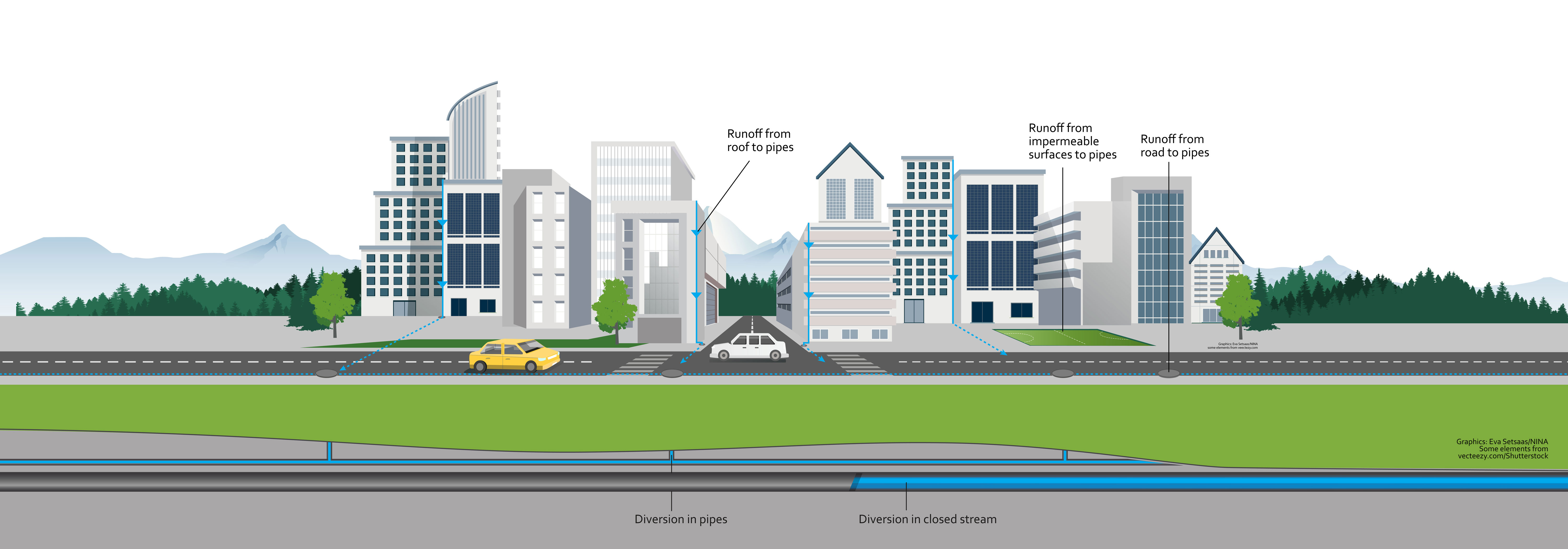
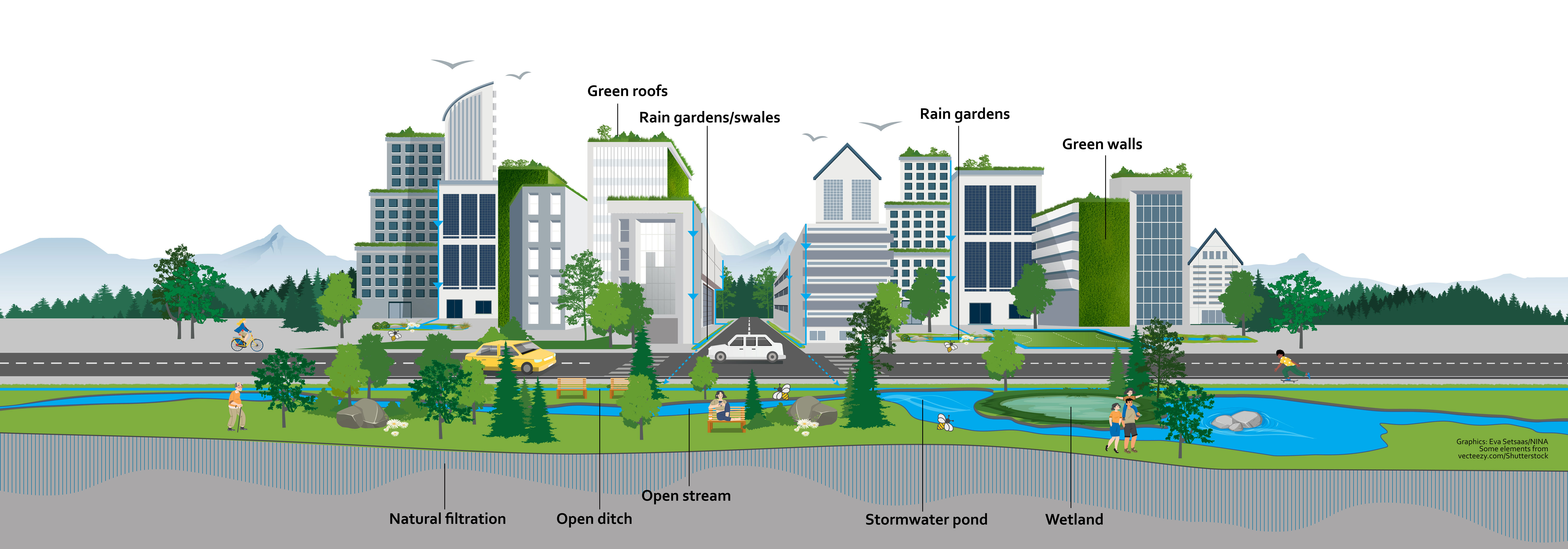
Figure 10. Infographic for urban areas, before and after NbS.
NbS that can be implemented in urban areas
- Green roofs and walls: Green roofs can help reduce stormwater and regulate local temperatures to reduce urban heat island effects, improve air quality, and create habitats for local species including birds and bees, butterflies, beetles and other invertebrates. Green and blue-green roofs (e.g. Blue-green roof on Vega Scene in Oslo
), as well as green walls, are particularly beneficial in densely built environments with limited ground-level green space. - Rain gardens and swales: In the Nordic region, where frequent rainfall and snowmelt can lead to significant stormwater runoff on hard surfaces, rain gardens and swales offer solutions to manage stormwater, reduce flooding risks, and retain and treat pollutants from the urban environment. These structures can help prevent flooding by slowing runoff, reduce pollution entering waterways, and recharge groundwater. Care needs to be taken for these structures to be beneficial for biodiversity, for example in thinking about which plants and vegetation are used in the solutions.
- River daylighting and urban wetlands restoration: Restoring or creating urban rivers, lakes, and wetlands can help improve water quality, reduces flood risks, and provides critical habitats for aquatic and terrestrial species. For example, see the river reopening example at Hovinbekken, Oslo.
Wetlands also play a role in carbon sequestration and can contribute to climate change mitigation. - Urban trees and forests: Planting street trees and protecting or restoring urban forests can help cool down city areas and reduce the impact of heat waves as well as protect against wind. Trees can also absorb stormwater and offer habitats for birds and other species while also contributing to the aesthetic and recreational value of urban spaces.
Examples of NbS in urban areas can be found here
5.6 Rivers, lakes and wetlands
Rivers, lakes and wetlands are saturated with freshwater, either permanently or seasonally, creating unique habitats for a variety of aquatic plants and animals. These ecosystems are typically characterized by vegetation adapted to waterlogged, oxygen-poor soils, and can include marshes, swamps, and bogs. Freshwater wetlands are especially valuable for their role in filtering water, reducing flood impacts, and providing habitat for biodiversity. In the Nordics, rivers, lakes and wetlands are diverse and ecologically significant, playing a crucial role in supporting biodiversity, regulating water flow, and sequestering carbon. Wetlands in the Nordics range from small streams, over large lakes to peatlands, and they are integral to the region's natural landscape and cultural heritage. As such, wetlands are also an important ecosystem in agricultural systems, which are dependent on water availability and are also often the source of degradation of these ecosystems. Below is a list of some of the main types of wetlands:
- Peatlands – bogs: Common across the Nordic region, especially in Finland and Sweden. Bogs are acidic, nutrient-poor wetlands dominated by sphagnum mosses. They often form in cool, humid climates and accumulate thick layers of peat.
- Peatlands – fens: Found throughout the Nordics, fens are less acidic and more nutrient-rich than bogs. They are often fed by groundwater and support a diverse array of plant life, including sedges, grasses, and various flowering plants.
- Marsh: A marsh is a type of wetland that is dominated by herbaceous plants rather than woody vegetation like trees and shrubs. It typically has shallow, standing or slow-moving freshwater or brackish water and is characterized by waterlogged, nutrient-rich soils. These wetlands often occur along the edges of rivers, lakes, and estuaries, serving as transition zones between aquatic and terrestrial ecosystems.
- Shallow Lakes and Ponds: The Nordic region is dotted with thousands of lakes and ponds, many of which are surrounded by wetland areas. These water bodies support a variety of aquatic life and are important for migrating birds and amphibians, for example.
- Riverine/floodplain wetlands: These wetlands are found along rivers, particularly in Sweden and Finland. They play a crucial role in flood management and provide habitats for species like beavers, otters, and a wide range of birds.
- Forested Wetlands/swamps: Forested wetlands, particularly those dominated by pine or spruce, are common in the Nordic countries. These swamps often occur in conjunction with peatlands and are important for species like moose and various bird species.
Rivers, lakes and wetlands as nature-based solutions
Nature-based Solutions in wetlands address a range of societal challenges by leveraging the inherent capabilities of these systems. Below are some of the main societal challenges that can be effectively addressed applying NbS in rivers, lakes and wetlands:
Disaster risk and preparedness – Flood Risk Management:
Challenge: Increasing frequency and intensity of floods due to climate change and urbanization.
NbS Application: Restoring rivers, lakes and wetlands help absorb and slow down floodwaters, reducing the risk and severity of floods in downstream areas.
Water Management – Water Quality Improvement:
Challenge: Pollution and nutrient runoff from agricultural and urban areas degrading water quality.
NbS Application: Wetlands act as natural filters, trapping sediments, nutrients, and pollutants. Restoration of wetlands can reduce nutrient overload, prevent sedimentation, and treat and retain contaminants from water sources. This not only improves the ecological balance of rivers, lakes, and coastal areas but also contributes to e.g. cleaner drinking water. In this way, wetland restoration is a cost-effective strategy for enhancing water quality and protecting both environmental and human health.
Biodiversity enhancement – Biodiversity Loss:
Challenge: Habitat destruction and fragmentation leading to declines in species populations and loss of biodiversity.
NbS Application: Rivers, lakes and wetlands provide critical habitats for a diverse array of species. By protecting and restoring these ecosystems, biodiversity can be enhanced by supporting the survival of both aquatic and terrestrial species.
Climate Change Mitigation:
Challenge: Rising greenhouse gas emissions contributing to global warming.
NbS Application: Wetlands, particularly peatlands, are critical carbon sinks that play a vital role in mitigating climate change. By preserving and restoring these ecosystems, large amounts of carbon dioxide can be sequestered and at the same time the release of greenhouse gases can be prevented. This is especially important, as disturbed wetlands, such as drained peatlands, can emit significant quantities of carbon, methane and nitrous oxide.
Climate Change Adaptation:
Challenge: Increasing temperature and changing precipitation patterns affecting communities and ecosystems.
NbS Application: By protecting and restoring rivers, lakes and wetlands it is possible to help communities adapt to climate change by providing natural buffers against extreme weather events, stabilizing local climates, and maintaining water availability during dry periods.
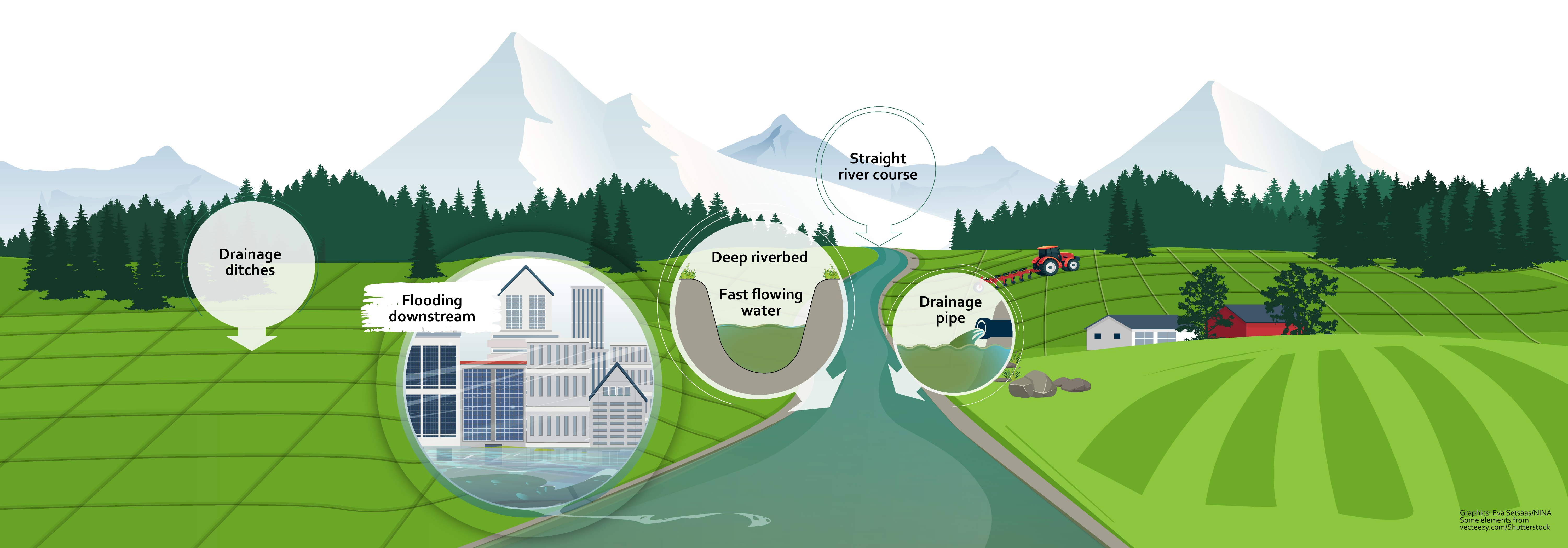
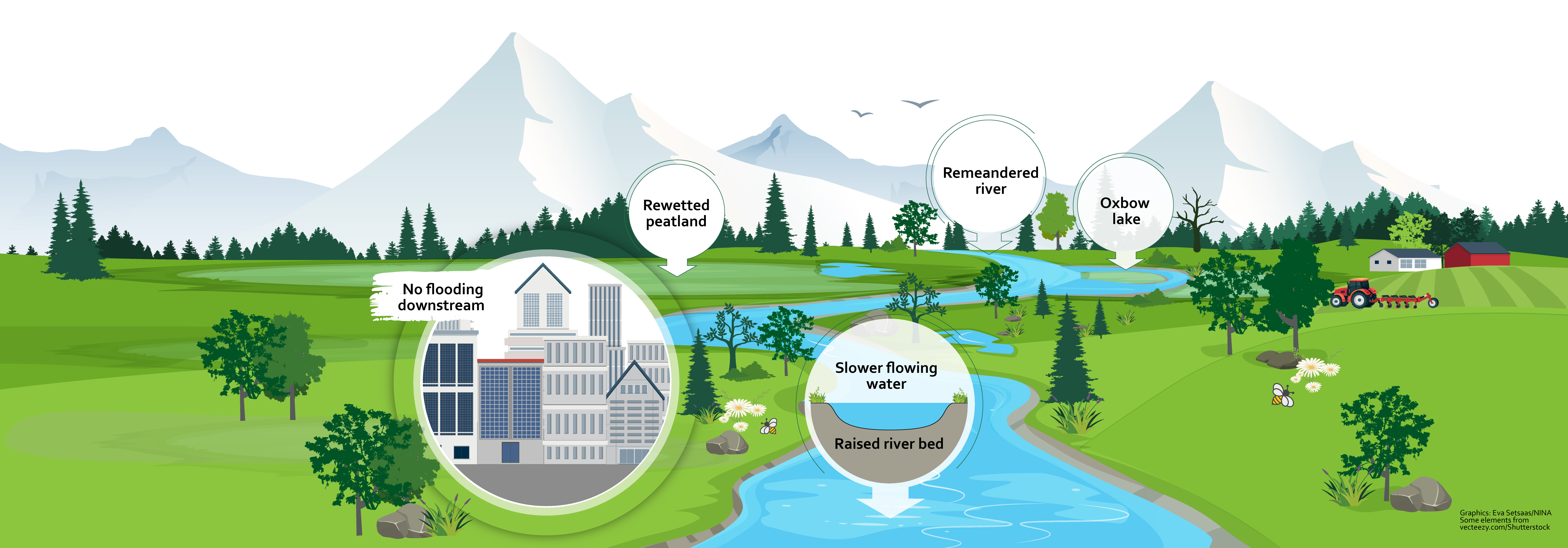
Figure 11. Infographic for wetlands, before and after NbS.
NbS that can be implemented in rivers, lakes and wetlands
- Remeandering: A previously straightened or channelized stream is returned to a more natural, meandering (curving) planform.
- Raising riverbed level: The stream bed level of a previously cut down stream is elevated to reconnect the river with the surrounding area.
- Ditch and drain blocking and filling: Man-made drainage ditches and drains that were originally constructed to lower the water table for purposes like agriculture are obstructed or filled completely. For example, the Kylldal catchment of the Kyll river near Steinebruck (Nauta et al., 2024).
- Disconnect functioning drainpipes: Artificial drainage systems are disconnected to prevent the water from entering directly into the stream. For example, Kvorning, the river valley to Nørreåen in central Jutland.
- Rewetting: Former wetlands that have been drained for human activities are rewetted applying different types of NbS that restore the natural hydrology of the area.
- Floodplain reconnection: Floodplain can be reconnected to its surrounding by applying different types of NbS that reconnect the hydrological connectivity between the river and the floodplain.
- (Re-)establishment of shallow lakes and ponds: Small, shallow bodies of water are created in areas where they have been lost, degraded, or were not previously present.
Examples of NbS in wetlands can be found here