3. What are nature-based solutions?
The United Nations Environment Assembly of the United Nations Environment Programme from 2022 defines NbS as “actions to protect, conserve, restore, sustainably use and manage natural or modified terrestrial, freshwater, coastal and marine ecosystems which address social, economic and environmental challenges effectively and adaptively, while simultaneously providing human well-being, ecosystem services, resilience and biodiversity benefits”. This builds on the IUCN definition which is “actions to protect, sustainably manage, and restore natural and modified ecosystems that address societal challenges effectively and adaptively, simultaneously benefiting people and nature”. These solutions harness the power of nature to tackle various environmental, social, and economic issues, such as climate change, food and water security, disaster risk reduction, pollution mitigation and sustainable urban development (Figure 1).

Figure 1. NbS must address human health and well-being, and biodiversity enhancement, along with other societal challenges.
NbS are:
- highlighted by the UN, IPBES and IPCC as a cost-effective way of meeting SDGs (address societal challenges while safeguarding benefits to biodiversity and human well-being)
- vital in addressing climate change and biodiversity loss
- tackle societal challenges using opportunities and models created by ecosystem elements and processes
- an umbrella concept incorporating already established approaches (e.g. ecological engineering, ecological restoration, blue-green infrastructure, ecosystem-based adaptation, ecosystem-based management, area-based conservation)
Nature-based solutions encompass many different actions spanning protection, sustainable use, and restoration of ecosystems to solve societal challenges such as climate change adaptation, food security, biodiversity loss and climate change mitigation and adaptation. As such, nature-based solutions are highlighted by both the UN, IPBES and IPCC as a cost-effective way of meeting the Sustainable Development Goals. The Kunming-Montreal Global Biodiversity Framework (GBF) recognises the need for action and goals to address the hazardous loss of biodiversity and restoring natural ecosystems including through NbS, where NbS are named explicitly in target 8 and 11.
NbS should have:
- measurable targets for their expected benefits ii) solid documentation that these benefits are achieved through monitoring, and
- if monitoring shows that the initial targets are not fulfilled, adaptive management should be considered to improve their functions.
This forms part of the IUCN global standard for the implementation of NbS (IUCN, 2020; see below), which encompasses eight criteria and associated indicators that focus on biodiversity conservation, ecosystem integrity, and societal benefits. These criteria aim to ensure that NbS deliver benefits for both nature and people, address societal challenges effectively, are economically viable, and are governed by inclusive and equitable processes. To avoid greenwashing it is necessary to have clear and explicit requirements for when and how the term NbS should be used, including the necessity to strictly use the term as defined by the UN and IUCN focusing on actions that have a positive effect on biodiversity. It is also important to be aware that the term NbS has being misused to “sell” concepts that are harmful to nature and society.
Traditionally, NbS can be divided into actions targeting a range of specific ecosystem services which address a variable number of ecosystem functions focusing on biodiversity. In this handbook, we will focus on NbS which address multiple ecosystem functions, processes, and societal problems – there are no examples of highly constructed or “grey-green” infrastructure included.

Figure 2. The schematic diagram shows how NbS can differ in their level of intervention, their level of ecosystem service delivery including a focus on biodiversity, and their targeting for specific ecosystem services. Adapted from Cohen-Shacham et al. (2016).
3.1 General guidance for NbS
Recently, NbS have become more visible in policy and economy, resulting in the development of a global standard (IUCN, 2020). This standard is designed to guide the practical implementation of NbS, as well as support conservation and policy development. The standard can also help to establish a common understanding of what NbS are amongst NbS practitioners and stakeholders.
The IUCN Global Standard for NbS identifies eight criteria to ensure full realization of the potential of NbS (Figure 3). All NbS should follow a general set of principles to adhere to these standards:
- NbS effectively address societal challenges
- The design of NbS is informed by scale
- NbS result in a net gain to biodiversity and ecosystem integrity
- NbS are economically viable
- NbS are based on inclusive, transparent and empowering governance processes
- NbS equitably balance trade-offs between achievement of their primary goal(s) and the continued provision of multiple benefits
- NbS are management adaptively, based on evidence
- NbS are sustainable and mainstreamed within an appropriate jurisdictional context
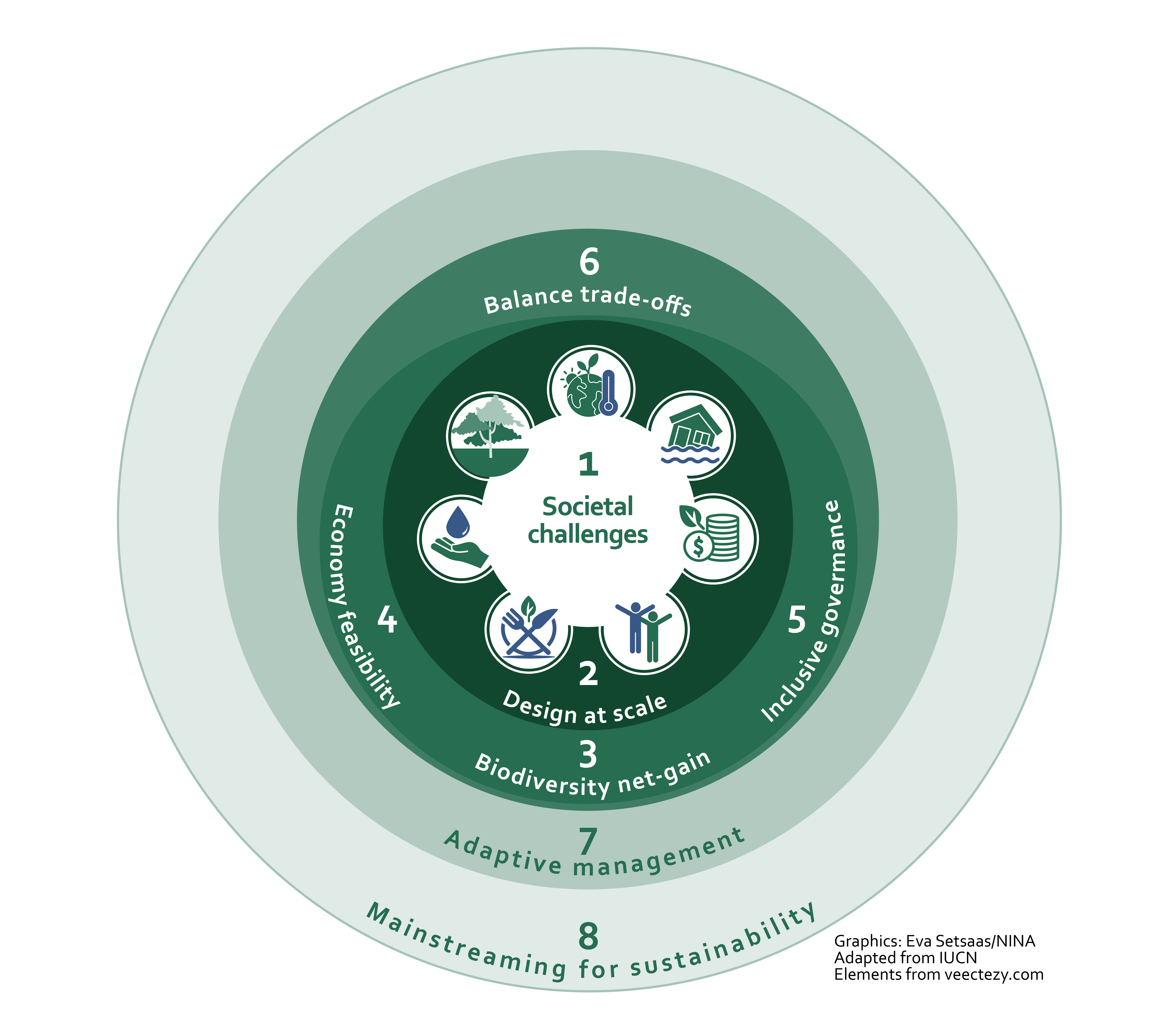
Figure 3. Eight assessment criteria of the IUCN Global Standard for NBS.
How to plan an NbS
There is no one-size-fits all approach to planning NbS, because each project is dependent on the type of NbS that is chosen, combined with the context (i.e. country, ecosystem type, local conditions) in which it is applied. NbS implementation should therefore be tailored to each location's individual characteristics, using place- and context-specific assessments. However, there are helpful steps that can be followed when implementing NbS projects, also known as the NbS project cycle (Figure 4).
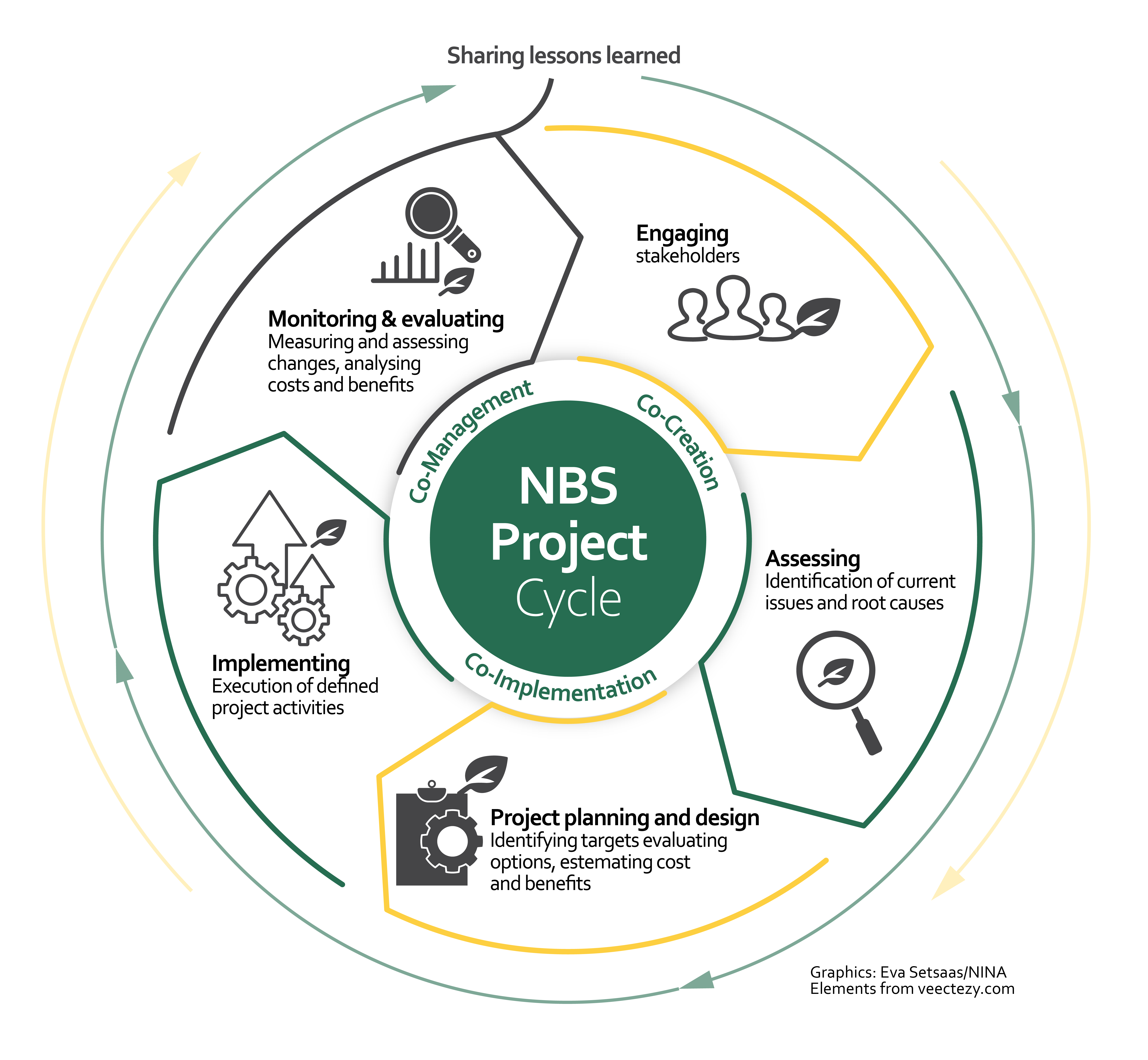
Figure 4. The NbS Project cycle: Engaging stakeholders, Assessing, Project planning and design, Implementing, Monitoring and evaluation, and Sharing lessons learned.
General Guidance for NbS in the Nordics
A previous Nordic Council of Ministers project on implementation processes in eight Nordic pilot projects identified some common key aspects which affect the success of NbS project planning and implementation in a Nordic context (Barkved et al. 2024). Many of these aspects are also in line with leading frameworks on NbS and can be related to the IUCN standard for NbS.
Why do we need guidance for NbS?
- Aid a common understanding of NbS, fast-track policy development and transformative societal change.
- Equip users with a robust framework for planning and design of NbS.
- Ensure actions help solve societal challenges.
- Assess outcomes and success of NbS.
- Ensure NbS are effective, scalable, and sustainable.
- Mainstream nature-based approaches in policy and practice through increasing scale and impact.
- Help preventing negative outcomes or misuse (greenwashing).
- Help funding agencies, policymakers and other stakeholders assess the effectiveness of interventions.
3.2 Existing guidance and tools for NbS
There is a wide range of guidance material for NbS, from general guidance on how to think about planning an NbS project, to specific guidance on how to apply a defined NbS in a specific country, ecosystem, or context. The following is a non-exhaustive list of NbS guidance, focusing on more general guidance in a Nordic context.
Global General Guidance
- Guidance for using the IUCN Global Standard for Nature-based Solutions: A user-friendly framework for the verification, design and scaling up of Nature-based Solutions.
- Standards of practice to guide ecosystem restoration.
- Natural climate solutions Handbook: A technical guide for assessing nature-based mitigation opportunities in countries.
- Handbook of Nature-Based Solutions to Mitigation and Adaptation to Climate Change.
- Voluntary guidelines for the design and effective implementation of ecosystem-based approaches to climate change adaptation and disaster risk reduction and supplementary information.
European General Guidance
- EU NAIAD project – Handbook for the Implementation of Nature-based Solutions for Water Security
- Evaluating the impact of nature-based solutions. A handbook for practitioners
- Nature-based solutions handbook
- Phusicos project – according to nature – NbS guidebook
- National guidance on the implementation of NbS. A tool for climate adaptation and other societal challenges (Sweden)
- A national guide for municipalities to evaluate when to use NbS, focusing on climate related risks (Norway)
European guidance for freshwater & wetland NbS
- EU MERLIN Project – New framework for monitoring systemic impacts of freshwater and wetland restoration actions
European guidance for urban areas
- NbS catalogue – a catalogue of nature-based solutions for urban resilience
- UNALAB technical handbook of nature-based solutions
- NATWiP Handbook – A handbook for practitioners to promote and inspire implementation of nature-based solutions in peri-urban areas
- UrbanGreenUP – tools and resources for selection of nature-based solutions
Guidance from other countries
- Nature-based solutions resource guide. Compendium of federal examples, guidance, resource documents, tools, and technical assistance (USA).
3.3 Standards, policies and laws
A good knowledge of local, regional and national policies is important when planning NbS. This is because existing policies may prevent or support NbS projects.
Examples of policies that may influence the success of NbS implementation:
- Existing legislation – how strong are laws related to biodiversity protection, climate adaptation and water quality?
- Governance system – how adaptive is the management and policies in response to a rapidly changing environment?
- Rights of the landowner – how can local or national authorities collaborate with private landowners for the implementation of NbS?
- Existing incentives – are there incentives for citizens, private landowners, farmers, companies and municipalities to contribute to nature-positive measures?
The governance systems in the Nordic countries have many similarities, but there are also differences in how the implementation of NbS can be supported through policies. When working with policy development to mainstream and upscale the use of NbS, this is both related to creating new policies, such as strategies and incentive programs, to strengthen existing policies that are already supporting NbS, such as nature protection and restoration initiatives, and to change policies that may not incentivize NbS. There are several standards and criteria suggested for NbS, and these can also be applied when working with policy development, such as the IUCN global standard. Key elements that policies supporting NbS should also consider, are education and capacity building, financing, stakeholder involvement, knowledge-based management and cross-sectoral collaboration.
3.4 Cost-benefit of NbS
One of the main challenges when planning and implementing Nature-based solutions (NbS) is to be able to weigh the costs of the solutions against their benefits. Cost-benefit analyses are traditionally focused on one single, or a few selected issues, and do not always include impacts on nature or the ecosystem services provided by nature. This makes it difficult to assess the costs and benefits of NbS in comparison to more traditional, technical, or “grey” solutions.
The lack of information and uncertainty about the costs and benefits of NbS makes it difficult to calculate reliable revenue streams and to develop investment plans for NbS. To help to address this issue, the following recommendations were made in NbS workshops with Nordic stakeholders (Sandin et al., 2022):
- The strength of NbS is that they can address multiple societal problems at the same time, but this is not reflected in most current cost-benefit analyses. To account for the benefits of NbS, there is a pressing need for proper monetary valuation studies focusing on the ecosystem services of different NBS to allow for value transfers from one study area to other locations and cases.
- Current cost-benefit analyses of NbS often do not properly consider the long-term benefits of NbS (as these benefits could increase over time, depending on how they were built/secured and managed). This leads to the impression that NbS are more expensive compared to traditional or “grey” solutions, even when they are not. Comprehensive cost-benefit analysis can help potential investors choose NbS over other more technical solutions.
- Current thinking is often focused on single ecosystem service delivery – for example water companies focus on delivering drinking water and cleaning wastewater using traditional infrastructure, thus missing the additional services NbS could provide. In order to direct existing funding to test and create NbS, including ecosystem service delivery, it is necessary with creative, proactive, and holistic thinking.
- There is a lack of coordinated public and private funding for NbS. The many benefits that NbS can deliver for different societal needs should also be reflected in the funding the solutions receive. Incentive systems may help to attract private investors, coordinate public funding, and mainstream NbS.
- Public funding is partly dependent on awareness and understanding of the importance of NbS. If governments should prioritize NbS over other types of solutions, one route would be to increase awareness and knowledge about NbS among the general public to change the views of politicians.
- Changing mindsets towards the acceptance of more holistic solutions is necessary to embrace NbS in order to upscale such solutions.
3.5 Monitoring and evaluation
At the core of NbS are the societal challenges that these solutions will help solve (IUCN, 2020). Monitoring and evaluation of NbS efficiency are therefore essential to determine whether implemented NbS respond effectively to these challenges across ecosystems and land use types. The IUCNs global standard for NbS require that NbS are managed adaptively and are based on evidence. This means that in practice, NbS need to be monitored and evaluated to make sure that the implemented actions continue to deliver the benefits that they were implemented for. It is therefore very important that in the start-up phase of a new NbS project (such as a restoration project) that measurable “scope, vision, target, goals, and objectives” are identified, and that adequate funding are allocated for monitoring and evaluation as part of the NbS implementation (Gann et al. 2019).
Unfortunately, proper monitoring is not often done in NbS in the Nordics (see Sandin et al. 2022; Barkved et al., 2024). If no proper monitoring and evaluation is done, it will result in the following problems:
- a lack of initial data for proper project planning
- missing monitoring and assessment schemes for evaluating NbS
- a lack of information regarding the effects of NbS on social and ecological values across different spatial scales and on long-term effects
The European Commission has developed a handbook for practitioners for the evaluation of impact of NbS with the goal to “to support the adoption of common indicators and methods for assessing the performance and impact of diverse types of NbS” (European Commission, 2021). Other frameworks developed to assess NbS includes the integrated valuation of a nature-based solution for water pollution control (Liquete et al., 2016); the assessment of the effectiveness and co-benefits of nature-based solutions in urban areas including NbS design, implementation and evaluation (Raymond et al., 2017); the assessment of the regulation of urban run-off (Zölch et al., 2017); and a ‘dynamic’ assessment framework explicitly incorporating climate change (Calliari et al., 2019).
Regarding the evaluation of the impact of NbS, important questions remain regarding how to assess NbS within and across societal challenges (Raymond et al., 2017), but it is clear that the monitoring and evaluation of NbS impacts should include both observations (monitoring) as well as analysis (assessment of the results). This includes both measuring and assessing change, as well as costs and benefits of the NbS. Including a monitoring scheme with the NbS project will support and enhance the evidence base for new and established NbS as well as provide important information regarding performance, effectiveness, implementation and costs (European Commission 2021). When doing so it is important to include appropriate, unbiased, and robust methods for the monitoring and evaluation to be effective (Chrysoulakis et al 2021). Most current studies on the impact of NbS are limited to single cases, limited in terms of the impacts considered or have focused on a specific type of NbS (Dumitru et al. 2020). Most attention has focused on assessing the environmental aspects without paying enough attention to economic, social and health impacts (Brink and Wamsler, 2018; Raymond et al., 2017).