6. Work of equal value in ILO Convention No. 100 and Agenda 2030 and alternative approaches for comparisons at a national level
The introductory theme of this chapter is the Nordic countries’ reporting to the ILO on measures taken to fulfil the purpose of ILO Convention No. 100. Reports are submitted every three to four years. The most recent reporting period has been reviewed. There are surprising differences between the Nordic countries in their treatment of the theme of work of equal value.
Attention is then drawn to reporting on the implementation of Agenda 2030, specifically goal 8.5 and indicator 8.5.1, which describes progress towards achieving equal pay for work of equal value.
In this chapter thus two different perspectives on the theme of work of equal value are addressed. The application of Convention No. 100 focuses on pay comparisons within individual organisations, i.e. at the local level. Agenda 2030 includes indicators that show developments from a national perspective.
The chapter concludes by describing two alternative approaches to comparing work of equal value at national level. In response to the mandate to include “perspectives from other countries”, a German model is presented that calculates the influence of the undervaluation of female-dominated work on the gender pay gap.
Implementation of ILO Convention No.100
Quote from Equal Pay, an Introductory Guide, pp. 66–67, ILO (2013).
Prior to the writing of this report, a request was made to the responsible ministry in each Nordic country for a copy of the most recent report on Convention No. 100 to the ILO. These writings are commented on below. In addition, the ILO’s feedback on these reports is commented on. The ILO feedback is available in the ILO database. All documents commented on in this chapter have been made available via links.
Denmark
The latest report on the implementation of ILO Convention No. 100 is from 2022.
The feedback from the ILO pertains not only to the above-mentioned document but also to other official information on gender equality provided online by the Government.
ILO feedback: Direct Request – adopted 2022, No. 100 Denmark.
Firstly, the ILO takes note of a Danish report that draws attention to the problem of the structural undervaluation of work dominated by women. According to this official report, 85 per cent of the gender pay gap in Denmark can be linked to the gender-segregated labour market and the fact that men are overrepresented in higher paid jobs. The ILO then asks the Government: What concrete measures have been taken to counteract the problem of structural undervaluation? Furthermore, the ILO requests information that can shed light on the effectiveness of the legislation on gender-disaggregated statistics. The ILO also asks whether this legislation allows for comparisons between work of equal value. Another issue noted by the ILO is the lack of information on the measures taken to promote, in cooperation with social partners, objective job evaluation methods.
Finland
So far, it has not been possible to obtain any documents from the Finnish Government on reporting on ILO 100. For that reason, comment is only provided on the feedback by the ILO, which consists of two documents from 2023.
Firstly, it is noted that the Government has initiated a number of studies and projects on equal pay issues and that the ILO is requesting follow-up information. More specifically, information is requested on how supporting measures are implemented to improve compliance with the requirement for pay surveys and the quality of pay surveys. In particular, emphasis is put on the measures taken, in cooperation with social partners, to ensure that the principle of equal pay for work of equal value is implemented. The need to include the principle of equal pay for work of equal value in the design of collective agreements on pay is also emphasised. In addition, information is requested on measures that can be linked to the theme of promoting objective and gender-neutral job evaluation methods. Furthermore, more and clearer information is requested on legal disputes that can be linked to the principle of equal pay for work of equal value.
With regard to information pertaining to Finland, it should be noted that the parliamentary elections in April 2023 resulted in a change of government. The previous government can be described as a centre-left coalition in which gender equality issues were a clear priority, while the new government coalition is dominated by a conservative party and a right-wing nationalist party. According to information received from experts on Finnish gender equality issues, the previous government’s reform agenda in this area has been put on hold.
Iceland
The latest Icelandic report to the ILO on the implementation of Convention No. 100 is dated 7 February 2024.
To address the structural undervaluation of female-dominated work, a tripartite committee including representatives of the Government and social partners has been working on recommendations to be finalised by the end of 2023.
This refers to Job evaluation Iceland, report 2024. The report is briefly commented on in Chapter 7.
The ILO Committee’s feedback to the Government relates primarily to previous reports on the development of the equal pay standard ÍST-85, as well as to the development of various tools for pay analysis. Furthermore, it is stated that the ILO encourages the Icelandic Government’s efforts, and that the ILO is interested in receiving ongoing information on future evaluative studies.
ILO feedback: Direct Request – adopted 2023, No. 100 Iceland.
Norway
The Government reports that there have been no recent judicial decisions concerning the issue of equal pay for work of equal value.
At the Centre for Research on Gender Equality (Core), one of the four priority areas will be the gender-segregated labour market. The report also discusses the causes of the statistical gender pay gap and calls for Core to launch a study to monitor compliance with pay survey provisions.
The report also refers to an earlier report to the Committee on the Elimination of Discrimination against Women (CEDAW) from the Equality and Anti-Discrimination Ombud. This report states that the “Ombud” recommends Norwegian authorities to clarify two specific issues that arise in connection with pay surveys. The first issue is the need to clarify the provision that states that the conditions for setting pay for an individual employer shall be reviewed or investigated. The second question concerns the need for clarification to facilitate the grouping of work of equal value. In its response, CEDAW recommends that the Norwegian Government clarify the legislation so that the principle of equal pay for equal work “goes beyond the same establishment or enterprise” (see footnote 41). With reference to this recommendation, the Norwegian Government states in its report to the ILO that there are currently no plans to amend the legislation on pay survey provisions to allow for comparisons between different employers.
It then comments on criticism received by Norway from the European Committee on Social Law on the same issue, namely the external framework for comparing pay for work of equal value. In the discussion that follows, the Norwegian Government refers to the Pay Transparency Directive. The Directive is interpreted by the Government as meaning that “the scope of application of the principle of equal remuneration for work of equal value does not go beyond the same establishment or enterprise” (see footnote 41). Furthermore, reference is made to an ongoing project, run in collaboration with partners to the labour market, which aims to obtain new knowledge on pay differentials for work of equal value. Finally, 16 equal pay cases between 2019 and 2023 are briefly commented on. Links to all cases are provided.
In its response to the Government, the ILO Committee requests feedback from an ongoing project with social partners, from the studies managed by the CORE Institute as well as comments on the evolution of the gender pay gap. Subsequently, the ILO requests specific information on how pay survey provisions have been applied with regard to the principle of equal pay for work of equal value. The ILO also notes that information on the efforts of social partners to address pay inequalities has been extremely scarce. The ILO therefore wishes to receive specific information on the measures or activities of these parties in relation to the principle of equal pay for work of equal value. In particular, the ILO is interested in the results of a project involving these parties related to the issue of work of equal value, with a particular focus on job evaluation. Furthermore, the ILO would like more specific information on the outcome of equal pay disputes.
ILO feedback: Direct Request – adopted 2023, No. 100 Norway.
Sweden
In the autumn of 2021, the Government Offices of Sweden submitted its latest report to the ILO on the implementation of Convention No. 100.
In its response, the ILO highlights the consistent lack of concrete measures included in the Government’s reporting.
ILO feedback: Direct Request – adopted 2021, No. 100 Sweden.
This report, SOU 2022:4, is commented on in Chapter 7.
Comments
It is notable that the reports from Denmark and Sweden lack information on the most central issue, specifically an account of successes or problems in applying the principle of equal pay for work of equal value.
Agenda 2030 and indicators of equal pay for work of equal value
Goal 8.5 of the UN’s Agenda 2030 calls for national statistics that highlight progress towards the goal of equal pay for work of equal value. The Swedish Gender Equality Agency’s report Ekonomisk jämställdhet (Economic Gender Equality), published in January 2022, highlights this issue.
The Swedish Gender Equality Agency report 2022:2.
Comments
It is worth noting that the ILO’s Guidebook conflates the concepts of equal work and work of equal value. The ILO’s instructions on Agenda 2030 therefore conflict with the content of ILO Convention No. 100 and the ILO’s Equal Pay, an Introductory Guide, which was published in 2013. In 2021, the Swedish Gender Equality Agency’s investigator drew the ILO’s attention to this contradiction. The response received at the time was evasive, with the ILO stating that the indicator is based on pay statistics that refer to ISCO codes and that comparisons between the same occupational codes closely resemble a comparison of equal work. In the context of the preparation of this report, the same question was again put to the ILO and a similar response was received.
To summarise, the ILO’s handling of the concept of work of equal value can only be described as contradictory. The ILO’s comments on government reports on measures and experiences in applying Convention No. 100, as well as the ILO’s Equal Pay Guide from 2013, clearly show that there is solid knowledge within the ILO of the difference between the concepts of equal work and work of equal value. However, when the ILO has drawn up instructions on the statistical basis for reporting progress towards goal 8.5 of the Agenda 2030, the concepts of equal work and work of equal value have been confused. The underlying statistics for the indicator have no connection whatsoever to the concept of work of equal value.
National reporting on the implementation of Agenda 2030 – work of equal value
Agenda 2030, objective 8.5 – Full employment and decent work with equal pay for all
By 2030, achieve full and productive employment with decent work for all women and men, including young people and persons with disabilities, and ensure equal pay for work of equal value.
The review under this heading is based on the latest available country reporting on the implementation of the various goals of Agenda 2030. In this case, it comments on how goal 8.5, which includes equal pay for work of equal value, has been addressed, as well as indicator 8.5.1. The material shows that in many cases the theme of work of equal value is avoided altogether or that gender pay differentials are described in more general terms.
Denmark’s reporting on goal 8.5 does not address the theme of equal pay for work of equal value.
Regeringen.no (2021) Regeringens Fremdriftsrapport for FN’s Verdensmål 2022-2023 (Government Progress Report for the UN Sustainable Development Goals 2022-2023).
The Finnish report briefly comments on the development of the pay gap between women and men.
The Icelandic report addresses the theme of work of equal value by mentioning the legal requirement for equal pay certification. It also states that measures have been taken to reduce the pay gap resulting from the gender-segregated labour market but that further efforts are necessary.
There are two reports from Norway, one in English from 2021 and one in Norwegian from 2023.
Regeringen.no (2021) Agenda 2030 Voluntary National Review 2021 and Regeringen.no (2023:2) Oppfølging av berekraftsmåla i Noreg (Follow-up of the Sustainable Development Goals in Norway).
The latest Swedish report is from 2022.
Statistics Sweden SCB (2022) Statistisk lägesbild 2022. Genomförande av Agenda 2030 i Sverige (Statistical snapshot 2022: Implementation of Agenda 2030 in Sweden).
Alternative approaches to comparisons of work of equal value at the national level
The fact that the statistics on which indicator 8.5.1 of Agenda 2030 is based does not reflect pay differentials between work of equal value, but instead shows pay differentials between occupations with the same ISCO code, has been recognised by the Swedish Gender Equality Agency and by the Norwegian agency Bufdir (the Norwegian Directorate for Children, Youth and Family Affairs). Among other things, Bufdir has a mandate to promote equal pay.
Bufdir is a government agency whose main areas of work are children’s rights, adoption issues, equal treatment and non-discrimination and violence and abuse in close relationships; see www.bufdir.no.
Report 2022:2 by the Swedish Gender Equality Agency and the Lönelots Report from January 2023
In connection with a government commission on the development of economic gender equality in Sweden since 2015, the discrepancy between the purpose of indicator 8.5.1 in the Agenda 2030 and the underlying statistics was highlighted. This issue is dealt with by an independent consultant, Lena Johansson, in Annex 3 of that report. In addition, the issue is summarised and commented on in Chapter 7 of the main report. Since then, another report has been presented using the same methodology as a starting point, this time by the consulting group Lönelotsarna, of which Lena Johansson is a member.
Harriman, Johansson and Trollvik (2023) Strukturella löneskillnader – högt värderad, låg lön (Structural pay differentials – high value, low pay).
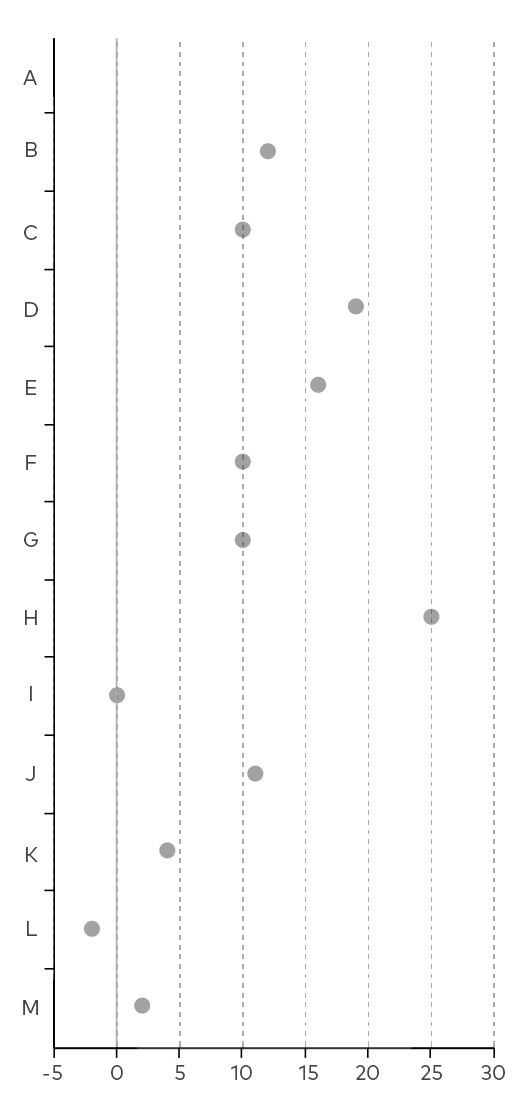
The report Ekonomisk jämställdhet (Economic Gender Equality) presents the starting points for an indicator that calculates the pay gap between occupations of equal value at the national level. The proposal is seen as a supplement to the official statistics for which the National Mediation Office is responsible. Firstly, an indicator is proposed that describes structural pay differentials defined by 13 levels of requirements and includes all of the country’s occupational categories according to the SSYK-klassificeringen (SSYK classification).
SSYK is the national variant linked to the international system of ISCO codes.
Group | Pay differential in percentage |
A | .. |
B | 12 |
C | 10 |
D | 19 |
E | 16 |
F | 10 |
G | 10 |
H | 25 |
I | 0 |
J | 11 |
K | 4 |
L | -2 |
M | 2 |
Average earnings in occupations dominated by women | SEK 31,800 |
Average pay in other occupations | SEK 39,000 |
The structural pay differential | SEK 7,200 |
Assignment from Bufdir on indicators for work of equal value, September 2023 to December 2024
In September 2023, Institutt for samfunnsforskning (the Norwegian Institute for Social Research) received a commission from Bufdir.
- the development of the pay differentials between women and men from 2015 to 2022,
- key causes of gender pay differentials in Norway,
- possible ways of measuring pay differentials between work of equal value, which could form the basis of indicators to be used for comparisons at national level.
The project is led by Maria F. Hoen. Here is a summary of her description of the ongoing work, as of 24 April 2024:
The analysis starts with the employees’ occupations and a representative set of characteristics using data from the American O*NET database and the working environment monitor from Statistisk Sentralbyrå’s (Statistics Norway) survey of living conditions. We will then make a number of adjustments, in terms of which characteristics we include and how we measure the characteristics, to study how the results change.
In a next step, these characteristics are combined with the four overarching factors included in discrimination legislation to assess whether two jobs are of equal value. The aim is to group occupations according to the ‘value’ of each factor (occupations with the same level and type of responsibility, occupations with the same skill requirements, etc.) These groups can then be aggregated into an overall measure (grouping those of equal value across all factors), but this requires a value judgement of how much each factor should count in relation to the others.
Initially it is important to be cautious in making such value judgements, as we consider the debate over valuation to be a political one. Therefore, we intend to highlight the various judgements and choices made in developing a ‘value indicator’ and highlight the implications of these, for example by illustrating how the ranking/grouping of occupations changes when the weighting of the factors changes. One of the main aims of the study is to make these considerations visible and to highlight the challenges of developing a ‘value indicator’.
Comparable Worth-Index as a tool to analyse the gender pay gap
In Germany, two research reports were published in 2016 and 2018 on the development of a comparative index for assessing occupations of equal value at the national level, Der "Comparable Worth" – Index als Instrument zur Analyse des Gender Pay Gap (The “Comparable Worth” – Index as an instrument for analysing the gender pay gap) and “Comparable Worth” (CW).
Lillemeier (2016) and Klammer, Klenner and Lillemeier (2018).
Klammer, Klenner, Lillemeier and Hellmann (2022).Kompletterande kontrollvariabler för analys av könslönegapet
Additional control variables for analysing the gender pay gap
In two further studies, commented on in Chapter 7, there is a discussion about the need to use additional control variables to analyse the gender pay gap in the labour market. One is from Denmark, Den ’uforklarede’ del af forskellen mellem kvinders og mænds timeløn (The ‘unexplained’ part of the differential between women’s and men’s hourly pay; 2020), and the other from Iceland, Icelandic gender pay gap analysis 2008-2020.
Larsen, Verne and Højgaard Mikkelsen (2020) and Calian (2021).
In summary, the examples from Sweden, Norway and Germany show that statistics aimed at highlighting the undervaluation of work dominated by women challenge the established perception of the gender pay gap. Instead of comparisons between different occupations and sectors being communicated as an explanatory factor that roughly halves the statistical pay gap, according to the official narrative, one of the alternative methods presented shows that the pay gap is rather doubled. In Agenda 2030, the ILO has a mandate as a custodian agency to provide instructions on how countries can use statistical means to describe progress towards the goal of equal pay for work of equal value. A new approach by the UN agency to promote the development of new statistical models seems urgent. Even the national authorities, that have dutifully reported data on the pay gap as part of Agenda 2030 obligations, should have reacted long ago to the fact that this data does not match what is to be described.