3. Methodology
In order to study financial tools that will ensure that investments promote biodiversity, we have applied a combined approach with desk study, interviews and maturity assessment (Figure 3) (further described below). The results from each step feed into the conclusions and recommendations which are targeted at Nordic Financial Institutions, but also at Nordic decision-makers and stakeholders involved with biodiversity and financing in general.
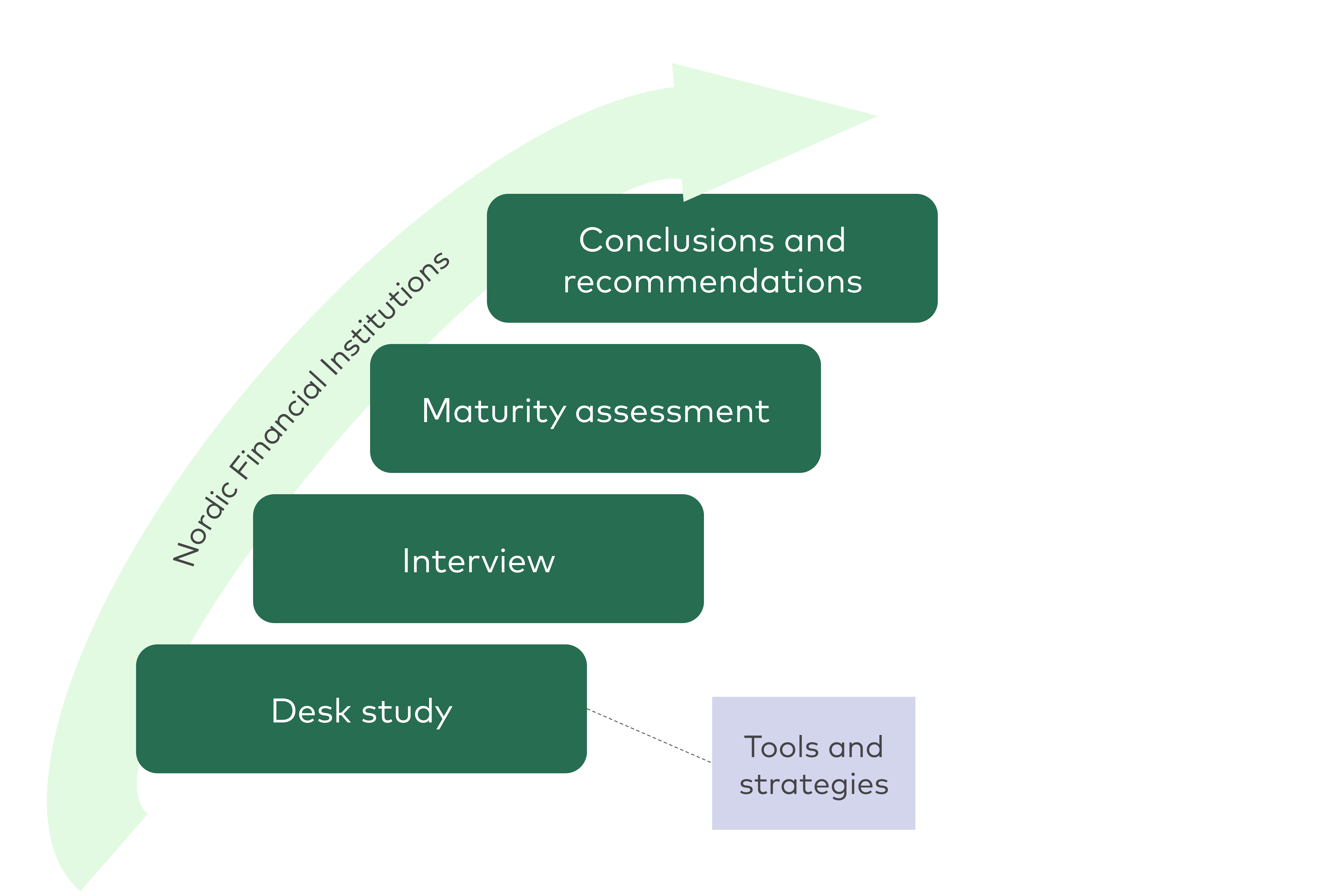
Figure 3: Methodology of research study
3.1. Desk study
A desk study has been carried out to i) Identify global tools and strategies to ensure that financial activities promote, not weaken biodiversity ii) Review tools and strategies used by the Nordic financial institutions to ensure that their financial activities promote, not weaken biodiversity.
The identification of tools and strategies used globally, in Europe, and in the Nordic countries has been based on an extensive literature review of academic literature and reports, web research and prior work of the consulting team. The uptake and usability of the identified tools has been analysed.
Biodiversity tools and safeguards used by the Nordic Financial Institutions have been studied by mapping the institutions’ strategies, policies, investments and projects. This provided data on the institutions’ efforts at strategic level down to the concrete actions that they carry out in their financial activities.
3.2. Interviews
Semi-structured personal interviews have been carried out with representatives from the environment and sustainability departments at each of the three international finance institutions. One interview was carried out with each institution, engaging either one or two personnel from each financial institution. Interviews were conducted online in February 2013. One additional interview was carried out with each institution in March 2023, where data was collected from fund managers, monitoring experts and sustainability staff respectively.
The interviews have served as a platform for further analyses of strategies and tools used by the Nordic Financial Institutions to safeguard biodiversity. The interviews also covered specific topics such as the application of the EU Taxonomy and to which extent the institutions focus investments towards Nature-based Solutions.
3.3. Maturity assessment
To assess whether NEFCO, NDF and NIB have implemented relevant approaches to biodiversity actions, an organisational thematic analysis has been prepared for all three IFIs as a mean to uncover the level of implementation/maturity of the biodiversity agenda (Appendix A). The goal of the maturity assessment has been to review the level of biodiversity mainstreaming within each of the Nordic financial institutions. The CBD defines the mainstreaming of biodiversity as:
“integrating or including actions related to conservation and sustainable use of biodiversity at every stage of the policy, plan, program and project cycle, regardless whether international organizations, businesses or governments lead the process.”
CBD (2019)
If financing institutions are expected to – at a minimum – do no harm to nature, biodiversity must be accounted for when identifying, preparing, appraising, negotiating, approving, and finally implementing and evaluating projects and programs
WWF & The Biodiversity Consultancy (2021)
The organizational analysis is based on a maturity model developed by Norion, inspired by the McKinsey 7S model. The maturity model has been developed by determining maturity levels for each organizational parameter as seen in Appendix A. Based on the model and on data collected through desk studies and interviews, a maturity assessment has been carried out for each of the financial institutions. A first version of the assessment was based on the desk studies, whereafter the results and preliminary conclusions was validated and further developed through the interviews described above.