4. SYNERGIES BETWEEN BIODIVERSITY, CLIMATE AND POLLUTION IN NATURE BASED SOLUTIONS
Responses to the climate and nature crises have long been dominated by a silo approach, addressing them separately and without considering the links and interdependencies. However, since the crises are interconnected and are reinforcing each other, the responses need to be cross-sectoral, enabling synergies and minimizing trade-offs. As stated in a joint report by IPBES and IPCC, “a new conservation paradigm would address the simultaneous objectives of a habitable climate, self-sustaining biodiversity, and a good quality of life for all”. A new paradigm thereby takes a holistic viewpoint of the challenges that the global societies are facing related to the natural world, and places emphasis on the need for solutions that address several objectives at once. In this new paradigm, nature-based solutions (NbS) can play a significant part in mitigating issues related to climate change, biodiversity loss and pollution.
NbS are, as defined by IUCN, “actions to protect, sustainably manage, and restore natural or modified ecosystems, that address societal challenges effectively and adaptively, simultaneously providing human well-being and biodiversity benefits”.
Pörtner et al. (2021)
Nature-based Solutions Initiative (2022A)
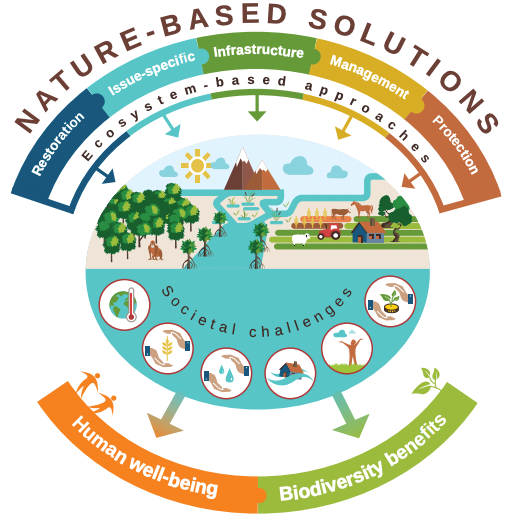
Figure 2. Conceptual figure of NbS as defined by IUCN.
Cohen-Shacham et al. (2016)
The ecosystem-based approaches under the NbS umbrella are:
Cohen-Shacham et al. (2016)
- Ecosystem restoration approaches
- Issue-specific ecosystem-related approaches
- Infrastructure-related approaches
- Ecosystem-based management approaches
- Ecosystem protection approaches
These approaches can reinforce synergy measures when integrated into policy and management practices. The next section as well as Chapter 6 “Policy Measures and Synergies” discuss this further.
4.1 The relevance of NbS for synergy measures
Due to their overarching goals and designs (Figure 2), NbS methods are suitable when addressing the common challenges of climate change, biodiversity and pollution.
Cohen-Shacham et al. (2016)
Key et al. (2021)
Meanwhile, it should be noted that NbS are context-specific, and that the potential for synergistic outcomes from measures varies between biomes and ecosystem uses. In some ecosystems it may be possible to achieve significant synergies, while measures may work antagonistic in other areas.
Pörtner et al. (2021)
Key et al. (2021)
Solheim et al. (2021)
When seeking for NbS interventions that can have co-benefits related to climate change mitigation or adaptation and biodiversity preservation, it is highly relevant to target ecosystems that are carbon- and species-rich.
Pörtner et al. (2021)
Cook-Patton et al. (2021)
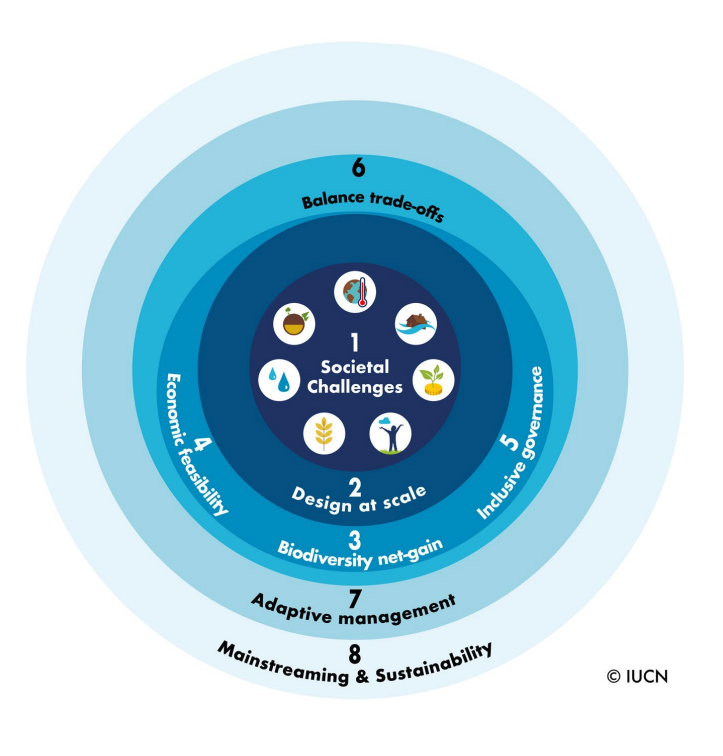
Figure 3. The relationship between eight criteria in the IUCN global standard for NbS.
IUCN (2020)
NbS can be integrated into production practices in the agricultural or forestry sector where they can contribute to increased adaptive capacity to climate change as well as mitigation potential through for example reduced fertilizer input. Furthermore, NbS can be implemented through alternative production approaches such as agroforestry, agroecology and crop diversification. These types of measures can support biodiversity in a productive landscape, while also contributing to carbon sequestration and increased resilience to stressors induced by climate change.
Seddon et al. (2020)
IUCN Global Standard for Nature-based Solutions |
|---|
1. NbS effectively address societal challenges |
2. Design of NbS is informed by scale |
3. NbS result in a net gain to biodiversity and ecosystem integrity |
4. NbS are economically viable |
5. NbS are based on inclusive, transparent and empowering governance process |
6. NbS equitably balance trade-offs between achievement of their primary goal(s) and the continued provision of multiple benefits |
7. NbS are managed adaptively, based on evidence |
8. NbS are sustainable and mainstreamed within an appropriate jurisdictional context |
While NbS provide a solid framework and actual solutions that can be implemented into policy and practice, it demands a holistic approach to simultaneously address the socio-ecological crises we are facing. In 2020, the IUCN published the first version of a standard for Nature-based Solutions. The standard contains 8 criteria and 28 indicators (Figure 3). The aim of the standard is to provide clarity on what is covered by the concept of NbS, prevent misconceptions and provide guidance on how to deploy it successfully. The standard can be used across all regions of the world, in a natural, cultural or urban landscape and the standard is suitable for both small and large-scale interventions. The standard can be used by a wide range of stakeholders from national and local governments, the private sector, NGOs and various others.
IUCN (2020)
Guidelines supporting successful NbS have also been developed by researchers and practitioners in the UK.
Seddon et al. (2021)
Table 1. NbS guidelines developed by a large number of researchers and practitioners in the UK.
Seddon et al. (2021)
Guidelines |
1. NbS are not a substitute for the rapid phase out of fossil fuels and must not delay urgent action to decarbonize our economies |
2. NbS involve the protection and/or restoration of a wide range of naturally occurring ecosystems on land and in the sea |
3. NbS are implemented with the full engagement and consent of Indigenous Peoples and local communities, including women and disadvantaged groups, and should be designed to build human capacity to adapt to climate change |
4. NbS sustain, support, or enhance biodiversity, that is, the diversity of life from the level of the gene to the level of the ecosystem |
4.2 Factors influencing NbS potentials
The temporal scale between decisions and effects for climate-biodiversity-pollution related measures may vary. Applied NbS can have offset or delayed effects, and effects related to climate vs. biodiversity vs. pollution may be manifested at different times. Offsets are also relevant at a spatial scale, as measures can result in tele coupling effects that have impacts at other geographical places than where the intervention was implemented. This includes spill-over effects to other regions.
According to IPBES and IPCC, there is a need for rapid and sufficient synergistic actions.
Pörtner et al. (2021)
NbS covers multiple cross-sectoral topics, this is one of the strengths, but it also possesses some management challenges. Municipal workers who often are responsible for the implementation of NbS, might lack awareness of NbS and its possibilities, or do not feel properly educated to practice it. To properly implement NbS there is a need for engaging multiple departments; cross-departmental coordination has also been identified as a challenge.
Haxwell et al. (2018)