3. METHODOLOGY
The study consists of a desk study of existing literature, identification of relevant cases, and development of recommendations for screening methods of laws, policies and management practices.
An analytical framework has been developed to ensure that all relevant thematic questions are answered through the study, and to provide the methodological approach to identification and analyses of relevant examples of laws, policies and management practices. The logic of the part of the analytical framework concerning the development of research and operational questions and their link to the analytical stages is visualized below.
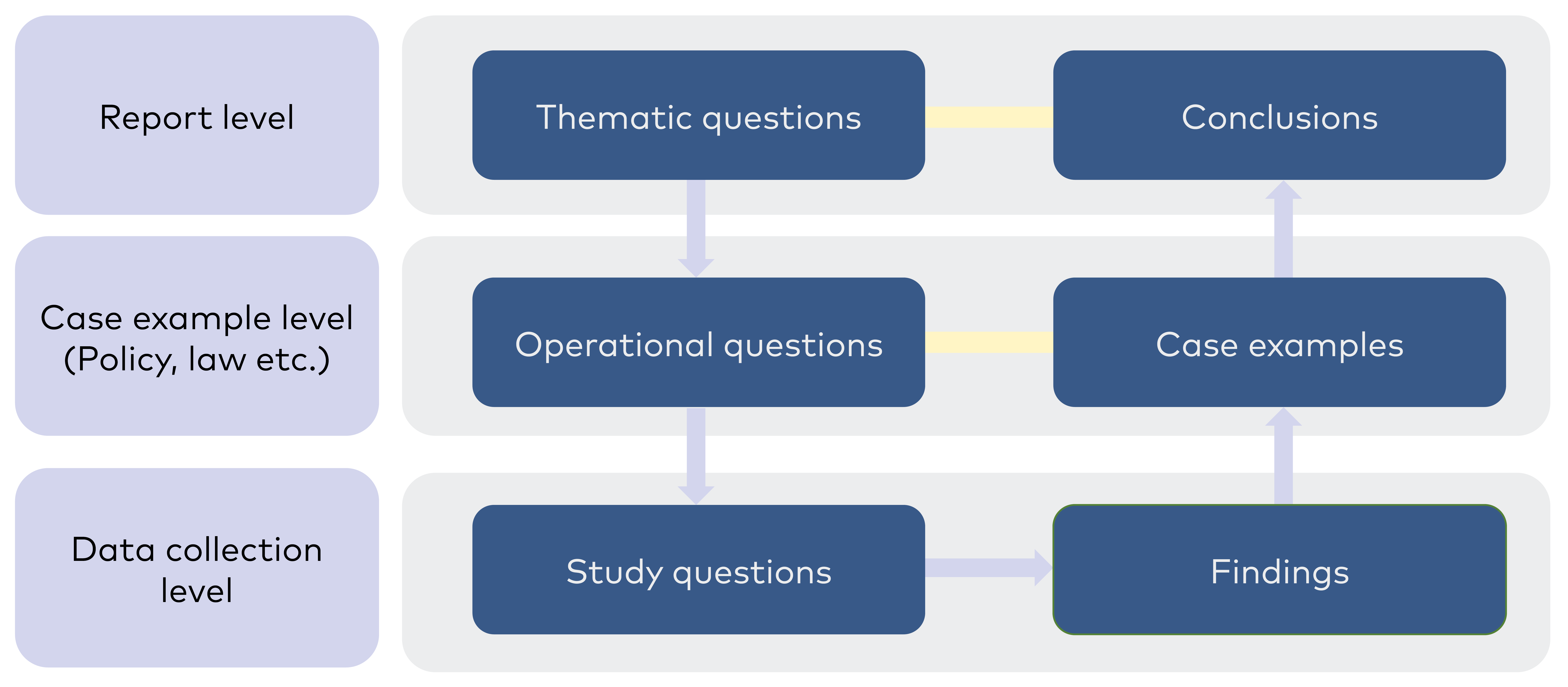
A desk study of relevant literature has been carried out to map the current scientific landscape around synergies between safeguarding biodiversity, decreasing pollution and adapting to and mitigating climate change. The literature review has had specific focus on NbS and incorporated scientific articles as well as official reports and grey literature to address the thematic questions posed in the study.
For the case studies, a long list of 50 potential, relevant case examples of policies and management practices promoting synergies in the Nordic countries has been identified through desk research/web searches and through the vast Nordic network of the authors of this report. Cases were selected based on a set of criteria to safeguard the diversity and quality of the final case studies.
Criteria for case selection have been:
- Country (five Nordic countries represented)
- Scale (National, regional or municipal)
- Variation in measures between management practices, laws and policy instruments
- Representation of the different environmental objectives as well as the indirect benefits
- Type of nature affected
- Synergies promoted
Applying the aforementioned criteria to the long list led to the final selection of 15 cases. Once selected, cases were analysed through desk research, following the analytical framework (Figure 1), by experts in each country. Cross-cutting case analyses were then performed to reveal trends and findings on a Nordic level.
Finally, screening tools of laws, policies and management practices that can help identifying untapped synergies between climate change, pollution and biodiversity measures has been identified in the literature study.