Nudging to increase the uptake of reusable cups
Single-use beverage cups are a major source of plastic pollution and one of top ten items littered around beaches today. In this study, the possibility of increasing the use of reusable cups through nudging have been explored.
Using nudging to influence the decision making
Nudging is used for influencing people in how they make their decisions, without making it for them. It’s about getting people to behave in a desired way by making certain choices easier or presenting options in a different way. This is done without prohibiting or removing their options – or freedom to choose.
In this case, nudging was used as a method to make people choose reusable cups instead of single-use cups. This study showed that verbal prompts were found most effective.
Method
This study tested the effects of different nudging techniques in various coffee shops, cafeterias and gas station convenience stores in Denmark and Sweden, such as:
- Implementation of signs in stores with various messages
- Instructing staff to specifically suggest a reusable cup to customers
- Leveraging social norms by showing customers the accumulated sales with reusable cups over time
- Implementation of a lottery mechanism where customers could win their cash back when using a reusable cup
- Adding donation boxes for reusable cups
The results
To outright ask customers if they want a reusable cup was shown to be the most influential method to increase the use of reusable cups. It makes the option very clear for the customer.
Posters with various types of messages were not by themselves sufficient in affecting the customers behavior. In one of the tests, the study showed that there was a substantial drop in the use of reusable cups when verbal prompts were no longer provided, but posters remained.
Recommendations to reduce the use of single-use cups:
- For coffee shops: ask customers if they want a reusable cup to increase the visibility of the reusable option and make returns easier.
- For regulators: encourage verbal prompts without mandating them, increase the saliency of reusable compared to single-use cups, and explore an awareness campaign in collaboration with coffee shops.
Conclusion
Some of the nudging techniques have the potential to increase the use of reusable cups. However, the success depends on the setting in which the decisions take place. To achieve a transition to reusable cups engagement will also be crucial. From the customer who makes the choice to the owner and sales assistant who has the power to influence it. Not to forget, the regulators.
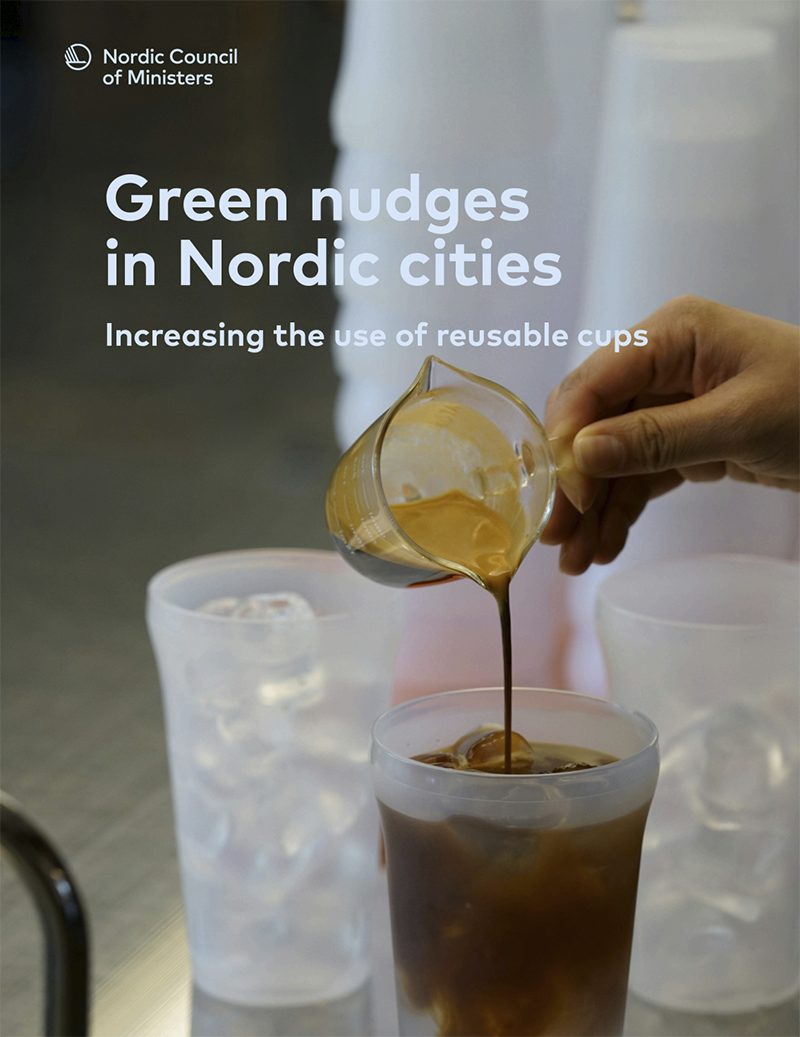
To read more about this study, including different nudging techniques that were conducted and conclusions that were made please click here to review the report.