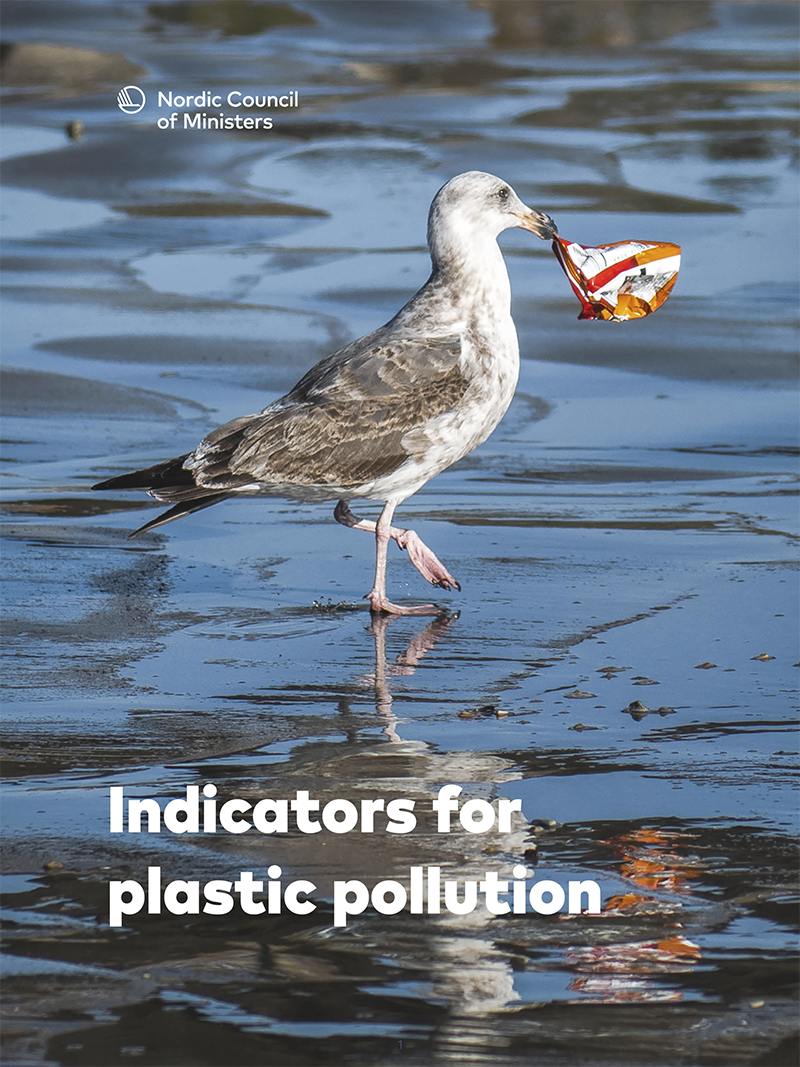
Indicators for Plastic Pollution
Plastic pollution is a growing global issue, affecting ecosystems, economies and human health. Reliable indicators are needed to effectively measure and mitigate the impact of plastic pollution. This report, commissioned by the Nordic Council of Ministers, evaluates existing indicators for plastic pollution across its lifecycle.
The main conclusion of the report is that the current indicator landscape is fragmented and lacks harmonization, but useful indicators exist. Future efforts should be directed at a more holistic picture that combines different types of indicators.
Background
In 2022, the United Nations Environmental Assembly (UNEA) agreed to develop a legally binding international agreement to combat plastic pollution, addressing the full lifecycle of plastics. Policy decisions require reliable data to assess the problem and the efficiency of regulations, thus, indicators are needed. The purpose of the report is to flag differences in the current data and suggest a harmonized way to present indicators.
Methodology
The study applies the Drivers-Pressures-State-Impact-Response (DPSIR) framework to assess indicators along the plastic value chain. The authors have reviewed databases, regulatory frameworks, and scientific literature to identify strengths, weaknesses, and gaps in existing measurement approaches.
Recommendations
- Enhance waste management indicators to monitor mismanaged waste, especially in high-leakage regions
- Develop standardized methodologies for measuring microplastic sources such as tyre wear and industrial pellet loss
- Develop cost-effective methodologies for tracking plastic flows and waste mismanagement
- Improve linkage between value chain and environmental indicators to provide a clearer picture of plastic pollution trends
- Strengthen global databases for tracking plastic pollution, ensuring consistency in measurement and reporting
- Incorporate emerging indicators such as container losses and wastewater discharges into monitoring frameworks
Effective plastic pollution management requires robust, harmonized indicators that connect production, usage and environmental impact. Strengthening data collection and integrating new metrics will improve policy effectiveness in tackling this global challenge.