26 Tåsenhjemmet
26 Tåsenhjemmet, Norway
Building use | Nursing home | Stories above ground | 4 |
Location | Pastor Fangens vei 26 - 28, Oslo | Basement area | 1185 m2 |
Client | Oslo Bygg KF | Structural system | Glulam, CLT, steel, and concrete |
LCA consultant | LINK Arkitektur | Façade type | Painted wood |
Year of completion | 2024 | Roof type | Flat roof, CLT slab, Roof terrace |
Reference area | 11 392 m2 (heated floor area) | Heat demand /source | Heat pump |
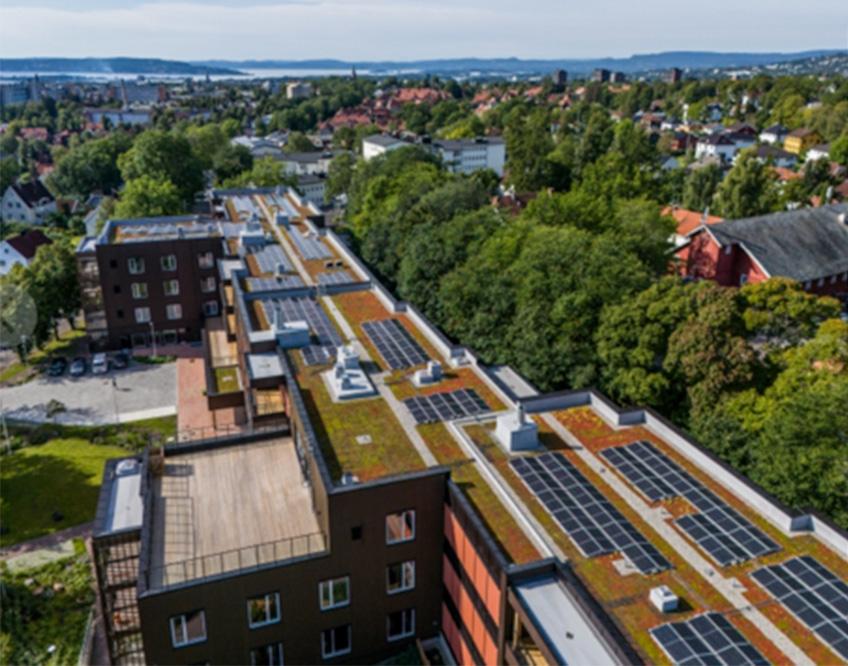
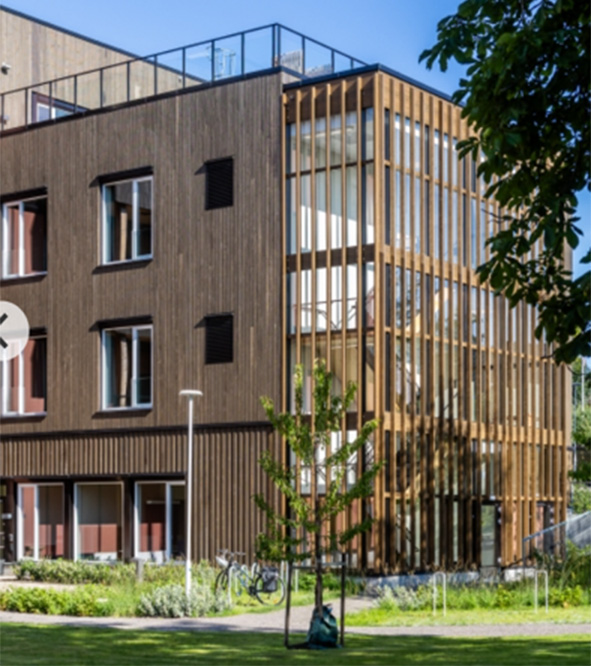
The environmental ambitions have been high and in line with the City of Oslo's strategy to reduce greenhouse gas emissions, both in the construction phase and in the operational phase. In addition, the project will be certified as a BREEAM Excellent building. Tåsenhjemmet will be a recognizable and safe place for the building's users. At the same time, it has been a goal to create a building that works well in its surroundings, with a scale and use of materials that fits into the surrounding buildings. Most of the bearing load elements are composed of Glulam wood and about half the slabs and the roof are composed of CLT wood. To reduce emissions from the CLT slabs it has been opted for gravel instead of the otherwise normally used concrete used for levelling mortar and acoustical barrier. CLT wood has also been extensively used in bearing walls and in balconies and stairs. The total emission reduction from materials according to the FutureBuilt scope (A1-A3 + B4) amounts to 26% compared with a standard geometry reference building, when excluding the PV-panels and the foundation measures. It should here be noted that the emissions from the ground floor slab is higher than the reference due to foundation needs (this extra thickness may also be allocated to the foundation but this is not done here). Carbon storage in the wood is not included in these calculations but would improve the results significantly if it was. Also emissions in the construction phase has been reduced as a result of a large proportion of emission-free machines on the construction site.
Assessment method
LCA scheme compliance | FutureBuilt |
LCA tool version | ByggLCA v.1.1 |
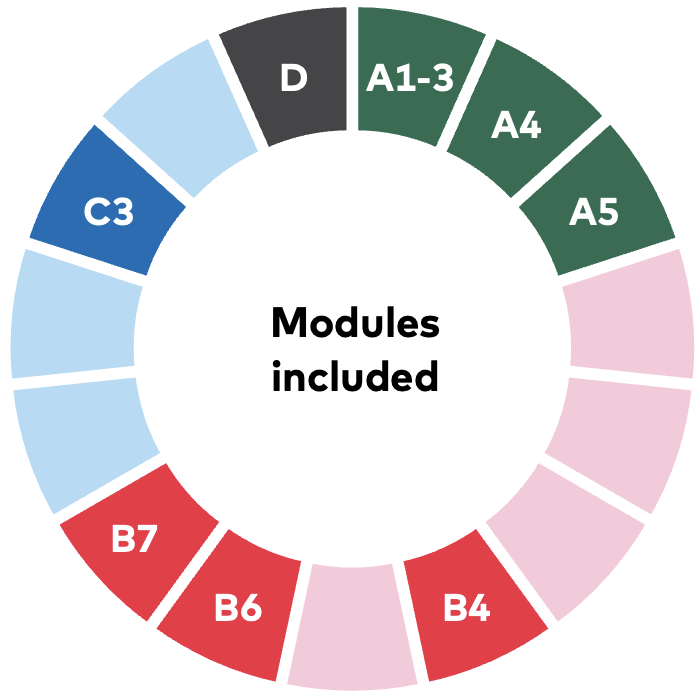
Life cycle stages included | A1-3, A4-A5, B1-B5, B6, C1-C4 |
Material emission data | Generic Norwegian database, EPDs |
Material decarbonisation scenario | — |
Energy calculation method | Emission factor for scenario 1 in NS 3720 |
Energy, dynamic scanario | — |
LCA results: Life cycle modules
[kgCO2e/m2 reference area * year]
%
[kgCO2e/m2 reference area * year]
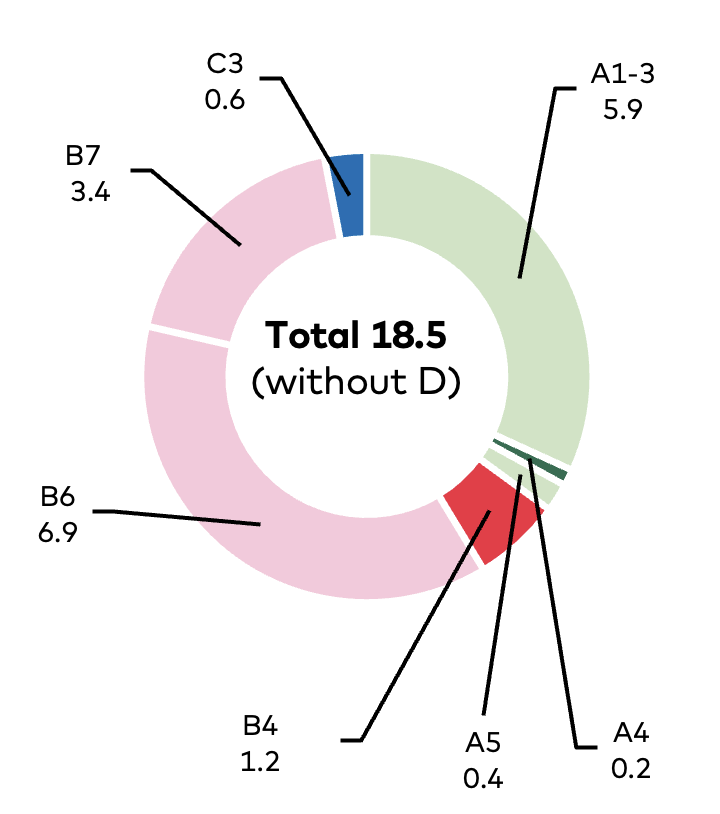
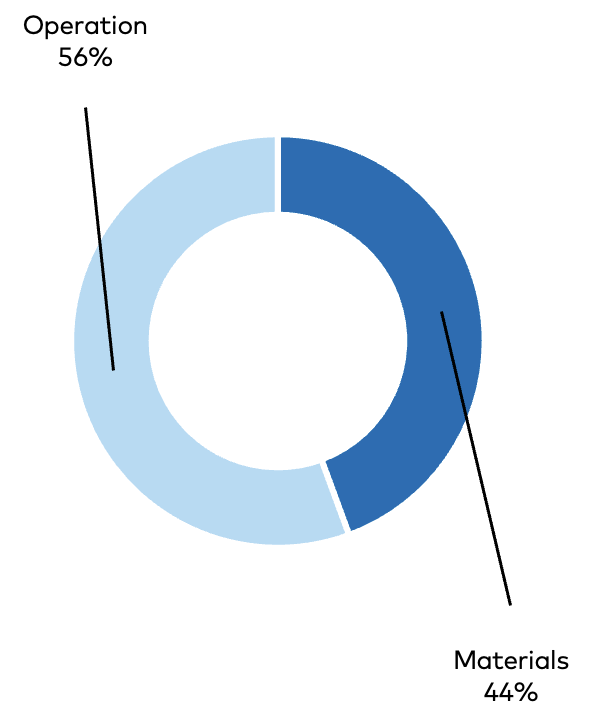
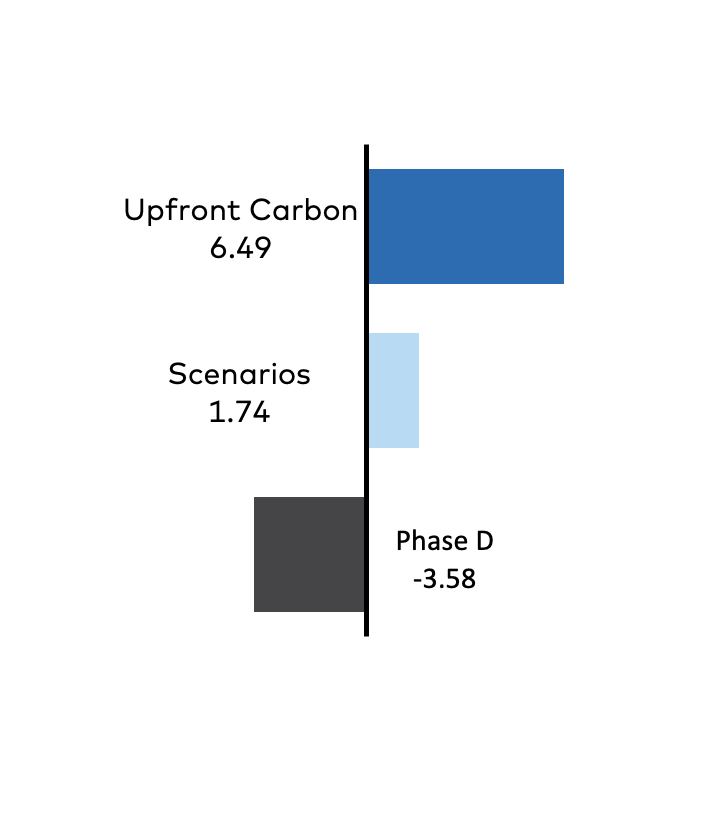
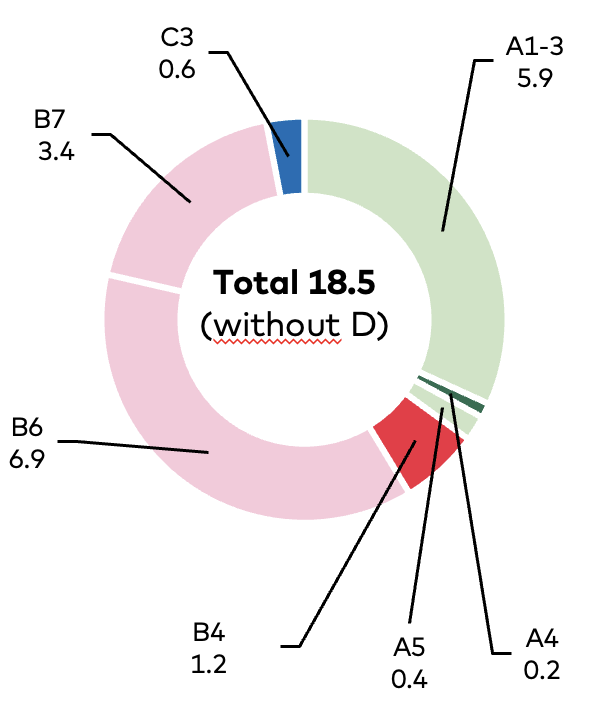
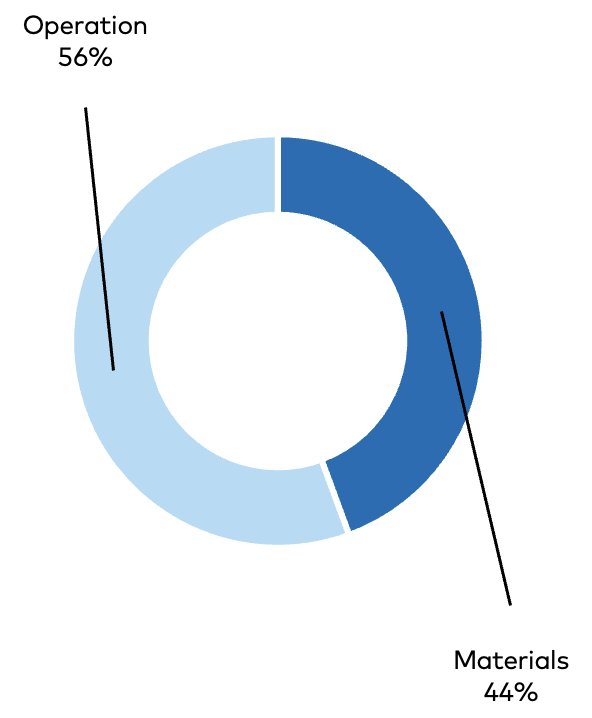
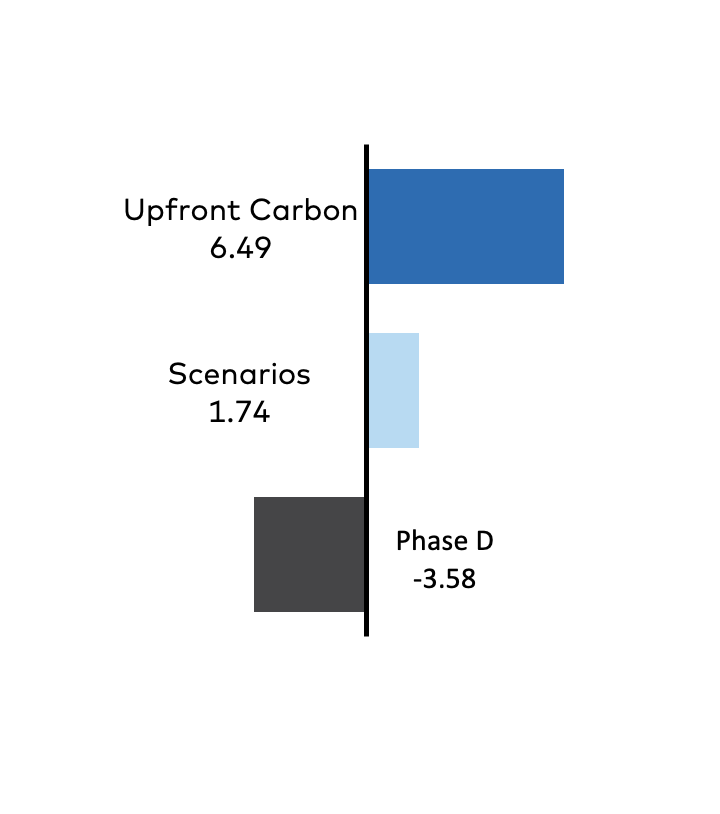
The system boundary includes the product, use and end-of-life stages. The material inventory also includes solar cells. In the middle figure operation includes B6 and B7, while materials include A1-A5, B4, C3. Operation B6 contain electricity, district heating and solar power. For electricity it is used an emission factor at 130 gCO2e/kWh. The building uses 66,1 kWh/m2 electricity specific and 14,6 kWh/m2 electricity for heat pumps. It produces 12,5 kWh/m2 with solar panels. In the third figure upfront includes A1-A5, scenarios include B4, C3, and D is shown separately.
LCA results: Building elements
GWP / reference area [kgCO2e/m2 reference area]
Material inventory: All materials
Life cycle modules: A1-A5, B4, C3
Life cycle modules: A1-A5, B4, C3
Interior walls are included finishes, Floor slabs include everything from flooring to ceilings, External walls, include the facade cladding, roof structure include external cladding. Solar cells were also calculated (A1-A5, C3), but they are not shown in figure, there impact is 34 kgCO2eq./m2
Building element quantity / reference area [kg building element / m2 reference area]
GWP of building element / building element quantity [kgCO2e / kg building element]
Material inventory: All materials
Life cycle modules: A1-A5, B1-B5, C1-C4
Life cycle modules: A1-A5, B1-B5, C1-C4
Building element quantity per building reference area is a measure for the material intensity, while element impacts per element quantity is a measure for the elements’ carbon intensity relative to their weight.
LCA results: Products
Product quantity / reference area [kg product / m2 reference area]
GWP of product / reference area [kgCO2e/m2 reference area]
Material inventory: Top 10 products with the highest impacts
Life cycle modules: A1-A5, B4, C2-C4
Life cycle modules: A1-A5, B4, C2-C4
Construction product quantity per building reference area is a measure for the material intensity, while product impacts per building reference area is a measure for carbon intensity.