22 Fyrstikkbakken
22 Fyrstikkbakken, Norway
Building use | Residential | Stories above ground | 4 buildings, 8,9,10 and 9 floors |
Location | - | Basement area | 2476 m2 |
Client | AFE Boligprosjekt 2020 AS, Birk & co and AF Eiendom | Structural system | CLT, Concrete and steel |
LCA consultant | LINK Arkitektur | Façade type | Painted wood |
Year of completion | 2024 | Roof type | Flat roof, CLT slab, Roof terrace |
Reference area | 12,699 m2 (useable floor area) | Heat demand /source | District heating and solar cells |
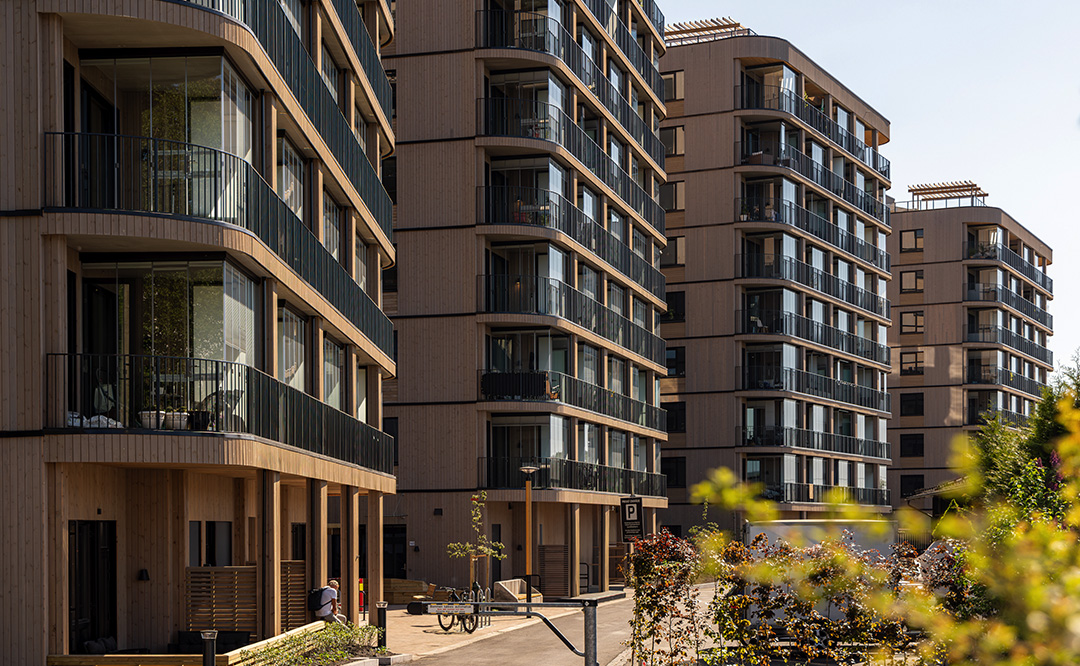
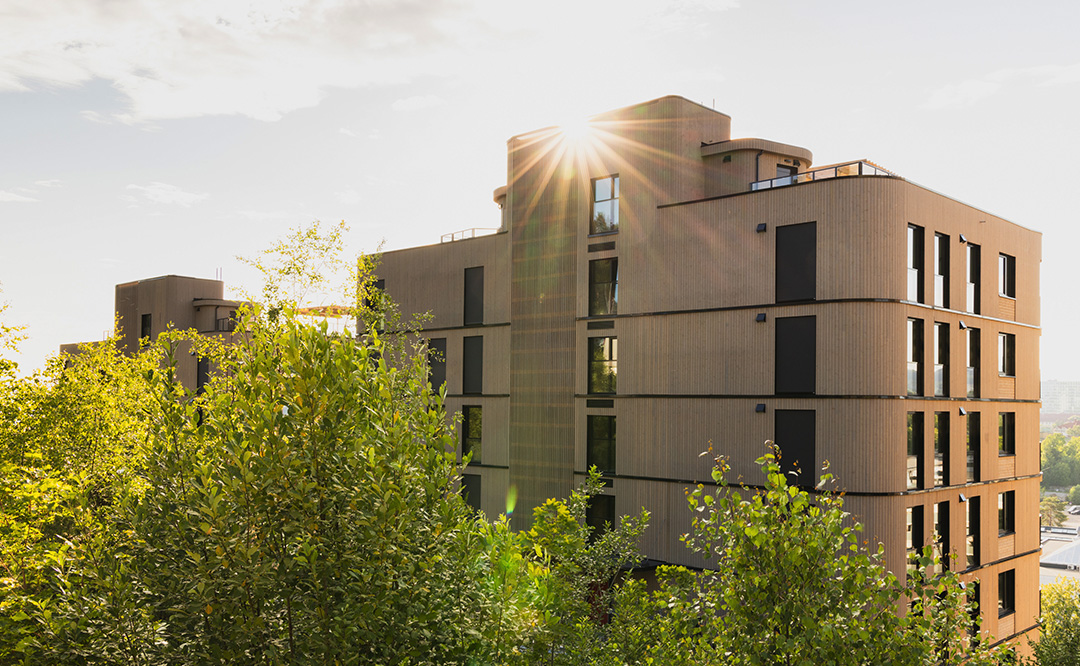
The project is part of the FutureBuilt program, which has the goal to reduce CO2 from energy use, materials and transportation with 50%. It was designed to be an eco-friendly residential densification near public transport hubs, with sharing and joint use as guiding principles. The location of the project was central to the low CO2 emissions. The main building materials are cross laminated wood (structural system) and low carbon concrete (basement and first floor). The energy use of the buildings is low due to the insulation in the outer walls, decentralized ventilation, and use of coal filters in the kitchen ventilation (requires less extraction of air). The project has proved to be a model project in terms of shared use, sustainability, future living forms and green mobility. The homebuyers range from 22 to 82 years old and have in common is that they support the idea of sharing and community. The project hopes to show one can achieve lower CO2 emissions by living in a smaller individual space and sharing common spaces with neighbours, but at the same time increase the quality of living. The project has used LCA analysis from the beginning in planning and choice of materials.
Assessment method
LCA scheme compliance | FutureBuilt |
LCA tool version | One Click LCA |
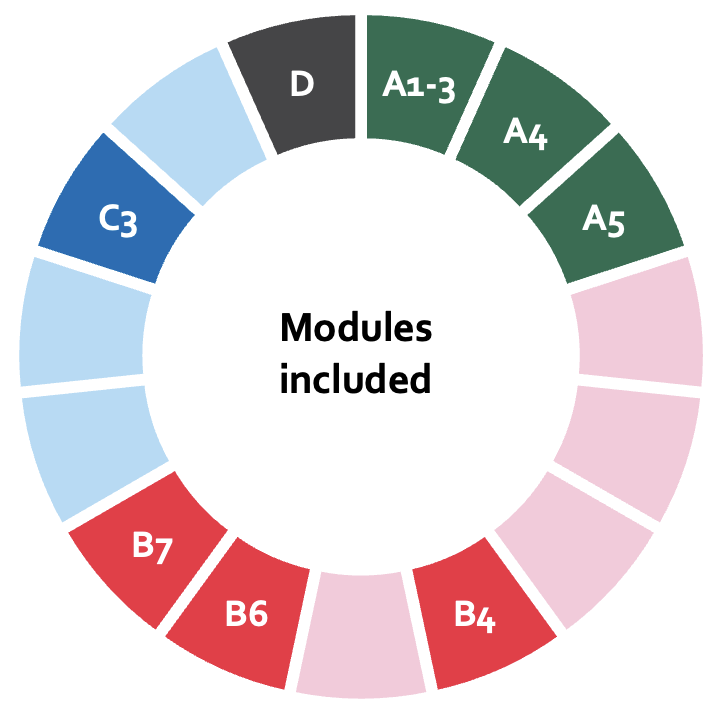
Life cycle stages included | A1-A5, B4, B6, B7, C3, D |
Material emission data | EPDs |
Material decarbonization scenario | – |
Energy calculation method | Energy simulation method for the TEK building code |
Energy, dynamic scenario | – |
LCA results: Building elements
[kgCO2e/m2 reference area * year]
%
[kgCO2e/m2 reference area * year]
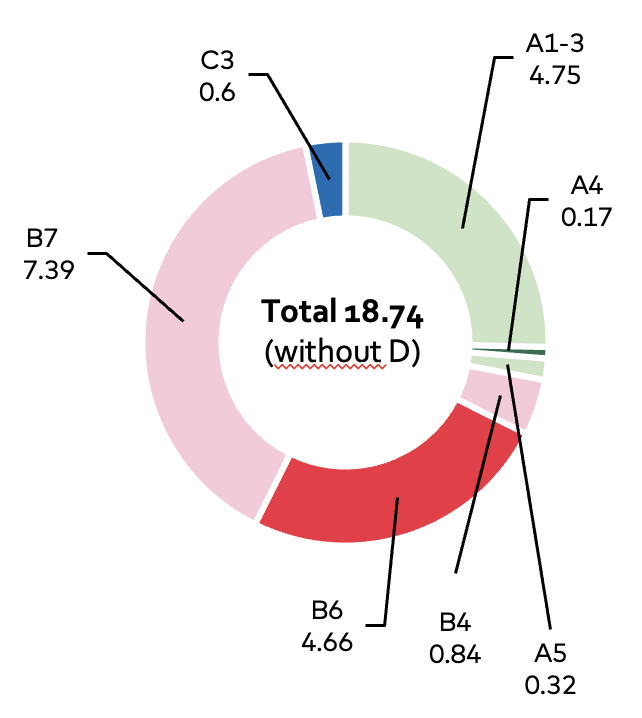
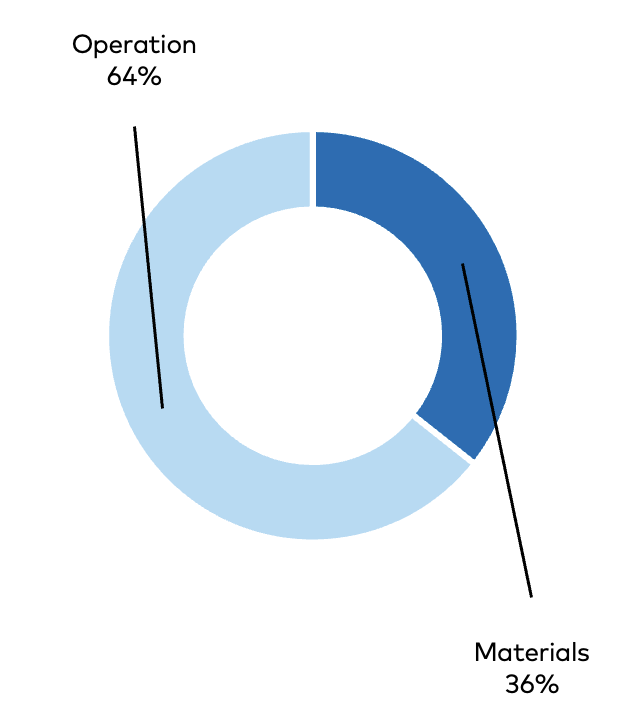
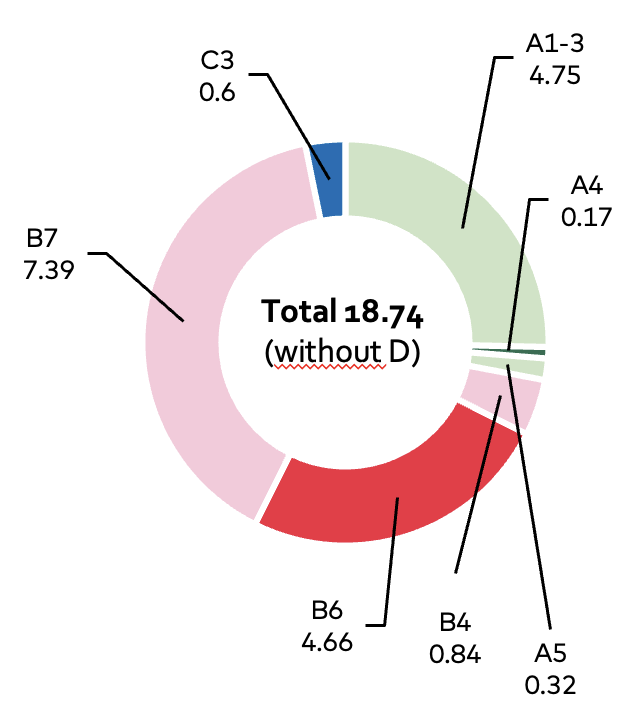
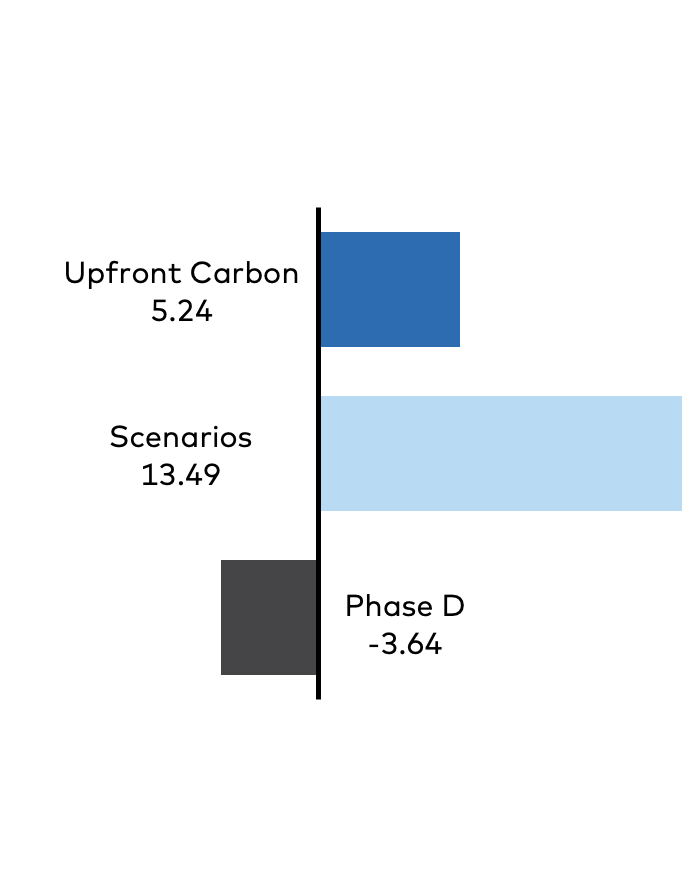
The system boundary includes the product, use and end-of-life stages.
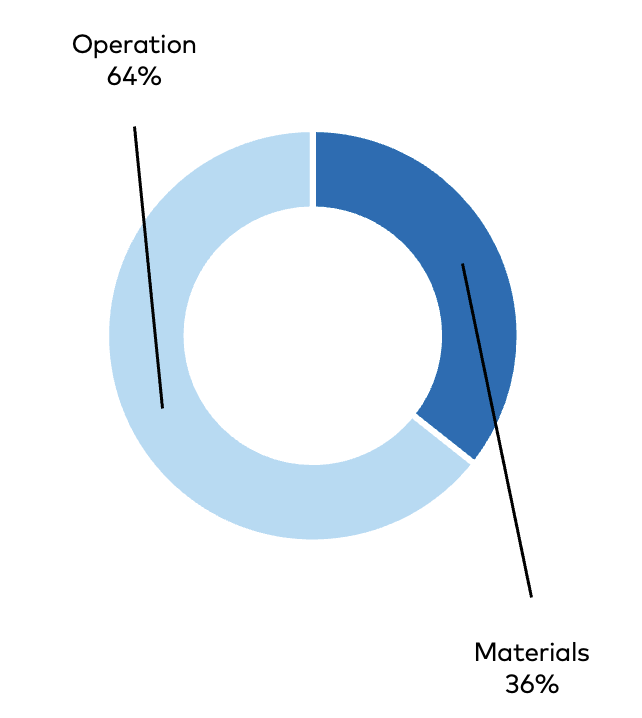
The material inventory also includes solar cells. In the second figure, Operation includes B6, while materials include A1-A5, B4, C2-C4. Be aware that B6 contain electricity, district heating and solar power.
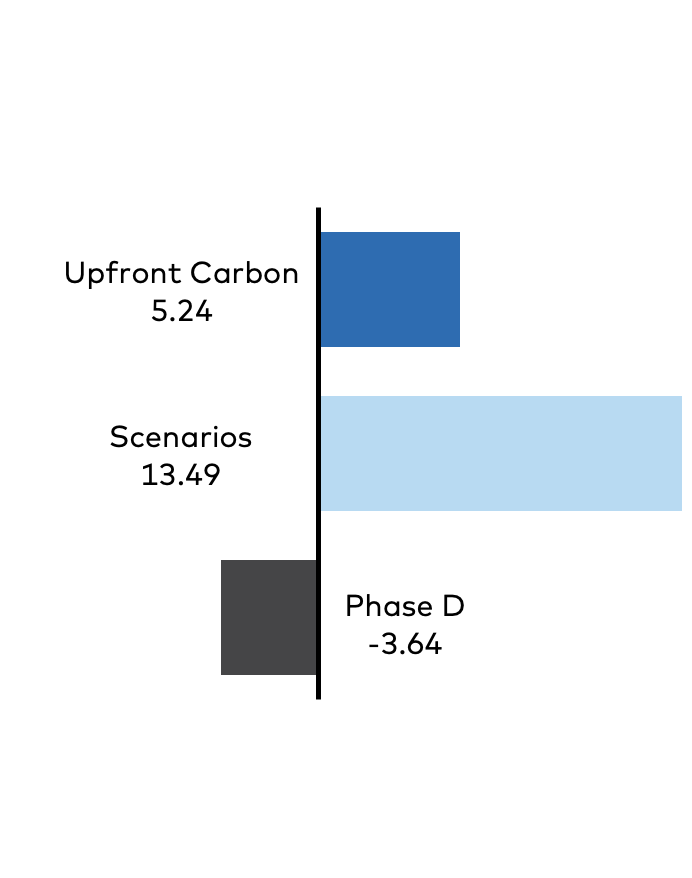
In the third figure, Upfront includes A1-A5, scenarios include B4, C2-C4, and D is shown separately, had it been included in the assessment.
The material inventory also includes solar cells. In the second figure, Operation includes B6, while materials include A1-A5, B4, C2-C4. Be aware that B6 contain electricity, district heating and solar power.
In the third figure, Upfront includes A1-A5, scenarios include B4, C2-C4, and D is shown separately, had it been included in the assessment.
LCA results: Building elements
GWP / reference area [kgCO2e/m2 reference area]
Material inventory: All materials
Life cycle modules: A1-A5, B4, C3
Life cycle modules: A1-A5, B4, C3
Interior walls are included finishes, Floor slabs include everything from flooring to ceilings, External walls, include the facade cladding, roof structure include external cladding. Solar cells were also calculated (A1-A5, C3), but they are not shown in figure, there impact is 614 kgCO2eq./m2.
Building element quantity / reference area [kg building element / m2 reference area]
GWP of building element / building element quantity [kgCO2e / kg building element]
Material inventory: All materials
Life cycle modules: A1-A4, B4
Life cycle modules: A1-A4, B4
Building element quantity per building reference area is a measure for the material intensity, while element impacts per element quantity is a measure for the elements’ carbon intensity relative to their weight.
LCA results: Products
Product quantity / reference area [kg product / m2 reference area]
GWP of product / reference area [kgCO2e/m2 reference area]
Material inventory: Top 10 products with the highest impacts
Life cycle modules: A1-A4, B4
Life cycle modules: A1-A4, B4
Construction product quantity per building reference area is a measure for the material intensity, while product impacts per building reference area is a measure for carbon intensity.
Note that the reference area in this case I the usable floor area.