15 Fyllinge
15 Fyllinge, Sweden
Building use | Logistical building | Stories above ground | 2 |
Location | Kistingevägen 6; 302 62 Fyllinge | Basement area | — |
Client | SLP Halmstad Fyllinge 20:434 AB | Structural system | Steel |
LCA consultant | Solenco AB | Façade type | Steel sandwich panels (mineral wool core) |
Year of completion | 2023 | Roof type | Steel sheet roof |
Reference area | 6,042 m2 (gross floor area) | Heat demand /source | District heating |
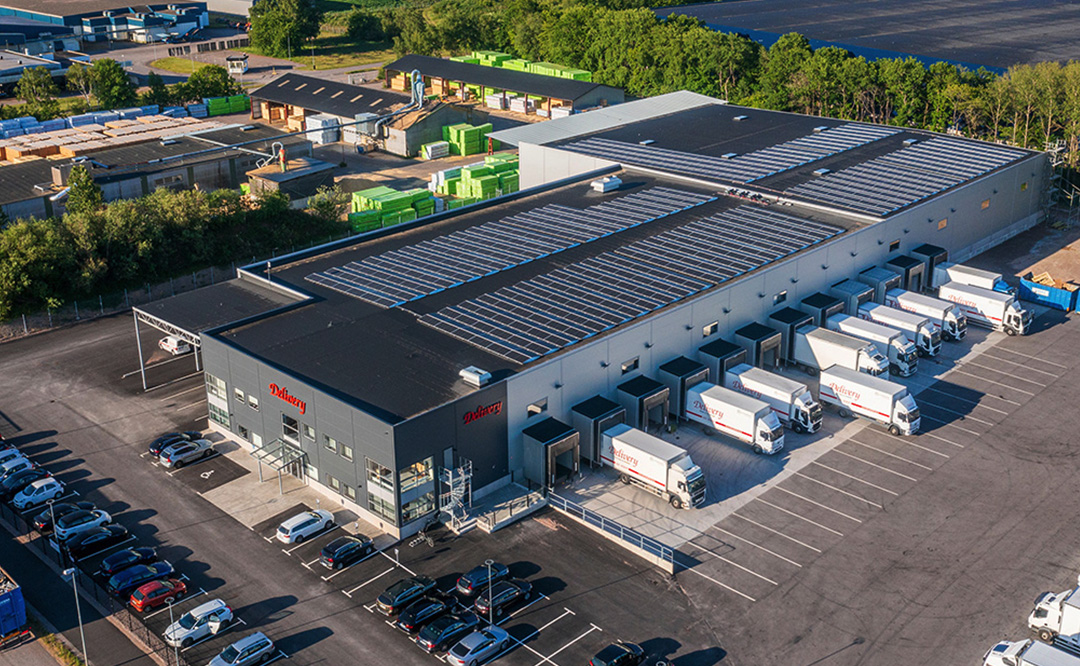
From the start of the project, climate and sustainability goals were at the top of the agenda. At a later stage, it was decided to certify the building with Miljöbyggnad Silver and NollCO2. Collaboration between the LCA consultant, the tenant, the contractor and the building owner made it possible to realise this project which is the first logistics building in Sweden certified according to NollCO2 and the first building within the NollCO2 certification to balance its carbon impact to net zero on site, using the photovoltaic system installed on the building’s roof. In the early project stages, it was decided to opt out of EPS and polyurethane insulation as much as possible. Investigation of the best construction for the concrete slab on the ground in the warehouse showed that the Teqbase plan, executed without joints and without reinforcement, would be a very climate-smart and time-efficient solution and accelerate construction time. It was decided to make the wall elements for warehouses and offices as sheet metal sandwich elements with a stone wool core. Different suppliers were compared based on the climate impact per square metre of façade. Due to difficulties sourcing steel with a sufficiently low climate impact, the designers have worked towards minimising the amount of steel purchased. Through smart division of fire zones and other measures, the fire consultant was able to establish that no sprinkler system was required for the building, which represents a large saving in embodied carbon emissions. The window and door supplier undertook to produce project-specific EPDs for all supplied windows and doors.
Assessment method
LCA scheme compliance | Miljöbyggnad and NollCO2 certification |
LCA tool version | One Click LCA, NollCO2 |
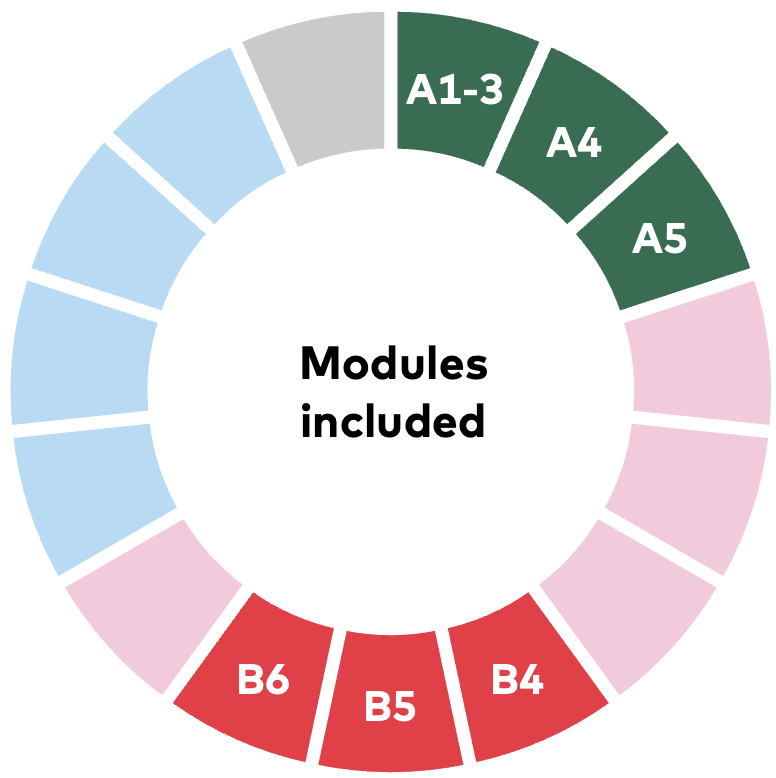
Life cycle stages included | A1-A5, B4-B6 |
Material emission data | Generic Swedish database, EPDs |
Material decarbonisation scenario | — |
Energy calculation method | Energy simulation method for Noll CO2 certification |
Energy, dynamic scenario | Noll CO2 certification |
LCA results: Life cycle modules
[kgCO2e/m2 reference area * year]
%
[kgCO2e/m2 reference area * year]
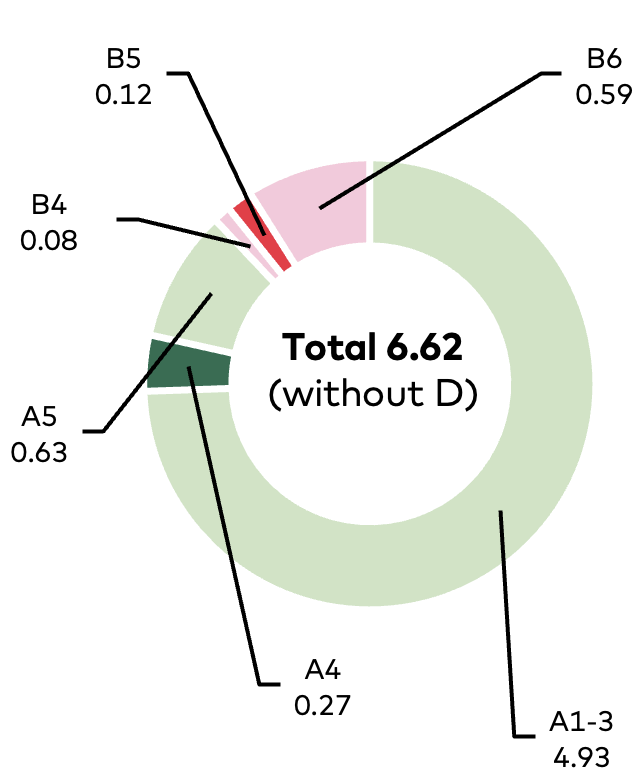
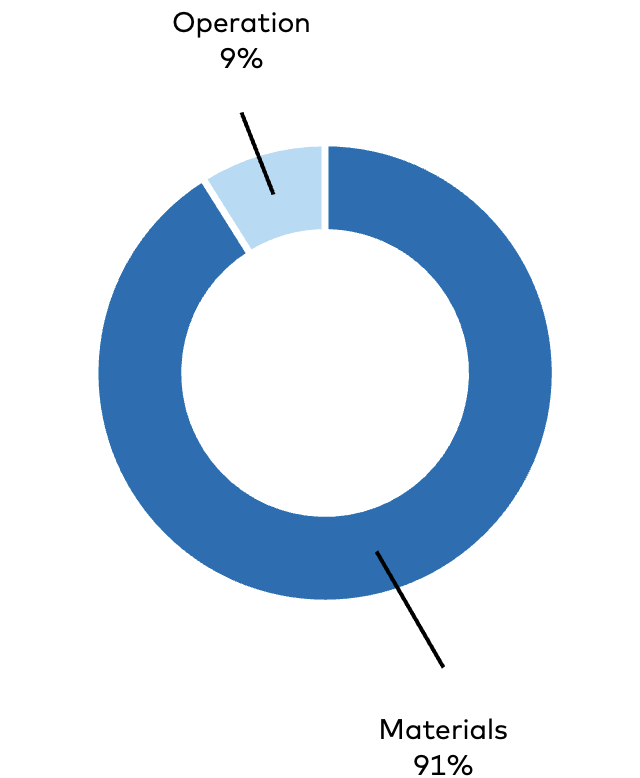
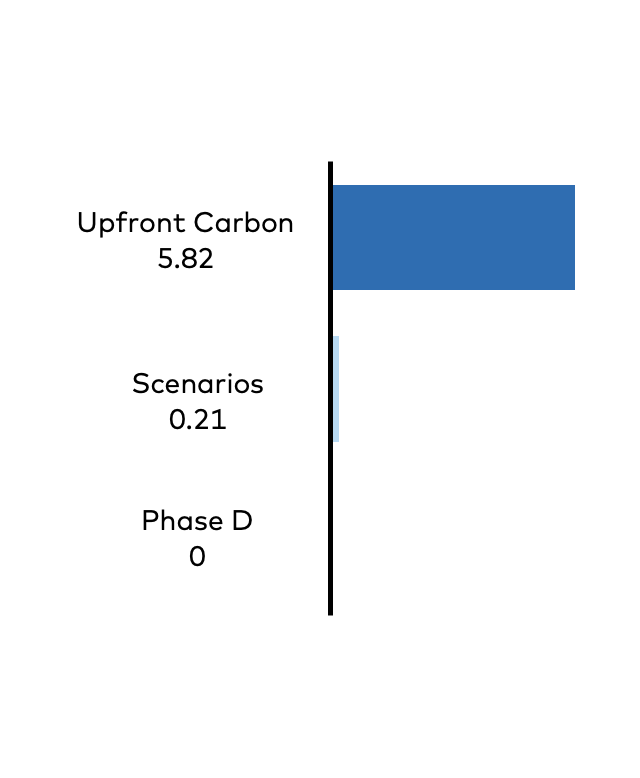
The results shown here are from the NollCO2 certification. The system boundary includes the product and use stages. All materials are reported, including building energy systems/installations such as electrical cables, HVAC, water pipes, sewage pipes, heating systems, lifts and solar PV panels. Impacts from energy use are reduced by district heating and solar power generation.
In the second figure, Operation includes B6, while materials include A1-A5, B4-B5.
In the third figure, Upfront includes A1-A5, scenarios include B4-B5, and D is shown separately, had it been included in this assessment.
In the second figure, Operation includes B6, while materials include A1-A5, B4-B5.
In the third figure, Upfront includes A1-A5, scenarios include B4-B5, and D is shown separately, had it been included in this assessment.
LCA results: Building elements
GWP / reference area [kgCO2e/m2 reference area]
The results shown here are from the NollCO2 certification.
Material inventory: All materials
Life cycle modules: A1-A5, B4-B5
Life cycle modules: A1-A5, B4-B5
All the technical components and piping for electricity water etc. were included in the estimation. Combined, they have an impact of 10 kgCO2e/m2 reference area (not included in the figure). The suspended ceiling is allocated to the roof.
Building element quantity / reference area [kg building element / m2 reference area]
GWP of building element / building element quantity [kgCO2e / kg building element]
The results shown here are from the NollCO2 certification.
Material inventory: All materials
Life cycle modules: A1-A5, B4-B5
Life cycle modules: A1-A5, B4-B5
Building element quantity per building reference area is a measure for the material intensity, while element impacts per element quantity is a measure for the elements’ carbon intensity relative to their weight.
LCA results: Products
Product quantity / reference area [kg product / m2 reference area]
GWP of product / reference area [kgCO2e/m2 reference area]
The results shown here are from the NollCO2 certification.
Material inventory: Top 10 products with the highest impacts
Life cycle modules: A1-A5, B1-B5, C1-C4
Life cycle modules: A1-A5, B1-B5, C1-C4
Construction product quantity per building reference area is a measure for the material intensity, while product impacts per building reference area is a measure for carbon intensity.