The Hierarchy of Resource-efficient Construction: A Tool for Prioritising Actions
The hierarchy of resource-efficient construction is a valuable tool for prioritising actions related to existing buildings. It helps guide decisions on whether to utilise, maintain, renovate and transform, extend or build new.
The priority is to utilise the existing building stock, minimising the need for new construction. Maintenance should be the next step to ensure longevity and prevent costly renovations. When adaptation is required, renovation and transformation should be considered to allow buildings to meet modern needs while conserving resources. For buildings with potential, extension can enhance their functionality without resorting to new construction.
Finally, building new should only be considered when all other options have been explored.
Although the purpose is to optimise the use of existing buildings, it is important to recognise that not all buildings can be saved. Some may be too deteriorated to be effectively renovated, or the cost of renovation may outweigh the benefits, particularly in areas where the building's value will never recover the investment. In such cases, demolition and, if needed, new construction may be the more viable option.
This hierarchy helps focus policies on the most sustainable actions, ensuring efficient use of resources and reducing waste.
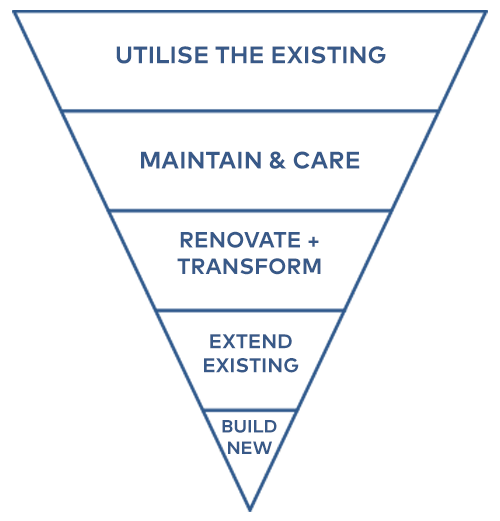
Source: Towards Sustainable Architecture: Finland’s national architectural policy programme 2022–2035 . Original concept by Matti Kuittinen, Aalto University.