Appendices
Appendix I: About the project
Partners: Media authorities in the Nordic countries (the project’s steering group): Medietilsynet (NO), Medierådet for børn og unge (DK), Fjölmiðlanefnd (IS), Kavi (FI), Mediemyndigheten (SE).
The Nordic media authorities have recognized the importance of measuring aspects of media literacy among individuals aged 9 years and older. Financing was given by the Nordic Council of Ministers for development of a method and a baseline survey. The survey (questionnaire) is developed to be conducted regularly to track changes and monitor developments over time. A unified approach across the Nordic countries facilitates comparability between countries and may lead to savings of resources.
The project involves conducting a pilot study, followed by a baseline measurement to evaluate various aspects of media literacy within the Nordic populations. The measurement is based on a questionnaire developed by experts at the media authorities in the Nordic countries with adaptations for children aged 9–15 and individuals aged 16 and older.
The survey was conducted by Origo Group over the period from December 2024 to April 2025.
Project Manager at Origo Group:Henrik Brandes
Project co-ordinator:Catharina Bucht , Swedish Agency for the Media
Project Manager at Origo Group:
Project co-ordinator:
Methodology
The survey focused on two key demographics: Adults aged 16 years and older, and children aged 9 to 15 years. Data was collected through a digital questionnaire utilizing the NEBU survey tool, and responses were gathered via an online web panel employing panel management tools such as Cint, Norstat, Syno, and Bilendi. Given the lower panel coverage in Iceland, the market research firm Procént was engaged for data collection in that region. Panel participants earn points for completing surveys, which can be exchanged for various monetary incentives.
Data Collection | Pilot Study | Baseline Study | Responses in Total | |
Sweden | 104 | 2,034 | 2,138 | |
Norway | 105 | 2,100 | 2,205 | |
Denmark | 105 | 1,935 | 2,040 | |
Finland | 106 | 1,937 | 2,043 | |
Iceland | 105 | 956 | 1,061 | |
Sweden | 50 | 960 | 1,010 | |
Norway | 50 | 961 | 1,011 | |
Denmark | 50 | 958 | 1,008 | |
Iceland | 53 | 175 | 228 | |
In total, 12,744 responses were received, comprising 9,487 from adults and 3,257 from children. The survey results incorporate all responses from both the pilot and main studies.
The data collection for the pilot study spanned from December 10, 2024, to January 16, 2025. Subsequently, the main study's data collection occurred between February 14 and April 14, 2025.
To address discrepancies in response willingness among different demographic groups, the results have been weighted to more accurately reflect the population distribution regarding gender and age within each country. For the adult target group, weights are further calibrated using auxiliary information about educational level.
The questionnaire was available in the official languages of each participating country: Swedish, Norwegian, Danish, Finnish, and Icelandic. Moreover, some questions and answer options were specifically tailored to align with the context of each country.
Feasibility study
Before the project to create a Nordic media literacy survey took off a feasibility study was conducted by the research group MEDLiE at the Norwegian University of Science and Technology (Schofield et al., 2021). The study was assigned by the media authorities in Denmark, Iceland, Norway and Sweden. The most common frameworks identified in the feasibility study comprise of the DigComp framework, UNESCO’s definition of MIL and Ofcom’s definition of media literacy. While all of these do not, specifically, refer to media literacy (ML), they do include concepts and indicators that relate in similar and different ways, e.g. digital literacy. In addition to that, the feasibility study distinguishes between frameworks that include several dimensions of media literacy and frameworks that include fewer, more specific, dimensions.
Taken together, these different frameworks provide a rich and nuanced depiction of ML and how it can be recognized. At the same time, they also reveal the complexity and difficulty involved in operationalising a study that measure ML. As is pointed out by Schofield et al., it is not feasible to incorporate all of these different frameworks in one single study (2021, p. 106). Limitations are inevitable. The study recommends a survey that combine self-reporting and proficiency tests or task-based measurements.
Developing a media literacy questionnaire
In the efforts to select an appropriate framework for the Nordic media literacy survey, the aim was to strive for a holistic and at the same time feasible framework. Holistic in the sense that it should encompass different aspects of ML, including competence areas such as safety and problem solving from the DigComp framework (Schofield et al., 2021, p. 98) and domains such as ’knowing‘ and ’critically evaluate‘ from Lopes et al.’s (2018) framework. By feasible, a conceptual framework is suggested that can easily be overviewed, that is possible to execute and repeat in different national contexts and over time. By feasible, also implied a framework that actually can be operationalised into specific tasks and questions, which in their turn can be used as indicators of media literacy.
Based on these premises, we decided to lean against a more recent and condensed framework presented by Carlsson (2023, p. 43) in the operationalisation. Carlsson’s framework is based on UNESCO’s framework and consists of six overarching competence areas or domains, followed by eight specific proficiencies.
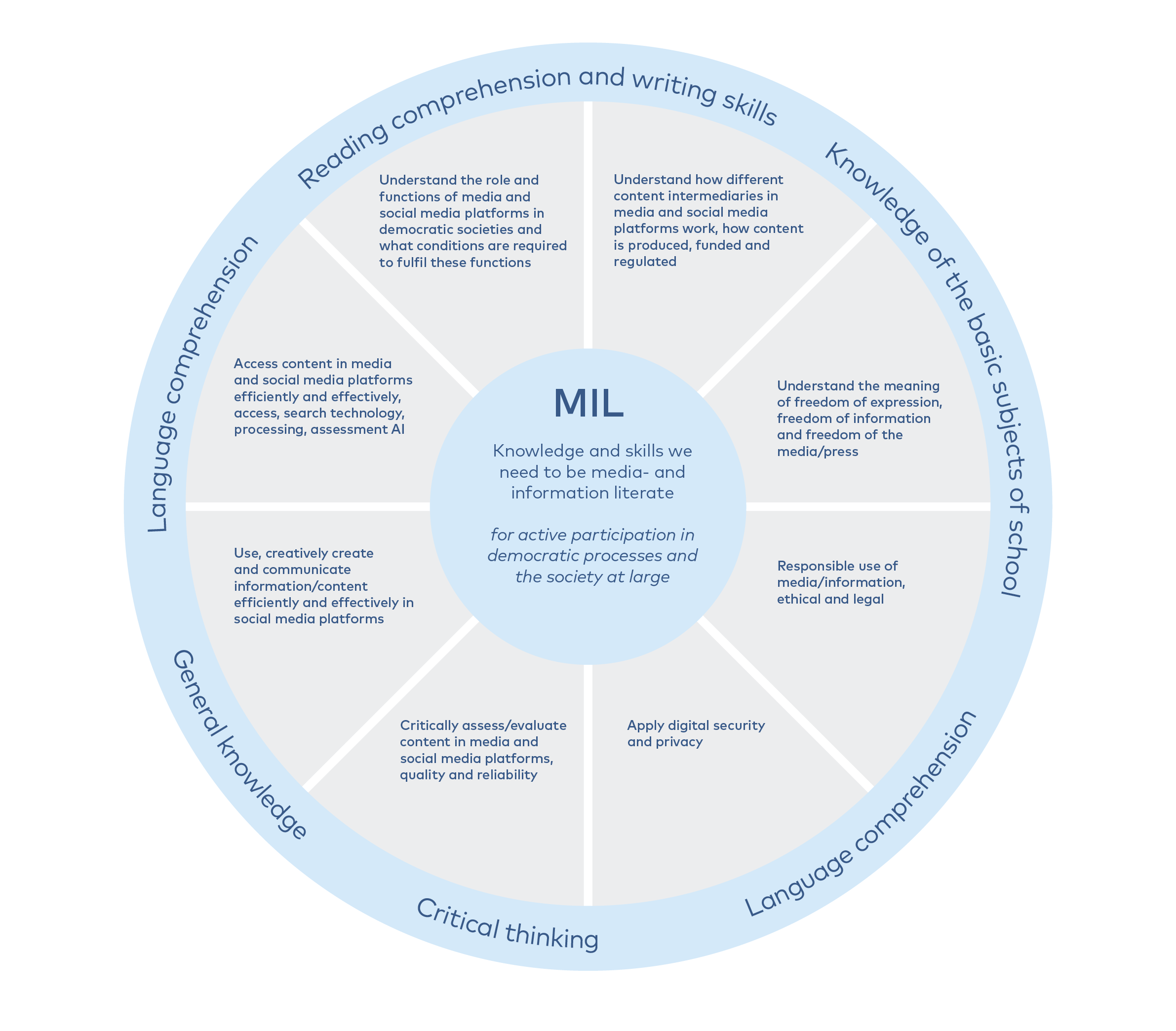
While this framework so far has not been operationalised in prior studies, it does capture the elementary dimensions of ML that are important to know today and that can be expected to be important tomorrow as well.
The selection of indicators for the different ML proficiencies has primarily been structured according to the conceptual framework developed by Carlsson (2023) and taking into consideration the recommendations from the study by Schofield et al. Following the advice from the feasibility study, special consideration was taken to Ofcom’s Adults’ Media Use and Attitudes Report (2023a), the Norwegian Media Authority’s Kritisk medieforståing i den norske befolkninga (2021) and the study by Lopes et al. (2018).
A first draft of the questionnaire, aimed at 16+ year olds, was commented on by a group of researchers or experts from all participating countries, appointed by members of the steering group (see appendix II Nordic Expert Group). An adaptation of the adult questionnaire with a reduced number of questions was developed targeting the young, 9- to 15-year-olds.
In the construction of the questions, inspiration was found in the “Adults Media Literacy Core Survey 2022” by Ofcom (ofcom.org.uk) as well as the survey about media literacy levels in the Norwegian population (“Kritisk medieforståelse i den norske befolkningen 2024”, available in Norwegian) by The Norwegian Media Authority (medietilsynet.no).
References:
Carlsson, U. (2023). Medie- och informationskunnighet (MIK): Begreppet och kunskapen. In U. Carlsson, P.-M. Wehrling, & K. Westling (Eds.), Medie- och informationskunnighet (MIK) för ett demokratiskt medborgarskap: Rapport från nationell MIK-konferens 2022 (pp. 37–46). Förvaltningen för kulturutveckling, Västra Götalandsregionen.
Lopes, P., Costa, P., Araujo, L., & Ávila, P. (2018). Measuring media and information literacy skills: Construction of a test. Communications, 43(4), 508–534. https://doi.org/10.1515/commun-2017-0051
Ofcom. (2023a). Adults’ Media Use and Attitudes Report. Ofcom.
Ofcom. (2023b). Children and Parents: Media Use and Attitudes. Ofcom
Schofield, D., Frantzen, V., & Kupiainen, R. (2021). Towards a Nordic MIL-index. A feasibility study for a Nordic Media and Information Literacy Index.
Appendix II Nordic Expert Group
Denmark:
Department of Communication, University of Copenhagen
Digital Society and Participation, IT University of Copenhagen
Finland:
Faculty of Education, University of Lapland, Rovaniemi
Media Education Faculty of Education and Culture, Tampere University
Iceland:
Icelandic Media Commission
Norway:
School of Communication, Leadership and Marketing Kristiania University College, Oslo
Sweden:
Department of Education, Uppsala University
Appendix III: Data
Use of social media platforms 16+ years, by country
Do you use any of the following social media platforms?
News consumption 16+ years by country
How often do you use the following media to stay updated about the news?
Understand media and social media platforms
News articles published in daily newspapers:
Mean
Mean
Mean
Mean
Mean
Social media posts:
Mean
Mean
Mean
Mean
Mean
Understand how media and social media platforms work
Which media/media compay has/is…?
Critically assess media content
Examples of images
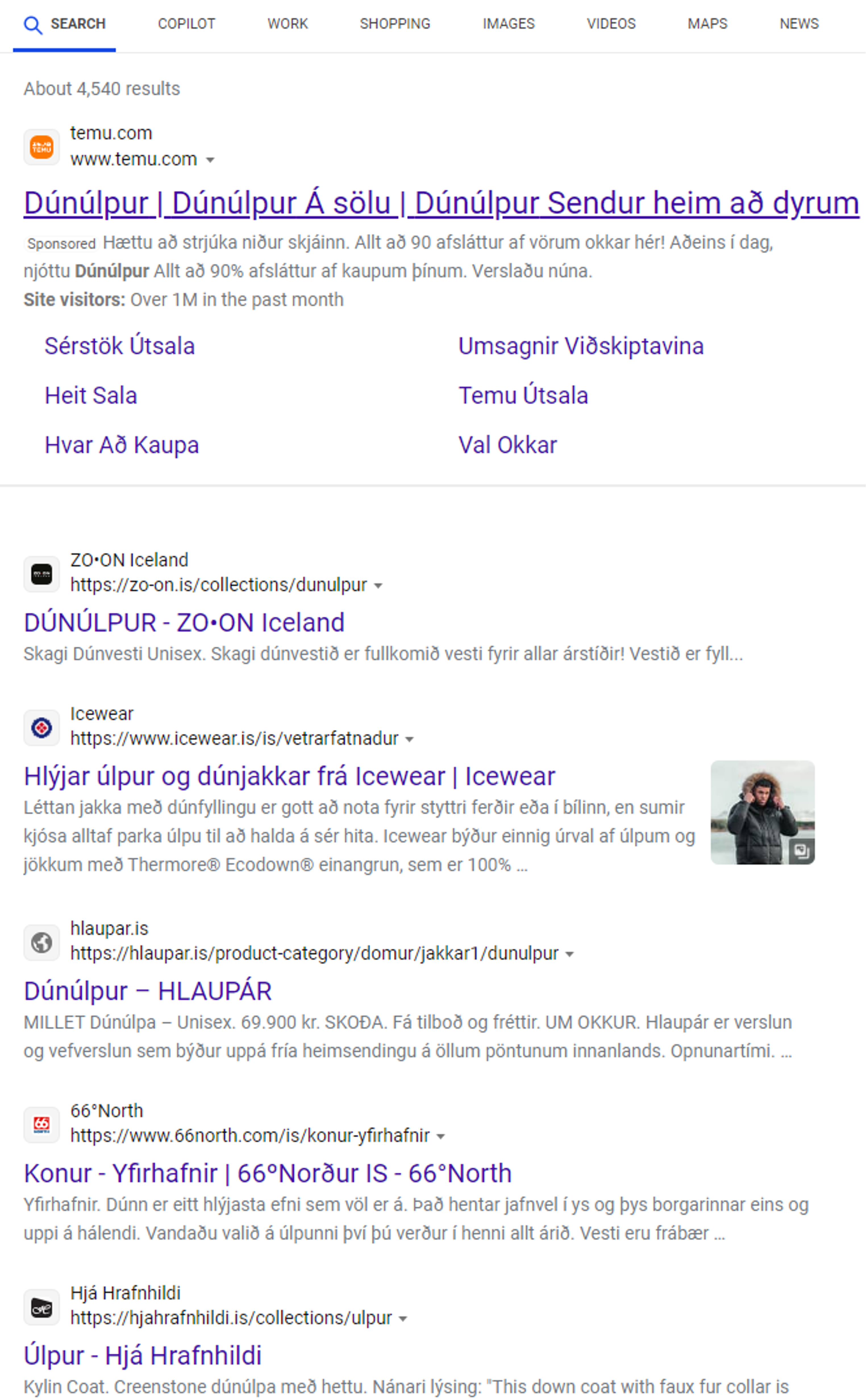
Web search down jacket, Iceland:
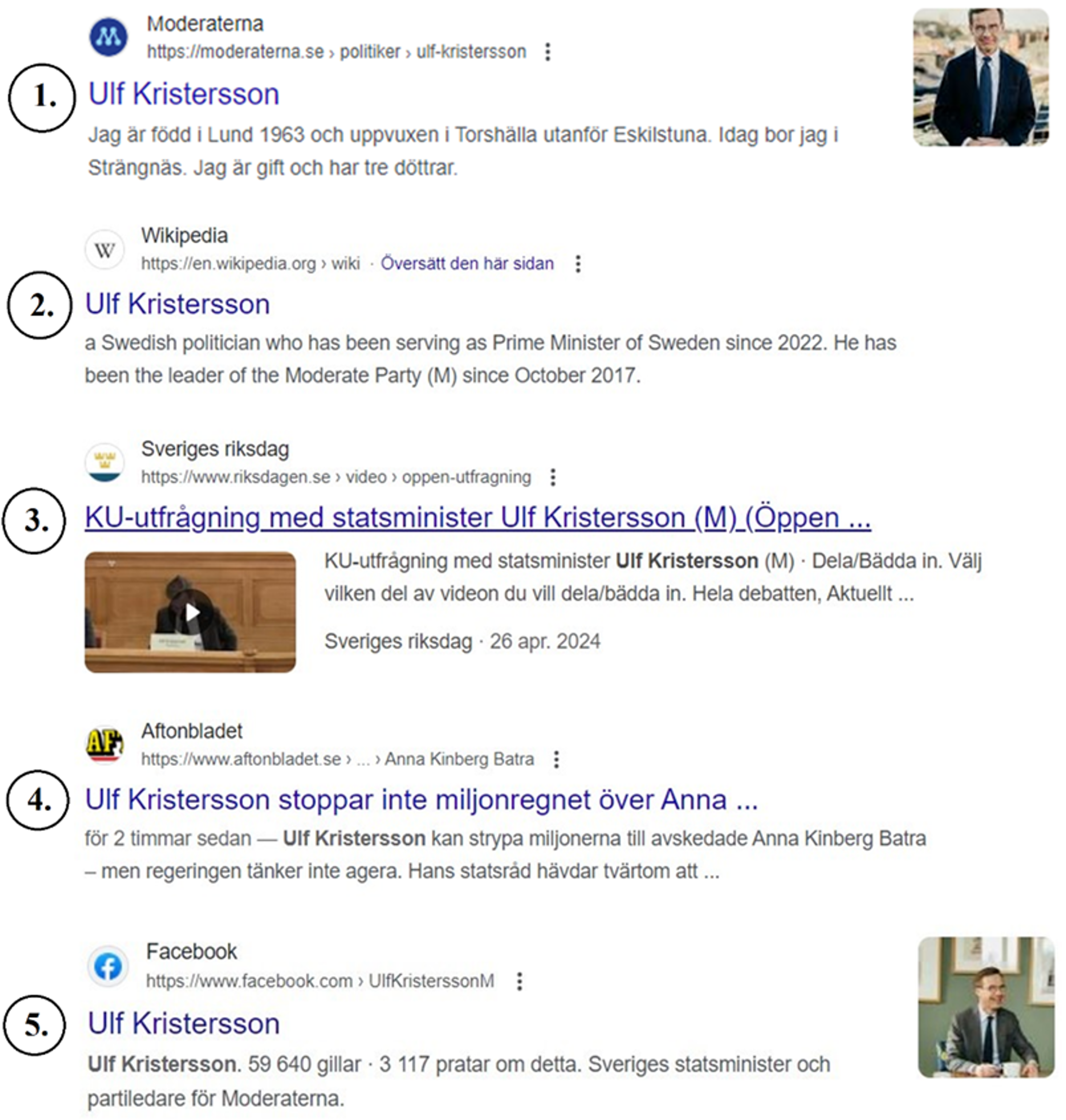
Web search prime minister, Sweden:
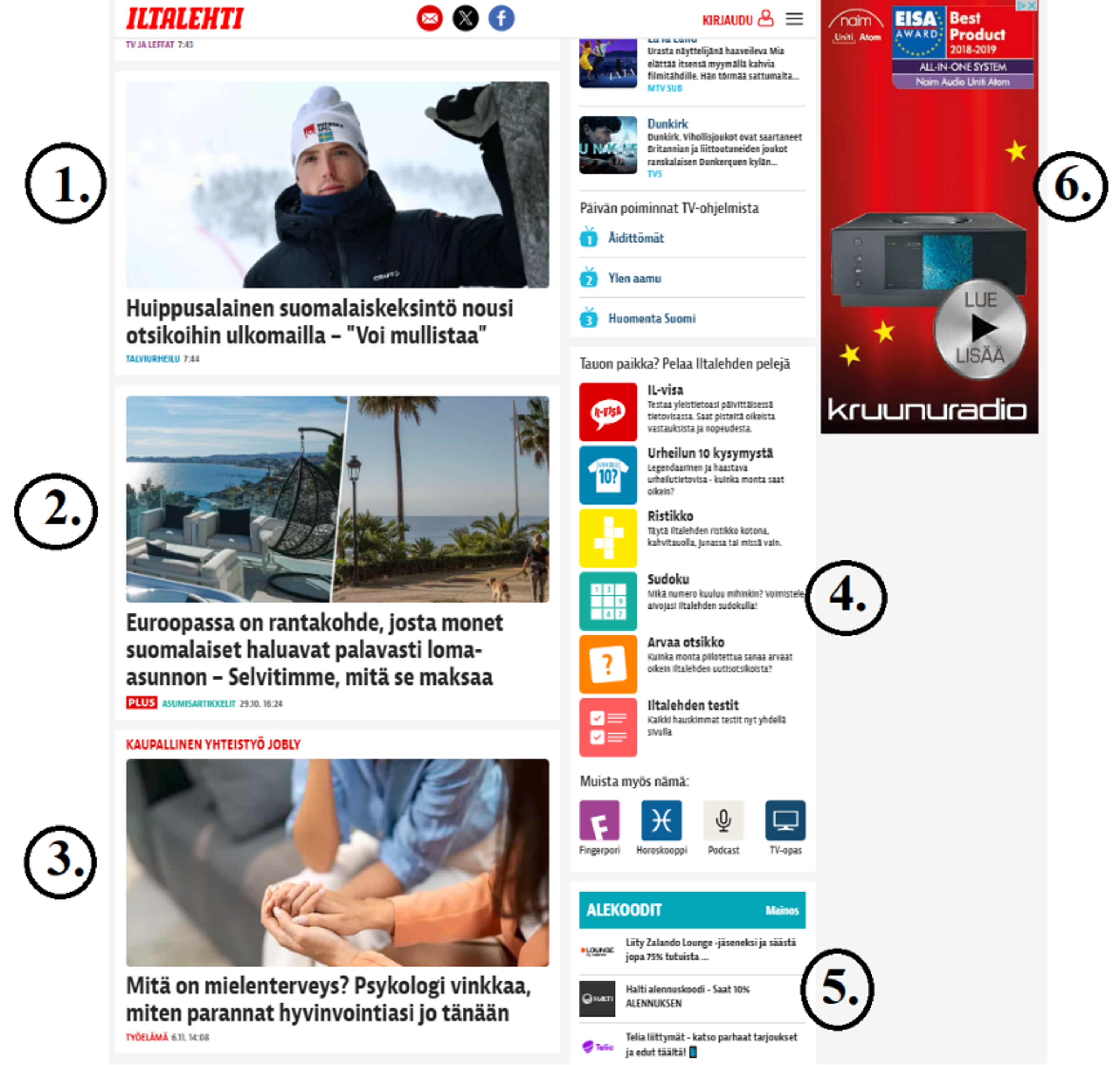
News site, Finland:
Use and create content in media
How often do you…?