Users of fishing gear
Fisheries in the Nordic Atlantic operate in harsh and often challenging environments. Some fishing grounds become inaccessible during winter due to extreme weather conditions, ice coverage, and prolonged darkness. Large and powerful vessels are often necessary to access certain fishing areas safely and effectively. Using robust fishing gear is essential as weaker materials can lead to life-threatening situations in some fisheries in these demanding conditions.
Environmental factors such as low temperatures and drifting ice significantly impact the properties of the materials used in fishing gear. Additionally, rough seas and winter darkness can result in gear loss as surface markers become challenging to locate. The use of AIS (automatic identification system) on marking buoys for fishing gear was prohibited from 1 January 2025. These challenges necessitate the use of specialist and durable gear to withstand the region’s unique conditions.
The Nordic fleet can be categorised into three main types of fisheries based on vessel size and the fishing gear employed:
Industrial fleet
- Primarily consists of large vessels exceeding 24 metres in length, owned by family-run, small to medium-sized businesses and, in some cases, larger companies.
- Vessels are equipped with advanced and robust fishing gear, including purse seines, pelagic and demersal trawls, auto liners for longline fishing, demersal seine and, in a few cases, gillnets.
- Operate in offshore and distant fishing grounds, built to withstand extreme weather and maximise efficiency.
Small-scale commercial fishery
- Comprises smaller vessels, mostly shorter than 24 metres, owned by private individuals or small companies.
- Utilises a variety of gear types, including:
- small trawls
- longlines (both automatic longliners and hand-baiting operations)
- gillnets, traps or pots, and jigging equipment
- demersal seine
- Operate closer to shore, often in inshore waters during winter, or may remain inactive during the harshest months.
Recreational fishing fleet
- Consists of small vessels, mostly shorter than 12 metres, primarily owned by private individuals.
- Predominantly uses jigging gear, though traps or pots and gillnets are also employed in some areas.
- Operates mainly during the summer, but in closed fjords where weather has less impact, the season may extend for longer. Fishery is restricted to coastal or inshore waters due to the size and capacity of the vessels.
Methods of sourcing fishing gear for Nordic fisheries
Manufacturing fishing gear for the domestic market is a vital industry across all the Nordic countries. This sector not only supports local fisheries but also serves a substantial export market, particularly for large, mobile fishing gear such as trawls and purse seines. These gears are in high demand globally due to the region’s expertise in producing durable and efficient equipment capable of withstanding harsh conditions. Countries such as Iceland, the Faroe Islands, and Norway play critical roles in this industry, assembling fishing gear locally by combining imported raw materials, made primarily of synthetic fibres. Smaller static fishing gear such as gillnets and pots are typically imported into the Nordic countries. However, they might be rigged up at netlofts or by fishers themselves.
The Nordic countries rely heavily on imports from Asia for smaller, static fishing gear such as gillnets and pots. It is worthy of note that the majority of pots arrive from Asia fully assembled and rigged. However, these imported components are often rigged or customised locally by netlofts or fishers to meet specific requirements.
While fishing gear manufactured domestically is sold directly to local fishers, there is currently no unified system in place to register the quantity, weight, or types of materials used in the gear. Suppliers sometimes tag or mark the fishing gear for large fishing gear such as purse seines and large trawls, allowing them to track which vessel is using it for later maintenance and servicing. Although this practice provides some level of traceability, it remains inconsistent. In contrast, smaller gear types, including gillnets, longlines, traps, and pots, are typically imported through mixed supply chains. In some cases, fishers procure their fishing gear independently, either in whole or as parts, bypassing centralised suppliers.
Due to the diverse supply routes and lack of systematic registration, the Nordic countries lack a complete understanding of the total quantity and type of fishing gear in use at any given time. Estimates are typically based on indirect, often inaccurate data, such as import and sales records or fishery-specific studies.
Abandoned, lost, or discarded fishing gear (ALDFG)
The primary reasons for fishing gear becoming marine debris are categorised internationally into three main fractions: Abandoned, lost, or discarded fishing gear (ALDFG). In the Nordic context, it is unlikely that a significant number of fishers deliberately abandon their gear, although isolated cases of such behaviour can happen. Historically, it was common practice among the Nordic countries to discard used fishing gear at sea rather than bringing damaged or unusable gear back to land. However, this practice is now believed to be rare, as waste management systems onshore have improved significantly. Additionally, fishers are increasingly aware of the problems that discarded fishing gear can cause in the long term. However, fishing gear continues to be lost in Nordic fisheries, as in fisheries worldwide (Richardson et al., 2022). This typically involves parts of gear, such as sections of trawl nets or fragments of gillnets, rather than complete gear. However, there are instances where entire fishing gear such as longlines or sets of traps are lost due to strong currents, drifting ice, or other environmental factors.
Norway stands out for its systematic approach to documenting lost fishing gear. Fishers in Norway can report lost gear, including its location, cause, and quantity, without facing repercussions. It is relatively simple for commercial fishers to register the loss of fishing gear using an interactive website
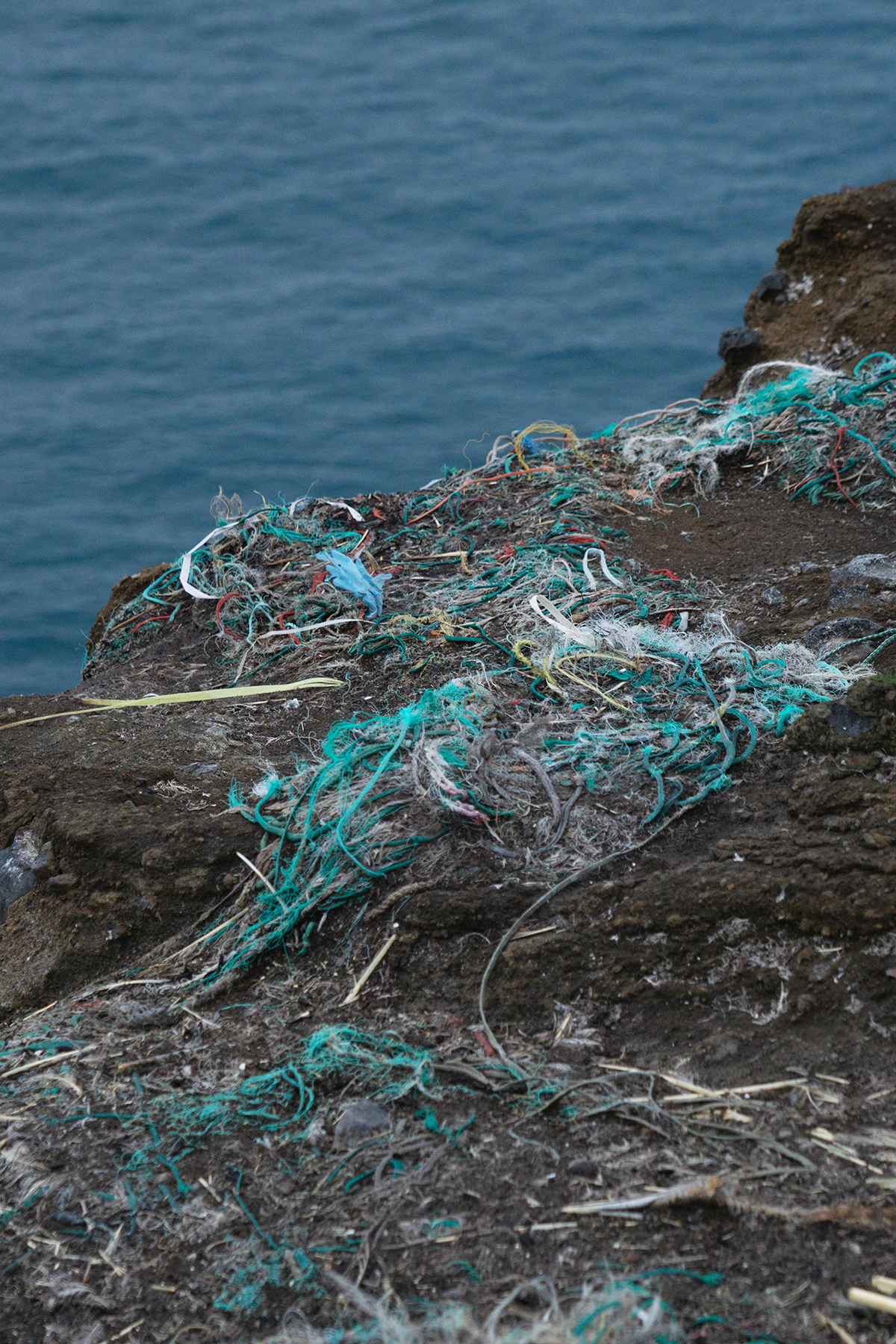
A particularly striking example involves nesting sites of the Northern gannet (Morus bassanus). These birds often use fragments of fishing gear, particularly dolly ropes, in their nests. These materials, originating from bottom trawling operations domestically or internationally, entangle adult birds and chicks, often causing them to hang or starve to death (O’Hanlon et al., 2019; Massetti et.al., 2021).
The fishing industry should prioritise developing more sustainable materials for gear components known to harm the environment, even when lost in small quantities. Efforts to address this issue could include research into alternative materials, improved maintenance practices, and increased accountability for gear use and disposal.