1. Introduction
This report is the third and final part in a series addressing resource efficiency concerning critical raw materials (CRMs) in Nordics.
Article 26 of the Critical Raw Materials Act (CRMA) requires member states to adopt and implement a national programme containing measures designed to “promote waste prevention and increase re-use and repair of products and components with relevant critical raw materials recovery potential”. This report outlines potential measures and instruments to be considered when designing these programmes. From a list of 90 measures (Appendix 1), a selection of these measures is given a more in-depth evaluation in chapter 3. The first chapter of the report contains a more general discussion on how waste prevention concepts and principles defined by the Waste Framework Directive of EU can be best applied for increased CRM-resource efficiency.
1.1 Critical raw materials
Central aspects of critical raw materials are discussed more thoroughly in the first two reports of this series, hence, only a short description is provided here. Raw materials are defined by the EU as substances in processed or unprocessed state used as input for the manufacturing of intermediate or final products. Substances predominantly used as food, feed or combustion fuel are, however, excluded from this definition and not considered raw materials.
EU Critical Raw Material Act
Critical raw materials (CRM) are defined by the EU as materials of high economic importance with significant supply risks. To address these risks, the EU has introduced the Critical Raw Materials Act (CRMA), which establishes regulatory measures to enhance European capacity for extraction and refining. The Act also emphasises waste prevention and initiatives to increase the re-use of discarded products and materials as a part of a broader strategy to secure CRM supply chains.
In May 2024, the Critical Raw Material Act entered into force, which means that the regulations already bind Denmark, Finland, and Sweden, while Norway and Iceland are currently assessing their EEA relevance.
1.2 Waste prevention, re-use and substitution
Almost all products and materials consumed by humans impose a negative environmental footprint throughout their lifecycle. The extraction and processing of raw materials require energy and chemicals, generating waste, pollution and significant disruption to landscapes and ecosystems. Recycling mitigates the need for virgin raw materials and often reduces energy consumption and waste generation. However, while the overall environmental footprint from secondary materials is typically much smaller than that of their primary equivalents, it remains substantial. The only materials or products with no negative environmental footprints are those that are never produced, as illustrated in Figure 1.1.
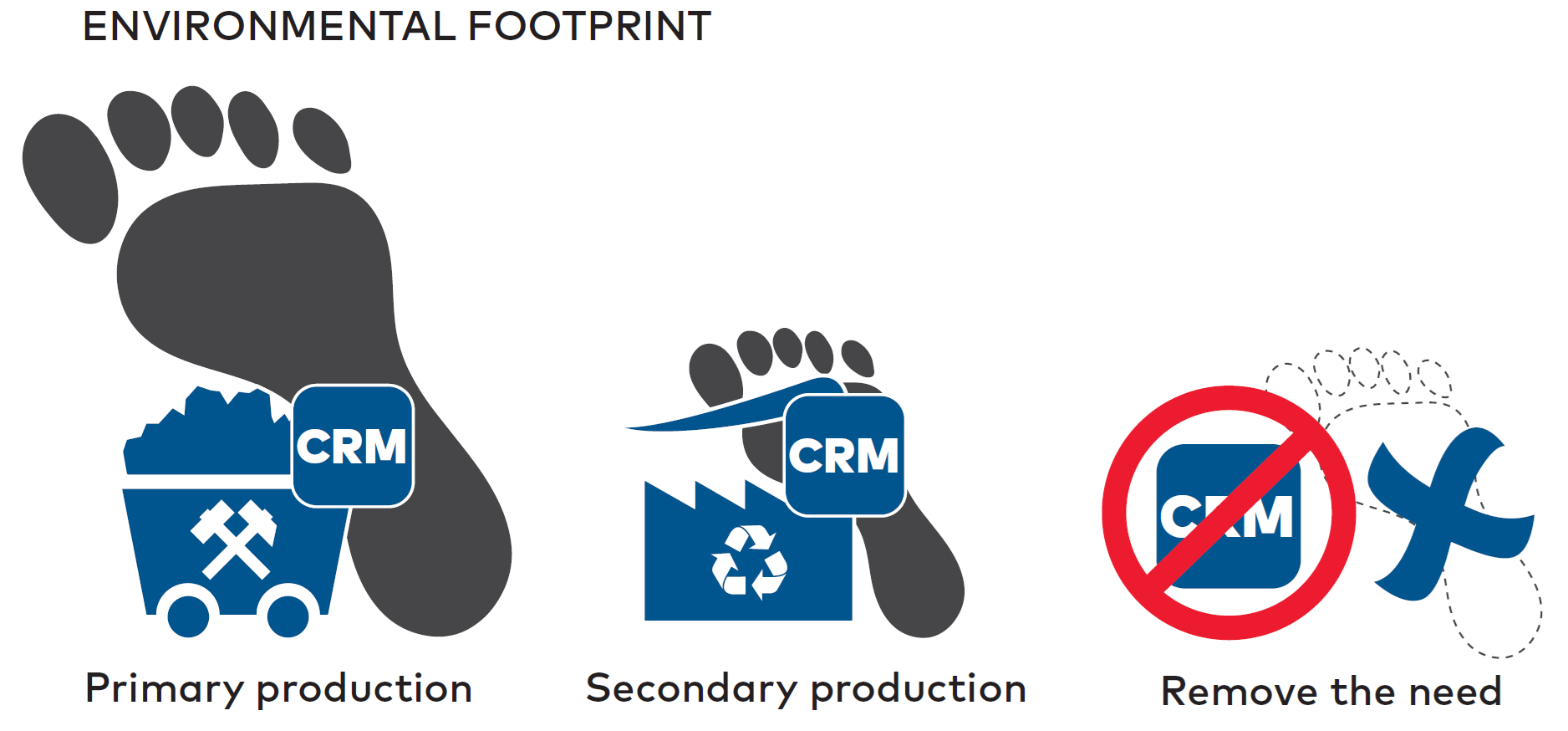
Figure 1.1 No products have a better environmental footprint than those we can do without. Illustration Bergfald Miljørådgivere.
Waste prevention refers to strategies aimed at eliminating or minimising the consumption of products and materials that would otherwise become waste. These measures can either reduce the overall amount of waste generated or minimise the presence of hazardous substances, certain chemical components, or critical raw materials. While recycling mainly addresses waste once discarded, waste prevention focuses on actions earlier in the product lifecycle.
Industrial symbiosis describes networks of industrial processes where residual materials generated in one process is utilized as a feedstock in another. As such industrial symbiosis may be considered both waste prevention and a form of recycling.
The use phase of a product or material gives the consumer several opportunities to reduce waste. This includes avoiding the consumption of non-essential products and materials or extending the use phase for consumed products and materials through considerate and practical use that includes maintenance, reparations, and upgrades necessary to maintain full functionality for as long as possible. Strategies for waste prevention during the use phase are often summarised using the keywords refuse, reduce, re-use, repair, refurbish and rethink.
Re-use refers to the process where functioning products and materials that would otherwise be discarded as waste are instead repurposed and applied by new consumers in the same way. Cars, bicycles, furniture, EE products, and textiles are examples of products commonly reused through transactions on second-hand markets. Additionally, there is also a developing market for re-used construction materials. Discarded products and materials can sometimes also be prepared for re-use after being collected as waste.
Some business models can promote waste prevention through prolonged product lives and more efficient use of the products being distributed. One example is Product-Service-Systems (PSS) where products are rented out instead of sold. Retaining ownership to the product allows the business to plan maintenance and upgrades that can promote durability with full functionality over extended time periods compared to business models where the product is owned by the user. If done right, PSS may contribute to a change in consumer behaviour and reduce both consumption and waste. Business to business models may be of particular interest, where companies rent necessary office equipment instead of buying. This requires a design rethink while it may create business and job opportunities within a range of products. Nordic Council of Ministers have explored PSS models based on different products,
Waste prevention is used as a concept covering strategies aimed at both reducing the total volume of waste and minimising the concentration of specific chemical components within that waste, such as hazardous substances or critical raw materials. Chemical components of a product often contribute properties necessary for product functionality. In order to replace such components without compromising functionality, it is crucial to identify an alternative substance that can provide similar properties while being less hazardous or scarce. This process, known as substitution, represents a qualitative waste prevention strategy, enabling the replacement of hazardous or resource-limited substances with more benign or available alternatives. Substitution based on weak or flawed assessments may lead to unsuccessful substitutions resulting in products with unacceptable safety or functional performance. All substitution assessments should include an environmental evaluation that ensures that the chosen substitution material does not lead to products having more adverse environmental effects compared to the material being replaced.
Figure 1.2 summarises the sub-strategies included in the waste prevention concept.

Figure 1.2 Strategies under waste prevention. Illustration Bergfald Miljørådgivere.
1.2.1 Political instruments for increasing waste prevention
CRM-waste prevention can be stimulated using both communications, economic- and legal instruments. Communication can be used to increase waste prevention through information campaigns that raise public awareness of increasing CRM-supply risks caused by consumption of certain products. Taxes or fees can be put on certain CRM-intensive products to limit consumption, or legal instruments can be used to ban these applications completely.
Critical raw materials have different applications ranging from life essential to purely entertainment based. The CRM helium is for instance used both in party balloons and in MRI-machines used for medical examinations. In a supply situation with limited availability of a CRM, restrictions on use of this CRM for non-essential applications may secure necessary supply for more essential uses. Ideally such restrictions would best be applied before the supply situation becomes acute.
Although legal restrictions in the form of a banning certain CRM-applications is the most efficient way to ensure CRM-waste prevention, this instrument is both controversial and comes with associated costs and risks. Banning certain applications limits both consumer and commercial freedoms and may lead to economic losses for producers and distributors of these applications. Banning an application may also encourage smuggling and illegal distribution of banned products which can also lead to poorer compliance with safety regulations as seen with illegally imported fireworks. Enforcing a ban also comes with added costs and encumbrances. Banning certain products is however not an uncommon practice in the Nordic countries or EU as a long list of banned products already exists due to unwanted content of hazardous substances. If certain products where to be banned due to CRM-supply concerns this can therefore be seen as an extension of an already well-established legal practice that is a part of the regulation of chemicals and hazardous substances. Examples of already banned products include mercury batteries, fire foam containing PFOS and phosphate-containing detergents.
1.3 Waste reduction as an EU strategy for better CRM-resource efficiency
To mitigate future supply risks for CRMs, the EU introduced the Critical Raw Materials Act, which provides regulations to strengthen European capacity for extraction and refining. Article 26 of CRMA requires member states to
«promote waste prevention and increase re-use and repair of products and components with relevant critical raw materials recovery potential;”
The member states shall develop and implement national programmes that include measures to improve CRM waste prevention. These can be outlined as either separate policy documents or as an integrated part of other national waste policy frameworks. Figure 1.3 illustrates potential methods for integrating waste management programmes, waste prevention initiatives or CRM resource efficiency programmes into a common policy plan.
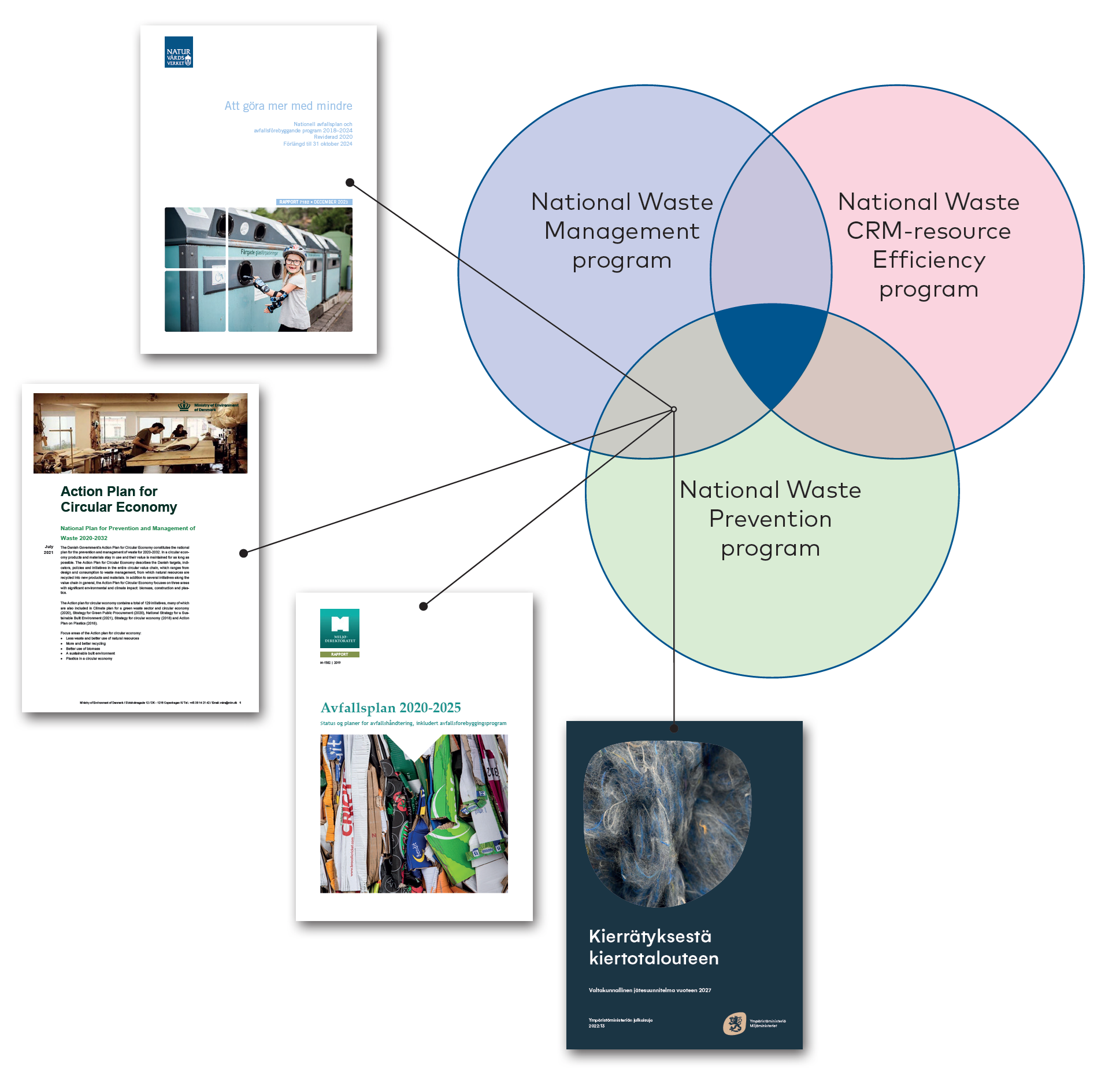
Figure 1.3 Possible integrations of waste management programs, waste prevention programs and CRM-resource efficiency programs. Illustration Bergfald Miljørådgivere.
1.3.1 Other EU regulations that impact CRM waste reduction policies
In addition to CRMA, several other EU regulations affect the framework conditions for CRM-waste reduction. The following paragraphs summarise the most relevant regulations that include:
- Waste Framework Directive
- WEEE Directive
- Battery Directive
- End of Life Vehicle Regulation
- Eco Design Directive
Waste Framework Directive
The European Waste Framework Directive defines alternative waste treatment solutions and requires a national waste policy where these treatments are given priority according to the waste hierarchy. The directive lists the following methods as part of the hierarchy:
- prevention
- preparing for re-use
- recycling
- other recovery, e.g. energy recovery
- disposal
The directive requires member states and those bound by the EEA agreement to take measures that encourage options delivering the best overall environmental outcomes.
The directive requires member states and those bound by the EEA agreement to develop national waste management plans. These plans must include measures to improve environmentally sound practices preparing for reuse, recycling, recovery, and waste disposal. Many of these measures align with the national programme for CRM recycling and other strategies aimed at reducing risks to CRM supply chains.
Article 3 of the EU Waste Framework Directive defines waste prevention as “measures taken before a substance, material or product has become waste, that reduces either the quantity of waste, adverse impacts of the generated waste or the content of hazardous substances in materials and products.” Thus, the definition includes both quantitative aspects (reduced amounts of waste) and qualitative aspects (reduced amounts of certain chemical compounds in the waste and unwanted effects from the waste in the surroundings). The definition specifies that reuse and measures extending the life span of products shall be considered integrated parts of a waste prevention strategy
Article 9 of the Waste Directive lists the following measures as potential parts of a waste prevention strategy:
- promote and support sustainable production and consumption models;
- encourage the design, manufacturing and use of products that are resource-efficient, durable, reparable, re-usable and upgradable;
- target products containing critical raw materials to prevent those materials from becoming waste;
- encourage the reuse of products and the setting up of systems promoting repair and re-use activities, including in particular for electrical and electronic equipment, textiles and furniture, as well as packaging and construction materials and products;
- encourage the availability of spare parts, instruction manuals, technical information, or other instruments, equipment or software enabling the repair and re-use of products;
- reduce waste generation from industrial production, extraction of minerals, manufacturing, construction and demolition;
- reduce the generation of food waste in primary production, in processing and manufacturing, in retail and other distribution of food, in restaurants and food services, as well as in households
- encourage food donation and other redistribution for human consumption
- promote the reduction of the content of hazardous substances in materials and products,
- reduce the generation of waste, in particular, waste that is not suitable for preparing for re-use or recycling;
- identify products that are the primary sources of littering, and take appropriate measures to prevent and reduce litter from such products;
- aim to halt the generation of marine litter
- develop and support information campaigns to raise awareness about waste prevention and littering.
As can be read from the list, EU-defined strategies for waste prevention include the circular design of durable products that facilitate repairability, thereby extending their lifespan. Additionally, resource-efficient manufacturing processes that minimise production waste are highlighted. The list also includes strategies for reusing and modifying consumer behaviour, such as raising awareness of sustainable consumption practices and forming a culture encouraging these habits. Waste prevention of CRM-containing products is listed as a special concern.
Annex IV of the Waste Framework Directive outlines additional measures for waste prevention. These include information campaigns to promote the best available techniques for waste prevention and educating competent authorities in incorporating waste prevention requirements into industrial permits. Furthermore, voluntary agreements should be used to set waste prevention plans and objectives for industries, as well as economic measures that provide incentives for waste prevention.
Article 29 of the Waste Framework Directive mandates that member states establish a national waste prevention programme outlining the implementation of measures specified in Article 9 and Annex IV. This programme may be structured as a separate plan or integrated into the national waste management plan or another relevant national environmental policy programme.
WEEE Directive
The first version of the WEEE Directive entered into force in 2003 and has since been updated several times. The EU is currently evaluating the need for further revisions.
The directive describes required measures to reduce the adverse impacts of the generation and management of waste from electrical and electronic equipment (WEEE). The directive contains regulations regarding product design, waste collection and collection rates, treatment facilities and recovery rates. The current version of the directive includes overall benchmarks for recovery and preparation for re-use and recycling but not recycling benchmarks for specific CRMs like the Battery regulation and ELV regulation.
The Battery regulation
On 17 August 2023, the new Battery Regulation of the EU entered into force and replaces the Battery Directive from 2006.
The regulation applies to all categories of batteries, including portable batteries, starting, lighting and ignition batteries (SLI batteries), light means of transport batteries (LMT batteries), electric vehicle batteries and industrial batteries. The regulation also applies to batteries incorporated into or added to products or specifically designed to be incorporated into or added to products.
Article 11 of the regulations introduces requirements for the removability and replaceability of portable and LMT batteries. These requirements will also benefit CRM-recycling operations as they may allow easier and more cost-effective dismantling of the battery components from the product and can prohibit the use of welding and glued connections that make disassembly difficult and time-consuming.
The Battery regulation also requires all batteries above a minimum size to be associated with a battery passport that is interoperable with other digital product passports required by the Eco design directive. The passport and battery labelling shall include information about CRMs present in the battery.
End-of-Life Vehicle Regulation
A proposal for a revised regulation that replaces the End-of-Life Vehicle (ELV) Directive was presented in 2023 and has yet to be adopted. The proposal is supposed to replace not only the existing ELV directive but also several other directives, including the Directive on the type-approval of motor vehicles regarding their reusability, recyclability and recoverability.
The End-of-Life Vehicle Regulation establishes requirements for the treatment of scrapped vehicles and their components. It includes circularity standards for vehicle design and production, focusing on reusability, recyclability and recoverability and integrating recycled content. These requirements are verified during the type-approval processes for vehicles. The regulation also employs information and labelling requirements on parts, components and materials. Additionally, it also specifies conditions regarding extended producer responsibility, the collection and treatment of end-of-life vehicles, as well as on the export of used vehicles to countries outside the EU. Part of these requirements includes design standards that enable the easy removal and replacement of recyclable parts and components, as well as mandatory removal of certain parts and components to enhance the efficiency of CRM recycling.
Article 13 requires all new vehicles to have a digital passport similar to equivalent passports required by the Battery Directive and Eco-design regulation.
Eco-design for Sustainable Products Regulation (ESPR)
The Eco-design for Sustainable Products Regulation (ESPR) entered into force on 18 July 2024 and is the main legislative initiative of the EU towards more environmentally sustainable and circular products.
The regulation defines eco-design as the integration of environmental sustainability considerations into the characteristics of a product and the processes taking place throughout the product’s value chain.
The regulation establishes a framework of eco-design requirements that products must fulfil in order to be sold in the European market or put into service. The regulation provides guidelines for mandatory green public procurement requirements and creates a framework aimed at preventing the destruction of unsold consumer products.
ESPR requires products, components and materials covered by the regulation to be associated with a digital product passport with accurate, complete and up-to-date information described in ESPR and delegated acts. This information intends to support the product’s sustainability and circularity, strengthen the product’s legal compliance, and include instructions on disassembling products for repair and recycling. A comprehensive and detailed description of the data to be included in a digital passport will be provided by the EU Commission at a later stage.
- Product’s technical performance
- Materials and their origins
- Repair activities
- Recycling capabilities
- Lifecycle environmental impacts