2. Synthesis: Summary of important results
How is inclusion in the Nordic labour markets progressing? What barriers prevent vulnerable groups from participating in the labour market, and how prevalent are these barriers among different vulnerable groups? And which employment instruments are most effective, and for whom?
We have answered these questions throughout the project Towards a More Inclusive Labour Market in the Nordics, and the purpose of this chapter is to summarise the key findings from the project. The key findings from the project form the foundation for the policy recommendations we will present in Chapter 3. Please refer to the specific reports for more information on data and methodology.
Labour market attachment in the Nordic countries
Barriers to employment for vulnerable groups in the Nordic countries
A Multitude of Barriers – analysing components in joblessness to inform policy in the Nordic countries
What works and for whom – An Overview of Employment Instruments among Vulnerable Groups in the Nordics
Barriers to employment for vulnerable groups in the Nordic countries
A Multitude of Barriers – analysing components in joblessness to inform policy in the Nordic countries
What works and for whom – An Overview of Employment Instruments among Vulnerable Groups in the Nordics
The first section presents labour market statistics from the Nordic countries. We then introduce a framework that outlines the key employment barriers and demonstrates how prevalent these barriers are among vulnerable individuals in the Nordic countries. After highlighting the challenges faced by these groups, we examine the employment instruments currently available to address these barriers and assess their effectiveness based on the most recent literature from the Nordic countries.
It is important to note that the microdata used in this chapter is self-reported data from large surveys conducted by the national statistical offices in the Nordic countries (on behalf of Eurostat) and adjusted to reflect national population figures. Comparing the findings in this chapter to similar numbers using national register data might yield somewhat different results. For example, the disability employment gap tends to appear smaller but is also more complex and persistent when analysed using register data.
2.1 Labour force participation among vulnerable groups in the Nordic countries
The Nordic countries generally outperform EU27 in terms of labour market inclusion, as illustrated in Figure 2.1, which presents labour market statistics for the traditional demographic target groups (i.e., young people, individuals with disabilities, immigrants, and seniors). For instance, the participation rate among seniors is approximately 12 percentage points higher in the Nordic countries than in the EU27. Similarly, the rate of young people not in employment, education, or training (NEET) is 4 percentage points lower in the Nordic countries. One exception is the disability employment gap, which is slightly higher in the Nordic countries compared to EU27.
Figure 2.1 Labour market statistics for traditional demographic target groups in the Nordic countries, 2023
Source: Eurostat.
Note: The disability employment gap refers to the difference (in percentage points) in employment rates between people with disabilities and those without. Data for Iceland regarding the disability employment gap is unavailable due to insufficient observations.
However, the data also reveals notable variations across Nordic countries. For example, Denmark’s and Finland’s NEET rates are approx. 9 pct., compared to just 6 pct. in the other Nordic countries, indicating that some countries may have developed more effective approaches to tackling youth disengagement. These differences highlight opportunities for cross-Nordic learning and for exchange of best practices, enabling countries to address shared challenges more effectively.
Moreover, the Nordic countries have faced persistent challenges in improving labour market outcomes among some groups. Figure 2.2 shows labour market statistics in the Nordic countries in 2013 and 2023, and the figure demonstrates that the NEET rate has barely improved during the last 10 years even though this group has received extensive political attention. On the other hand, the labour market statistics among the other groups have improved to a larger degree during the last 10 years. For example, the participation rate among seniors in the Nordics has increased by 9 pps. during the last 10 years, highlighting the success of various retirement reforms.
Figure 2.2 Development in labour market statistics for traditional demographic target groups in the Nordic countries
Source: Eurostat.
Note: The disability employment gap refers to the difference (in percentage points) in employment rates between people with disabilities and those without.
These findings highlight the potential to enhance labour market participation and to improve the organisation of support for these groups in the Nordic employment services. Achieving these goals, however, requires a deeper understanding of the barriers that may prevent these individuals from entering or remaining in the labour market – an issue we will explore in the next section. Moreover, as these challenges are common across the Nordic region, there is significant scope for cross-Nordic learning and collaboration to address them effectively.
2.2 Barriers to employment among vulnerable groups
Many barriers potentially hinder vulnerable groups from participating in the Nordic labour markets.
In the second part of the project, we developed a framework for understanding employment barriers among vulnerable groups. This framework is based on a targeted literature review of studies from Nordic countries and incorporates input from a network of Nordic research experts. It was designed to capture the multifaceted nature of employment barriers and to provide a structured approach to analysing them.
Our understanding of vulnerable groups
We define vulnerable individuals as those with no or weak attachment to the labour market who face challenges beyond unemployment, placing them at risk of social exclusion. Such challenges may include health issues or limited professional qualifications.
To operationalise this definition, we identify vulnerable individuals as individuals outside the labour market who experience one or more employment barriers, in addition to lacking recent employment experience, having limited job opportunities, or relying on significant non-labour income.
We use the EU statistics on income and living conditions (EU-SILC), which is a household and individual survey containing questions on living conditions, health, and position on the labour market, etc.
This group constitutes approx. 15 pct. of the working-age individuals in the Nordic countries, corresponding to 2.5 million vulnerable individuals with no or weak labour market attachment. This corresponds to approx. 75 pct. of individuals with no or weak labour market attachment in the Nordic countries.
Source: Rosholm et al. (2019) & microdata from EU-SILC.
The framework identifies 24 specific employment barriers, categorised into four dimensions: individual characteristics (BIC), economic incentives and motivation (BIM), the employers and the labour market (BEL), and public services (BPS). Figure 2.3 provides an overview of these categories and the associated barriers.
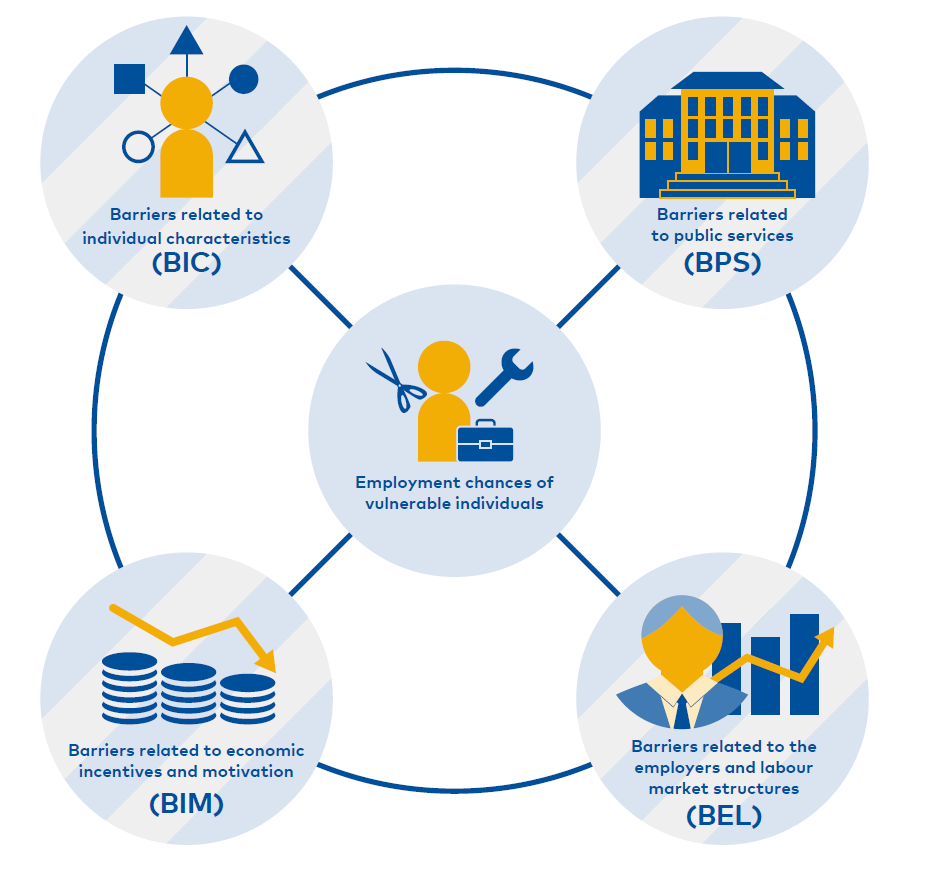
Figure 2.3 Framework over employment barriers in the Nordic countries
Read more about the framework in Højbjerre et al. (2023a): Barriers to employment for vulnerable groups in the Nordic countries. Link to the report:
(https://pub.norden.org/temanord2023-513/)
Read more about the framework in Højbjerre et al. (2023a): Barriers to employment for vulnerable groups in the Nordic countries. Link to the report:
(https://pub.norden.org/temanord2023-513/)
BIC
BIC1: Mental health issues
BIC2: Physical health issues
BIC3: Lack of relevant education
BIC4: Joint retirement
BIC5: Lack of language skills
BIC6: Lack of knowledge about the labour market
BIC7: Lack of work experience and skills
BIC8: Care responsibilities
BIC2: Physical health issues
BIC3: Lack of relevant education
BIC4: Joint retirement
BIC5: Lack of language skills
BIC6: Lack of knowledge about the labour market
BIC7: Lack of work experience and skills
BIC8: Care responsibilities
BPS
BPS1: Low effectiveness of public services
BPS2: Collision between public services
BPS3: Lack of participation in public employment services
BPS4: Insufficient support for groups to overcome other barriers
BPS5: Lack of resources
BPS6: Regional differences in service provision and access to services
BPS2: Collision between public services
BPS3: Lack of participation in public employment services
BPS4: Insufficient support for groups to overcome other barriers
BPS5: Lack of resources
BPS6: Regional differences in service provision and access to services
BIM
BIM1: Insufficient economic incentive to find education/ employment
BIM2: Retirement and pension benefits, incl. early retirement and sick pay
BIM3: Mismatch between job content and personal values
BIM4: Lack of motivation
BIM2: Retirement and pension benefits, incl. early retirement and sick pay
BIM3: Mismatch between job content and personal values
BIM4: Lack of motivation
BEL
BEL1: Costs associated with low productivity
BEL2: Information gaps and risks related to hiring employees
BEL3: Discrimination
BEL4: Working econditions
BEL5: Lack of local employment opportunitites
BEL6: State of the economy
BEL2: Information gaps and risks related to hiring employees
BEL3: Discrimination
BEL4: Working econditions
BEL5: Lack of local employment opportunitites
BEL6: State of the economy
This framework illustrates how various factors can hinder vulnerable individuals from participating in the labour market. These barriers are often interconnected and multifaceted, underscoring the complexity of the challenges faced by vulnerable groups.
We have actively used the framework to operationalise the employment barriers and used harmonised and cross-Nordic survey data from Eurostat to investigate the number of barriers and how prevalent they are among vulnerable groups. More specifically, we have used the EU statistics on income and living conditions (EU-SILC), which is a household and individual survey containing questions on living conditions, health, and position on the labour market, etc. By using the questions in the EU-SILC survey data, we have been able to operationalise 10 out of the 24 barriers from the framework. Therefore, we want to emphasise that the following results are most likely bottom-edge estimates of the barrier complexity in the Nordic countries; i.e., there are many barriers existing in practice that we have not been able to measure using the EU-SILC dataset.
Based on the EU-SILC data, Figure 2.4 illustrates the number of identified employment barriers among vulnerable groups in the Nordic countries (on a scale from 0 to 10 barriers).
Figure 2.4 Number of employment barriers faced by vulnerable individuals
Source: Own calculations based on microdata from EU-SILC. Read more in Højbjerre et al. (2023b): A Multitude of Barriers – analysing components in joblessness to inform policy in the Nordic countries. Link to the report: (https://pub.norden.org/temanord2023-538/)
The figure shows that 80 pct. of vulnerable individuals face two or more barriers, highlighting the complexity of challenges in this policy area. Further, it shows that 15 pct. face a total of four or more barriers to employment, indicating that these individuals face complex problems characterised by many interdependent factors.
Moreover, we have examined how prevalent the barriers are among vulnerable groups in the Nordic countries. Figure 2.5 shows the prevalence of the barriers among vulnerable groups in the Nordic countries.
Figure 2.5 Barriers among the vulnerable groups
Source: Own calculations based on microdata from EU-SILC. Note that some of the variables overlap to some degree. For example, if you have never worked, you also have no recent experience. Read more in Højbjerre et al. (2023b): A Multitude of Barriers – analysing components in joblessness to inform policy in the Nordic countries. Link to the report: (https://pub.norden.org/temanord2023-538/)
The figure illustrates that barriers related to individual characteristics (BIC) appear to be relatively significant. Health issues, lack of education, and lack of recent work experience are particularly common barriers among vulnerable groups. 43 pct. of individuals are limited in their daily activities due to physical or mental health issues, while 31 pct. lack formal education. These findings are consistent across all Nordic countries, as previously demonstrated in Report 3 in this project. While these findings highlight the relative importance of individual barriers, it is important to note that these barriers should not be interpreted as absolute. For example, the socio-economic positions of vulnerable individuals can exacerbate the severity and impact of barriers such as health issues.
We also examine the prevalence of these barriers among the traditional demographic target groups. This is illustrated in Figure 2.6, which shows how many individuals within these groups face specific barriers. To simplify the analysis, we have grouped related barriers for clearer interpretation.
Figure 2.6 Barriers among the traditional vulnerable demographic target groups
Source: Own calculations based on microdata from EU-SILC. Read more in Højbjerre et al. (2023b): A Multitude of Barriers – analysing components in joblessness to inform policy in the Nordic countries. Link to the report: https://pub.norden.org/temanord2023-538/
Note: The other barriers among the 10 we have operationalised based on EU-SILC are the following: care responsibilities, high non-labour income, high earnings replacement (benefits), low job opportunities, and low contact with PES. To avoid double-counting, a person is assigned to only one of the traditional target groups (since some persons may belong to different vulnerable groups at the same time, e.g., being both immigrant and senior). We have used the following hierarchy: persons with disabilities, immigrants, young people/seniors.
The figure reveals a high degree of similarity in the barriers faced by traditional demographic target groups. For example, individuals with health issues often encounter additional barriers, such as a lack of education or skills, affecting 50 pct. of this group. Similarly, other traditional demographic groups face multiple barriers, including health issues. For instance, 38 pct. of vulnerable young people and 35 pct. of vulnerable immigrants experience health-related challenges. These patterns underscore the interconnected nature of the employment barriers, where one issue often exacerbates others, creating compounded difficulties for these groups in accessing and sustaining employment.
These findings illustrate that vulnerable individuals face complex sets of barriers with potentially many interdependent factors and that the traditional demographic target groups face similar employment barriers to a high degree. These are key findings which we will use as a basis when we present concrete evidence-based policy recommendations in chapter 3.
2.3 Overcoming employment barriers – framework of employment instruments and systematic review
The Nordic countries are making efforts to offer vulnerable individuals initiatives that can help them enter the labour market. There is a growing recognition of the importance of effective employment instruments and the role of efficient public employment services (PES) in facilitating labour market integration. To get an overview of available instruments, we have developed a systematic framework of employment instruments used in the Nordic countries. This framework is illustrated in Figure 2.7.
The framework has an overall focus on employment instruments designed to help individuals overcome employment barriers and increase their labour market participation. Therefore, a central part of the framework includes instruments primarily targeted at the individual. However, we recognise that these instruments do not work in a vacuum. Consequently, the framework also includes elements related to the public employment system and the companies.
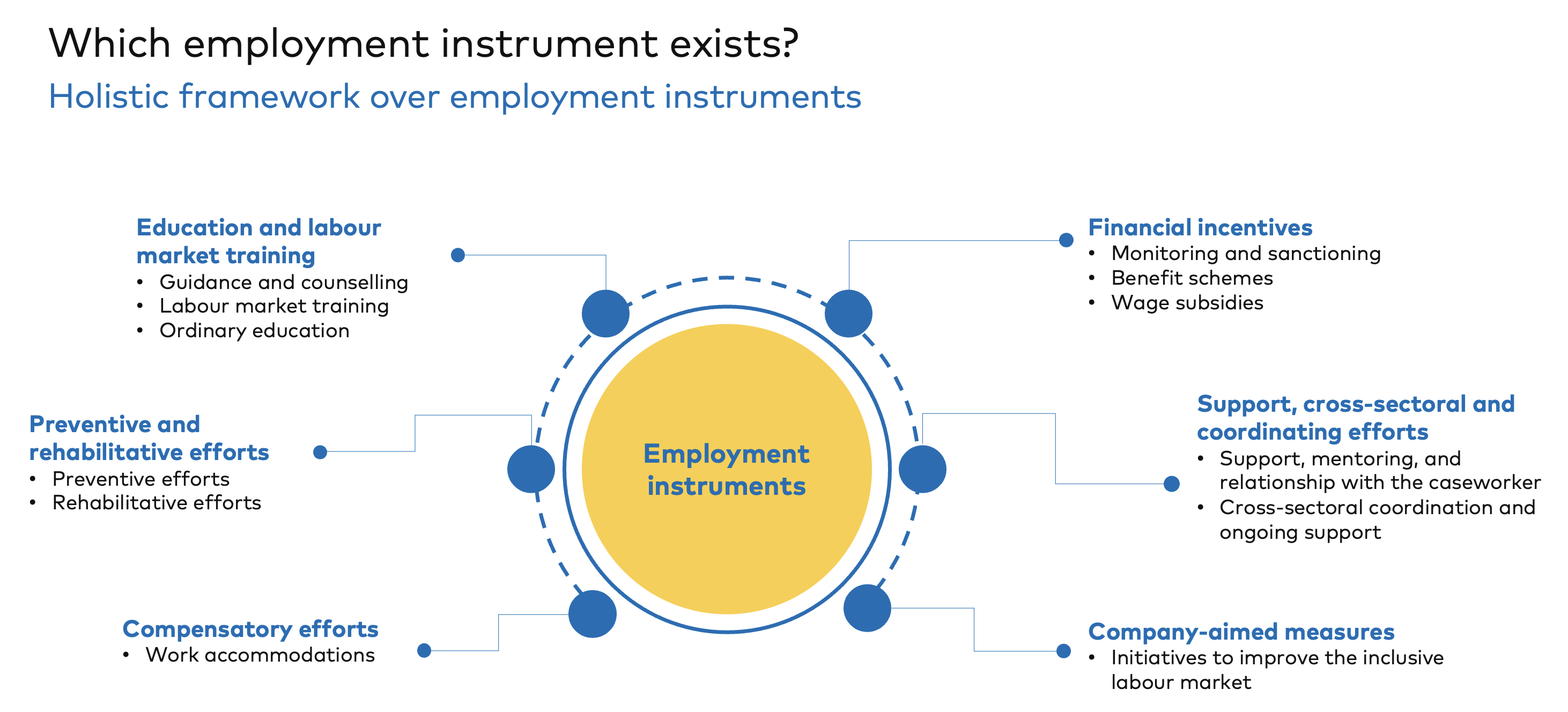
Figure 2.7 Framework of employment instruments in the Nordic countries
Read more about the framework in Højbjerre et al. (2024): What works and for whom? An overview of employment instruments among vulnerable groups in the Nordics. Link to the report: https://pub.norden.org/temanord2024-546/index.html
One of the purposes of the framework has been to establish a language and an understanding of the various employment instruments that are common and cross-Nordic. Further, we have used the framework to categorise the latest academic literature on the effectiveness of various labour market instruments and their effectiveness for the traditional demographic target groups. The output of this can be seen in Table 2.1, which summarises the literature review on which employment instruments that work, and for whom.
Table 2.1 Summary of the employment effects in the identified literature from systematic literature review
Young people | Immigrants/refugees | Individuals with health issues* | Seniors | ||||||||||
+ | 0 | - | + | 0 | - | + | 0 | - | + | 0 | - | ||
Education and labour market training | Guidance and counselling | 1 | 2 | 1 | |||||||||
Labour market training | 1 | 2 | 2 | ||||||||||
Ordinary education | 2 | 1 | 1 | 2 | |||||||||
Preventive and rehabilitative efforts | Preventive efforts | ||||||||||||
Rehabilitative efforts | 6 | 4 | |||||||||||
Compensatory efforts | Work accommodations | ||||||||||||
Financial incentives | Monitoring and sanctioning | 2 | 1 | ||||||||||
Benefit schemes | 1 | 2** | 2*** | 1 | 1 | 4 | |||||||
Wage subsidies | 1 | 1 | 1**** | ||||||||||
Support, cross-sectoral and coordinating efforts | Support, mentoring and relationship to the case worker | 1 | |||||||||||
Cross-sectoral coordination and ongoing support | 2 | 1 | |||||||||||
Company aimed measures | Initiatives to improve the inclusive labour market | ||||||||||||
Read more about the literature review in Højbjerre et al. (2024): What works and for whom? An overview of employment instruments among vulnerable groups in the Nordics. Link to the report: https://pub.norden.org/temanord2024-546/index.html
Notes: The number in each cell represents the number of articles that have found a positive effect (+), a null effect (0), or a negative effect (-). For example, in our systematic review, in the cell related to labour market training among young people, we have identified 1 article that finds a positive effect from labour market training, whereas we have found 0 articles that found a null effect or a negative effect.
* Here, individuals with health issues are defined broadly, including individuals on sick leave due to various circumstances.
** Heterogeneous treatment effects among immigrant men and women are very prevalent in this literature.
*** Part of this literature demonstrates positive employment effects in the short run, but the effect vanishes in the long run.
**** The effect is positive in the short run, but it vanishes in the long run.
Besides demonstrating which employment instruments that work, and for whom, the table also allows for drawing some overall conclusions. First, the table demonstrates that the evaluation literature on programmes or interventions to improve labour market participation among vulnerable groups relatively often contains ambiguous results. In other words, one study shows positive effects of an intervention for one group, while another study finds null effects for the same group. For example, the evidence is ambiguous concerning labour market training among immigrants/refugees. This is related, among other things, to the complex barrier sets presented in section 2.2. Second, the table demonstrates that significant knowledge gaps exist. Generally, our knowledge tends to cluster in areas where we have good data and where it is easier to measure and estimate employment effects. This means that the largest fraction of research is clustered around classical active labour market policies, such as education and labour market training, as well as financial incentives. However, our actual need is quite the opposite. To a much greater extent, we need new knowledge in areas where it is difficult to measure and uncover causal employment effects. For example, the academic literature we reviewed does not uncover any direct employment effects from company-aimed measures; therefore, additional evidence is needed to understand the effects of implementing inclusive human resource management practices within Nordic labour markets.
Further, it is a central conclusion from the literature review that choosing an instrument is complex and with no one-size-fits-all option. There are, however, some common features among the effective instruments – an issue we will turn to in the next section.
2.4 Nordic experiences designing effective interventions
For a long time, the Nordic countries have prioritised policies to increase the labour market participation among vulnerable groups, and they have succeeded to some degree, as demonstrated in section 2.1. There is, however, still room for improvements, and several of the Nordic countries are currently about to implement, to a greater or lesser extent, reforms in their public employment services. Among other things, these reforms are meant to provide better services for vulnerable groups and increase their labour market participation through a greater focus on holistic employment instruments. In Finland, for example, the authorities are currently working on implementing an employment reform transferring employment and economic development services to the municipalities. According to the Finnish Ministry of Employment, this transfer of responsibilities will bring the services closer to the citizens, which puts the municipalities in a good position to offer targeted and tailored services that meet their needs and those of the local labour markets.
Characteristics of effective employment instruments
Due to the complexity of the barriers, as demonstrated in section 2.2, and the challenge of formalising a holistic approach into a one-size-fits-all solution, it is unsurprising that we have not identified any universal or magical remedy for increasing labour market participation among vulnerable groups. However, during our work analysing survey data, interviewing experts and caseworkers in the Nordic countries, and summarising literature, we have found five characteristics and prerequisites of effective employment instruments. Effective instruments:
Are holistic and comprehensive
They are typically holistic and comprehensive in nature, addressing not just employment barriers but also social and health-related barriers. For example, literature documents positive employment effects of individual placement and support (IPS) within the framework of Supported Employment. A central part of this type of intervention is integration of mental health services and employment services in order to provide individuals with competitive employment while being treated for the mental health issues.
They are typically holistic and comprehensive in nature, addressing not just employment barriers but also social and health-related barriers. For example, literature documents positive employment effects of individual placement and support (IPS) within the framework of Supported Employment. A central part of this type of intervention is integration of mental health services and employment services in order to provide individuals with competitive employment while being treated for the mental health issues.
Involve the individual and build on good relationships
They often actively engage the individual and are built on trust and a good relationship between the vulnerable individual and the caseworker. Our findings highlight the critical role of time in fostering meaningful engagement with the system. This can be achieved by, among other things, reducing the case load for caseworkers in order for the caseworker to establish presence, offer support, and provide encouragement.
They often actively engage the individual and are built on trust and a good relationship between the vulnerable individual and the caseworker. Our findings highlight the critical role of time in fostering meaningful engagement with the system. This can be achieved by, among other things, reducing the case load for caseworkers in order for the caseworker to establish presence, offer support, and provide encouragement.
Include some form of labour market training
They often include some form of labour market training to bridge the gap between the needs of the labour market and skills acquired through education and formal or informal work. This training also aims to provide vulnerable individuals with confidence in their abilities. Such training can take many forms, including internships, wage-subsidised jobs, or regular paid hours. A key factor appears to be ensuring that the training occurs under conditions as close to ordinary workplace terms as possible.
They often include some form of labour market training to bridge the gap between the needs of the labour market and skills acquired through education and formal or informal work. This training also aims to provide vulnerable individuals with confidence in their abilities. Such training can take many forms, including internships, wage-subsidised jobs, or regular paid hours. A key factor appears to be ensuring that the training occurs under conditions as close to ordinary workplace terms as possible.
Are built on a solid skills and social match
They build on a solid skills and social match between the individual and the employer. Our research demonstrates that a strong match between employer and employee is crucial for the success of labour market training. Certain instruments are effective because they involve a structured sequence of job training internships that help participants develop skills. By exploring different workplaces and sectors, participants gain opportunities to find a suitable job match both professionally and socially.
They build on a solid skills and social match between the individual and the employer. Our research demonstrates that a strong match between employer and employee is crucial for the success of labour market training. Certain instruments are effective because they involve a structured sequence of job training internships that help participants develop skills. By exploring different workplaces and sectors, participants gain opportunities to find a suitable job match both professionally and socially.
Require close contact between caseworker and employer
Direct interaction between caseworkers and employers has been shown to significantly enhance the effectiveness of employment initiatives. Evidence suggests that this form of engagement facilitates faster transitions into employment for job seekers, as it allows caseworkers to acquire informal yet valuable knowledge that improves the quality of job matching.
Direct interaction between caseworkers and employers has been shown to significantly enhance the effectiveness of employment initiatives. Evidence suggests that this form of engagement facilitates faster transitions into employment for job seekers, as it allows caseworkers to acquire informal yet valuable knowledge that improves the quality of job matching.
Common Nordic challenges
These findings indicate that the Nordic countries are on the right track. We have, however, also identified some common Nordic challenges for the design of effective employment instruments, which should be considered in order to implement solutions to the complex problems in this field.
Uncertainty about long-term effects limits investments in vulnerable groups
In general, we lack knowledge on the long-term effects of various employment instruments for vulnerable groups. Furthermore, when dealing with vulnerable individuals, the effect might only be present in the longer run. This lack of knowledge can limit the idea of using employment instruments as an investment in the cases where it can be recognised and documented that the return only comes in the longer term.
In general, we lack knowledge on the long-term effects of various employment instruments for vulnerable groups. Furthermore, when dealing with vulnerable individuals, the effect might only be present in the longer run. This lack of knowledge can limit the idea of using employment instruments as an investment in the cases where it can be recognised and documented that the return only comes in the longer term.
Legal complexity limits the use of new technologies
General legal complexity and uncertainty around new technologies (e.g., data models, AI, and new technologies that can support individuals and caseworkers) prevent actors in the Nordic countries from reaping the full benefits of these technologies.
General legal complexity and uncertainty around new technologies (e.g., data models, AI, and new technologies that can support individuals and caseworkers) prevent actors in the Nordic countries from reaping the full benefits of these technologies.
Balance in economic incentives
It is difficult to find the right balance between, on the one hand, financial incentives, participation requirements, and sanctions, and, on the other hand, ensuring that there is time and space for vulnerable citizens to find a foothold in the labour market. For example, increased financial incentives may unintentionally harm vulnerable groups, e.g., by raising property crime or affecting children’s education, while insufficient incentives risk keeping some individuals reliant on public benefits.
It is difficult to find the right balance between, on the one hand, financial incentives, participation requirements, and sanctions, and, on the other hand, ensuring that there is time and space for vulnerable citizens to find a foothold in the labour market. For example, increased financial incentives may unintentionally harm vulnerable groups, e.g., by raising property crime or affecting children’s education, while insufficient incentives risk keeping some individuals reliant on public benefits.
Incoherent upskilling and lack of long-term goals for building qualifications
Vulnerable individuals often lack formal qualifications and face challenges within the regular education system. Moreover, the current arrangements and the relatively short-term perspectives in the employment system create a risk that vulnerable groups are offered numerous small, incoherent courses as part of employment efforts without receiving certification for the skills they acquire.
Vulnerable individuals often lack formal qualifications and face challenges within the regular education system. Moreover, the current arrangements and the relatively short-term perspectives in the employment system create a risk that vulnerable groups are offered numerous small, incoherent courses as part of employment efforts without receiving certification for the skills they acquire.
Measures to activate employers and increase inclusivity of workplaces
Engaging employers in employment efforts is crucial, but employers can be hesitant for various reasons. A lack of information about available support schemes, unclear guidelines, and complex regulatory frameworks often discourage businesses from hiring vulnerable individuals. Additionally, companies may hesitate due to uncertainties about the target group, concerns about productivity risks, challenges in ‘presenting the business case’ for hiring jobseekers from vulnerable groups internally – such as showcasing positive examples of success – and a general lack of knowledge and practices aimed at including diverse employees.
Engaging employers in employment efforts is crucial, but employers can be hesitant for various reasons. A lack of information about available support schemes, unclear guidelines, and complex regulatory frameworks often discourage businesses from hiring vulnerable individuals. Additionally, companies may hesitate due to uncertainties about the target group, concerns about productivity risks, challenges in ‘presenting the business case’ for hiring jobseekers from vulnerable groups internally – such as showcasing positive examples of success – and a general lack of knowledge and practices aimed at including diverse employees.
In the last chapter of this report, we will present actionable recommendations addressing these common Nordic barriers, including specific policy adjustments and signature projects of successful initiatives.