Executive Summary
This guide serves as a practical toolkit for export credit agencies (ECAs) and their respective governments helping them to formulate and implement policies for aligning export finance with the Paris Climate Agreement. It summarises best practices from extensive research and stakeholder engagement on ECAs’ Paris alignment in twelve countries conducted by Perspectives Climate Research since 2020. Following the development of a dedicated methodology for ‘Aligning Export Credit Agencies with the Paris Alignment’ (Shishlov et al., 2021), Perspectives Climate Research conducted a series of country case studies helping derive key lessons and best practices that informed the development of this guide. The table below summarises these best practices and can serve as a ‘Paris alignment checkbox’ for ECAs and their respective governments.
Dimensions | Paris alignment criteria |
Transparency | Alignment with international GHG reporting standards for Scope 1, 2, and 3 emissions (e.g., GHG Protocol or the Partnership for Carbon Accounting Financials [PCAF]). |
Clear in-house definition of fossil fuel finance and clean energy finance based on international best practices such as by the Export Finance for Future initiative (E3F), multilateral development banks (MDBs), the OECD, and EU Taxonomy (excluding any investments that may prolong the lifetime of fossil fuel assets). | |
Annual disclosure fully in line with the newly developed IFRS S1 and S2 reporting standards that integrate all the recommendations of the Task Force on Climate-Related Financial Disclosures (TCFD). | |
Fossil fuel exclusion | Existing policies exclude support for new coal projects and related value chains (with very limited, clearly defined exceptions that do not prolong the lifetime of fossil fuel assets). |
Existing policies exclude support for new oil projects and related value chains (with very limited, clearly defined exceptions that do not prolong the lifetime of fossil fuel assets). | |
Existing policies exclude support for new gas projects and related value chains (with very limited, clearly defined exceptions that do not prolong the lifetime of fossil fuel assets). | |
Mitigation | Consistent decline in GHG emission intensity and total emissions of the portfolio. |
Consistent decline in the share of fossil fuel financing and consistent increase in the share of clean energy over the total energy portfolio. | |
Adoption of GHG emissions reduction targets for all emissions-relevant sectors (with increasing alignment with 1.5 °C pathways over time). | |
Climate Finance | Adoption of common climate finance earmarks such as the EU Taxonomy for Sustainable Activities and annual reporting on these earmarks. |
Implementation of effective financial incentives for clean energy technologies and sustainable business practices. | |
Consistent contributions to sustainable development goals (SDGs) and implemented safeguards against negative social and environmental impacts. | |
Engagement | Demonstrated engagement in relevant international fora such as export finance-relevant clubs, initiatives, and working groups promoting ambitious climate policies in the export finance system. |
Demonstrated engagement in relevant national fora promoting ambitious climate policies in the national export finance system. | |
Demonstrated engagement with domestic exporters on climate-related matters. |
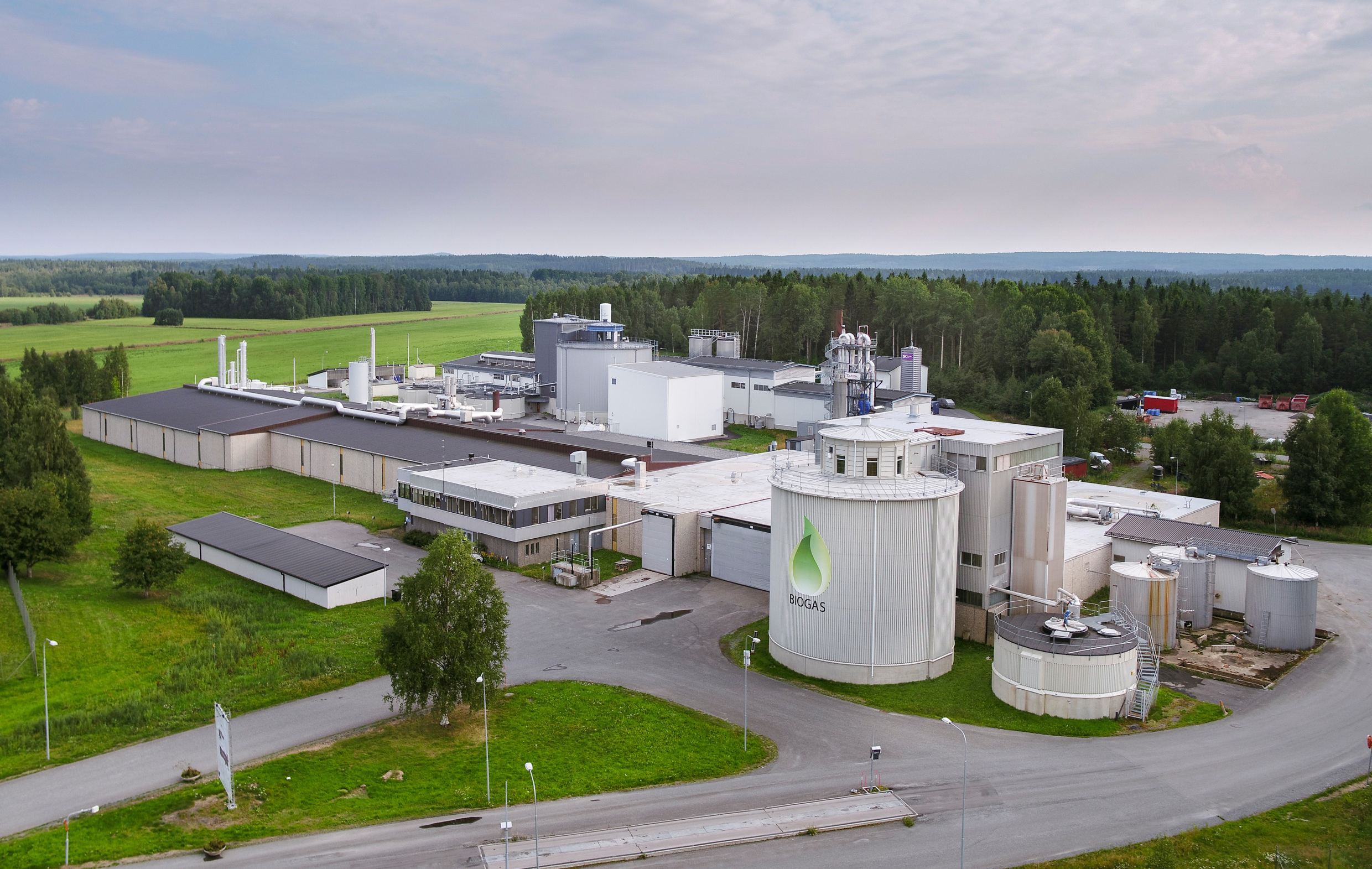
Biogas facility in Skellefteå, Sweden
Photo: Ulf Grünbaum/Imagebank.sweden.se
Photo: Ulf Grünbaum/Imagebank.sweden.se
To tick these boxes, we synthesize below the best practices of ECAs for Paris alignment under each of the five dimensions. Section 3 of this guide provides further details on each of them.
Transparency
The best practice in terms of transparency is the energy finance reporting by Export Finance for Future (E3F). E3F is an inter-ministerial coalition, founded by Denmark, France, Germany, the Netherlands, Spain, Sweden and the UK. Finland, Italy and Belgium joined the coalition later. All E3F members have communicated their National Approaches to the implementation of the COP26 Statement on International Public Support for the Clean Energy Transition (CETP) since 2022 (OCI, 2024a). E3F has thus already helped to promote and support a shift in investment patterns towards climate-neutral and climate-resilient export projects (E3F, 2022, 2023b). Importantly, E3F countries make transparent all energy finance figures thus allowing the assessment of trends and the impacts of export-related climate and energy policies (E3F, 2023). The reporting includes data disaggregated by energy source and different stages of the value chain. From 2024 onwards, it will expand the scope of the reporting to other transactions such as transportation, manufacturing, and hydrogen (E3F, 2023b). E3F reporting can be used as a blueprint by other OECD and non-OECD countries on aggregate level reporting. This reporting should be further enhanced by providing project-level finance data as done, for example, by the Export-Import Bank of the US (US-EXIM) since 1993, besides emissions (scope 3) reporting (since 1999; US-EXIM, 2024).
Ambition of fossil fuel exclusion policies
The best practice in this dimension is the introduction of comprehensive fossil fuel (coal, oil and gas) energy sector exclusion policies, which was first pioneered by UK Export Finance (UKEF). UKEF “[had] a history of support for oil and gas projects” (UK House of Commons, 2021), but in 2021 committed to ending new support for the fossil fuel energy sector overseas (e.g., UKEF, 2024) in line with a UK government-wide policy ending support for the fossil fuel energy sector from March 2020. UKEF, as a ministerial government department strategically aligned with the Department for Business and Trade (formerly Department for International Trade) had to subsequently adhere to this policy. These changes were preceded by the government-wide Green Finance Strategy (UK Government, 2019). UKEF’s fossil fuel exclusion was thus a gradual process based on political decisions and pressure from civil society. ECAs within and beyond the OECD that have not implemented comprehensive fossil fuel exclusion policies should therefore consider the UK experience and start (or accelerate) building green project pipelines to enable phasing out all fossil fuel support and contribute to the just energy transition.
Mitigation
The best practice in terms of climate change mitigation beyond fossil fuel exclusions is Finland’s comprehensive portfolio decarbonisation strategy. Finland’s ECA Finnvera (2024) reported its financed (scope 3) emissions of all outstanding commitments (domestic and export) per sector and portfolio GHG intensity in tCO2e/EUR for the first time in 2023. Full disclosure on and monitoring of portfolio GHG intensity is crucial to ensure greater public accountability. Following the lead of UKEF which already has in place sectoral targets for 85% of its scope 3 emissions, Finnvera aims to develop its long-term emissions pathways. They will be based on Finnvera’s emission intensity calculations, using a ‘Sectoral Decarbonisation Approach’ that allows the ECA to set intensity-based sector-specific targets and monitoring (Schmidt et al., 2024). All ECAs should follow this best practice and – together with fossil fuel exclusion policies – also set absolute sectoral decarbonisation targets, starting with their biggest sector(s) of support. For example, in the shipping sector they may start by signing the Poseidon Principles, an initiative aimed at decarbonising the sector well before 2050. Like Finnvera, ECAs should not stop there and define GHG reduction targets for all emission-relevant sectors in line with 1.5 °C pathways.
Climate Finance
The best practice in the climate finance dimension is demonstrated by Denmark’s ECA EIFO. It is the leading ECA in the financing of renewable energy (RE), with wind energy making up 67% of its total financial portfolio. Admittedly, EIFO enjoys advantages due to the structure of Denmark’s economy and favourable RE conditions. Indeed, Ørsted and Vestas Wind Systems – two global leaders in offshore wind and turbine manufacturing – are both located in Denmark. This incentivises Denmark’s ECA to focus on wind energy financing to safeguard its leading position in RE, which is also strongly supported politically (Weber et al., 2024). EIFO (previously EKF), for over three decades, gained significant experience with RE finance. The ECA has already participated in the financing of 40 GW of wind energy projects, and a third of all installed offshore wind energy capacity outside of China. EIFO concluded its first wind power deal in 1998, and wind energy has made up a major share of its portfolio for over a decade now. Besides structural advantages, EIFO also has a unique mandate among ECAs to support social return by contributing to a sustainable and green transition. EIFO’s creation through a merger of three state funds – Vækstfonden (The Growth Fund), Eksport Kredit Fonden (EKF, Denmark’s ECA) and the Danish Green Investment Fund – offered the possibility to give EIFO an even stronger sustainability profile than its predecessor. This stronger focus on climate and sustainability is reflected in EIFO's work on developing incentive schemes such as sustainability-linked finance, to decarbonise all high-emission sectors, not only energy. While most countries may not enjoy similar structural advantages, they should start considering amending the mandates of their ECA, incentivising sustainable investments and securing economic benefits from the green transition.
Engagement
The Swedish government and its ECAs – EKN and SEK – have been leading engagement for aligning export finance with the Paris Agreement for years, internationally, regionally and nationally. Swedish ECAs’ (pro-)active roles include chairing the Berne Union’s Climate Working Group by EKN and their role as founding members of the Net Zero Export Credit Agencies Alliance (NZECA). Sweden is a member of the E3F, the Powering Past Coal Alliance, and the Beyond Oil and Gas Alliance (BOGA). All ECAs and country governments should consider joining these groups, to “drive the transition away from fossil fuels in energy systems [by 2050]” (UNFCCC, 2023). At home, Sweden aims to align export finance with the Paris Agreement via its Fossil Free Sweden initiative which includes a dedicated finance strategy for fossil-free competitiveness in Sweden and abroad. The ‘Team Sweden’ (of which EKN and SEK are members) publicly promotes Sweden’s climate and sustainability ambitions. Regular meetings with exporters and banks occur, and public conversations on likely impacts on job and sales losses of fossil fuel phase-out policies have already been held (Schmidt et al., 2024a). All countries with a broad ecosystem of experts and export governance should consider strengthening their domestic coordination via such ‘export teams’.
The table below summarises ECA best practices for Paris Alignment and provides country examples.
Best practices for Paris Alignment | ECA examples |
Transparency | |
Alignment with international GHG reporting standards for Scope 1, 2, and 3 emissions (e.g., GHG Protocol or the Partnership for Carbon Accounting Financials [PCAF]). | Finland’s Finnvera calculates and reports its produced (scope 1, 2) as well as financed emissions (scope 3) both domestically and internationally as well as by sector. Denmark’s EIFO (formerly EKF) reports its scope 1, 2, and 3 (financed) emissions for the years 2020 onward. US-EXIM has reported its actual (or projected) CO2 emissions for pending and approved projects since 1999, but only for those above a high threshold. |
Clear in-house definition of fossil fuel finance and clean energy finance based on international best practices such as by the Export Finance for Future initiative (E3F), multilateral development banks (MDBs), the OECD, and EU Taxonomy (excluding any investments that may prolong the lifetime of fossil fuel assets). | In 2020, the Dutch ECA Atradius DSB developed an in-house methodology to measure the share of fossil fuel-related activities over the total portfolio. E3F’s annual status reporting set a new standard for transparent reporting on the number of transactions, credit value, and fossil/clean energy finance shares in value chains. The EU Taxonomy is increasingly used by ECAs and defines criteria for economic activities aligned with a net-zero trajectory by 2050, but falsely considers gas-related projects to be in line with a 1.5 °C-trajectory. |
Annual disclosure fully in line with the newly developed IFRS S1 and S2 reporting standards that integrate all the recommendations of the Task Force on Climate-Related Financial Disclosures (TCFD). | Canada’s EDC was the first ECA to join the TCFD in 2018 and has been reporting on progress within the four dimensions of governance, strategy, risk management and metrics, and targets ever since. |
Fossil fuel exclusion | |
Existing policies exclude support for new coal projects and related value chains (with very limited, clearly defined exceptions that do not prolong the lifetime of fossil fuel assets). | OECD-ECAs have stopped all support to unabated coal-fired power plants in 2021, but loopholes remain for other coal uses, such as, for example, metallurgical coal. Chinese ECAs (CDB, CEXIM, and SINOSURE) have stopped all support to newly built coal-fired power projects since 2021. |
Existing policies exclude support for new oil projects and related value chains (with very limited, clearly defined exceptions that do not prolong the lifetime of fossil fuel assets). | Since March 2021, as an ECA first mover, UKEF implements the UK government’s policy ending new support for the fossil fuel energy sector overseas (coal, oil, and gas). In spring 2024, UKEF concluded its first deal for O&G decommissioning. |
Existing policies exclude support for new gas projects and related value chains (with very limited, clearly defined exceptions that do not prolong the lifetime of fossil fuel assets). | |
Mitigation | |
Consistent decline in GHG emission intensity and total emissions of the portfolio. | Many of the ECAs assessed have been reporting financed (scope 3) emissions only in recent years, often for the first time, with some time delay or even showing a GHG increase. This leaves Denmark’s EIFO as the only ECA that has already demonstrated a consistent declining trend in GHG emissions intensity. |
Consistent decline in the share of fossil fuel financing and consistent increase in the share of clean energy over the total energy portfolio. | Of the E3F countries, Belgium, Denmark, Finland, Spain, Sweden and the UK have increased the share of RE support to 100% since they stopped all fossil fuel support in 2021. Denmark’s EIFO shows that some ECAs started intentionally phasing out fossil fuel support even before, not having approved a single fossil fuel transaction since 2018. This was made easier by the structure of the Danish economy and EIFO’s track record of supporting the wind industry – making up 75% of its entire portfolio. |
Adoption of GHG emissions reduction targets for all emissions-relevant sectors (with increasing alignment with 1.5 °C pathways over time). | UKEF has set interim sectoral decarbonisation targets for approximately 85% of its financed emissions, i.e. exposures in the O&G, power, and aviation sectors, on the path to net zero by 2050. These targets will be kept under review and a UKEF Transition Plan will be developed. |
Climate Finance | |
Adoption of common climate finance earmarks such as the EU Taxonomy for Sustainable Activities and annual reporting on these earmarks. | Sweden’s EKN and SEK classify Paris-aligned transactions based on the EU Taxonomy which is far more granular and adaptable than the Rio markers or the MDB Joint Approach. Moreover, EKN’s and SEK’s in-house methodology prevents possible ‘carbon lock-ins’ from fossil gas that the EU Taxonomy classifies as ‘green’. |
Implementation of effective financial incentives for clean energy technologies and sustainable business practices. | The Dutch Atradius DSB and Germany’s Euler Hermes introduced several instruments to make Paris-aligned exports more attractive in 2020. In 2023, OECD negotiations went further and now allow its ECAs: an extended maximum repayment period for climate and environmental loans, reduced minimum guarantee payments in the lower-risk categories, and more flexible repayment terms. |
Consistent contributions to sustainable development goals (SDGs) and implemented safeguards against negative social and environmental impacts. | Most OECD-ECAs already have various international guidelines and sustainability policies in place. Their level of stringency varies, however, and historic shortcomings in safeguarding human rights and environmental due diligence show space for improvement. Denmark’s EIFO is mandated to generate social returns, which are not simply limited to financial returns or climate aspects but encompass its wider sustainability performance. |
Engagement | |
Demonstrated engagement in relevant international fora such as export finance-relevant clubs, initiatives, and working groups promoting ambitious climate policies in the export finance system. | Many ECAs are already members of the Berne Union Climate Working Group, E3F, NZECA, and other groups. |
Demonstrated engagement in relevant national fora promoting ambitious climate policies in the national export finance system. | Finland, France and Sweden have set up one-stop shops and networks of public organisations, agencies and companies that promote exports and investments. The Fossil Free Sweden initiative aims to make the country the first fossil-free welfare nation in the world. This requires government-wide engagement with companies, industries, municipalities and regions and already led to a dedicated finance strategy for fossil-free competitiveness. |
Demonstrated engagement with domestic exporters on climate-related matters. | UKEF has been providing tailored export finance advice to ‘green’ SMEs with dedicated export finance managers across the UK. UKEF has conducted national-level surveying to better understand the attitudes of stakeholders towards ceasing its support of fossil fuel value chains and its implications. UKEF also developed guidelines for companies transitioning out of fossil fuel exports. |