2. Nordic context
The Nordic countries have distinguished themselves through their ambitious emission reduction goals and actions, demonstrating a strong commitment to a sustainable, low-carbon future. Each nation has outlined bold plans for the coming decades, going beyond many global targets to set even higher standards. For example, while the EU aims for a 40% reduction in emissions by 2030 (from 1990 levels), many Nordic countries have set even more aggressive targets.
However, beyond these national commitments, many Nordic cities have developed progressive and highly ambitious climate plans that surpass even these national targets. Cities like Copenhagen, Oslo, and Helsinki have been at the forefront of climate action over the past decade, driving innovation in sustainable urban development, transportation, and energy use. For example, Copenhagen has committed to becoming the world’s first carbon-neutral capital by 2025
These national and city based strategies are not only ambitious but also deeply interconnected with efforts to enhance urban sustainability. As we transition to discussing the Mitigation Work Programme (MWP) topic for 2024 – focusing on Cities: Buildings and Urban Systems – the Nordic countries' national targets have significant implications for urban planning and infrastructure. Nordic countries are embedding their emission reduction goals into urban planning by developing low-carbon infrastructure, such as energy-efficient buildings and green spaces, to enhance quality of life and cut emissions. Central to these efforts is the electrification of urban systems and a shift to net-zero emission resources like renewable energy. For example, the City of Copenhagen's 2035 Climate Plan
Additionally, many Nordic cities are investing in green and blue infrastructure – such as parks, green roofs, and wetlands – to boost carbon storage and urban resilience. A notable initiative is Oslo’s policy called the Blue-Green Factor (Blågrønn Faktor),
By integrating these national targets with city planning, the Nordic countries demonstrate a holistic approach to climate goals and urban development. They encompass a wide array of measures, from tangible funding mechanisms for hard infrastructure to knowledge networking exchanges and practical tools or “urban labs” for experimentation. One example is through projects like Helsinki's Carbon-neutral 2035 plan
And finally, although not explicitly included in the MWP, the incorporation of circular economy principles recognizes the importance of resource efficiency and waste reduction in urban development. The circular economy has emerged as a crucial component in the Nordic countries' approach to sustainability. Circular economy practices focus on maximizing resource use throughout the lifecycle of materials, promoting reuse, recycling, and reducing waste, which aligns well with the region's climate goals. As cities seek to transition to low-carbon infrastructures, integrating circular economy strategies can significantly enhance the effectiveness of existing policies and practices. For example, the perception that new construction is superior to circular practices, like reuse and modular building, often hinders progress. This challenge underscores the need for standardized regulations that prioritize functionality over prescriptive details and advocate for a cultural shift towards sustainable building practices. By fostering collaboration among stakeholders and emphasizing life-cycle analysis (LCA) in decision-making, Nordic cities can better evaluate the environmental impact of construction and embrace more sustainable solutions.
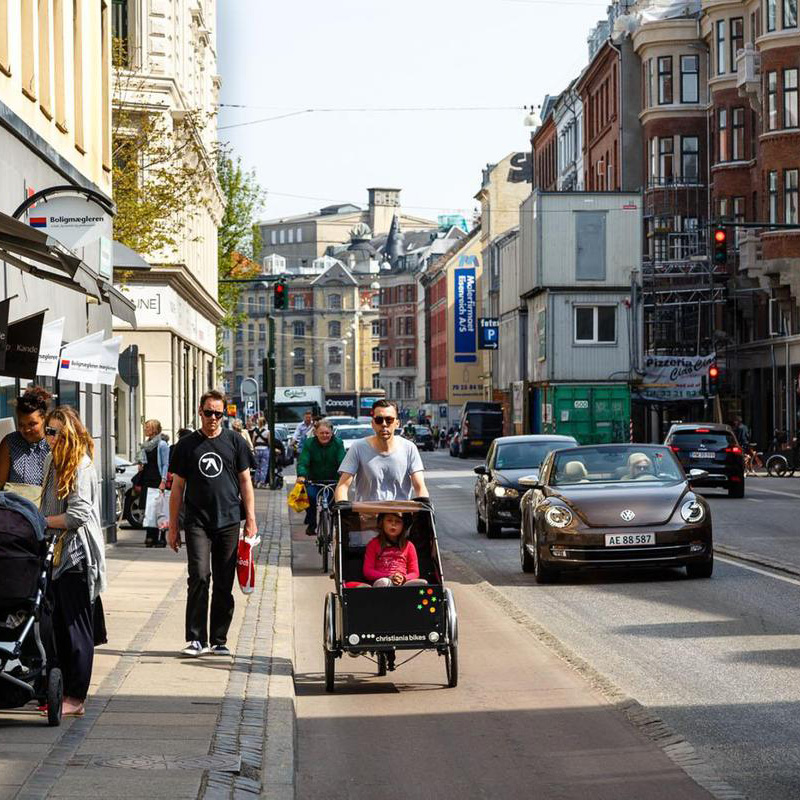
Photo: Yadid Levy/norden.org