2. Experiences and Expectations of Offshore Co-existence with Fisheries and other Maritime Sectors
The Nordic Marine Think Tank invited governance representatives from Sweden and Norway to present current experiences with offshore co-existence, followed by a debate with other Nordic agencies and fisher organizations.
2.1 Proposal for amended Swedish marine spatial plans
Per Olsson, Unit Director, Marine Spatial Planning, The Swedish Agency for Marine and Water Management
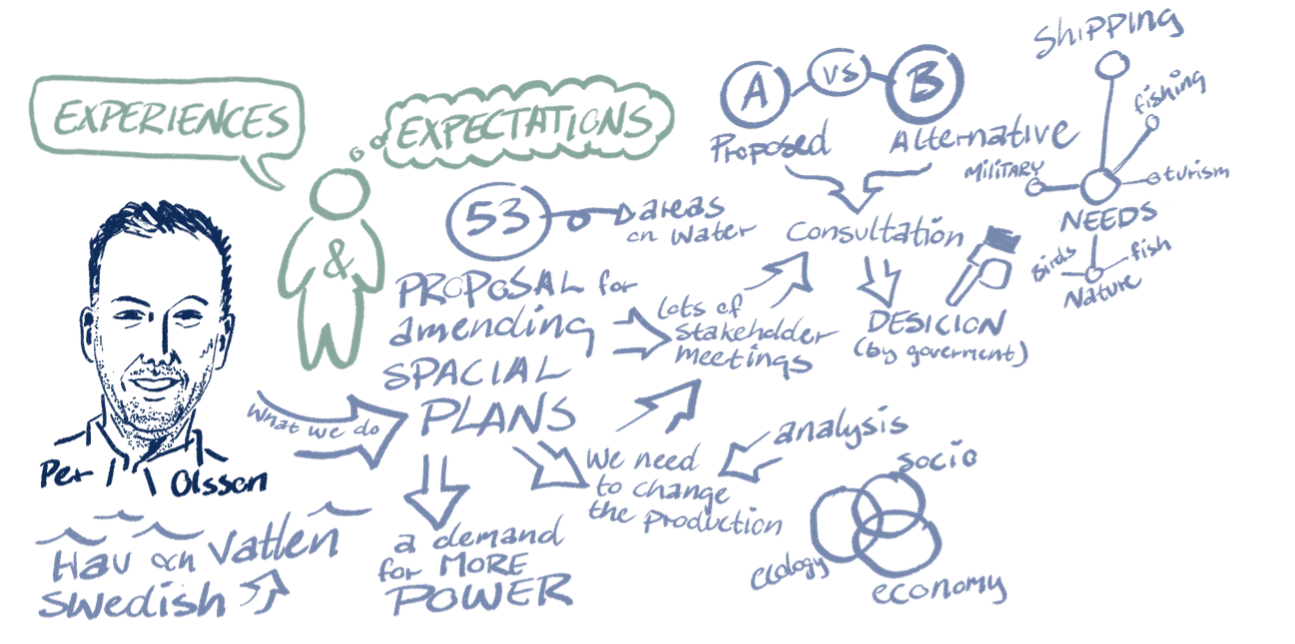
Figure 10: Graphical summary of Per Olsson’s talk. Illustration by Håvard Legreid.
In 2022, Sweden finalized its first maritime spatial plans, which designated areas for offshore wind production to meet climate and energy targets. However, updates are necessary to increase energy production, aiming to raise production from 30 to 90 TWh, with an additional 200 TWh needed by 2050 to meet demand.
The task is to identify ways to boost energy production while considering co-existence between wind power and other interests. Currently, 53 areas are proposed, each facing various conflicts. The process to revise the marine spatial plan must be completed by December 2024, involving two consultation processes before presenting the final proposal to the government for approval.
The proposed Swedish marine spatial plan will prioritize marine energy extraction while making adjustments for areas of high natural value and use. The plan involves expanding proposed areas or introducing supplementary areas to accommodate increased energy extraction.
For the Gulf of Bothnia, which is a UNESCO heritage site and supports small-scale fisheries, 11 proposed energy areas and 11 alternatives are being considered. Despite some conflicts, there are ample opportunities for bottom-fixed foundations and grid connections.
In the Baltic Sea, extensive national defense interests, shipping, fishing, and high natural values present challenges. Six proposed energy areas with 18 alternatives are being evaluated, although grid connections and military interests pose uncertainties.
Skagerrak and Kattegat, known for their high natural values for recreation and tourism, face conflicts due to extensive commercial fishing. The impact assessment considers environmental, social, and economic factors, including effects on bird migration routes, marine mammal habitats, fish spawning, and commercial fisheries.
A significant learning from the Swedish maritime spatial planning exercises is the main conflicts with fisheries, particularly regarding new floating structures that hinder fish trawling and vice versa. Efforts are ongoing to address these conflicts with the fishing industries.
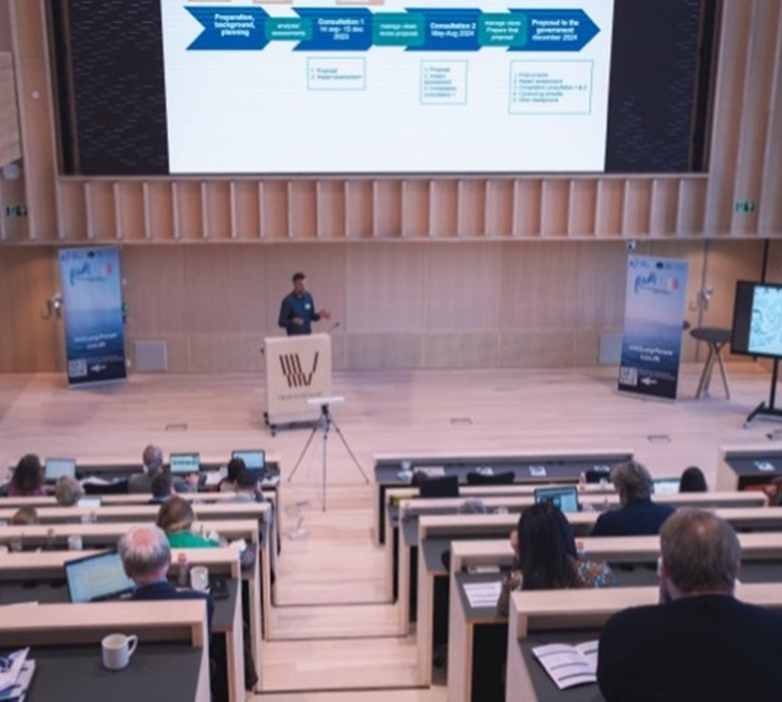
Figure 11: Per Olsson from Sweden presents the Swedish experience with offshore wind and planning. Photo by Andrea Magugliani.
2.2 The Norwegian cross-directorate marine spatial planning experience
Kari Grundvig, Directorate of Fisheries, Norway
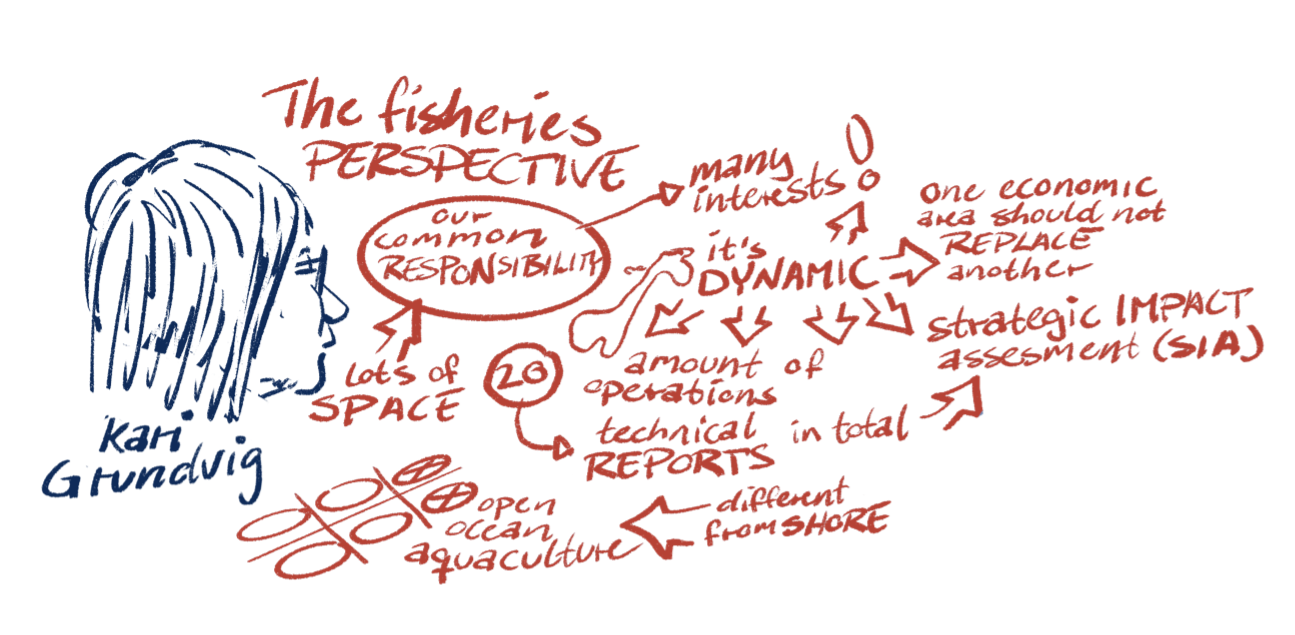
Figure 12: Graphical summary of Kari Grundvig’s talk. Illustration by Håvard Legreid.
The Directorate of Fisheries holds a shared responsibility for marine life in Norway. After oil and gas, seafood (wild caught and farmed seafood) products are the largest export in Norway and 2023 was a record-breaking year
Within the directorate, there's a specialized group focused on marine spatial planning that spans across different directorates. They pinpoint areas in Norway with low fishing activity and prioritize them for offshore wind development. Although some of these areas still see fishing, they're spacious enough, surpassing the initial 30 GW requirement for offshore wind capacity. This makes offshore wind development viable in these locations.
A Strategic Impact Assessment (SIA) aims to pinpoint five areas to be opened for license bids by 2025, with plans to open others later. However, the potential conflict with open ocean aquaculture arises, with two potential industries overlapping with offshore wind. Decision-making now centers on evaluating the costs and benefits of these overlaps. The weighting of these considerations is a political rather than scientific process, prompting questions on how to consider the trade-offs of priorities among fishing, aquaculture and offshore wind. This decision-making process should incorporate scientific input.
Technical reports will assess the suitability of different areas for various uses, involving trade-off analyses to determine the most favorable outcomes.
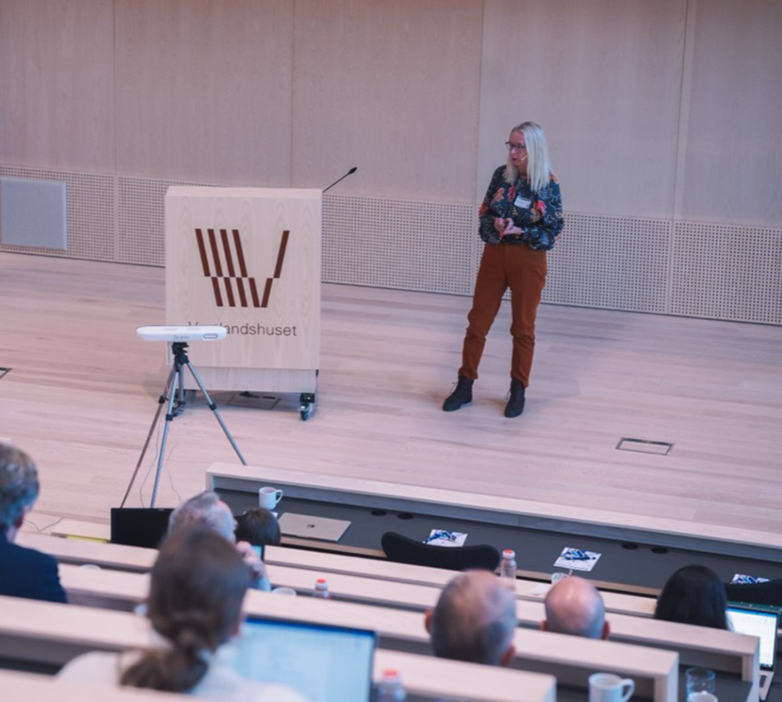
Figure 13: Kari Grundvig presents the current situation for the Fisheries directorate and the Norwegian Water Resources and Energy Directorate's Strategic Impact Assessment for new offshore wind farms in Norway. Photo by Andrea Magugliani.
2.3 Stakeholder panel debate
Mia Høgi, Pelagisk Forening, Norway
Niels-Herman Oxholm Johansen, Danmarks Fiskeriforening Producent Organisasjon
Lísa Anne Libungan, Fisheries Iceland
Christopher Harman, Norwegian Offshore Wind Cluster
Antonio Aguera Garcia, Institute of Marine Research, Norway
Niels-Herman Oxholm Johansen, Danmarks Fiskeriforening Producent Organisasjon
Lísa Anne Libungan, Fisheries Iceland
Christopher Harman, Norwegian Offshore Wind Cluster
Antonio Aguera Garcia, Institute of Marine Research, Norway
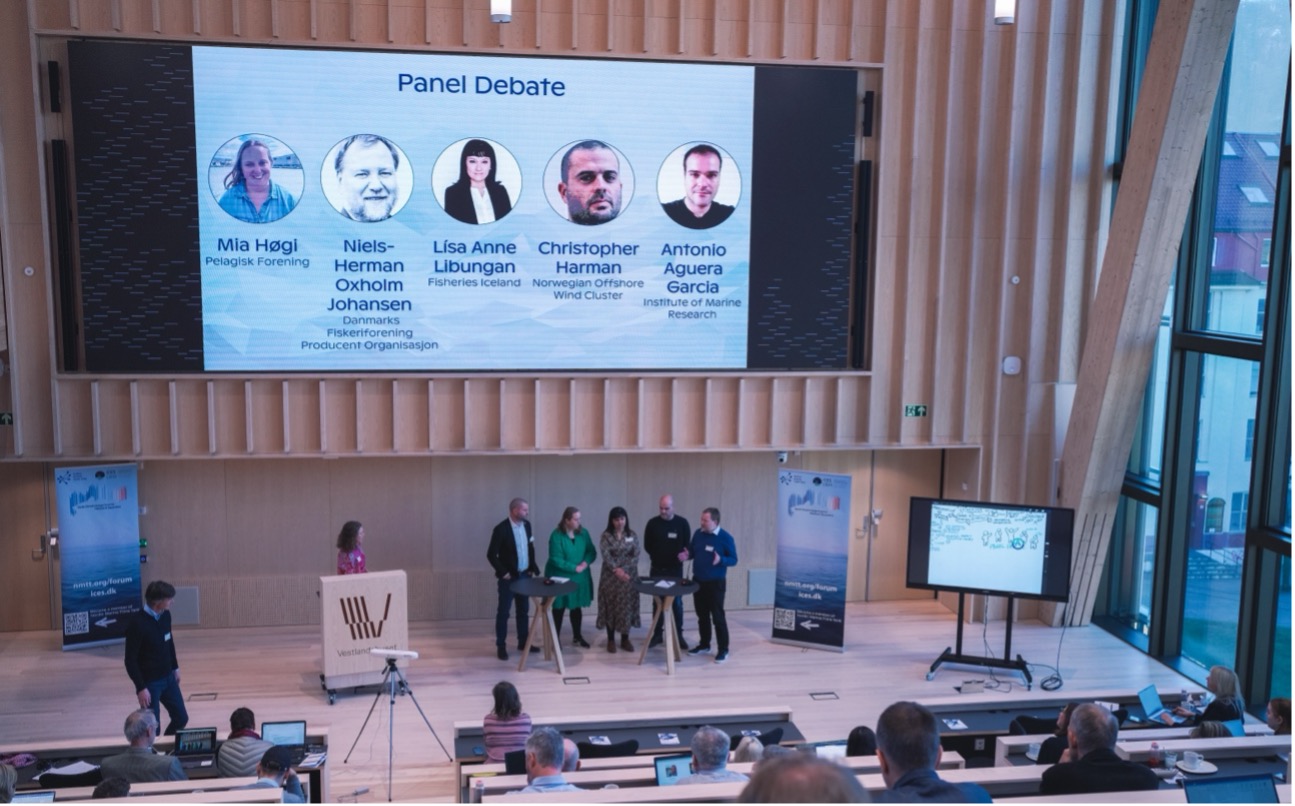
Figure 14: The stakeholder panel debate. Photo by Andrea Magugliani.
The panel debate opened with an invitation for audience members to engage with the speakers and panelists through questions and comments. Niels-Herman Oxholm Johansen from Denmark raised a question about the experience of Danish fishermen with offshore wind farms, citing concerns about the loss of fishing areas. He noted that about one-third of Danish sea areas have been designated for wind farms since the mid-1990s, primarily in the North Sea, Mia Høgi discussed the process in Norway to identify additional space for wind farms with minimal conflict with fisheries, acknowledging that while it has been more interdisciplinary, there are still shortcomings in stakeholder representation. Lisa Anne Libungan inquired about the outlook for offshore wind in Iceland, expressing concern that fishing representatives' comments are not adequately considered in decision-making processes.
Christopher Harman highlighted the Norwegian offshore wind cluster's support for offshore wind but raised questions about data responsibility and trustworthiness in decision-making processes.
Antonio Aguera Garcia discussed the potential for co-existence between low-trophic aquaculture and offshore wind, emphasizing the need to assess conflicts and plan accordingly.
Questions from the audience touched on topics such as the reef effect of wind farms, the availability of scientific knowledge, and the importance of coordinated research on long-term effects and operation and maintenance. The discussion concluded with reflections on the possibilities and challenges of co-existence between human activities and marine environments, emphasizing the need for caution and consideration of potential environmental impacts.
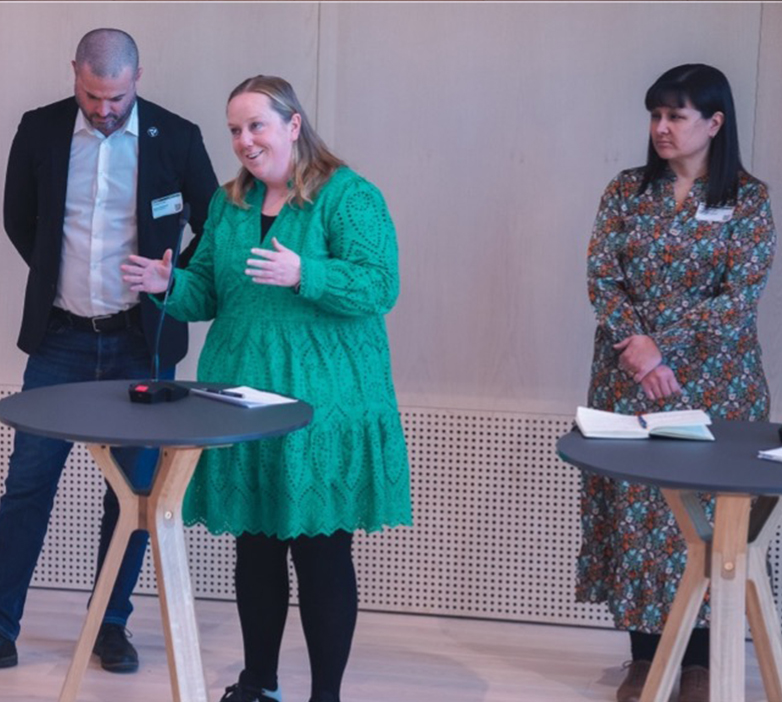
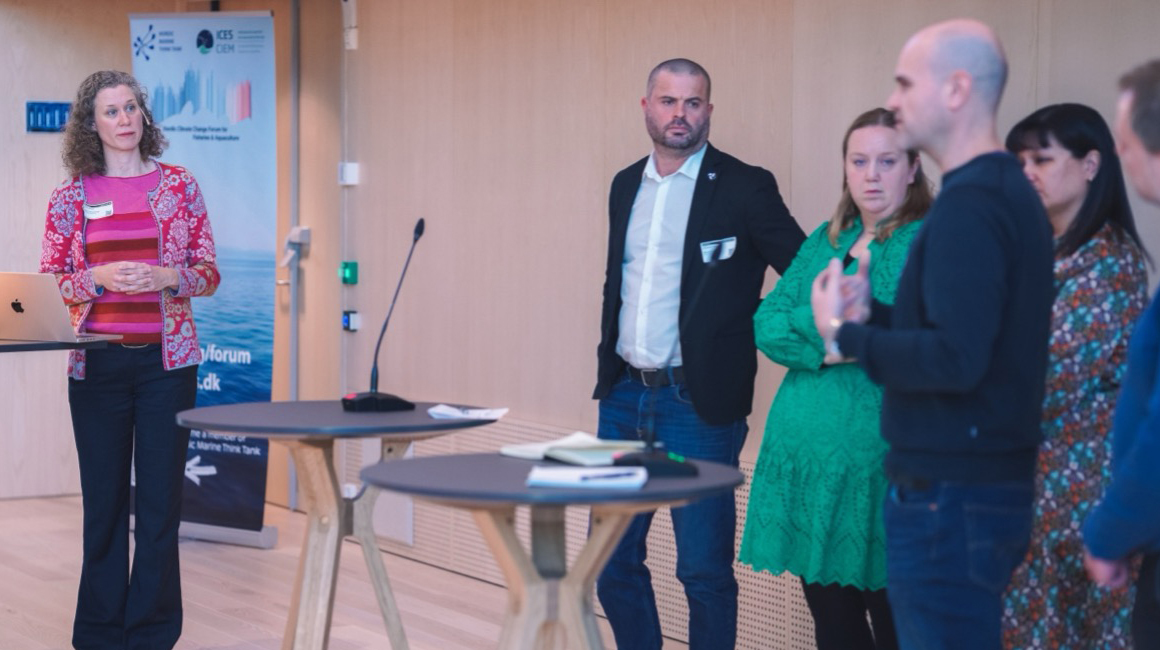
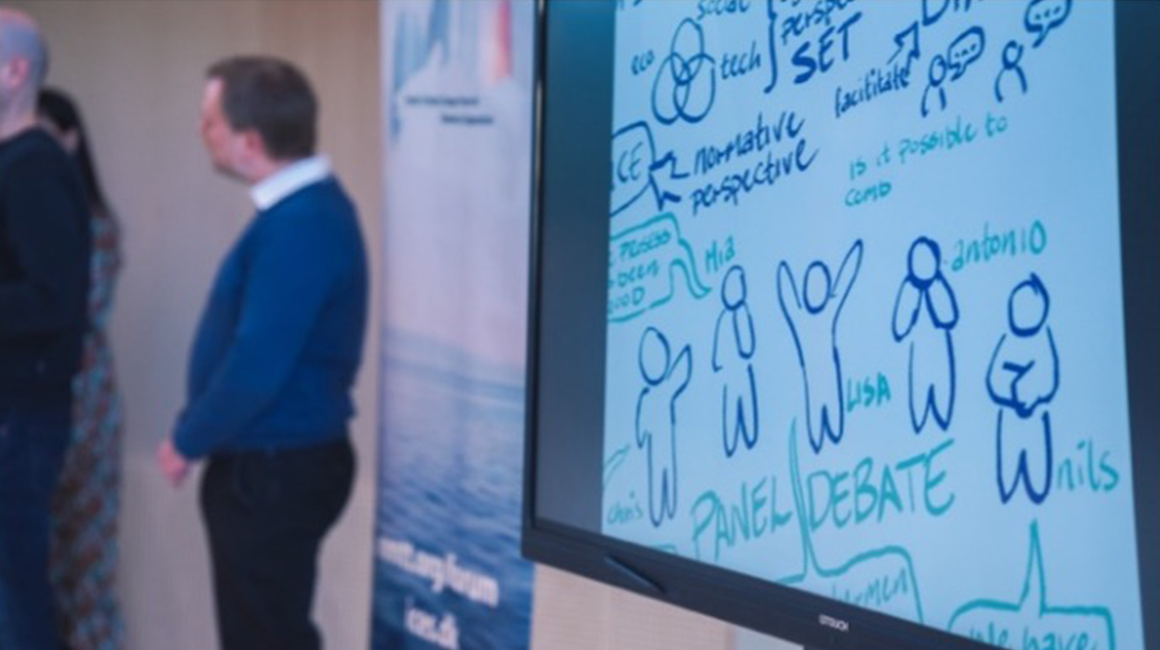
Figure 17: During this workshop, artist Håvard Legreid sketched the discussion which the participants could view in real-time on a screen in the fron tof the room. The result can be seen in the graphical workshop abstract in Figure 1. Photo by Andrea Magugliani.