Photo Adam Mørk/Visit Denmark. Nicolai Perjesi/Copenhagen Capacity. Colin & Meg/Unsplash.
The Nordic Region: The most sustainable and integrated region in the world in 2030
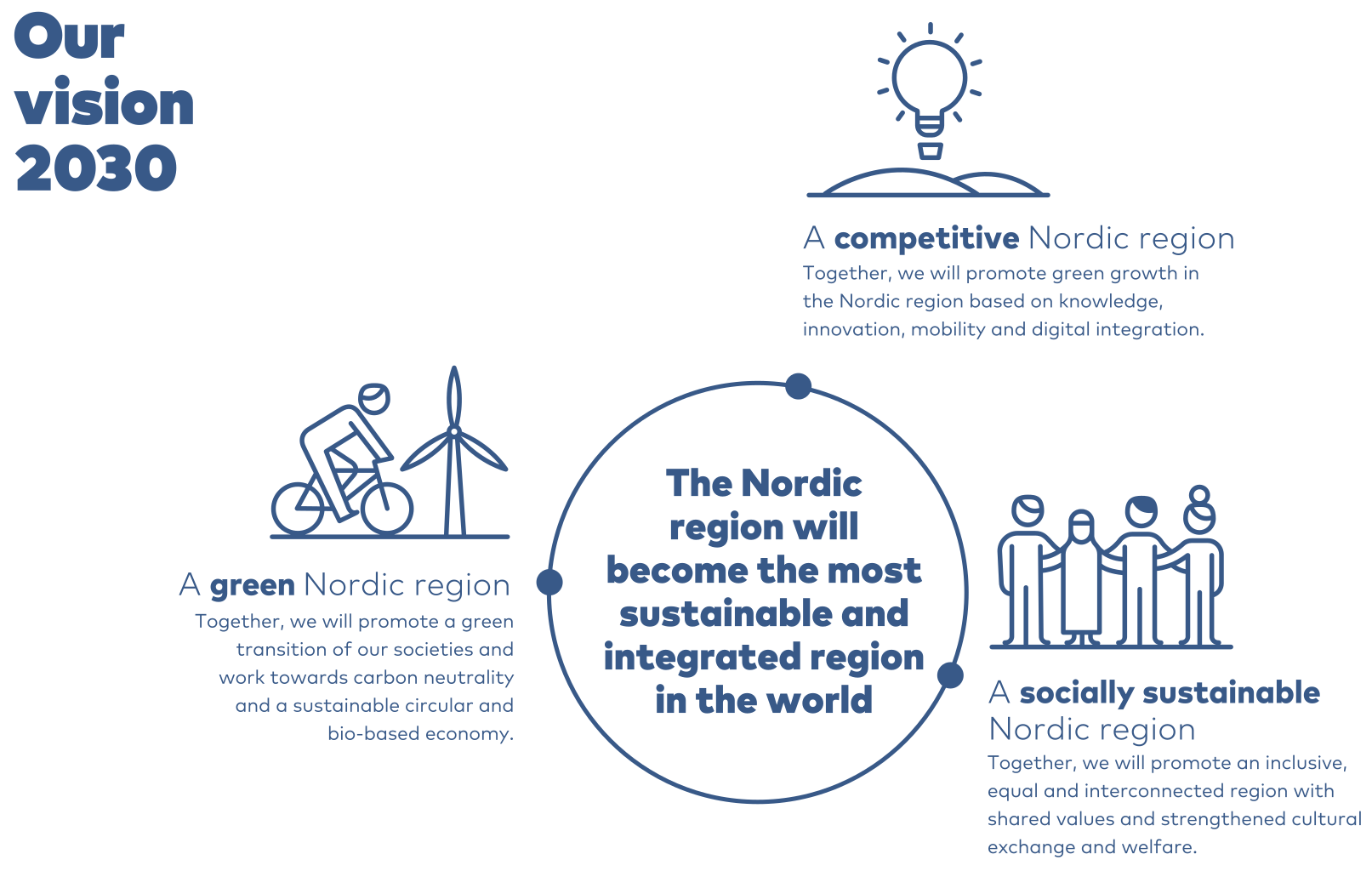
In 2019, the Nordic prime ministers adopted a vision of the Nordic Region being the most sustainable and integrated region in the world in 2030. Progress toward realising this vision is based on three strategic priorities: a green, competitive and socially sustainable region. The Danish and Faroese Presidency will pursue these ambitious and important goals by focusing on the new co-operation programmes and action plans for the period 2025–2030.
Crossing the finishing line on time
In 2023, the Nordic Council of Ministers presented a status report on progress toward Vision 2030. Overall, it shows that the region remains on track to become the most sustainable and integrated region in the world. Progress towards competitiveness and social sustainability is particularly positive. However, there is room for improvement with regard to the vision of a green Nordic Region.
A green Nordic Region
The status report from 2023 indicates that the Nordic Region faces significant challenges in a number of areas when it comes to realising the ambition of a green Nordic Region, both now and in the run-up to 2030. Although progress is generally moving in the right direction, several indicators suggest that the pace is too slow to reach the goal on time. The Presidency will focus on picking up the pace and achieving our green goals by 2030.
A competitive Nordic Region
The 2023 status report indicates that progress is good on the ambition of a competitive Nordic Region built on green growth, innovation, mobility and a circular economy. Based on current trends, the Nordic Region will be even more competitive in 2030. On the other hand, overall competitiveness in the EU is under pressure, and the Presidency will focus on ways that the favourable conditions in the Nordic Region can enhance competitiveness in the rest of Europe as well as at home.
A socially sustainable Nordic Region
The 2023 status report indicates that the region is generally well on the way to realising its ambitions for a socially sustainable and equal region. The people of the region are healthy, employment and social trust are high, and crime rates are low. However, there is still room for improvement, particularly in areas like self-rated well-being. The Presidency considers it important to maintain focus on social sustainability and gender equality in the Nordic Region.
Integration throughout the Nordic Region
If we are to call ourselves the most integrated region in the world by 2030, all eight Nordic countries must be more closely integrated, not just in specific policy areas and on the 12 border committees, but also in the interparliamentary work done by the Nordic Council and the intergovernmental work of the Nordic Council of Ministers. We are a region of eight countries, and proper integration requires all eight being fully on board.
Updating the Helsinki Treaty
The Helsinki Treaty, often referred to as the “Nordic constitution”, came into force on 1 July 1962 and has served as the foundation for close and deep co-operation across the region. It has been updated several times, most recently on 2 January 1996, to keep it up-to-date and make co-operation function as smoothly as possible. In changing times, keeping Nordic co-operation relevant and working as well as possible is a key priority for the Presidency – anything else would be folly. The political situation in 1996 was somewhat different than it is today, 30 years later. Nordic co-operation needs to reflect and cope with the differences.
The 2024 Session of the Nordic Council unanimously adopted a recommendation that the governments update the Helsinki Treaty to make the self-governing territories full members of the Nordic Council and Council of Ministers if they so wish and to the extent their constitutional frameworks make it possible. On 4 April 2025, the co-operation ministers decided to appoint a legal expert to examine the national, EU and international legal issues involved in updating the treaty. The report was completed under the Finnish and Åland Islands’ Presidency of the Nordic Council of Ministers.
The 2026 Presidency and the Ministers for Nordic Co-operation (MR-SAM) will follow up on the legal report and continue work on updating the Helsinki Treaty.
Freedom of movement in an integrated Nordic Region
The ambition of being the most integrated region in the world will require as much freedom of movement across the eight Nordic countries as possible. In 2024, the Freedom of Movement Council was reorganised. It is now more modern and operational and able to advise the Council of Ministers on new measures and improvements that will remove obstacles to cross-border mobility. In 2026, the Freedom of Movement Council is halfway through its four-year term, and the Presidency will work closely with it on a mid-term review in 2026. It is a key priority for the Presidency that this work on freedom of movement is as successful as possible. It will benefit the people and businesses of the region. However, we must also be able to work together on the use of instruments such as border controls to combat cross-border, organised and gang-related crime, which is a major and growing problem in the Nordic Region, cf. the section Organised crime and gangs, so that the region remains a community of nations that trust each other.
The most effective way to reduce the number of obstacles to freedom of movement is to avoid them in the first place. The Nordic countries have different ways of achieving this. For example, in Denmark and the Faroe Islands it is a legal requirement that new legislation must not create barriers to cross-border mobility in the Nordic Region.

