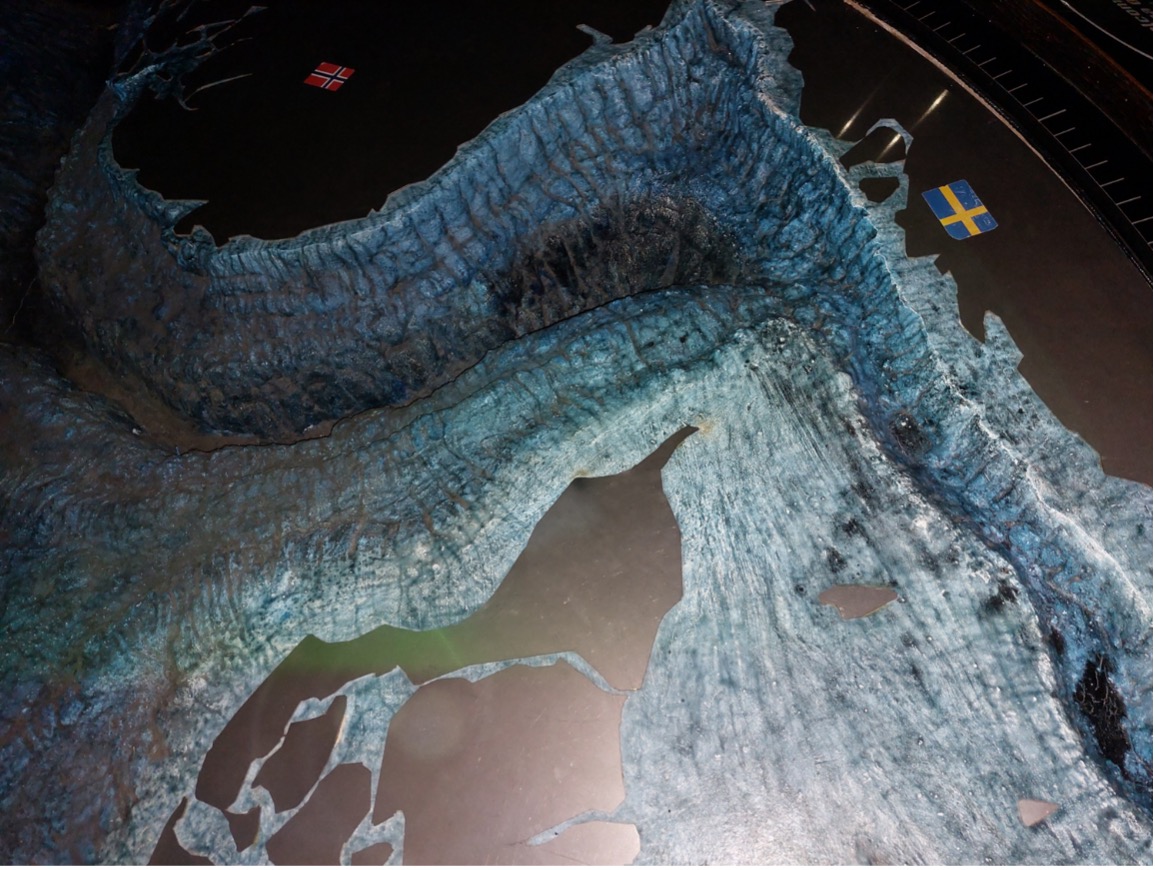
Skagerrak, an exceptional sea between Norway, Denmark and Sweden
Skagerrak serves as a crucial maritime gateway linking the North Sea with the Baltic Sea. The region is characterized by a unique seascape with a deep channel known as the Norwegian Trench, which extends all the way to the Norwegian Sea (Figure 1). The Norwegian and Swedish coasts of Skagerrak are characterized by a narrow rocky plateau that descends via steep slopes into the trench, whereas the southern Danish side features shallow sandy slopes with sporadic rocky habitat. Strong currents transport water to Skagerrak from both the northern and southern North Sea, where upwelling brings deep cold and nutrient-rich water to the surface, whereas less saline surface water flows from the Baltic Sea. This mixture of diverse habitats and water bodies creates a unique and exceptional ecosystem with a high biodiversity, where the access to deeper and colder water may represent a climate refuge from marine heat waves in coastal and shallow areas. The management of Skagerrak’s natural resources and conservation efforts are, nonetheless, challenged by the fact that the sea is shared between three nations with distinct governance systems, and of which two are members of the EU (learn more about the protection level of habitats in Skagerrak and the Norwegian trench in Protecting the Skagerrak for biodiversity, food and climate: pub.norden.org/nord2024-031).