19 Móberg hjúkrunarheimili í Árborg
19 Móberg hjúkrunarheimili í Árborg, Iceland
Building use | Nursing home | Stories above ground | 2 |
Location | Árvegur 3, 800 Selfoss | Basement area | — |
Client | Framkvæmdasýslan - Ríkiseignir | Structural system | Reinforced concrete |
LCA consultant | EFLA | Façade type | Wood |
Year of completion | 2024 | Roof type | Flat roof |
Reference area | 4369,3 m2 (gross floor area) | Heat demand /source | District heating |
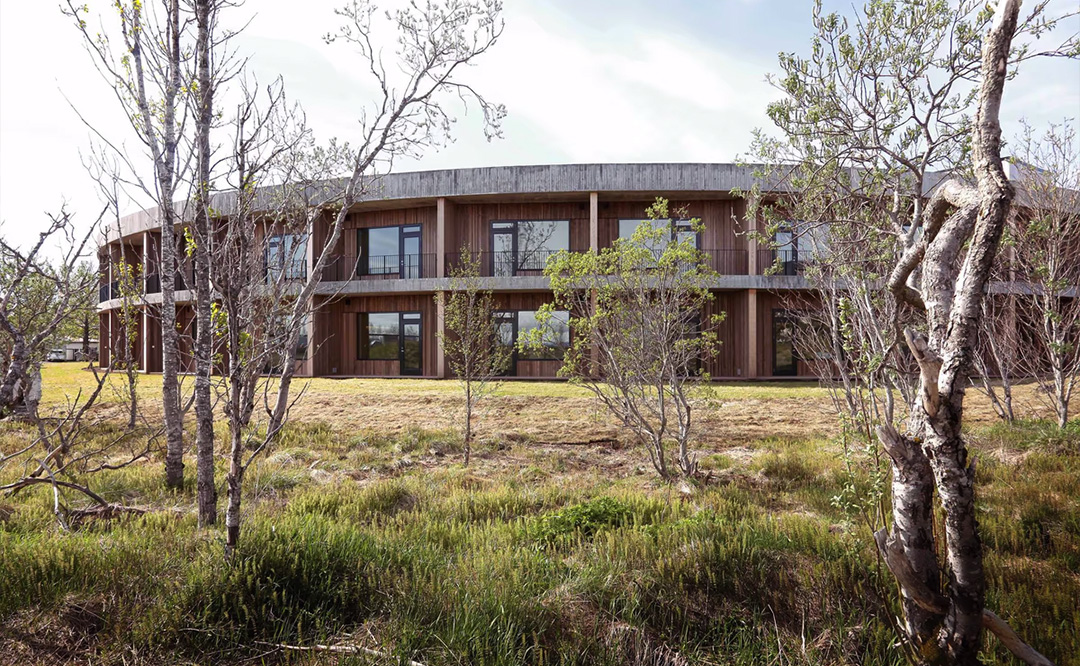
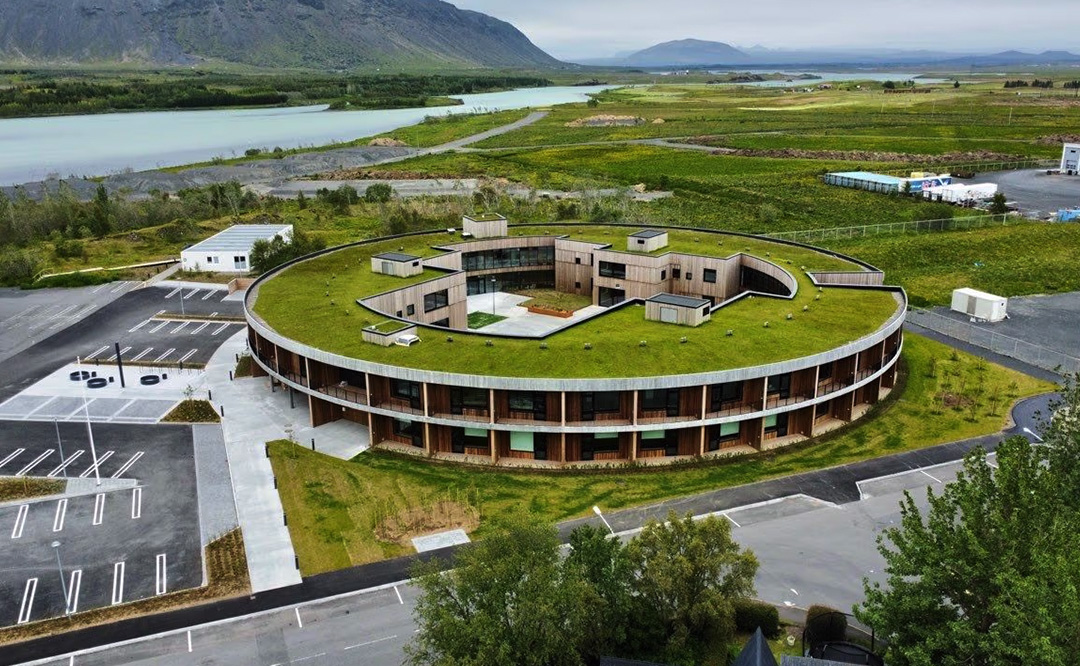
The Móberg nursing home is a two-story circular building featuring an inner courtyard at its centre. It includes 60 nursing rooms divided into five residential units, with the nursing spaces situated around the exterior and service areas and corridors positioned within the circle. The building is mainly constructed from reinforced concrete, externally insulated and clad in timber cladding. The roof is made from insulated concrete, covered with roofing felt and topped with turf and gravel.
From the start, the design prioritised sustainability in both construction and operation. Careful attention was given to material selection, interior design, energy efficiency and effective environmental management. Due to its location in an earthquake-prone area, concrete was selected for the structure, but all external walls were made from wood. To lower concrete emissions, the concrete was mixed with ash from the Eyjafjallajökull volcano eruption, significantly reducing carbon emissions. All wood used in the building was sourced from sustainably managed and legally harvested forests.
The life-cycle assessment influenced the selection of materials for the building. The analysis was carried out for the following building elements over a 60-year lifetime: Ground slab and plinths, floor slabs, flooring, ceiling, roof, exterior walls, interior walls, doors, windows, columns, stairs and interior painting. The measures implemented to reduce the building’s carbon footprint resulted in a 4% reduction in carbon emissions.
Assessment method
LCA scheme compliance | BREEAM |
LCA tool version | One Click LCA v 0.33.0 |
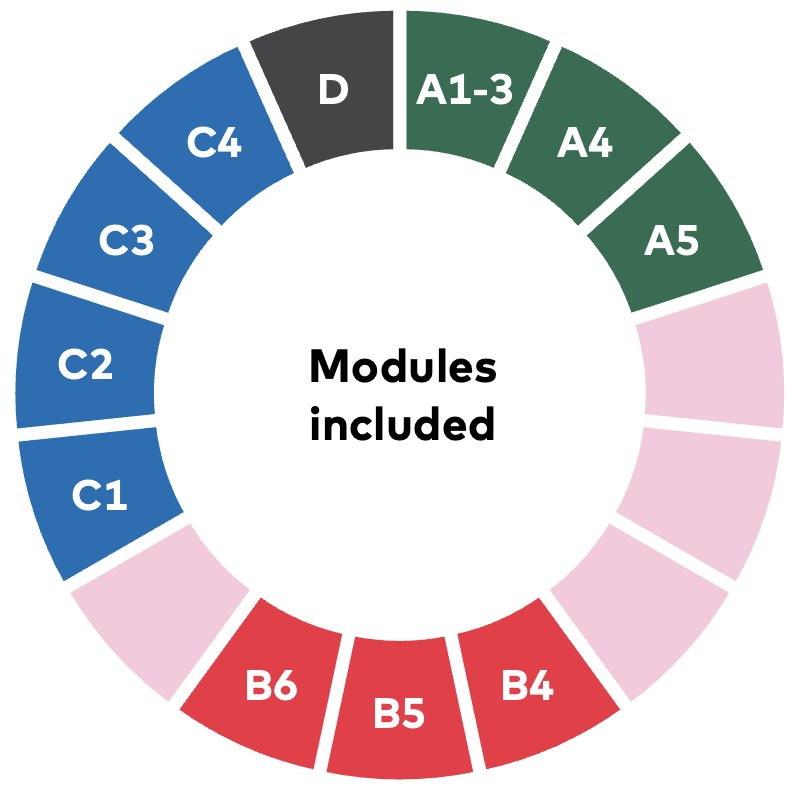
Life cycle stages included | A1-A5, B4-B6, C1-C4, D |
Material emission data | OneClick LCA database and EPD’s |
Material decarbonisation scenario | — |
Energy calculation method | — |
Energy, dynamic scenario | LCA study for country specific electricity and district heat mixes based on Orkustofnun, OneClickLCA 2017 |
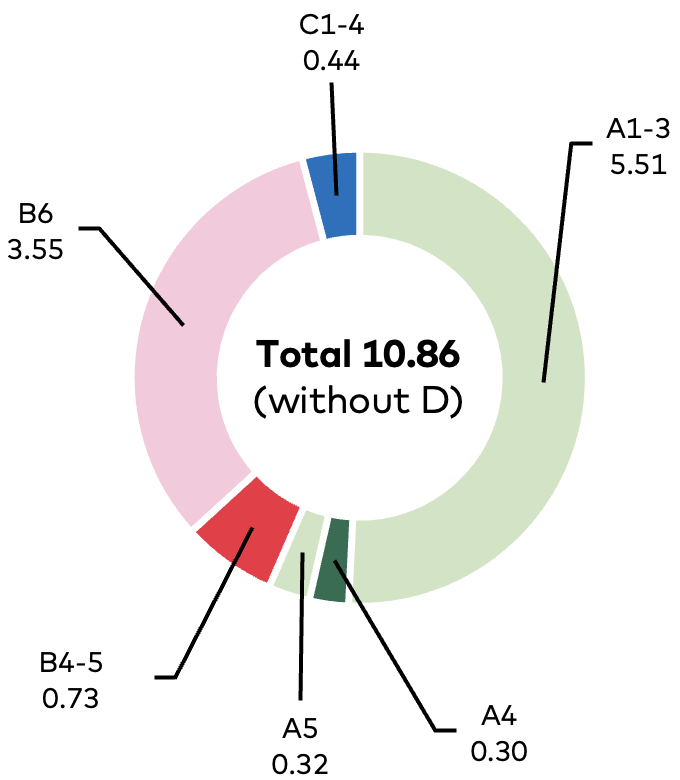
LCA results: Life cycle modules
[kgCO2e/m2 reference area * year]
%
[kgCO2e/m2 reference area * year]
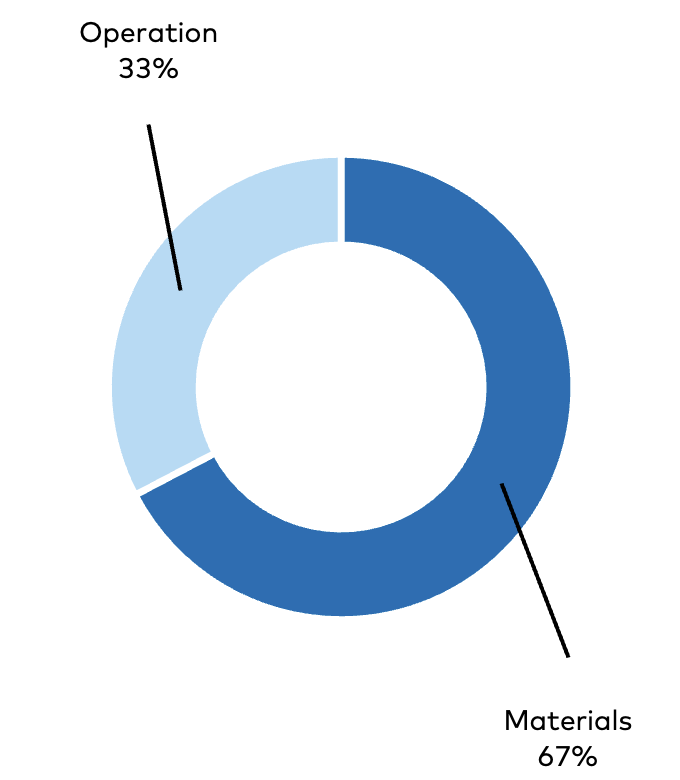
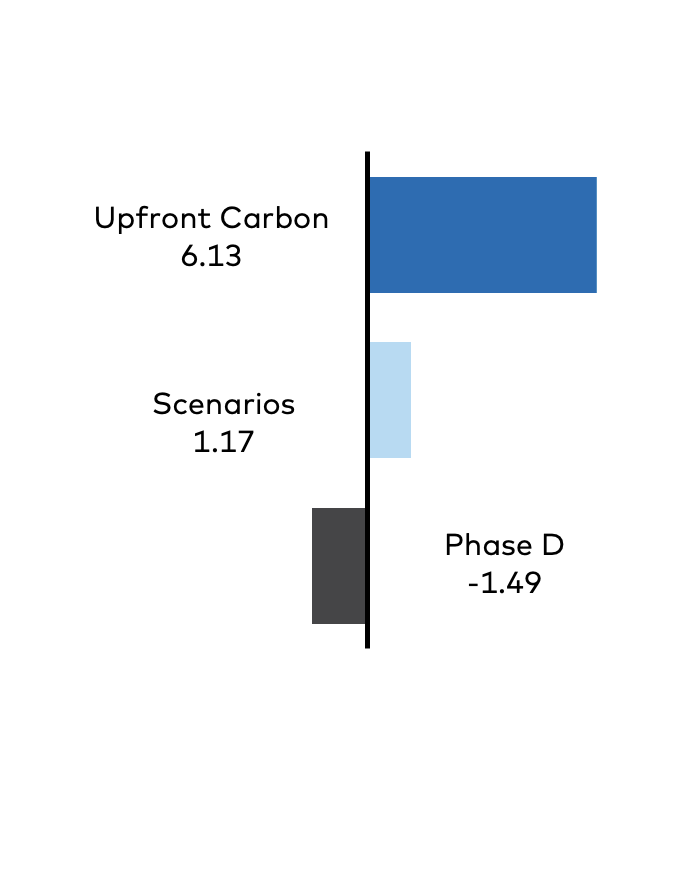
The system boundary includes key modules from product, use and end-of-life stages.
In the second figure, Operation includes B6, while materials include A1-A5, B4-B5, C1-C4.
In the third figure, Upfront includes A1-A5, scenarios include B4-B5, C1-C4, and D is shown separately.
In the second figure, Operation includes B6, while materials include A1-A5, B4-B5, C1-C4.
In the third figure, Upfront includes A1-A5, scenarios include B4-B5, C1-C4, and D is shown separately.
LCA results: Building elements
GWP / reference area [kgCO2e/m2 reference area]
Material inventory: All materials
Life cycle modules: A1-3, B4-5, C1-4
Life cycle modules: A1-3, B4-5, C1-4
Building element quantity / reference area [kg building element / m2 reference area]
GWP of building element / building element quantity [kgCO2e / kg building element]
Material inventory: All materials
Life cycle modules: A1-3, B4-5, C1-4
Life cycle modules: A1-3, B4-5, C1-4
Building element quantity per building reference area is a measure for the material intensity, while element impacts per element quantity is a measure for the elements’ carbon intensity relative to their weight.
LCA results: Products
Product quantity / reference area [kg product / m2 reference area]
GWP of product / reference area [kgCO2e/m2 reference area]
Material inventory: Top 10 products with the highest impacts
Life cycle modules: A1-3, B4-5, C1-4
Life cycle modules: A1-3, B4-5, C1-4
Construction product quantity per building reference area is a measure for the material intensity, while product impacts per building reference area is a measure for carbon intensity.