Status in Finland
“Defence and sabotage actions affecting Nordic biodiversity must be recognised, and their harmful impacts on biodiversity should be compensated in Nordic countries.”
Country-specific background
Key points
1. Finland failed to submit the Action Plan to the COP 16 meeting
At COP 16 in October 2024, parties to the CBD were expected to show the alignment of their NBSAPs with the GBF. Finland submitted a draft of national targets but not the NBSAP. While Nordic countries are committed to halting biodiversity loss over the next five years, Finland's success without a NBSAP heavily depends on political will and action. However, Finnish biodiversity policies are often delayed in the planning phase, making implementation, and monitoring the impact of biodiversity policies difficult. The lack of biodiversity actions by the government directly threatens the lives of numerous species on land, in inland waters, and in the Baltic Sea.
2. Urgent need to stop hostile nature policy
A range of hostile measures have recently been issued in Finland regarding nature. These policies aim at reducing the amount of biodiversity funding and weakening the obligations to implement EU and GBF agreements. Some of these hostile measures include cuts to the funding of the work related to Finland's IUCN Red List of Threatened Species. This decreases the quality and reliability of the IUCN biodiversity assessment in Finland.
An example of hostile action was when thousands of endangered freshwater pearl mussels died in August 2024 when logging machinery crossed the River Hukkajoki. The company Stora Enso, 10.7% owned by the Finnish state, violated the buffer zone along the river. Police are investigating the case as a severe environmental crime. The timber from Hukkajoki does not comply with the guidelines of either of Finland’s timber certificates (FSC and PEFC) and cannot be used commercially, as the logging is suspected to be an environmental crime. A 50-meter buffer zone is recommended for freshwater pearl mussel habitats but has yet to be added to Finnish law. Furthermore, some expert groups, such as the Finnish Nature Panel and the Finnish Climate Change Panel, have shown that policy measures (a regulatory, financial, or voluntary instrument) can cause deforestation and biodiversity loss in Finland (Lakka et al. 2023 and references therein).
3. Biodiversity and safety are linked in Finland
War is a human crisis and a massive biodiversity crisis. The Winter War (1939–1940) lasted 105 days in 1939–1940 and 25,904 Finnish soldiers and 957 civilians died. Just over a year after the end of the Winter War, the Continuation War (1941–1944) began, in which 63,204 Finnish soldiers died. Since 2022, Finland's neighbour Russia has been at war with another border neighbour, Ukraine. War can significantly reduce the human population in these small countries and leave behind nature crises as well, such as pollution and overuse of resources. In Finland's case, massive war reparations to the Soviet Union were paid partly from Finland’s natural resource, timber.
An example of the connection between safety and biodiversity is the border fences. Finland will build approximately 200 kilometres of a barrier fence along the 1300-kilometer-long eastern border during 2023–2026. The purpose of the fence is to stop illegal immigration from Russia and reduce Finland's dependence on the effectiveness of Russian border control. The fence area, including a ditch and a road, will be 20 m wide and treeless. Trees have already been removed from 100 km of the fence area. It is a well-researched fact that fences disturb animal movement (Trouwborst et al. 2016). This aspect should be recognized, and the biodiversity lost should be compensated for when planning new protection areas in the border area with military fences.
4. Freshwater ecosystems are neglected in biodiversity actions
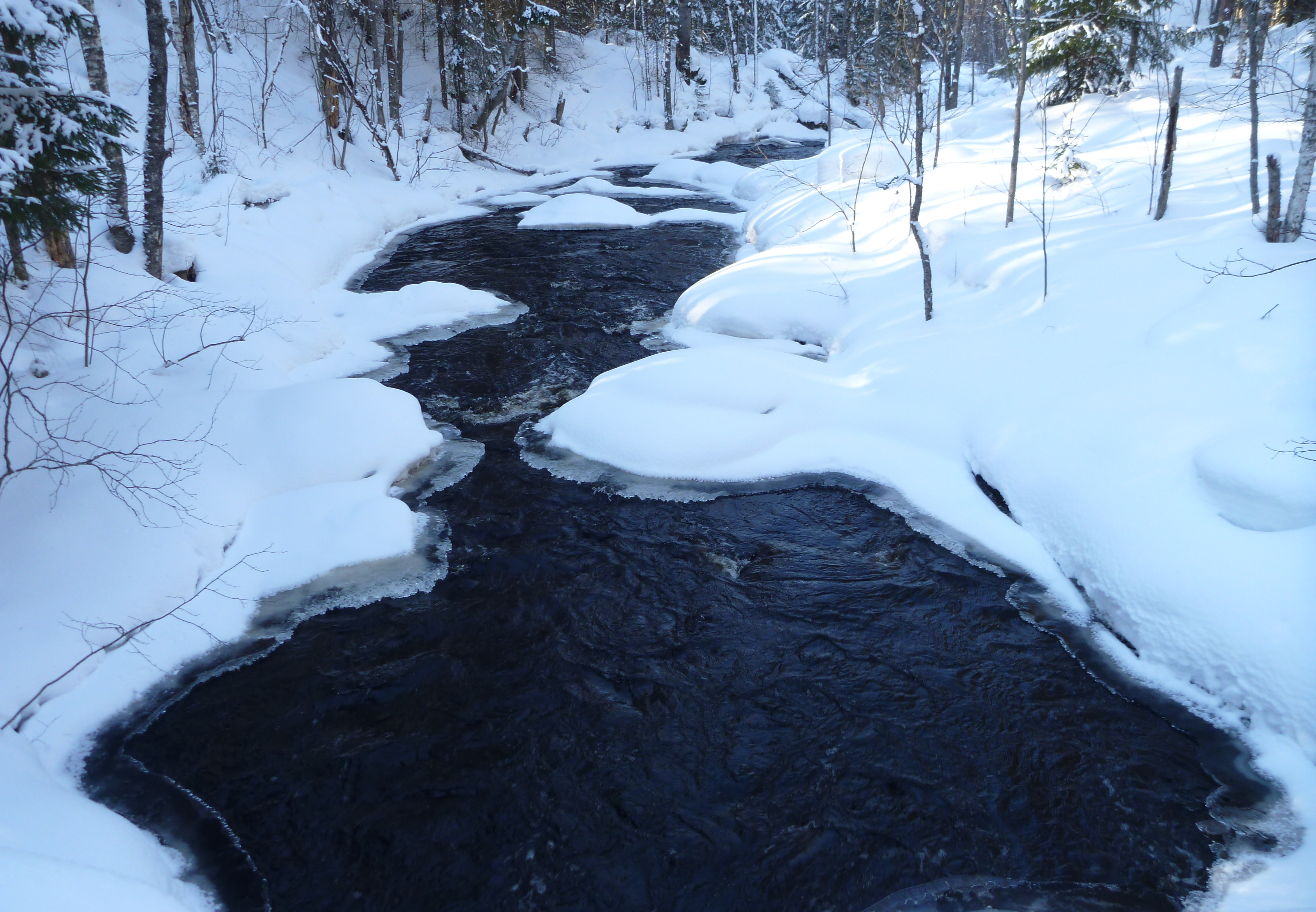
Numerous changes in forest policy and national forest economic use have contributed significantly to the decline of biodiversity and the state of nature in Finland. Therefore, the forestry sector cannot be excluded when biodiversity-related problems are discussed in Finland. However, this intense focus on forestry has led to the neglect of conservation actions in Finnish freshwater ecosystems.
Leading practice
The Forest Biodiversity Program METSO is a voluntary conservation program to protect privately owned forests. METSO aims to halt ongoing decline in the biodiversity of forest habitats and species and ensure that a favourable trend in forest biodiversity is established by 2025. It is the only government-supported tool for protection. Forest owners may offer their forests for protection through several different ways (e.g., permanent versus temporary) and are given the opportunity for nature management projects. Whichever avenue the owners take, they are financially compensated accordingly. There is, of course, still room for improvement. Since this is based on voluntary conservation of forests, the areas offered for protection probably do not represent high biodiversity or ecosystem connectivity. Finland should encourage the protection of new areas that enable connectivity and ensure that all ecosystem types and species are considered equally when selecting new conservation areas. The Finnish Nature Panel recommends that conservation actions should be implemented at the municipality level to ensure equal protection across the country (Lakka et al.2023). Regardless, this is a great example of cooperation between the government and landowners to achieve conservation goals.
GBF target implementation in Finland
Biodiversity agreements such as the GBF have been added to Finland's nature protection law, making it a powerful agreement for environmental policy. Finland also follows EU legislation, which has slowed biodiversity loss in all 27 EU member states, including Finland. Examples of such nature-friendly EU policies include the new Nature Restoration Regulation, which put the EU Biodiversity Strategy for 2030 into action and is the first continent-wide, comprehensive law of its kind. The Nature Restoration Regulation is a key element of the EU Biodiversity Strategy, which sets binding targets to restore degraded ecosystems. The Regulation aims to restore ecosystems, habitats, and species across the EU’s land and sea areas, enabling the long-term and sustained recovery of biodiverse and resilient nature. Another example of nature-friendly EU policies is the ban on the hunting of birds with lead shot in wetlands, which has protected around 1 million birds from dying of lead poisoning each year. The power of EU law should not be underestimated.
Many key commitments of the Finnish EU Biodiversity strategy are relevant to GBF Targets 1–8. Despite this, more urgent action and monitoring are needed to ensure effective implementation and accountability in protecting biodiversity. The Finnish Nature Panel has provided guidelines on which indicators to use and how to measure improvements in nature to fulfil EU commitments (Lakka et al. 2023). Many of these same actions will also fulfil GBF targets, however, GBF-specific actions are being finalized and are still pending official Finnish government decisions. Policy development in EU countries should focus on streamlined plans and determined action. Action is the only way to achieve effective nature policy and the only way to stop the ecosystem degradation and biodiversity crisis.
Example: Target 6. Reduce the Introduction of Invasive Alien Species by 50% and Minimize Their Impact
The GBF contains the commitment to prevent and manage established invasive alien species and decrease the rates of introduction and establishment of other known or potential invasive alien species by at least 50% by 2030. Invasive alien species (IAS) are animals, plants, pathogens, and other organisms that are non-native to an ecosystem, spreading to new areas with human intervention, which may cause environmental harm or negatively affect human health. They can have significant negative impacts on the economy. Between 1960 and 2021, the total cost of invasive species was EUR 7.94 billion in Nordic countries (likely an underestimation): Norway (EUR 3.07 billion), Denmark (EUR 2.09 billion), Sweden (EUR 1.38 billion), Finland (EUR 1.06 billion), and Iceland (EUR 24.20 million) (Kouratidou et al., 2022).
As of 2024, Finland had 29 harmful IAS, eight species groups, and two hybrid species on the national list. Fifteen of these are plants, four mammals, eight amphibians, two molluscs, and one hybrid bird. In addition to the GBF target, EU countries will be responsible for ensuring that the number of endangered and near-threatened species threatened by IAS decreases by 50%. This means that IAS in the next Finland Red List should threaten only a maximum of 31 endangered and near-threatened species (reduced from 63 species in 2019) (Hyvärinen et al., 2019). Finland will publish the next Red List of threatened species in 2029.
In Finland, the most harmful invasive alien plant species to Red-Listed species are garden lupin (Lupinus polyphyllus), and Japanese rose (Rosa rugosa) (Lakka et al., 2023). It is estimated that 72 and 48 Red List species are threatened by garden lupin and Japanese rose respectively (Jauni et al., 2023). The most harmful invasive alien mammals to Red listed species are the American mink (Neogale vison) and the raccoon dog (Nyctereutes procyonoides).
In order to reach both the GBF and EU targets, prioritization of certain areas and species will be crucial. Wherever possible, the immediate removal of IAS plant populations in areas of rapid dispersal (e.g., close to ditches, rivers, inland waters, and the Baltic Sea) is highly recommended. Since chemical removal of IAS adversely affects native fauna, mechanical removal techniques are best. Furthermore, Finland's management actions should prioritize halting the establishment of any IAS in biologically valuable areas, particularly in Lapland, where no IAS have been observed and native fauna has not yet been disturbed.
Finland has made progress in addressing invasive alien species under Target 6 of the GBF, but challenges remain. Although strategies and advisory bodies are in place, ongoing efforts and resources are needed to manage and reduce their impact effectively.