Analyses of case examples: Grouping of bisphenols
Three cases of grouping of bisphenols were analysed, as described in the following.
Case 1: Bisphenols, Assessment of Regulatory Needs
Purpose of assessment
The purpose of the ECHA Assessments of Regulatory Needs (ARN) on bisphenols was to help authorities to conclude on the most appropriate way to address identified concerns for this group of substances within the EU regulatory system. It considered combinations of regulatory risk management instruments needed to introduce regulatory measures, including intermediate steps such as data generation. For different sub-groups of bisphenols, it was concluded based on available data that different regulatory actions were required at EU level, including identification as substances of very high concern (SVHCs), harmonized classification for Repr. 1B, specific restriction proposals and data generation (ECHA 2021).
Description of methodology applied
148 substances were included in the report based on structural similarity, with the presence of the para-bisphenol moiety being the unifying factor for bisphenols (see Figure 1).

Figure 2 Generic structure of bisphenols adapted from the ECHA ARN (ECHA 2021)
(A) Generic “bisphenol” structure, with “X” representing the bridge between phenyl rings. There may be additional groups attached to the bridging atom(s). (B) General “bisphenol derivatives” structure. Rn can be the same/ different groups (Rn does not cover halogen substituents).
These 148 substances were divided into 6 sub-groups. 4 out of the 6 sub-groups were based on a common bisphenol bridge (denoted X in Figure 1), while the last two were characterized as either “Miscellaneous bisphenols” or “Other aliphatic or aryl bridged bisphenol derivatives” based on practical reasons:
- BPA and BPA derivatives – 84 substances, of which 35 were not registered under REACH.
- BPS and BPS derivatives – 11 substances
- BPF and BPF derivatives – 17 substances
- BPAF and its derivatives – 9 substances
- Miscellaneous bisphenols – 17 substances
- Other aliphatic or aryl bridged bisphenol derivatives – 10 substances.
Bisphenols and bisphenol derivatives were further defined by the substituents of the phenyl rings and/or the substitution of the phenyl hydroxy groups (represented by Rn in Figure 1). For example, BPA and all BPA derivatives share a common bisphenol bridge, but while the phenyl rings of BPA contain hydroxy groups only (in addition to the bisphenol bridge) the BPA derivatives have different substituents at the phenyl rings or may have the phenolic hydroxyls derivatized (hydrogens are substituted, e.g. with ether bonded groups (R-O-R’) (ECHA 2021).
Further limits were set on the bisphenols included in the report. A molecular weight limit was arbitrarily set to 600 or below. Some specific bisphenols (TBBPA and TBBPA-derivatives) were excluded due to their use as flame retardants and information suggesting a possible distinct hazard profile (ECHA 2021).
In a third step, 34 of the 148 substances were identified as a sub-group with a need for further risk management measures, ultimately in the form of a restriction based on the substances being known or potential EDs or substances that could be identified as toxic for reproduction. The identification was related to experimental evidence or indications of ED effects, including:
- substances already identified as SVHCs for ED for human health or reproductive toxicity (3 substances)
- substances with information evaluated to be possibly sufficient for identification as SVHCs for ED for human health or reproductive toxicity (including in some cases read-across considerations) (12 substances)
- substances with data suggesting ED properties, but where further data generation may be required (9 substances)
- substances containing BPA, BPF and BPS (10 substances)
Step 1 Identification of brutto list of 148 substances |
↓ |
Step 2 Sub-groups based on nature of bridge |
↓ |
Step 3 34 substances potential EDs based on evidence or indications |
Workflow 1 Bisphenols, Assessment of Regulatory Needs (ECHA 2021)
Comparison with procedures described in the OECD GD 194
The purpose of the ARN was to help authorities conclude on the most appropriate way to address the identified concerns for a group of substances, or a single substance, based on available information about their known or potential hazards. No attempt was made to fill data gaps in the bisphenol assessment of regulatory needs. The case example could in the framework of the OECD GD 194 be interpreted as an identification of category members in a larger group (step 1) and smaller sub-groups (step 2). In contrast, step 3 was a selection of substances with available data sufficient for further regulation or data generation. The identification of category members is described in step 1 of the stepwise approach in the OECD GD 194, see table 1.
Table 1 Analysis of case 1 (Bisphenols, Assessment of Regulatory Needs) according to the stepwise approach recommended in the OECD GD 194.
Step | Stepwise approach recommended in the OECD GD 194. | Analysis of case 1 (Bisphenols, Assessment of Regulatory Needs) |
0 | Check whether the substance is a member of an existing category | Not performed. |
1 | Develop category hypothesis and definition and identify category members | In the first step, the 148 members of the group of bisphenols were identified based on structural similarity, with the common moiety being the “bisphenol” structure composed of two phenyl rings with a bridge between them and the hydroxyl groups being in the para-position. One physico-chemical property was used in the definition of the group; A molecular weight of 600 was arbitrarily set as cut off. These elements were in line with the recommendations in the OECD GD 194. However, the group of bisphenols was non-exhaustive as inclusion in the group required registration under REACH or a CLP notification. Furthermore, some specific substances were excluded (TBBPA and derivatives) due to their specific uses as flame retardants and some specific hazard information. The arguments for excluding substances with bromine are not reported. It can be valid to exclude substances based on specific toxicological properties but the arguments and justification for exclusions should be included in a transparent manner. If substances were excluded only based on their use, this seems like a pragmatic approach which is not in line with recommendations in the OECD GD 194. As in step 0, this discrepancy can be explained by the purpose of the ARN, which was not to build groups for subsequent data gap filling by read-across. In the second step, the substances were sub-grouped based on a structural feature, i.e. the nature of the bisphenol bridge. While the grouping of the 148 bisphenols was based on a concern for the toxicological properties of this group of substances, the sub-grouping (based on the nature of the bisphenol bridge) was not argued to be linked to any specific properties (e.g. specific toxicological effects or mechanisms) of the substances. The nature of the bisphenol bridge is recognized to be linked to modulation of e.g. estrogenic activity, but the main driver for endocrine activity seems to be at least one OH-group in a para position (Kitamura et al., 2005). Using the bisphenol bridge to sub-group is thus not in line with the recommendations in the OECD GD 194. Other molecular features would be more relevant to use as structural basis for the sub-grouping. In the third step, 34 substances from different sub- groups were identified as having a need for further restrictions based on available data. This was not based on structural similarities but specific evidence or indications on endocrine disruption or reproductive toxicity available for each substance. This approach therefore did not follow the recommendations in the OECD GD 194, but a structural grouping was also not the intention. The data mapping conducted in this step, including knowledge of regulatorily identified EDs, could be valuable in future grouping approaches where data rich substances could be used as source substances. The subsequent steps recommended in the OECD GD 194 for category formation, including data gathering, evaluation of the category(ies) and documentation of the category approach were not conducted. |
2 | Gather data for each category member | Not performed. |
3 | Evaluate available data for adequacy | Not performed. |
4 | Construct a matrix of data availability | Not performed. |
5 | Perform a preliminary evaluation of the category and fill data gaps | Not performed. |
6 | Perform and/or propose testing | Not performed. |
7 | Perform a further evaluation of the category | Not performed. |
8 | Document the finalized category and refine the category rationale | Not performed. |
Examination according to the ECHA RAAF
As for the comparison with the OECD GD 194, focus on the case example according to the ECHA RAAF was on the rationale for forming the category, which was evaluated by use of the first two assessment elements (AE) for category approaches: AE C.1 “Substance characterization” and AE C.2 “Structural similarity and differences within the category”, see table 2.
Table 2 Analysis of case 1 (Bisphenols, Assessment of Regulatory Needs) according to approach recommended in the ECHA Read-Across Assessment Framework (RAAF).
Code | Approach recommended in the ECHA RAAF | Analysis of case 1 (Bisphenols, Assessment of Regulatory Needs) |
AE C.1 | Substance characterization Chemical identity and impurity profile of each category member are sufficiently detailed for assessment of the category approach. | This assessment element is judged to be acceptable with just sufficient confidence (notable reservations). Chemical identity was reported by EC numbers. CAS numbers were reported when available. Names, synonyms and structures were also reported, where available. Thus, the identity of the substances was generally well defined, but no impurity profiles were reported. Some of the substances were UVCBs with no further information on composition, and for some substances the structure was not publicly available. |
AE C.2 | Structural similarity and differences within category Structural similarities among all members are identified and structural differences allowed within the category are described. | This assessment element is judged to be acceptable with medium confidence (minor reservations) in the first two steps (see workflow 1 above). The third step was not based on structural similarities and is therefore not possible to assess for this element. In the first step, the 148 members of the group of bisphenols were identified based on structural similarity, with the common moiety being the “bisphenol” structure composed of two phenyl rings with a bridge between them and the hydroxyl groups being in the para-position. It was further defined that additional groups may be attached to the bridging atoms and that such additional groups may not be halogens. Thus, structural similarities among all members were identified and structural differences allowed within the category were described. In the second step, the substances were sub-grouped based on the nature of the bisphenol bridge. As in the first step, structural similarities among all members were identified and structural differences allowed within the category were described. In the third step, 34 substances from different sub-groups were identified as having a need for further restriction. This was not based on structural similarities but specific evidence or indications on endocrine disruption or reproductive toxicity for each substance. In this step, the assessment element in the RAAF cannot be used since the grouping was not based on structural similarity. Instead, substances were clustered in groups depending on regulatory readiness evaluated on the basis of available information in the registration dossiers. It is noted that no UVCBs were included in the sub-category of substances proposed for further regulatory actions. |
AE C.3 | Link of structural similarities and structural differences with the proposed regular pattern A category hypothesis has been provided and whether it applies to all category members. | Not performed. |
AE C.4 | Consistency of effects in data matrix Construct a data matrix for all category members vs. existing experimental data, arranged in suitable order to reflect trends or progression across the category. | Not performed. |
AE C.5 | Reliability and adequacy of the source study(ies) Study design of source substance(s) fulfills the information requirement and the test material(s) correctly represent source substance(s) in terms of purity and impurities. | Not performed. |
AE C.6 | Bias that influences the prediction Is inclusion of other structurally similar substances in the category possible or would they change the prediction of properties for the target substance(s)? The source substance(s) used for the predictions corresponds to the reliable study(ies) giving rise to the highest concern for the properties under consideration. | Not performed. |
Discussion of the case example: Assessment of Regulatory Needs for bisphenols
The Assessment of Regulatory Needs (ARN) entailed a grouping of structurally similar substances based on the bisphenol moiety and a subsequent structural sub- grouping of different bisphenol types based on the nature of the bisphenols bridge. Finally, bisphenols were clustered into groups based on the regulatory readiness due to available hazard information in the registration dossiers. As illustrated in table 1 and 2, the grouping approach in the ARN focused on identification of category members and relied on available experimental data to conclude on the most appropriate way to address the identified concerns. Later steps recommended in the OECD GD 194 (step 2-8) and RAAF (AE C3-C6 and scenario specific AEs) were not performed. Data gap filling by read-across was not performed and not part of the scope of the ARN. Even though the objective of the case example was not data gap filling by read-across, the category formation conducted was evaluated in the perspective of potential subsequent data gap filling by read-across in order to extract general learnings.
Advantages
The ECHA ARN provided a good overview of the bisphenols registered under REACH and/or classified under CLP. The 34 substances identified as ready for (further) regulatory action may be valuable source substances in future category formations aiming at data gap filling by read-across (see also “Regulatory perspective” below).
Challenges
The initial list of 148 bisphenols was not exhaustive, since some bisphenols may be left out if they were not registered under REACH or classified under CLP. Furthermore, some substances were excluded due to an arbitrary molecular weight cut off and arguments about use (flame retardants) combined with possible distinct hazard profile (not substantiated). If considering category formation aiming at subsequent data gap filling by read-across, this exclusion of substances early in the grouping exercise is not recommended since it leaves substances out which may prove valuable source substances, even though they are not e.g. registered under REACH, classified according to CLP or have a slightly higher molecular weight than the cut-off.
The case example does not describe information about impurity profiles, and structures of some of the substances in the group are lacking. This information should be taken into consideration if subsequent data gap filling by read-across is considered. Further, the relatively large group of bisphenols that are UVCBs may prove challenging to include in subsequent data gap filling by read-across as knowledge about their specific composition is required to assess their effects. ECHA has developed a read-across assessment framework targeted multi- constituent substances and UVCBs, which has not been part of the scope of this report (ECHA 2017b).
The considerations leading to the division of the 148 bisphenols into 6 sub-groups defined by the bisphenol bridge were not provided in the published ARN. It is therefore not possible to evaluate the reasoning or hypothesis behind this sub-grouping in detail. It is noted that, according to Kitamura et al., 2005 (which is further discussed in section 1.3 of this report), the nature of the bisphenol bridge is recognized to be linked to modulation of e.g. estrogenic activity, but the main driver for endocrine activity seems to be at least one OH-group in a para position (and further refined, depending on the specific mechanism of action in focus). Other molecular features than the bisphenol bridge could therefore be more relevant to use as structural basis for the sub-grouping when focus is on endocrine disruptive properties.
The general scope of ECHAs ARNs include selected hazards, namely CMR, sensitization, ED, PBT/vPvB or equivalent (such as PMT/vPvM) and aquatic toxicity. The main potential hazards for the group of 148 bisphenols were specified to be ED for human health and the environment, reproductive toxicity and skin sensitization, and for some also PBT/vPvB. Bisphenols may have other known or potential hazards that are not covered by the ARN. As grouping and read across is endpoint specific, different sub-groups of bisphenols may be relevant to form depending on the endpoint under evaluation. For each sub-group, the structural moiety(ies) used to define the sub-group should be relevant to the endpoint under scrutiny.
Uncertainties
The scope of the ARN was to assess the regulatory need for bisphenols. The identification of the 34 substances with a need for further restriction was not based on structural similarities but specific evidence or indications on endocrine disruption or reproductive toxicity for each substance. The potential uncertainty for the 34 substances included in this part of the assessment is therefore considered low/not significant. For the remaining bisphenols, the uncertainty about potential hazards is high as the ARN did not attempt to read across from data rich to data poor bisphenols.
Regulatory perspectives
The grouping in the ARN reports can be considered as a preparatory step to further regulatory actions, as the scope of the ARN groupings is not to fill data gaps by use of analogue or category approaches. The data mining leading to identification of 34 substances ready for (further) regulatory action provides valuable information. Regulating the bisphenols with available data adequate for harmonized classification as proposed by ECHA could be an important first step towards using these data-rich substances (e.g. those identified as endocrine disruptors) as source substances to fill data gaps for less data rich bisphenols and facilitate regulation, as appropriate. The bisphenols with ongoing data generation, through e.g. substance evaluation, compliance check or testing proposals by registrants, could be included in such approaches as either source or target substances, depending on data available. The identification of substances with need for further restriction in the ARN can thus be seen as a preliminary sub-grouping where regulatory risk management for the data rich bisphenols could pave the way for subsequent scientifically solid sub-grouping hypotheses supported by read across for specific endpoints to fill data gaps for less data rich bisphenols.
Learnings
This case focused on category formation, but with potential subsequent data gap filling by read-across in mind, the following learnings were extracted:
- Lack of information about impurity profiles and chemical structures may challenge subsequent data gap filling by read-across.
- UVCBs may be challenging to include in subsequent data gap filling by read- across. ECHA has developed a specific guidance to do so (further consideration was out of the scope of this report).
- When aiming at data gap filling by read-across, it is important to start with broad groups of substances. Exclusion of substances early in the process based on arguments like use profiles or lack of CLP classification or REACH registration is not recommended since such substances may be valuable source substances for data gap filling.
- Sub-grouping should optimally be based on structural similarity considerations relevant to the endpoint under scrutiny. Different sub-groups may be relevant to form depending on the endpoint under evaluation.
- Data-richsubstances(e.g.thoseidentifiedasendocrinedisruptors)maybe valuable as source substances in future regulatorygrouping approaches.
Learnings specific to endocrine disruptors
- Endocrine disruption was approached in the ARN in the same way as the other included hazards of concern.
Case 2: Proposal for restriction of bisphenol A and qbisphenols of similar concern for the environment
Purpose of assessment
The document presented a proposal for a restriction of bisphenol A and bisphenols of similar concern under the REACH Regulation based on the substances being endocrine disruptors in the environment.
Description of methodology applied
The group of substances was defined as those that had been identified as SVHCs for endocrine disruption in the environment (BPA+BPB) and substances that fulfilled the WHO/IPCS criteria for endocrine disruptors in the environment (BPS, BPF, BPAF and its salts). It is noted that BPS after the submission of the restriction proposal has been identified as an SVHC due to its endocrine disrupting properties for human health and the environment (ECHA 2022a).
Based on the group substances, structural boundaries were defined for possible inclusion of additional substances in the group in the future. The structural boundaries would be used as a requirement for inclusion together with a requirement that any additional substances had been identified as endocrine disruptors for the environment under REACH (SVHCs), CLP (category 1), Plant Protection Products Regulation (PPPR) or Biocidal Products Regulation (BPR).
The structural boundaries were based on information from the scientific literature. A primary source of information was a publication by Kitamura et al. 2005, which is further discussed in case 3. The structural alerts highlighted by Kitamura et al. were illustrated in the restriction proposal with reference to the scientific publication. See figure 3.
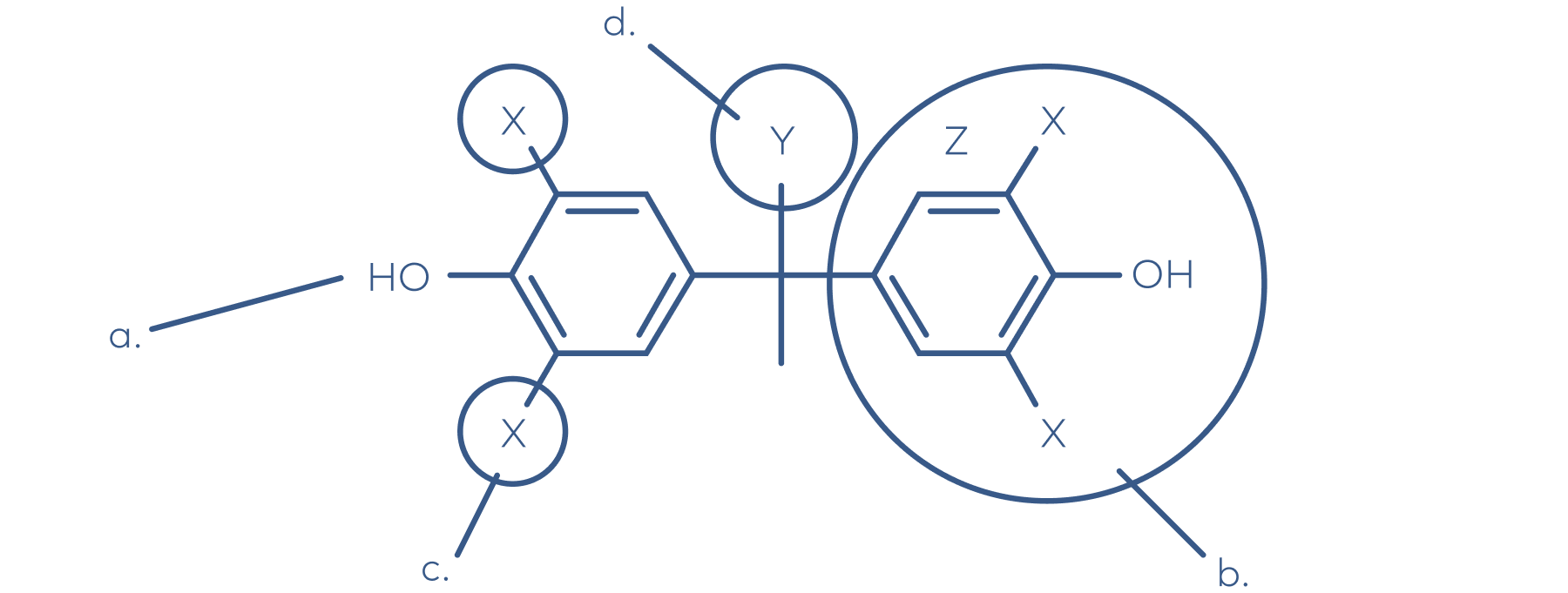
Figure 3 Illustration of structural requirement of bisphenol A and related substances for endocrine activity (adapted from the Restriction proposal (ECHA 2022) with reference to Kitamura et al., 2005).
a.: Essential for estrogenic, antiandrogenic and thyroid hormonal activities. b.: Enhancing for estrogenic and thyroid hormonal activities. c.: Regulating for estrogenic and antiandrogenic activities. Essential for thyroid hormonal activity. d.: Regulating for estrogenic and antiandrogenic activity.
It was further elaborated that:
- Estrogenic activity required an unhindered hydroxyl group in the para- position and could be modulated by the distance between the para hydroxyl groups and the nature of the bisphenol bridge. Also, increasing polarity could reduce estrogenic activity.
- Anti-androgenic activity required an unhindered hydroxyl group in the para- position.Thyroid receptor activation required a hydroxyl group in the para- position and double substitution by a halogen or methyl group at the 3,5- positions of the one phenyl group.
Based on this, the group boundaries were defined as: “Bisphenols, HO-(R1)-R2-(R3)- OH with R1 and R3 being phenylene groups bearing any substituents at any ring position and R2 being a methylene group being unsubstituted or bearing any substituents or another bridging unit bearing unspecified substituents, which are listed in Appendix X and their salt”. Appendix X lists the substances included in the group, i.e. BPA, BPB, BPS, BPF and BPAF, as described above.
Individual hazard assessments of the substances in the group were used to argue for their inclusion.
Step 1 Identified/defined EDs: BPA, BPB, BPS, PBF, BPAF |
↓ |
Step 2 Structural boundaries defined based on step 1 |
↓ |
Step 3 Include addtitional substances identified as ED and within structural boundaries |
Workflow 2 Proposal for restriction of bisphenol A and bisphenols of similar concern for the environment (ECHA 2022)
Comparison with procedures described in the OECD GD 194
Even though no attempt was made to fill data gaps in the proposal for restriction of bisphenols, the approach applied in step 3 of the workflow above could be interpreted as an identification of category members (described in step 1 of the stepwise approach in the OECD GD 194) and was analysed as such in the following, see table 3.
Table 3 Analysis of case 2 (Proposal for restriction of bisphenol A and bisphenols of similar concern for the environment) according to the approach recommended in the OECD GD 194
Step | Approach recommended in the OECD GD 194 | Analysis of case 2 (Proposal for restriction of bisphenol A and bisphenols of similar concern for the environment) |
0 | Check whether the substance is a member of an existing category | Not performed. |
1 | Develop category hypothesis and definition and identify category members | The category formation was based on structural similarity with specified structural molecular alerts for endocrine disruption as shown by Kitamura et al. 2005 and with the structural boundaries of the group being HO-(R1)-R2-)R3)-OH, with R1 and R3 being phenylene groups bearing any substituents at any ring position, and R2 being a methylene group being unsubstituted or bearing any substituents or another bridging unit bearing unspecified substituents, which are listed in Appendix X (i.e. the included bisphenols and salts). The justification of the category included consideration of chemical structure, composition and functional groups with specific structural moieties being linked to specific common mechanisms. Further justification was based on similarity to substances already being identified as endocrine disruptors. This is as such in line with the recommendations in the OECD GD 194. However, adversity of bisphenols comprises a broad variety effects, which could potentially be induced by several different mechanisms and modes of action. Some degree of estrogenicity, anti-androgenicity and thyroid system interference could all be at play. Each of these modalities encompass many different mechanisms of action interlinked in a complex adverse outcome pathway (AOP) network. No attempt was made to link specific molecular moieties to specific mechanisms, modes of action or endpoints of concern. Further, the molecular moieties relevant to each mechanism, mode of action and adverse outcomes could potentially overlap, but such an analysis was also not included in the report and therefore not reflected in the identification of members of the bisphenol group. This is not in line with the OECD GD 194. |
2 | Gather data for each category member | As available from literature or used in regulatory hazard assessment such as SVHC identification or CLH proposals. This is in line with the recommendations in the OECD GD 194. |
3 | Evaluate available data for adequacy | Not performed. |
4 | Construct a matrix of data availability | Not performed. |
5 | Perform a preliminary evaluation of the category and fill data gaps | Not performed. |
6 | Perform and/or propose testing | Not performed. |
7 | Perform a further evaluation of the category | Not performed. |
8 | Document the finalized category and refine the category rationale | Not performed. |
Examination according to the ECHA RAAF
As for the comparison with the draft OECD GD 194, focus of the examination according to the ECHA RAAF was on the rationale for forming the category in step 3 of the workflow, which was evaluated by use of the first two common assessment elements for category approaches, C.1 and C.2, see table 4.
Table 4 Analysis of case 2 (Proposal for restriction of bisphenol A and bisphenols of similar concern for the environment) according to the approach recommended in the ECHA Read-across Assessment Framework (RAAF)
Code | Approach recommended in RAAF | Analysis of case 2 (Proposal for restriction of bisphenol A and bisphenols of similar concern for the environment) |
AE C.1 | Substance characterization Chemical identity and impurity profile of each category member are sufficiently detailed for assessment of the category approach. | This assessment element is judged to be acceptable with high confidence (no reservations). Chemical identity was reported by EC numbers and CAS numbers. Names, synonyms and structures were also reported for all substances. For BPF, which is a multi-constituent substance, all constituents were reported with EC numbers, CAS numbers and structures. Thus, the identity of the substances was well defined, but no impurity profiles were reported, which could be a challenge in subsequent analogue or category approaches. |
AE C.2 | Structural similarity and differences within category Structural similarities among all members are identified and structural differences allowed within the category are described. | This assessment element is judged to be acceptable with high confidence. Bisphenols included in the group in step 3 in the workflow was defined as having to be identified as EDs and structurally within the defined boundaries: HO-(R1)-R2-(R3)-OH with R1 and R3 being phenylene groups bearing any substituents at any ring position and R2 being a methylene group which is unsubstituted or bearing any substituents or another bridging unit bearing unspecified substituents, which are listed in Appendix X (i.e. the included bisphenols and salts). Thus, structural similarities among all members were identified and structural differences al-lowed within the category were described. |
AE C.3 | Link of structural similarities and structural differences with the proposed regular pattern A category hypothesis has been provided and whether it applies to all category members. | Not performed. |
AE C.4 | Consistency of effects in data matrix Construct a data matrix for all category members vs. existing experimental data, arranged in suitable order to reflect trends or progression across the category. | Not performed. |
AE C.5 | Reliability and adequacy of the source study(ies) Study design of source substance(s) fulfills the information requirement and the test material(s) correctly represent source substance(s) in terms of purity and impurities. | Not performed. |
AE C.6 | Bias that influences the prediction Is inclusion of other structurally similar substances in the category possible or would they change the prediction of properties for the target substance(s)? The source substance(s) used for the predictions corresponds to the reliable study(ies) giving rise to the highest concern for the properties under consideration. | Not performed. |
Discussion of the case example: Proposal for restriction of bisphenol A and bisphenols of similar concern for the environment
The proposed restriction covered a group of bisphenols defined by structural boundaries and with the single substances being identified as ED ENV under REACH (SVHC), CLP (category 1), PPPR or BPR in the future. The case example thus focused on identification of category members. Later steps recommended in the OECD GD 194 (step 2-8) and the ECHA RAAF (AS C3-C6), including data gap filling by read-across, were not performed. Even though the objective of the case example was not data gap filling by read-across, the category formation conducted was evaluated in the perspective of potential subsequent data gap filling by read-across in order to extract general learnings.
Advantages
The category formation conducted in this case example was in general compliant with the recommended steps in the OECD GD 194 and the ECHA RAAF.
Challenges
Inclusion in the group of restricted substances required both structural similarity to substances already included as well as regulatory identification of the substance as an endocrine disruptor. The last requirement usually requires substantial substance specific information, and thus limits the number of substances included in the group of bisphenols to data rich substances, already identified as EDs. Further, no attempt was made to analyse the link between the activity of the functional groups of the structural moieties to the effects on specific endpoints of concern and form broader groups of bisphenols based on the endpoints affected, possibly supported by use of (Q)SARs.
Adversity of bisphenols comprise a broad variety of effects, which could potentially be induced by several different mechanisms and modes of action. Some degree of estrogenicity, anti-androgenicity and thyroid system interference could all be at play. Each of these modalities encompasses many different mechanisms of action interlinked in a complex adverse outcome pathway (AOP) network. No attempt was made to link specific molecular moieties to specific mechanisms, modes of action or endpoints of concern. Further, the molecular moieties relevant to each mechanism, mode of action and adverse outcomes could potentially overlap, but such an analysis was also not included in the report.
Uncertainties
The restriction proposal has been withdrawn due to comments received in the public consultation. It is not known whether the scope of the restriction proposal will be revised before it is resubmitted.
Regulatory perspectives
From a regulatory perspective, the proposed restriction sought to open a direct path from ED identification to restriction under REACH. Included in the restriction would be substances regulatorily identified as EDs and within the structural boundaries defined in the proposal. Identification of EDs usually requires substantial substance specific information. However, a way to broaden the approach in future could be to use identified EDs as source substances for data gap filling by read-across to less data rich substances, which thereby could be identified as EDs and be included in the restriction.
Learnings
This case focused on category formation, but with potential subsequent data gap filling by read-across in mind, the following learnings were extracted:
- If possible, specific molecular moieties should be linked to specific mechanisms, modes of action or endpoints of concern. It should further be considered whether the molecular moieties relevant to the different relevant mechanisms, modes of action and adverse outcomes overlap.
- In the bisphenol restriction proposal case it was proposed to restrict the use of a group of structurally similar substances already identified as endocrine disruptors (i.e. information sufficient to conclude on this hazard property is already available). A way to broaden the approach in the future could be to use identified EDs as source substances for data gap filling by read-across to less data rich substances, which thereby could be identified as EDs and be included in such a restriction.
Learnings specific to endocrine disruptors
- Adversity of EDs may comprise effects through several adverse outcome pathways such as estrogenicity, anti-androgenicity and thyroid system interference. When developing sub-groups with a focus on ED properties, it is recommended to consider this aspect. Ideally, the importance of specific structural moieties for different mechanisms and thereby modes of action and adverse effects should be analysed.
Case 3: Comparative study of 20 bisphenols
Purpose of assessment
The document is a peer reviewed publication. It is not presented as a grouping but as a comparative study where different endocrine activities were investigated in vitro for 20 different bisphenols: Estrogenic and anti-estrogenic activity in a reporter gene assay in MCF-7 cells (and for selected substances in vivo in the uterotrophic assay); Androgenic and anti-androgenic activity in a reporter gene assay in NIH3T3 cells and Thyroid disruptive activity in GH3 cells.
Description of methodology applied
Bisphenol A and 19 related substances were tested for estrogenicity, anti- estrogenicity in vitro and in vivo, androgenicity and anti-androgenicity in vitro and thyroid receptor activity in vitro. Based on the results and the structures of the tested substances and review of information from other peer reviewed studies, sub-structures of importance for the different activities were discussed.
Step 1 20 substances included |
↓ |
Step 2 Testing |
↓ |
Step 3 Review of information from other studies |
↓ |
Step 3 Structural elements important for activities |
Workflow 3 Comparative study of 20 bisphenols (Kitamura et al., 2005)
16 of the bisphenols induced estrogenic activity in the MCF-7 reporter gene assay, at varying concentrations.
Based on structural analyses of the substances positive versus negative for estrogenic activity and review of information from other peer reviewed studies, it was concluded that the following substructures influence the estrogenic activity of bisphenols: At least one hydroxyl group in para-position as well as the second phenyl group was found to be essential for estrogenic activity. Further, the bridge between the two phenylene rings was found to modify the estrogenic activity: When the bridge was more hydrophilic in nature than the propane bridge of BPA, the estrogenic activity was higher than for BPA, whereas it was lower when the bridge was more hydrophobic in nature.
Estrogenic activity was also investigated in vivo (in the uterotrophic assay) for some selected substances (TCBPA, TBBPA and BPA). All three substances induced uterotrophic effects in vivo with BPA being most effective, followed by TBBPA and TCBPA.
Two of the bisphenols induced anti-estrogenic activity in the MCF-7 reporter gene assay.
None of the bisphenols induced androgenic activity.
Fourteen of the bisphenols induced anti-androgenic activity in NIH3T3 assay.
Based on structural analyses of the substances positive versus negative for anti- androgen activity and review of information from other peer reviewed studies, it was concluded that the following substructures influence anti-androgenic activity of bisphenols: At least one 4-hydroxyl group was found to be essential for anti-androgenic activity. However, the second phenyl group was not. Further, 3,5-substituents were found to modify the activity, but not in the same direction; As TMBPA with methyl groups at the 3,5-positions had higher anti-androgenic activity than BPA, TCBPA and TBBPA with chloro- and bromine- groups, respectively, had no significant activity in this assay.
Three of the bisphenols (TMBPA, TCBPA, TBBPA) induced thyroid hormone dependent production of growth hormone in GH3 cells. All three have 3,5- substituents. It was concluded that a 4-hydroxyl group was essential for this activity, but that the bulky 3,5-group also play an important role in this activity.
Comparison with procedures described in the OECD GD 194
Even though no attempt was made to fill data gaps in this publication on bisphenols, the applied approach could be interpreted as a study to investigate structural features of importance for sub-categorization for different ED-related endpoints. The study therefore does not fit well into the OECD GD 194 for grouping, but relevant information is included for comparison where it fits best because the information is used in the other bisphenol grouping cases, see table 5.
Table 5 Analysis of case 3 (Comparative study of 20 bisphenols) according to the approach recommended in the OECD GD 194.
Step | Stepwise approach recommended in the OECD GD 194. | Analysis of case 3 (Comparative study of 20 bisphenols) |
0 | Check whether the substance is a member of an existing category | Not performed. |
1 | Develop category hypothesis and definition and identify category members | Structural boundaries for subcategories of bisphenols were defined based on testing of 20 bisphenols in vitro for (anti-)estrogenicity (also a few substances in vivo), (anti-)androgenicity and (anti-)thyroid receptor activity as well as review of information from other peer reviewed studies. In the first step, no reason was given for selecting the 20 specific bisphenols tested in the study (or exclusion of other bisphenols), which is not in line with the recommendations in the OECD GD 194. In the second step, chemical structure and functional groups were linked to specific common endocrine activities. This is in line with the recommendations in the OECD GD 194. |
2 | Check whether the substance is a member of an existing category | Not performed. |
3 | Evaluate available data for adequacy | Not performed. |
4 | Construct a matrix of data availability | Not performed. |
5 | Perform a preliminary evaluation of the category and fill data gaps | Not performed. |
6 | Perform and/or propose testing | Not performed. |
7 | Perform a further evaluation of the category | Not performed. |
8 | Document the finalized category and refine the category rationale | Not performed. |
Examination according to the ECHA RAAF
As for the comparison with the OECD GD 194, the study does not fit well into the ECHA RAAF, but relevant information is included for comparison where it fits best because the information is used in the other bisphenol grouping cases, see table 6.
Table 6 Analysis of case 3 (Comparative study of 20 bisphenols) according to the approach recommended in the ECHA Read-across Assessment Framework (RAAF)
Code | Approach recommended in the ECHA RAAF | Analysis of case 3 (Comparative study of 20 bisphenols) |
AE C.1 | Substance characterization Chemical identity and impurity profile of each category member are sufficiently detailed for assessment of the category approach. | This assessment element is judged to be acceptable with minor reservations. Chemical identity was reported by name, abbreviation and structure. No impurity profile or CAS RN was reported for any of the included substances. |
AE C.2 | Structural similarity and differences within category Structural similarities among all members are identified and structural differences allowed within the category are described. | If this had been a grouping exercise and not a comparative study, this assessment element would have been judged to be not acceptable in its current form for the first step, where 20 bisphenol A derivatives were included in the study without justification (see workflow 3 above). Apart from the substances being referred to as “bisphenol A and related compounds”, no reason for the initial selection of these 20 bisphenols was reported, and no detailed analysis in terms of structural similarity or differences within this group of substances was reported. This is not in line with the RAAF and leads to an uncertainty about whether other bisphenols could have been included. For the second step in the workflow (see workflow 3 above): If this had been a grouping exercise and not a comparative study, this assessment element would have been judged to be not acceptable in its current form based on test results and review of existing literature, substructures important for the (anti-)estrogenic, (anti-)androgenic and thyroid activities were discussed. For each subcategory, the structural boundaries were discussed, but neither the exact structural similarities required, nor the structural differences allowed within the subcategories were clearly identified. |
AE C.3 | Link of structural similarities and structural differences with the proposed regular pattern A category hypothesis has been provided and whether it applies to all category members. | Not performed. |
AE C.4 | Consistency of effects in data matrix Construct a data matrix for all category members vs. existing experimental data, arranged in suitable order to reflect trends or progression across the category. | Not performed. |
AE C.5 | Reliability and adequacy of the source study(ies) Study design of source substance(s) fulfills the information requirement and the test material(s) correctly represent source substance(s) in terms of purity and impurities. | Not performed. |
AE C.6 | Bias that influence the prediction
| Not performed. |
Discussion of the case example: Comparative study of 20 bisphenols
The comparative study of BPA and 19 related substances sought to define substructures of bisphenols relevant to endocrine ((anti-)estrogenic, (anti-)androgenic and (anti-)thyroid) activity based on in vitro (and for (anti-)estrogenicity also in vivo) findings. This can be interpreted as a category formation exercise and was analysed as such. Data gap filling by read-across was not performed and not part of the scope of this study. Even though the objective of the case example was not data gap filling by read-across, the category formation conducted was evaluated in the perspective of potential subsequent data gap filling by read-across in order to extract general learnings.
Advantages
Comparative studies like this are valuable for mechanistic understanding connected to molecular moieties of the chemical structures. They can be combined with e.g. docking simulations and (Q)SAR predictions for deeper understanding of the results.
Establishing links between specific molecular moieties and interaction with the estrogen, androgen and thyroid receptor could pave the way for formation of sub- categories of bisphenols with these mechanisms of action. In the future, this approach could be broadened to other sub-categories of bisphenols with other mechanisms of action relevant to endocrine disruption.
Challenges
It is acknowledged that this was a comparative study and not a grouping exercise. However, if the conducted category formation is considered to potentially be used for subsequent data gap filling by read-across, it would have been valuable to adhere to some of the recommended steps in the ECHA RAAF and/or the OECD GD 194.
The initial selection of substances for inclusion seemed arbitrary and was not well- argued, as no reason was given for selecting the 20 specific bisphenols tested in the study and excluding other bisphenols. This led to a non-exhaustive group of bisphenols.
The identity of the substances was generally well defined, but no impurity profiles were reported, which could challenge potential conductance of subsequent data gap filling by read-across.
Structural boundaries were discussed, but neither the exact structural similarities required, nor the structural differences allowed within the subcategories were clearly identified in the study.
Further, the formation of sub-categories was based on endocrine activity, mainly in vitro. A few substances were tested both in vitro and in vivo for estrogenicity and considerations about ADME (Administration, Distribution, Metabolism and Excretion) of the substances for extrapolation between in vitro and in vivo was discussed and highlighted as important. The sub-categorization suggested in the publication is therefore mainly relevant when considering endocrine activity in vitro, whereas extrapolation to the in vivo situation requires inclusion of ADME properties of the individual substances.
Uncertainties
It is noted that the structural elements used as a basis for this grouping approach were connected to receptor activation (estrogen receptor, androgen receptor and thyroid receptor) only. This narrow focus on receptor interaction may lead to the exclusion of relevant substances with ED properties. Since EDs may act through many other mechanisms and modes of action, it may be valuable in the future to consider also other mechanisms of action possibly connected to other molecular moieties of importance for grouping. For example, for EAS-modalities, molecular moieties related to effects on steroid synthesis may be of relevance, and for thyroid activity, molecular moieties related to e.g. TPO (thyroid peroxidase) inhibition, interaction with NIS (Sodium/Iodide symporter), DIOs (Iodothyronine deiodinases) and transporters could be considered in addition to thyroid receptor activation.
The robustness of the conclusions on the role of the molecular moieties are not evident since the total number of substances included in the analysis of what is decisive for the observed estrogenic, anti-androgenic and thyroid activity is not reported clearly. References are also given to other studies with similar findings. It also not clearly reported whether docking studies are considered, or the conclusions are based on statistics or merely several studies pointing in the same direction. As an example, at least one hydroxyl group in para-position as well as the second phenyl group was found to be essential for estrogenic activity. However, all the bisphenols have a second phenyl group and only 1 bisphenol in the comparative study has only one ring (IPP), so within the publication itself there are not a lot of substances to base this conclusion on. It is possible that QSARs could be applied to confirm, reject or revise the conclusions on the role of molecular moieties.
It is mentioned that increasing polarity could reduce estrogenic activity. Further, both TCBPA, TBBPA and BPA, induced uterotrophic effects in vivo with BPA being most potent, followed by TBBPA and TCBPA. This could indicate that Br and Cl substituents may reduce estrogenic activity. This, however, would have to be assessed further and is not discussed in the publication.
Regulatory perspectives
The findings of the comparative study have been used to define the scope of the restriction proposal for bisphenols. Using comparative studies as the basis for understanding how specific molecular moieties contribute to the specific observed mechanistic effects of bisphenols could potentially be expanded to other chemical groups.
Comparative studies like this are valuable and could provide the foundation for the development of regulatory relevant (sub)groups of EDs, including bisphenols. (Q)SAR predictions and docking studies could be used to substantiate the hypothesis that specific molecular moieties are linked to specific mechanisms or modes of action. Adding ADME and other relevant toxicological information in a data matrix (including data rich source substances and less data rich target substances) could aid subsequent data gap filling by read-across, as recommended in the OECD GD 194 and the ECHA RAAF.
Learnings
This case focused on category formation, but with potential subsequent data gap filling by read-across in mind, the following learnings were extracted:
- Lack of impurity profiles and identifiers as CAS numbers may be a challenge for potential subsequent data gap filling by read-across.
- Care should be taken in the initial selection of substances for inclusion, so that this is done as broad as possible and with well-argued inclusion and exclusion criteria.
- Considering ADME (Administration, Distribution, Metabolism and Excretion) of the individual substances is important to consider when extrapolating from in vitro to in vivo.
Learnings specific to endocrine disruptors
- Comparative studies are valuable and could provide the foundation for development of (sub)groups of EDs, including bisphenols. (Q)SAR predictions and docking studies could be used to substantiate the hypothesis that specific molecular moieties are linked to specific mechanisms or modes of action.
- When developing sub-groups with focus on ED properties, it is recommended to consider that different molecular moieties may be relevant to different mechanisms and thereby modes of action and adverse effects. Some overlap may occur, but this should ideally be analysed and described. The complexity increases when considering that some substances act through more than one mechanism and mode of action (i.e. some degree of e.g. estrogenicity, anti-androgenicity and thyroid system interference could all be at play at the same time). Special care is therefore recommended in (sub-) grouping of endocrine disruptors, taking this complexity into consideration.