Preface
During the Finnish presidency in 2021, a three-year project, Achieving the World’s Smoothest Cross-Border Mobility and Daily Life Through Digitalisation was launched to promote the mobility of data. Focusing on the data exchange between authority organisations, the project aimed to make the needs of people’s everyday lives the centre of attention. Focusing on data exchange across borders, co-operation in different sectors and between different authority organisations was built into the project structure.
The project produced a Baseline study of Cross-Border Data Exchange in the Nordic and Baltic countries in 2021, and later on a Handbook of Cross-Border Data exchange. In both of these publications, the use of health services in other Nordic or Baltic countries was raised as a topic to look into. Within this framework, the Finnish Institute for Health and Welfare in cooperation with the Norwegian Directorate of e-Health conducted a report on the status of maternity card development in the Nordic and Baltic countries. The aim of this report is to share knowledge between the Nordic and Baltic countries on the stages of development, each country’s aims and the content of digital maternity cards.
As stated in the Handbook of Cross-Border Data Exchange Within the Nordic and Baltic Countries (TemaNord 2023:542), we would like to highlight one of the key results of the publication:
From an equality standpoint, it is essential to ensure that the different user groups are accounted for and that they can access the kind of health data that is necessary for them. Gender equality is generated where ordinary decisions are made, resources are allocated, and norms are created.
In the case of developing cross-border health data exchange, the development of an electronic maternity card at the national level would enable and promote the mobility of women and families. Well-functioning national information systems are the starting point and foundations for further development as well as international co-operation. To ensure interoperability, the project has from its part aimed to share knowledge to overcome barriers in developing cross-border data exchange, and support actors in need of information to act on these barriers. Following the “Cross-border by default” principle, the international co-operation on online public services benefits from the dialogue between the developers of national infrastructures.
The current state of this report would not have been possible without the cooperation between the Nordic countries and the preliminary survey in 2022 on the Nordic countries done by the Norwegian Directorate of e-Health on the possibilities of developing the digital maternity card. Broadening the context to cover the status of Baltic countries, we hope that this study will act as a good starting point and inspiration in the Nordic-Baltic dialogue on digital maternity cards.
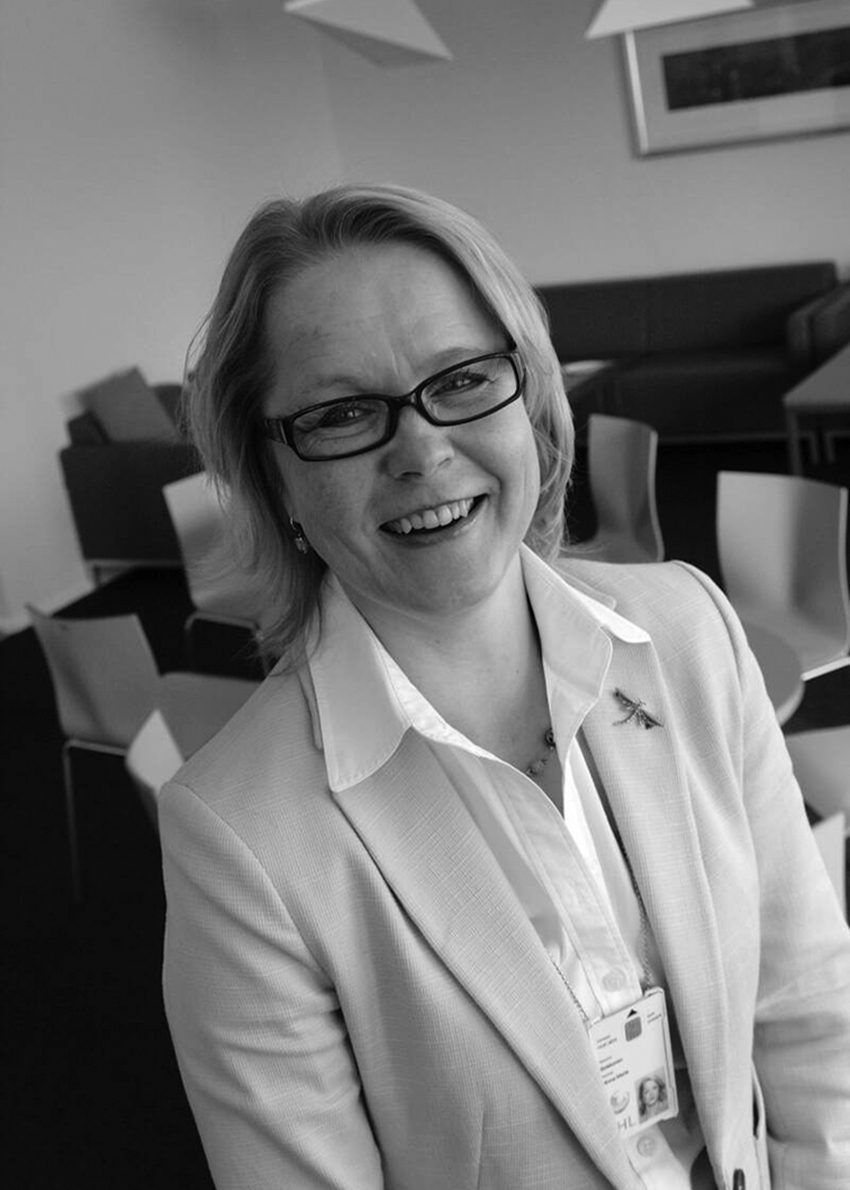
Minna-Maria Sinkkonen, development manager, International Affairs, Finnish Institute for Health and Welfare

Reija Klemetti, Research Manager, Unit for Knowledge Management and Co-Creation, Finnish Institute for Health and Welfare

Minna Maria Hernandez, Senior advisor, Norwegian Directorate of Health