Introduction
The cultural policies of the Nordic countries have long been characterised by a similar approach to the funding of culture, and from an international perspective, the Nordic countries are mainly considered to belong to the so-called “architect model”. In this model, public funding for culture is regarded as central. Public funding is viewed as particularly important for ensuring good working conditions in the cultural sector, as well as for promoting artistic autonomy, cultural diversity, and opportunities for all residents to participate in cultural life — together forming the core values of cultural policies in the Nordic countries (see Hillman Chartrand & McCaughey, 1989; Mangset, 2010).
However, today there is also a political trend in the Nordic region towards placing greater emphasis on increasing private funding for culture. Over the past 15–20 years in particular, several countries have implemented specific measures to encourage such funding, even in activities that receive public support. Examples of such measures include the introduction of tax deductions for donations to cultural activities, the introduction of matching systems, investments in developing new funding models, and increasing demands and expectations for cultural organisations to increase their earned income and obtain support from private actors (see, e.g., Det kongelege kultur- og kyrkjedepartement, 2003; Kulturministeriet, 2000, 2004, 2006a, 2006b; Ministry of Education, 2009; prop. 2009/10:3). At the same time, there has been growing discussion about how private funding can best be increased, as well as about the potential implications of a shift towards increased private cultural funding for cultural life and the objectives that characterise the cultural policies of the Nordic countries (see, e.g., Baeré & Elmelund, 2019; Jungerfelt, 2024; Liljestrand, 2024; Ljøgodt, 2015; Redder, 2011).
This literature review focuses on private cultural funding in the cultural areas that are prioritised in public cultural policy in the Nordic region. There is a particular focus on museums and performing arts organisations, but other cultural areas are also addressed in the report. Private cultural funding refers to funding that does not originate from public appropriations, grants, or subsidies. It thus includes private actors’ contributions in the form of grants, subsidies, and sponsorship, as well as various types of earned income, such as admission fees, ancillary revenue, commissions, and rentals (see Figure 1). The literature review describes how the Nordic countries’ approaches to cultural funding have evolved over time and how the countries’ current cultural policies are designed in relation to the issue of private funding. The review also presents statistics on the prevalence of private cultural funding in the countries. Based on academic research and grey literature, it then describes the consequences that an increased focus on private cultural funding has, and may have, for the cultural sector as a whole.
The literature review is hence based on four research questions:
- How have the cultural policies of the Nordic countries historically developed in relation to cultural funding and the division of responsibility between the public and private sectors?
- How do the contemporary cultural policies of the Nordic countries address the issue of private cultural funding, particularly with regard to specific measures?
- To what extent does private cultural funding exist in the Nordic countries?
- What kinds of consequences for the cultural sector are associated with an increased focus on private cultural funding in the Nordic countries?
The questions are answered at an overall Nordic level, but the report also describes and discusses similarities and differences between the Nordic countries.
Methods, limitations and key concepts
The literature review is based on three different studies.
- A study of the Nordic countries' policy approach to private cultural funding based on cultural policy research and public policy documents in the Nordic countries.
- A study of the prevalence of private cultural funding in the Nordic countries. The study is based on available statistics on private sources of funding in the cultural sector. The statistics are presented at an aggregate level in the countries, but also within two specific cultural areas.
- A study of the possible consequences of an increased focus on private cultural funding in the Nordic countries. The study is mainly based on previous research, public inquiries and other grey literature.
Study of the Nordic countries' cultural policy approaches
This study focuses on question 1 and 2 and is mainly based on cultural policy research and cultural policy documents concerned with both the historical and contemporary development of cultural policy in the Nordic countries. The historical account is at a general level and takes as its starting point the emergence of different types of cultural institutions in the Nordic countries. A central part of this section has been to describe how cultural policy has historically approached the balance between public and private funding in the cultural sphere. The description of the countries' contemporary approach to private cultural funding includes, above all, a description of measures that have been, or are being, implemented with the aim of encouraging increased private cultural funding.
Survey of the prevalence of private cultural funding
This study focuses on question 3 and is based on available statistics on private cultural funding in the Nordic countries. The study has focused on compiling aggregate statistics of different private funding sources and then providing examples from the museum and performing arts sectors in the Nordic countries.
The study is based on available statistics for the different countries and does not include additional data collection by Kulturanalys Norden. Data from different statistical authorities in the countries is used, as well as statistics published by various trade association. Time series are often lacking and have in several cases been compiled by Kulturanalys Norden based on annual reports from authorities and trade associations. The availability of statistics and the possibility of making comparisons between the Nordic countries are discussed in relation to the presentation of the statistics. There are variations between countries in collection methods and populations, which means that comparisons should be made with caution.
Investigation of possible consequences
This study focuses on question 4 and highlights research on the effects that measures have cultural funding, and above all the consequences that an increased focus on private cultural funding can have for the cultural sector as a whole. The study is based on academic research and public inquiries on private cultural funding in the Nordic countries but also takes research from a broader international perspective into account. In terms of academic research, journals on cultural policy
These journals are the International Journal of Cultural Policy, 2) Journal of Cultural Economics, 3) Nordisk Kulturpolitisk Tidskrift, 4) Cultural Trends, and 5) Journal of Arts, Managements, Law and Society.
Key limitations and concepts
In addition to the empirical focus described above, there is reason to clarify some of the delimitations made for the literature review and how the key concepts of the literature review are used and defined.
Focus on cultural policy-prioritised culture, activities, museums and the performing arts
A study of private cultural funding potentially covers a wide variety of cultural areas and activities. However, this literature review focuses on the art and cultural areas prioritised by the cultural policy and public support systems of the Nordic countries. This focus stems from Kulturanalys Norden’s general mandate and the increased political focus on private funding of those arts and culture sectors that receive public funding. The literature review is also characterised by a particular focus on the museum sector and the performing arts, although other cultural areas are also included in various parts of the report. Furthermore, the report focuses on activities rather than individual artists. These limitations mean that, among other things, copyright remuneration and private investments for commercial purposes are described and discussed to a lesser extent.
The concepts of public and private cultural funding
Two key concepts in the report are public and private cultural funding. In the report, public cultural funding refers to expenditures made by the state, regions and municipalities in the field of cultural policy in the Nordic countries. Particular focus is placed on public expenditure in the form of operating costs, grants, subsidies, and support for cultural activities. Public funding also includes funding originating from the EU and the Nordic cooperation. Private funding refers to funding for cultural activities that comes mainly from non-public sources. This funding can be divided into two categories: firstly, various types of private contributions, and secondly, various types of earned income. The former includes support from private foundations and funds, sponsorship, donations, and crowdfunding, while the latter includes income from admission fees, sales, commissioned work, rental of premises and various types of ancillary activities (see Figure 1).
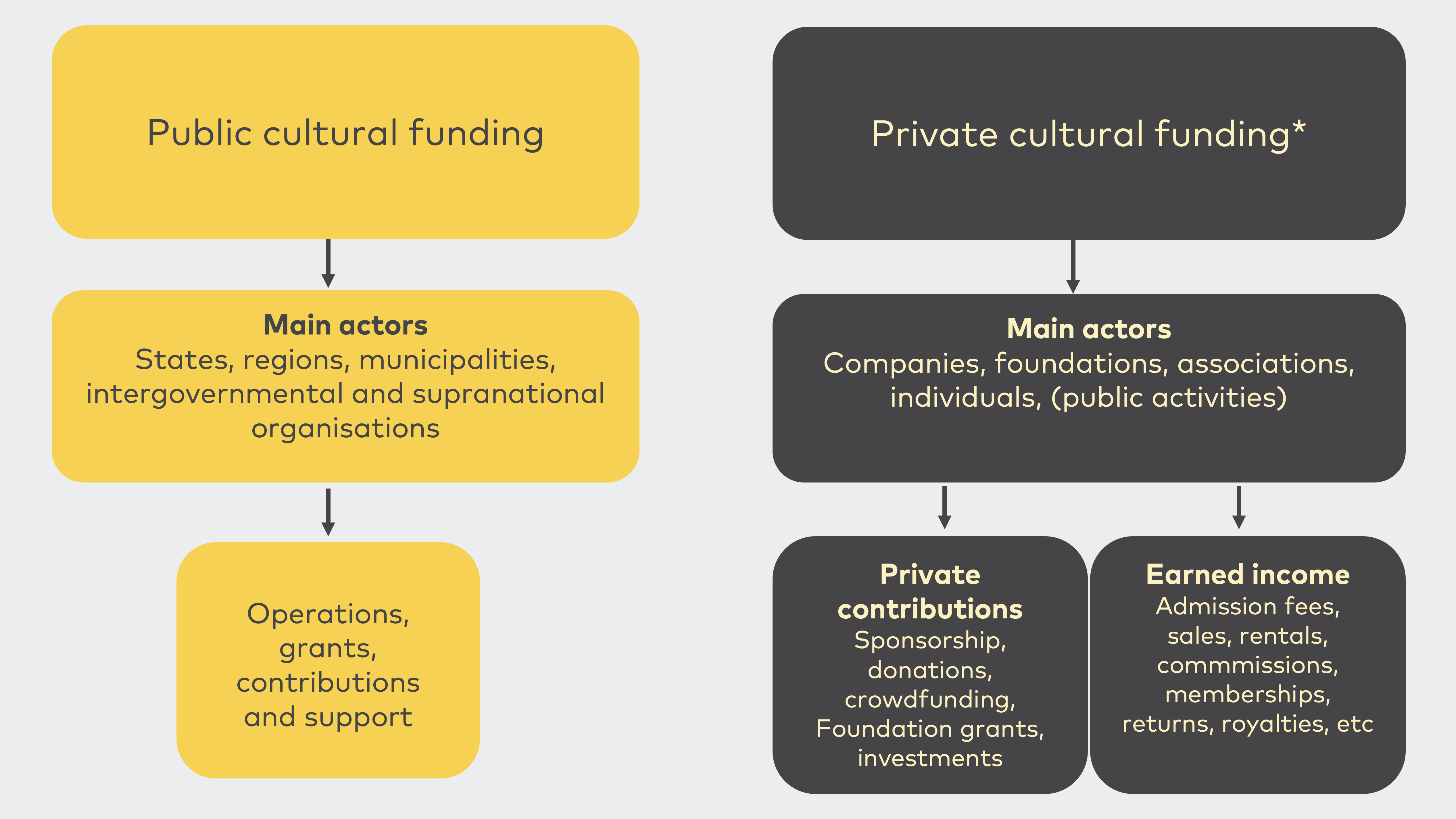
Figure 1. Different types of funding in the cultural sector
* The policy documents, research literature and statistics on which the report is based also use the term self-financing. When this term is used in the report, it is synonymous with the term private cultural funding.
One problem, partly visible in Figure 1, is the difficulty to, in some cases, distinguish between public and private funding. For example, funding for cultural activities from contract work, sales and rentals also includes funds from public actors. This also applies to incomes from sponsorship when the sponsoring company is wholly or partly publicly owned. When the concepts of public and private funding are operationalised, the main distinction is therefore between public grants, subsidies and support, on the one hand, and other funding on the other.
Varying access to data for the Nordic countries
Finally, it is important to note that access to data varies between countries. The main difference is between Denmark, Finland, Norway and Sweden, where access to data is generally good, and Iceland and the autonomous countries, where there is a significant lack of data relevant for the literature review. The difference concerns access to policy documents, reports, research articles and statistics on private cultural funding. This difference in availability of material characterises the presentation in its various parts.
Structure of the report
The report is divided into six chapters. The introduction is followed by Chapter 2, which describes how the Nordic countries' approach to private and public cultural funding has developed historically and how this has affected the funding structure of the cultural sector. Chapter 3 describes the Nordic countries' contemporary approach to private cultural funding based on concrete examples of measures that the countries have implemented. This chapter also includes a section on how the impact these measures have on funding is assessed in research and evaluations. The following Chapter 4 describes and discusses the prevalence of private cultural funding in the Nordic countries. Chapter 5 then describes the possible consequences the increased focus on private cultural funding has for the cultural sector. The final chapter, Chapter 6, then presents and discusses the conclusions of the literature review.