Waste prevention aims at transforming today’s waste challenges into tomorrow’s circular economy
The Vision 2030 of the Nordic governments aims at turning the Nordic region into the most sustainable and integrated region in the world. Global climate and biodiversity challenges call for more effective measures and the circular economy provides tools for turning today’s waste problem into a more sustainable future.
The waste hierarchy, which EU and Nordic waste policies build on, emphasizes waste prevention and reuse as top priorities. Waste prevention means reducing quantities of waste but also minimizing the negative impacts of waste on the environment and reducing the content of harmful substances in materials and products.
Current Nordic waste policies and practices still emphasize recycling more than waste prevention. While recycling plays an important role in the circular economy, it should not be seen as the main solution: as part of the collection, sorting, and recycling chain, the quality of materials often deteriorates. Recycling processes and logistics also require substantial amounts of energy, offsetting some of the benefits gained from using recycled materials.
Contrary to recycling, waste prevention and reuse measures primarily focus on the production and consumption phases, seeking to transform their dynamics. By extending the lifespan of products and materials through reuse, repair, refurbishment, upgrading, and different kinds of new ownership models, waste prevention aims to reduce the overall need for raw materials (Figure 1). Achieving this transformation requires behavioral change and strong societal commitment.
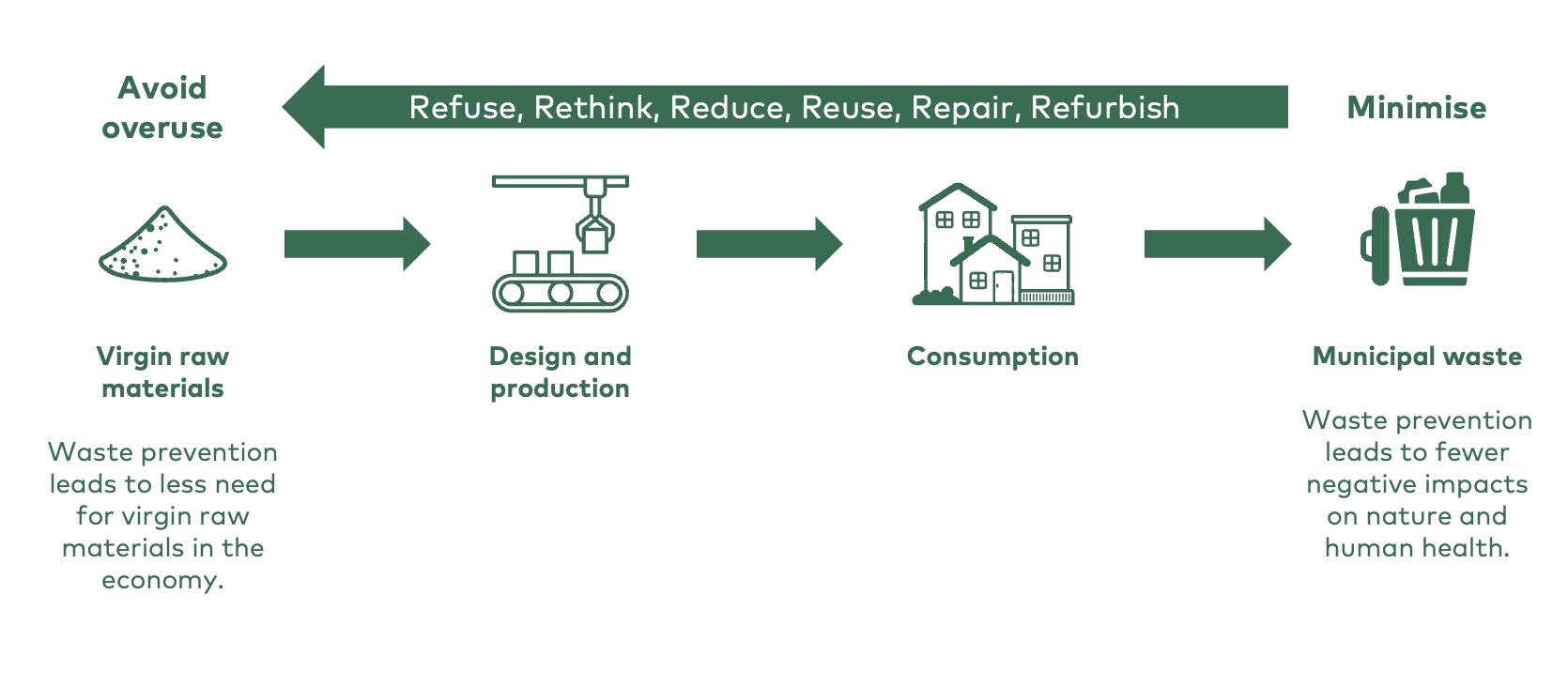
Figure 1. Effective waste prevention requires a shift from recycling-focused policies to covering the full product lifecycles.