
The structure of Work Package 4: Emission-Free Construction Sites


TASK 1
Nordic Declaration on Emission-Free Construction Sites
Task 2
Definitions, Boundaries and Terminology
Task 3
Newsletter
Task 4
Research and Innovation
Task 5
Guidelines for Emission-Free Construction Sites
Task 6
Standards, rules and regulations that can be hindering and other barriers
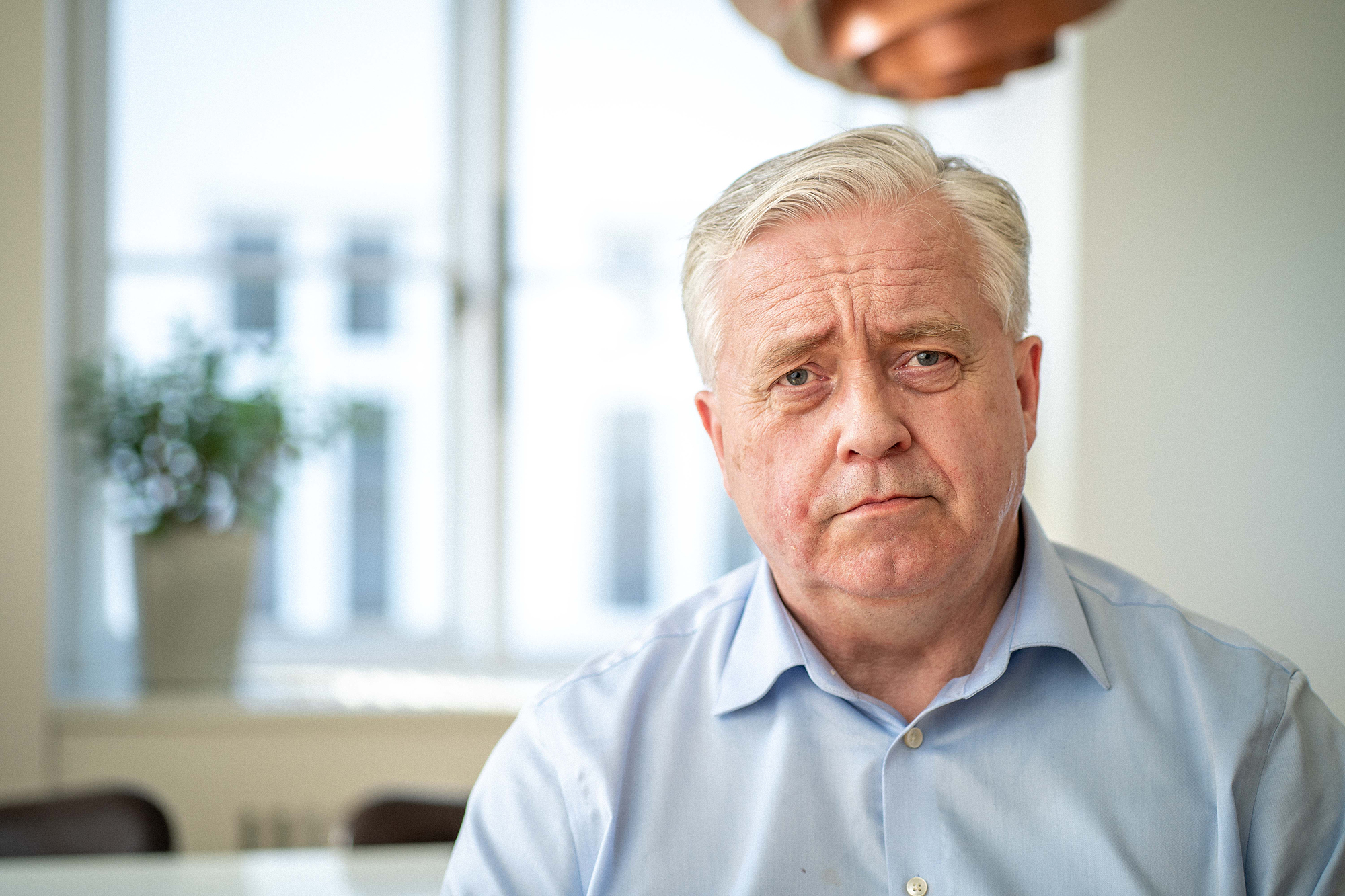
Decarbonisation of the construction site is now on the agenda along with building materials and operational emissions. We have gathered knowledge and insights from the Nordic construction industry and formed a framework for further work in this area. It is interesting that tackling construction site emissions is more than switching to electric excavators, it also involves the subjects from all the other work packages in the project.Björn Karlsson, Senior Advisor from Ministry of Infrastructure Iceland and Leader of Work Package 4
Strengthened Focus on Emission-Free Construction Sites
What are emission-free construction sites? An obvious area to focus on when trying to decrease carbon emissions in the construction phase is the machinery – going from diesel-driven to electric construction machines. However, it became clear that more areas should focus on achieving the goal of an emission-free construction site: barriers also exist within effective processes, waste management, energy use, and procurement.
Practical Insights from Field Excursions
One of the key activities at the beginning of the process was a field excursion, which gave significant insights and practical results. This hands-on experience allowed the work package to identify and elaborate on the necessary means to achieve emission-free construction sites. The excursion highlighted the importance of integrating various sustainable practices and technologies to reduce emissions comprehensively. From the site visit, it became evident that comparing different approaches is essential to determining the best strategies for minimising emissions. Additionally, the importance of documenting these reductions was underscored, as proper record-keeping ensures transparency and facilitates progress tracking.
The visit also showcased innovative possibilities for reusing entire buildings to reduce environmental impact. Instead of demolishing an old structure, a higher building was added to the existing one, demonstrating how adaptive reuse can minimise material waste and emissions. This visit provided a solid foundation for the projects that followed, equipping the team with practical insights and strategies for advancing emission-free construction practices.
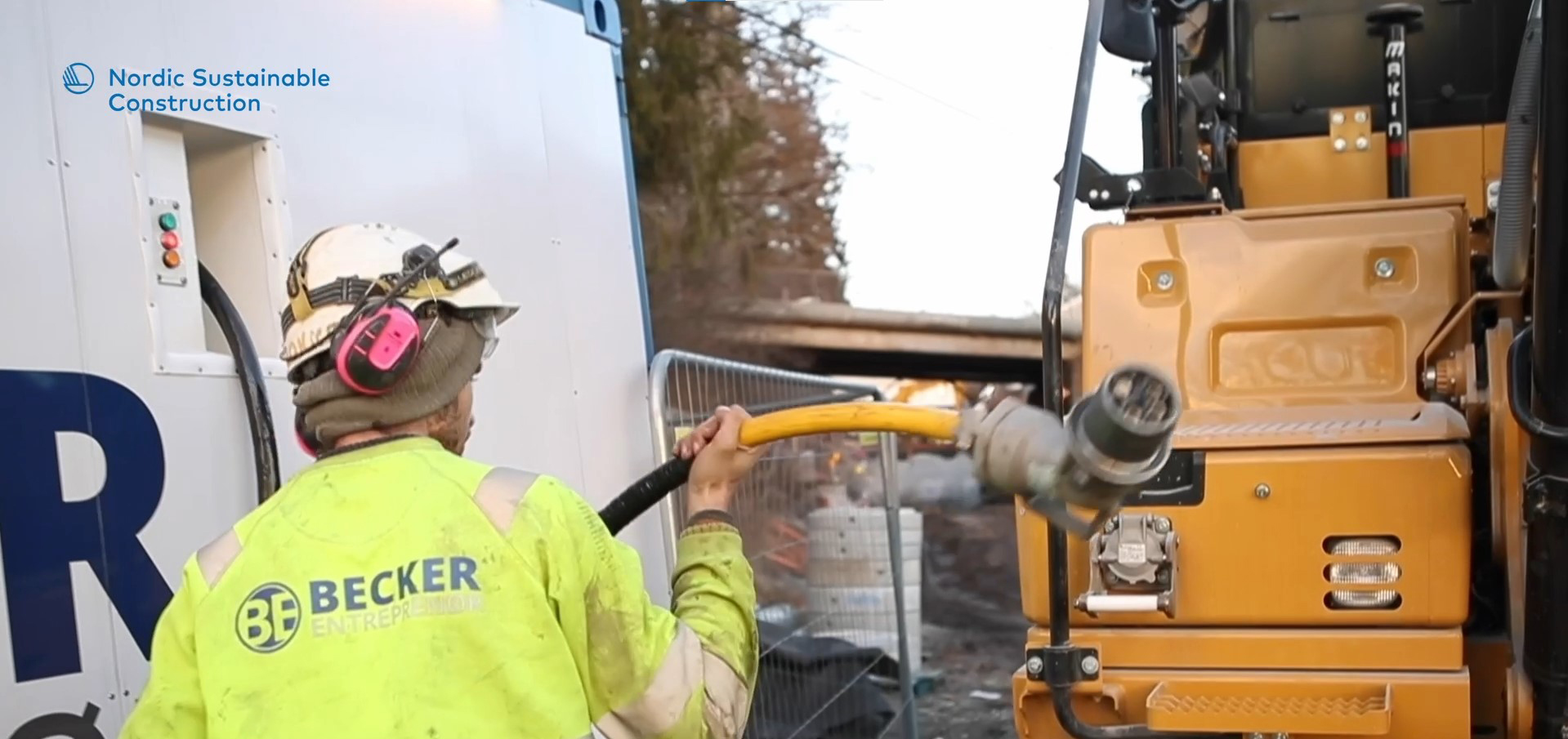
Photo: Klimaetaten, Oslo Kommune, screenshot from video, Norway 2023
Creating a Common Understanding and Framework
To continue the work, it was important to get a common understanding of what an emission-free construction site is. The report “Emission-free Construction Sites: Definitions, Boundaries, and Terminology” provides a unified framework for understanding what constitutes an emission-free construction site. It addresses the definitions of construction sites and their boundaries, the problems associated with emissions, waste, and pollution, and practical implementations for energy use and procurement. This report has been useful in standardising terminology and setting clear boundaries, which is crucial for consistent application across Nordic countries when including the A4 and A5 modules of the LCA calculation.
A common idea behind emission-free construction sites was to eliminate the use of fossil fuels and promote emission-free technologies, such as electric machinery. To align with common LCA practices, the scope was expanded to include aspects such as transportation and construction waste. Additionally, the report discusses the differences between fossil-free, emission-free, and waste-free construction sites, helping to clarify these concepts.
Equipment and activities | Sources of emissions | ||
A4 | Transportation | Vehicles | Fossil fuels Renewable energy |
A5.E | Energy | Construction machinery Vehicles on site Power generation | Fossil fuels Renewable energy |
Heating and drying Lighting and appliances Electric tools and machines | Fossil fuels Renewable energy District heating | ||
A5.W | Waste | Production of waste materials Transport of waste materials Recycling Landfill | Raw materials and production Fossil fuels Renewable energy Waste processing Landfill emissions |
Table: Categories of emissions from the construction site
Identifying Gaps in Existing Knowledge
To continue the journey towards greener construction sites, Work Package 4 was to identify areas where there is insufficient research or understanding of emission-free construction sites in the Nordics. The report “Emission-free Construction Sites: Knowledge Gaps and Research Needs” does this, highlighting the urgent need for extensive research, testing, and pilot projects to address greenhouse gas emissions in construction. It identifies key areas where data is lacking, such as transport-related emissions and waste, and proposes methods to enhance data collection. The report also emphasises the importance of harmonising Life Cycle Assessment (LCA) methodologies across the Nordic countries and optimising energy efficiency in construction processes.
The impact of the two reports has been significant in creating a common understanding, as they have not only provided a clearer picture of the current challenges but also laid out a roadmap for future research and innovation. By addressing what we already know as well as the knowledge gaps, the reports have paved the way for more informed decision-making and have fostered greater collaboration among stakeholders in the construction industry.
For the guidelines report, estimated emissions values for stages A4 and A5 have been collected from the Nordic countries. These figures are intended to reflect current emission levels and are expected to evolve as more accurate data becomes available. While it is insightful to see these values compiled, it is important to note that the underlying activities vary across cases. The activities included within the system boundaries differ, and the definitions of areas and units are not standardised. Harmonising standards and methods for estimating and regulating emissions is an important goal. Emissions from energy use are typically included, as this is a well-understood factor. However, emerging research shows that waste is just as important when considering construction emissions.
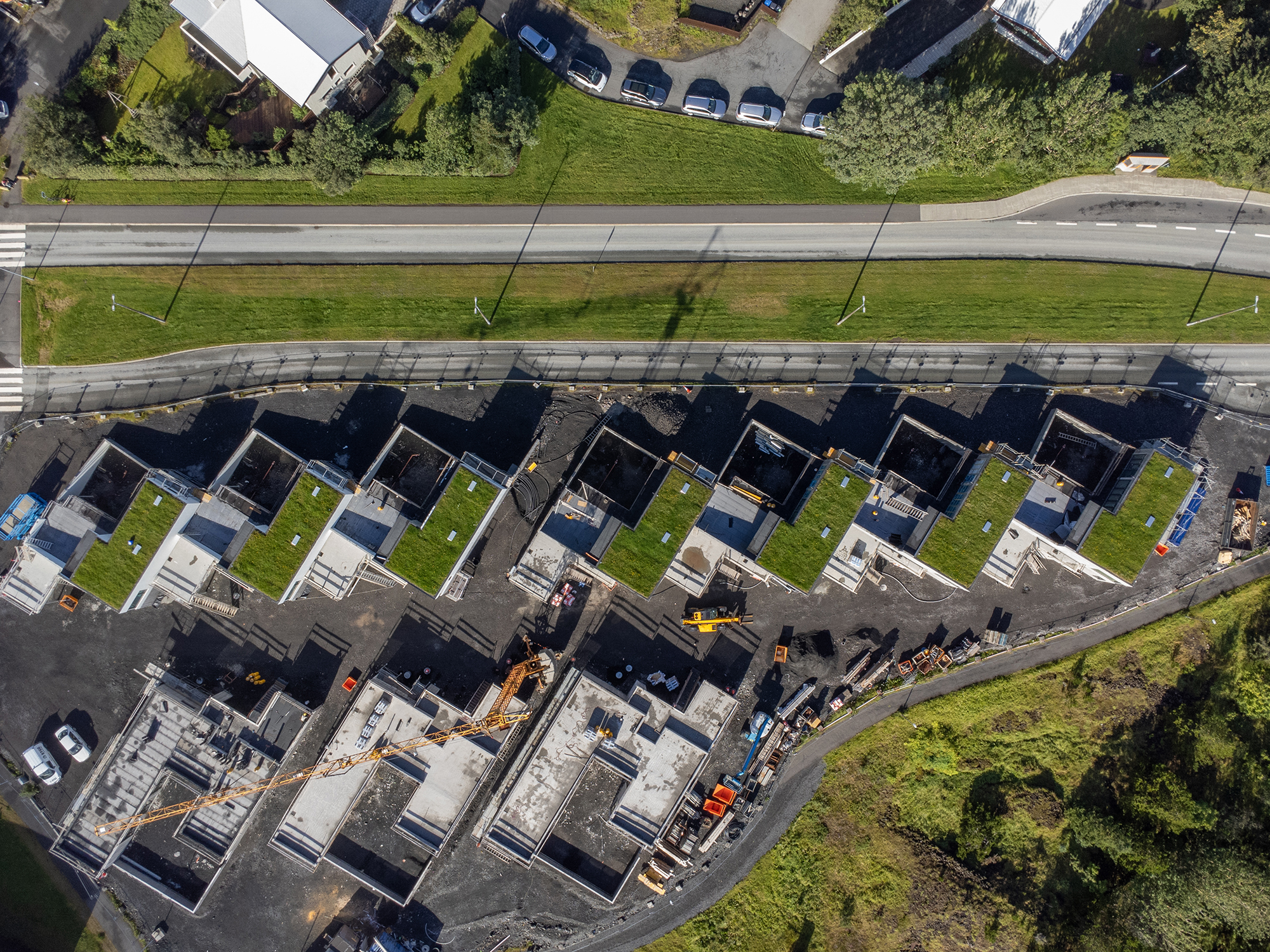
Photo: Róbert Magnússon, Hjallabraut 49, Hfj. Construction site, Iceland, summer 2024
Finland: Generic values for LCAs
‘Emissions database for construction’, Emissions database for construction. Accessed: Jun. 30, 2024. [Online]. Available: https://co2data.fi/rakentaminen/#en
Table: Estimated emissions values for A4 and A5 in the Nordic countries. From the report Guidelines to Emission-Free Construction Sites: Recommended data to collect from the construction phase.
LCA module | Activity | What to consider | Values | How to measure | Stakeholders |
A4 | Transportation | Transport of materials, products, and equipment to the construction site from: -Manufacturer -Storage/warehouse -Retailer | -Distance -Energy source | -Verification (of energy source) -Travel logs | Suppliers Material, product, and equipment hauliers |
A5.E | Energy use | Emissions from: machinery | Type of machinery Energy source Amount | Verification (of energy source and worked hours) | Suppliers Subcontractors |
Heating and cooling: -district heating -power station sources (for temporary works or other processes) | Energy source Amount | Automatic or manual meter reading Verification | Utility providers | ||
A5.W | Waste | Construction waste: | -Volume -Weight -Type | -Waste management company reports or verification | Waste hauliers |
Transport of waste from construction site | -Distance -Energy source | -Verification | Waste hauliers |
Table: Recommended data to collect for measuring emissions from transportation, energy use, and waste during the construction phase.
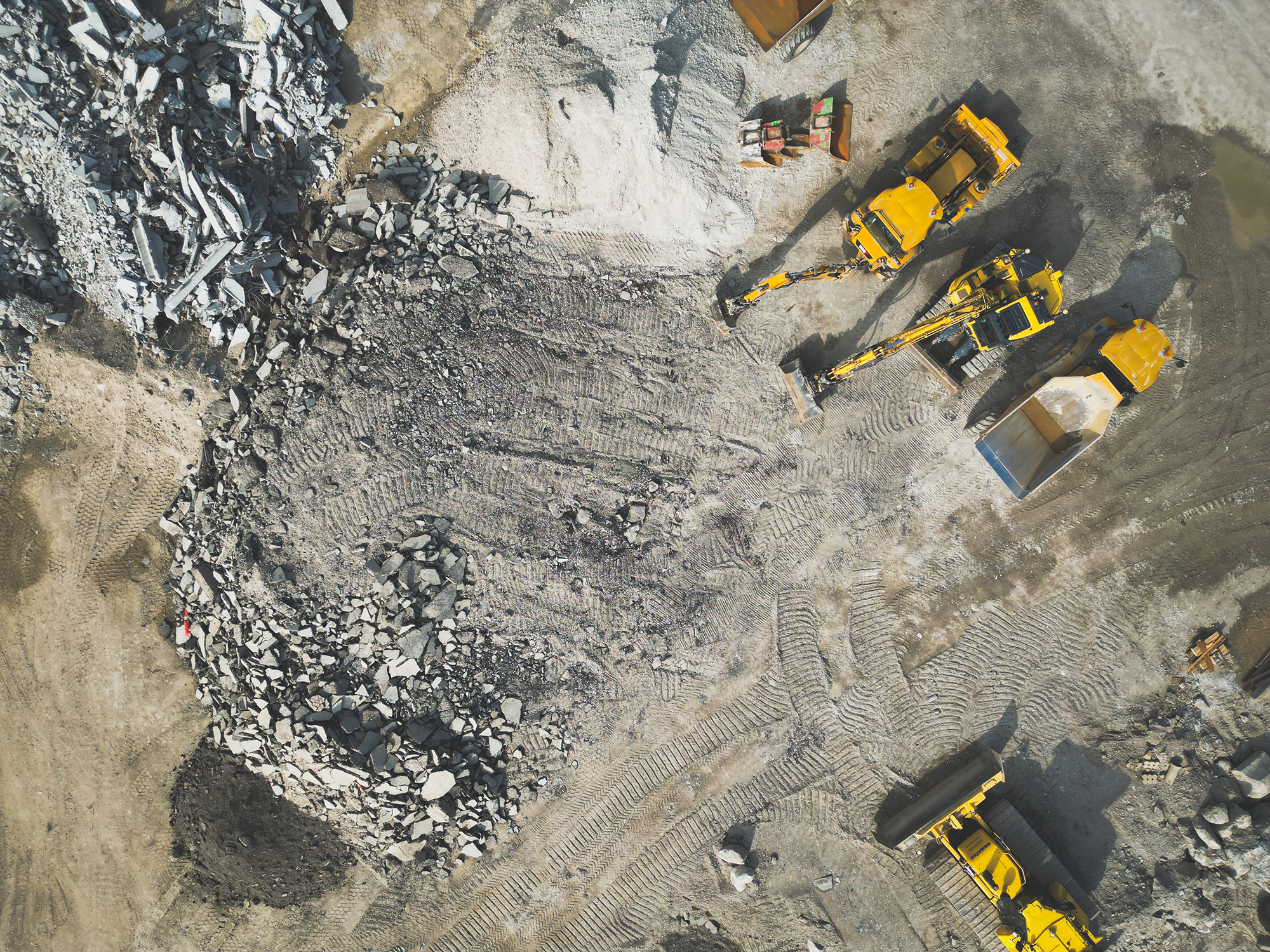
Construction site in Copenhagen, 2024
Transitioning to Emission-Free Construction: Standards and Practical Tools
To operationalise the work and draw a clear path, Work Package 4 has also provided guidelines for planning, procuring, implementing and evaluating emission-free construction sites. These guidelines are crucial for stakeholders aiming to implement sustainable practices effectively. Additionally, the team has been working on a report that addresses the standards, rules, and regulations that can be hindering. Furthermore, Work Package 4 has developed practical tools to support stakeholders in their efforts to achieve emission-free construction sites. This includes a cost-effective calculator designed to help stakeholders evaluate the financial implications of adopting sustainable practices. Lastly, a newsletter keeps everyone interested up to date and acts as a platform for relevant stakeholders.
Key Results About Emission-Free Construction Sites
1.
Data Gaps Hinder Emission Reduction Efforts
One of the key findings from this work package is that planning ahead and engaging designers, architects, and urban planners early in the process is essential to reducing emissions from construction sites. By considering emissions from construction waste, material transportation, on-site heating, and machinery fuel use, they can implement strategies that minimise environmental impact throughout the construction phase.
2.
Early Engagement Reduces Construction Emissions
Another key result is the conclusion that a major barrier to reducing emissions from construction sites is the lack of, both, reliable data and knowledge. Without data, it is difficult to identify key areas to target, and the lack of awareness among stakeholders often leads them to overlook the need for emission reduction efforts altogether.
Increased Political Focus and Support at a High Level
In September 2023, the Nordic Ministers of Housing and Construction gathered in Iceland. Here, they recommitted in a declaration to a common Nordic effort on reducing climate impact from construction and housing. Nordic Sustainable Constructions Work Package 4 laid the groundwork behind the declaration, achieving their goal of an increased political focus on emissions from Nordic construction sites.
The declaration stated the Nordic Ministers’ commitment to continue Nordic collaboration on lowering the climate impact and GHG emissions from buildings, waste, construction sites, building materials, the existing building stock, and construction processes.
The declaration also reaffirmed the Nordic Ministers’ wish to harmonise relevant legislation, tools, data, methods, and policies regarding carbon neutrality in the built environment across the Nordics, following the principles of a recent roadmap developed by Nordic Sustainable Construction.
The Ministers of Construction and Housing from Denmark, Sweden, Åland, Finland, Norway, Iceland, Greenland, and the Faroe Islands approved the declaration.
It has become increasingly clear that the regulatory tightening of climate demands and limit values will increase the demands for the construction process in the Nordic countries in the coming years.
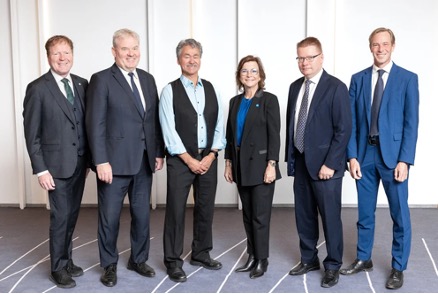
Group photo from the meeting with the Nordic Ministers of Housing and Construction, Reykjavik, Iceland 2023
We, the Nordic ministers responsible for construction and housing:
Affirm our commitment to fight climate change by facilitating reductions in emissions from the built environment. Further, we state our commitment to work towards making the Nordic construction sector the most sustainable in the world.
Recognise that the construction sector has a significant environmental impact, and that buildings affect the climate throughout their lifespan. At the same time, we recognise the construction sector’s potential to play a major part in the transition to a sustainable future.
Call for collaboration in the search for low carbon solutions in the Nordic construction sector,
through Nordic co-operation and harmonisation where possible.
through Nordic co-operation and harmonisation where possible.
Acknowledge the need to reduce the emissions and waste from the construction process, and work towards emission free construction sites.
Will work towards reducing greenhouse gas emissions from building materials.
Recognise the potential in preserving and developing existing building stock as a contribution to reduced emissions.
Recognise the potential in preserving and developing existing building stock as a contribution to reduced emissions.
Reaffirm our commitment to continue our collaboration on harmonising relevant regulations,
methods, data, tools, and policies for carbon neutrality in the built environment, in accordance with the basic principles of a Roadmap, jointly developed within the Nordic Sustainable Construction network.
methods, data, tools, and policies for carbon neutrality in the built environment, in accordance with the basic principles of a Roadmap, jointly developed within the Nordic Sustainable Construction network.
Call for continued collaboration on establishing a common framework for calculating greenhouse gas emissions in building projects.
Recognise that using and enhancing EU initiatives, can contribute to making the Nordic countries the most sustainable region in the world.
Call for continued Nordic collaboration on developing a framework for facilitating the circular
economy in the building sector. Stress the importance of continuing and strengthening Nordic collaboration.
economy in the building sector. Stress the importance of continuing and strengthening Nordic collaboration.
By signing this declaration, we reaffirm our commitment to the ongoing work towards low carbon solutions and the integration of circular principles in the Nordic construction and building sector.
Approved in 2023 by:
Pernille Rosenkrantz Theil, Former Minister for Social Affairs and Housing, Denmark
Sigurður Ingi Jóhannsson, Minister of Infrastructure, Iceland
Kai Mykkänen, Minister of the Environment and Climate Change, Finland
Sigbjørn Gjelsvik, Former Minister of Local Government, Norway
Andreas Carlson, Minister of Infrastructure and Housing, Sweden
Harry Jansson, Minister of Housing, Åland Islands
Ingilín D. Strøm, Minister of Environment and Housing, Faroe Islands
Erik Jensen, Minister of Infrastructure and Housing, Greenland
Overview of Deliveries
Work Package 4
Task 1: Nordic Declaration on Emission-Free Construction Sites
Declaration was signed by the Nordic Ministers
Declaration introduced
Task 2: Definitions, Boundaries and Terminology
Report: Emission-Free Construction Sites: Definitions, Boundaries and Terminology – Current Status in the Nordic Countries
Webinar: Emission-Free Construction Sites: Definitions, Boundaries and Terminology – Current Status in the Nordic Countries
Brochure: Emission-Free Construction Sites: Definitions, Boundaries and Terminology – Current Status in the Nordic Countries
Task 3: Network
Excursion to emission-free construction sites
Task 4: Research and Innovation
Report: Knowledge Gaps and Research Needs
Webinar: Knowledge Gaps and Research Needs
Cost-Effectiveness Calculator
Task 5: Guidelines for Emission-Free Construction Sites
Report: Guidelines for Emission-Free Construction Sites
Launch webinar: Guidelines for Emission-Free Construction Sites
Guidelines brochure
Task 6: Standards, Rules and Regulations that can be Hindering and Other Barriers
Report published ultimo 2024
Who Contributed to this Work Package?
Björn Karlsson, Sigrún Dögg Kvaran, Þóra Margrét Þorgeirsdóttir, Olga Árnadóttir, Elín Þórólfsdóttir, Hulda Einarsdóttir, Sarah Olson, Áróra Árnadóttir, Aðalsteinn Ólafsson, Ástrós Steingrímsdóttir, Hanna Þráinsdóttir, Katarzyna Anna Jagodzinska.
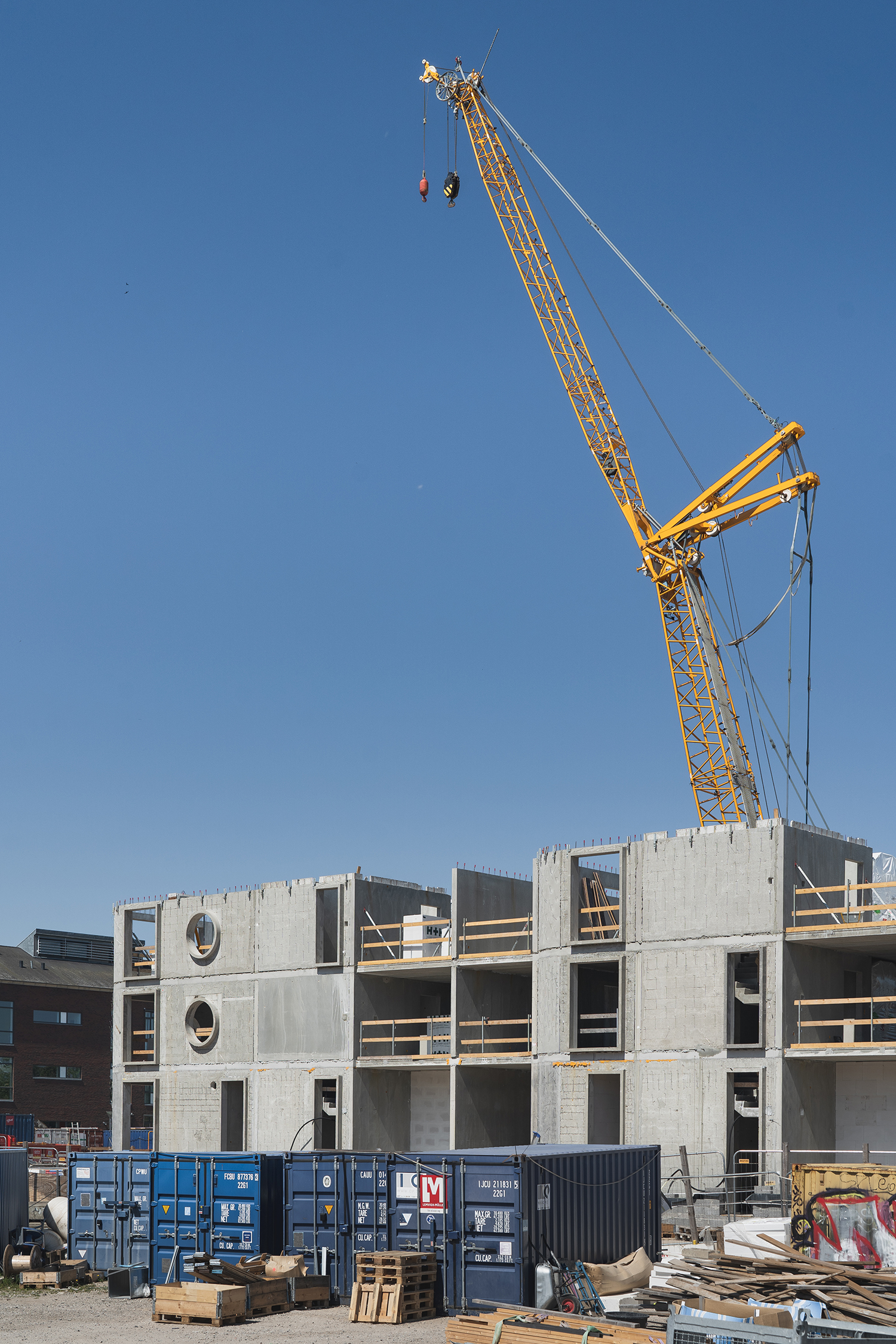
Construction site, Østerbro, Copenhagen 2024