
The structure of Work Package 3: Sustainable Construction Materials and Architecture



Democracy Festivals –Knowledge Gathering Tour
Transformation Panel
The Hierarchy of Material Use in Construction
Place-Based Development
and Architecture
and Architecture
Legislation for Sustainable Construction and Architecture
The Unheard Voices in Architecture
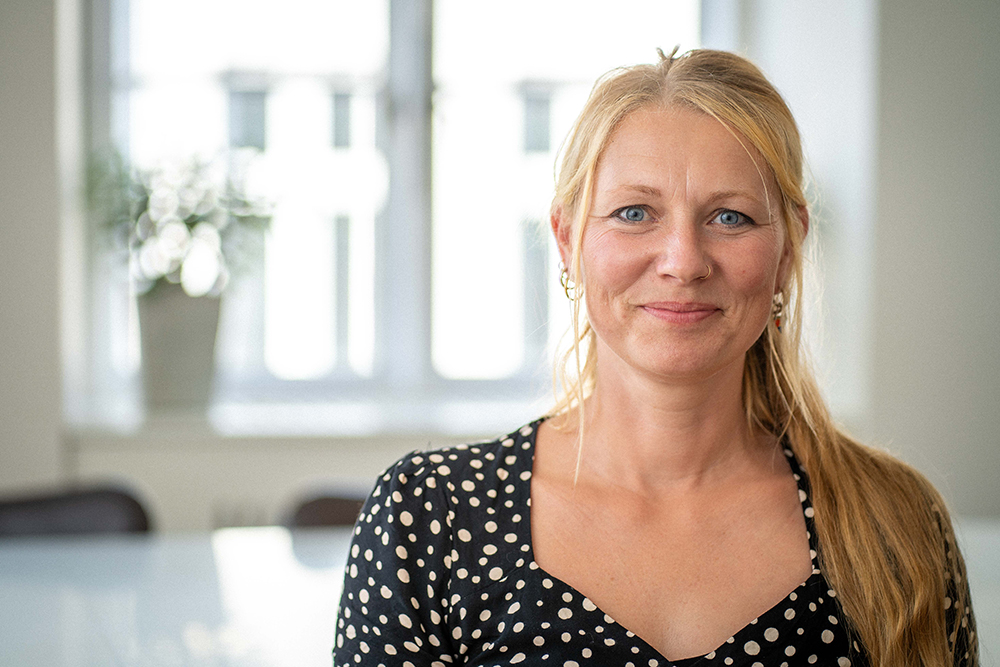
The Nordic countries must embrace policy changes that transcend silos. We cannot build our way to the Paris Agreement by just constructing new. The path forward requires rethinking how we use existing spaces and resources. Furthermore, we must adapt to the reality of finite planetary boundaries and make systemic reforms that address both the climate and biodiversity crises. Moving forward, it is important to work on cross-sector regulation and focus on place-based construction.Pernille Martiny Modvig, Head of project, SUSTAINORDIC, Leader of Work Package 3
Enriching the Debate: What is a Sustainable Construction Material?
The building sector is broad and contains many types of professions and stakeholders across the value chain. In order to succeed with a sustainable transformation, a cultural, discursive transformation must take place as well. We must change what we consider the ideal home, the priorities in the way we build, and perhaps our aesthetics as well. However, there are still variations and disagreements in the way we perceive sustainability, sustainable construction materials, and solutions. That is why dialogue is a crucial tool to achieve the goal of minimising the climate and environmental impact of construction. That is the key focus area of Work Package 3.
Roundtable Discussions and Articles
Over a three-year period, the work package has had different focus areas to guide knowledge collection and analysis.
During the first phase, it focused on identifying necessary changes and barriers in the Nordic construction sector through broad knowledge generation and collaboration. Four key themes that needed to be further enriched based on debates organised across the Nordics, in Bruxelles, and at Climate Negotiations emerged:
- Material use hierarchy,
- Place-based architecture,
- Underrepresented policy interests, and
- Emission regulations.
The second phase tested solutions to these barriers with stakeholder engagement to assess feasibility. These four central topics were used to kick off the roundtable discussions, where experts with different perspectives gave their input. The findings were summarised into policy recommendations for industry leaders and decision-makers.
Redefining Good Construction
Our perception of “good” construction materials and solutions is changing. New focus areas are gaining importance, and the balance of considerations and priorities is shifting. Today, the focus has shifted from energy performance during the use phase to a whole-life carbon perspective, emphasising the extension of existing building lifespans. New considerations now come into play, including nature's interests and the intrinsic value of materials, which were previously overlooked or considered voiceless.
The findings from this work package emphasise the need for a cultural shift toward systems thinking and life-centric policies, fostering long-term sustainability across education, urban planning, and policy-making.
It calls for promoting lifelong systems thinking and shifting from human-centric to life-centric policies by integrating biodiversity and sustainability into urban planning. Additionally, it encourages community involvement, regenerative development, and the establishment of stronger legal frameworks for land use and biodiversity protection. Actively involving youth in sustainability decisions and ensuring their voices shape policy and legislation, is also critical. Furthermore, collaboration at local, national, and international levels is essential to effectively address climate adaptation and environmental challenges.
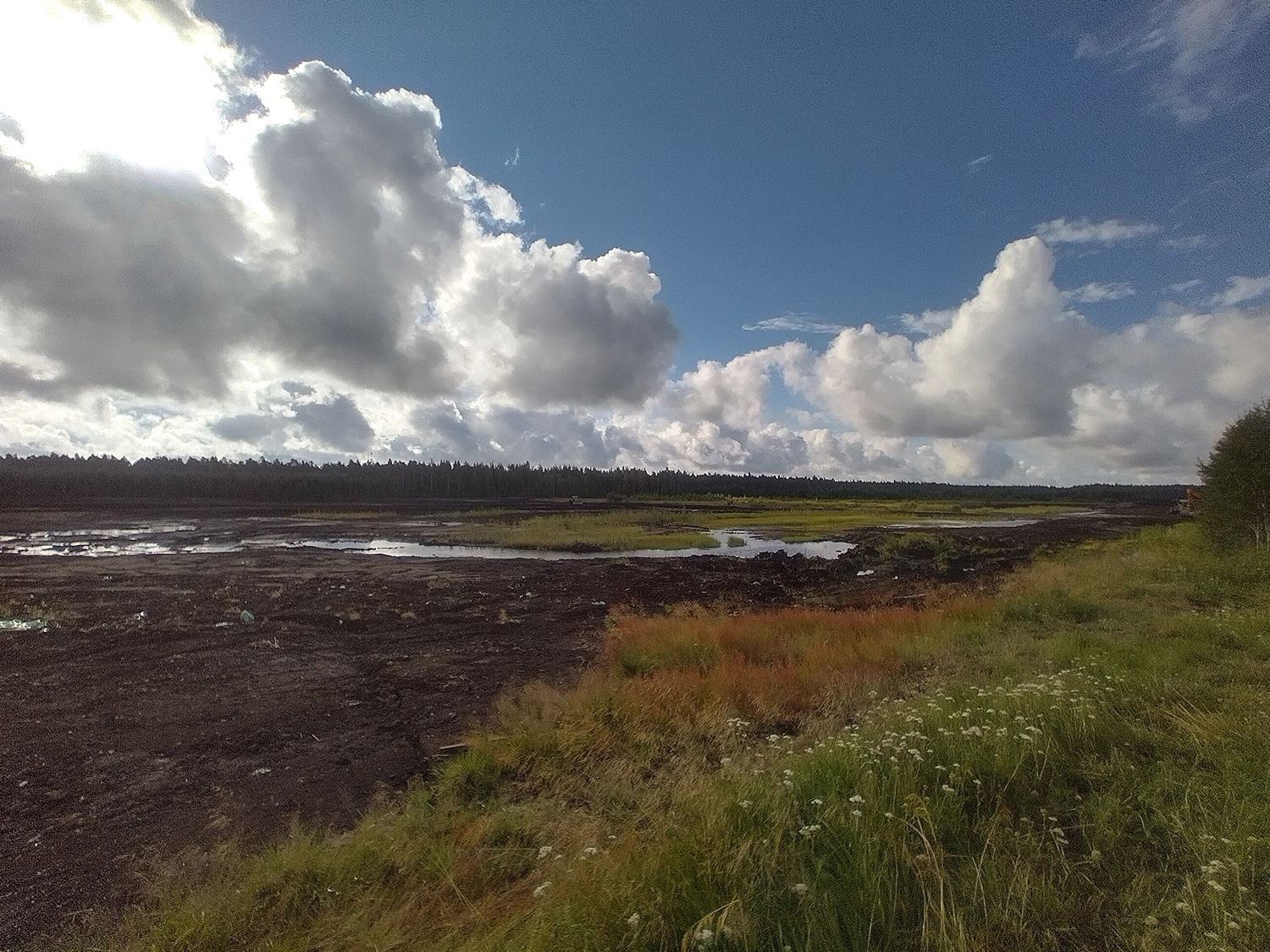
Peatlands are vital ecosystems that play a crucial role in carbon storage, water regulation, and supporting biodiversity. In construction, it is essential to consider not only the direct impact on the land but also the wider effects on surrounding ecosystems. Protecting peatlands and other natural landscapes ensures that both on-site and off-site biodiversity is preserved, helping to maintain ecological balance and mitigate climate change. Sustainable land use practices in construction are key to safeguarding these critical ecosystems for future generations. Photo: Peatland, Kristiina Lång
Work Package 3 has supported the transformation of construction by investigating the concept of place-based architecture and the underrepresented voices in construction. These topics point to a way of designing buildings that are deeply responsive to their local environments. This includes considering factors such as local material availability, cultural and aesthetic contexts, and the broader environmental impact of construction, as well as advocating for more inclusive, community-centred approaches to planning and building. By promoting place-based design and including diverse perspectives, Work Package 3 has fostered a broader conversation about how architecture can contribute to community resilience and a more holistic view of sustainability, encouraging architects and developers to think more critically about the environmental and social implications of their projects.
Prioritising Material Hierarchies in Construction
Another area in which Work Package 3 has initiated and enriched the debate, is the question of what is a sustainable material. Is the most sustainable construction material, in reality, the one that we avoid using? One of the most significant contributions to this debate from this work package has been the advocacy for material hierarchies. This approach encourages the construction industry to prioritise retrofitting and repurposing existing buildings over new construction, which is often more resource-intensive. When new construction is necessary, the emphasis is on using renewable, biobased materials rather than traditional, high-impact options like concrete and steel. This shift in focus has sparked important discussions about how the sector can reduce its overall carbon footprint by rethinking material use.
The findings under this work package point to the need to prioritise sustainability in construction through policies that limit demolition, encourage retrofitting, and promote the use of reused and biobased materials. It calls for integrating material reuse into design processes, adjusting housing policies to better utilise existing spaces, and providing education on sustainable building practices. Additionally, it highlights the importance of data sharing, lifelong training, and creating systems for reusing materials, all aimed at reducing environmental impact and supporting long-term ecological health.
The findings under this work package point to the need to prioritise sustainability in construction through policies that limit demolition, encourage retrofitting, and promote the use of reused and biobased materials. It calls for integrating material reuse into design processes, adjusting housing policies to better utilise existing spaces, and providing education on sustainable building practices. Additionally, it highlights the importance of data sharing, lifelong training, and creating systems for reusing materials, all aimed at reducing environmental impact and supporting long-term ecological health.
This work has resulted in four fundamental recommendations:
- Limit demolition and prioritise preservation, renovation, and retrofitting of existing buildings.
- Promote the use of reused materials in design and construction and use biobased materials when virgin material cannot be avoided.
- Encourage flexible housing solutions by optimising existing spaces and revising housing policies.
- Implement mandatory education and training on sustainability across the construction sector.
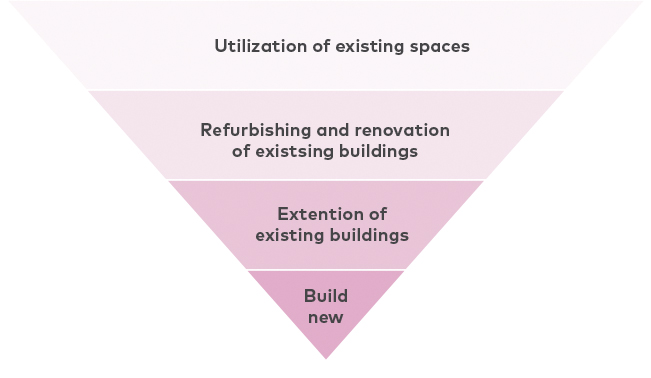
Figure: Hierarchy for resource-efficient construction, Matti Kuittinen, Aalto University
Gathering the Sector to Discuss Innovative Solutions at the United International Architects Congress
A way of fostering international collaboration and knowledge sharing is through conferences that spark conversation across the construction sector in different countries. Through the involvement in the global UIA World Congress of Architects, Work Package 3 managed to do just that. The event held in Copenhagen 2023, was a significant platform for highlighting the Nordic region's commitment to sustainable architecture and materials. The pavilion featured innovative projects that demonstrated how sustainable construction could be achieved through the integration of local materials, renewable resources, and circular design principles.
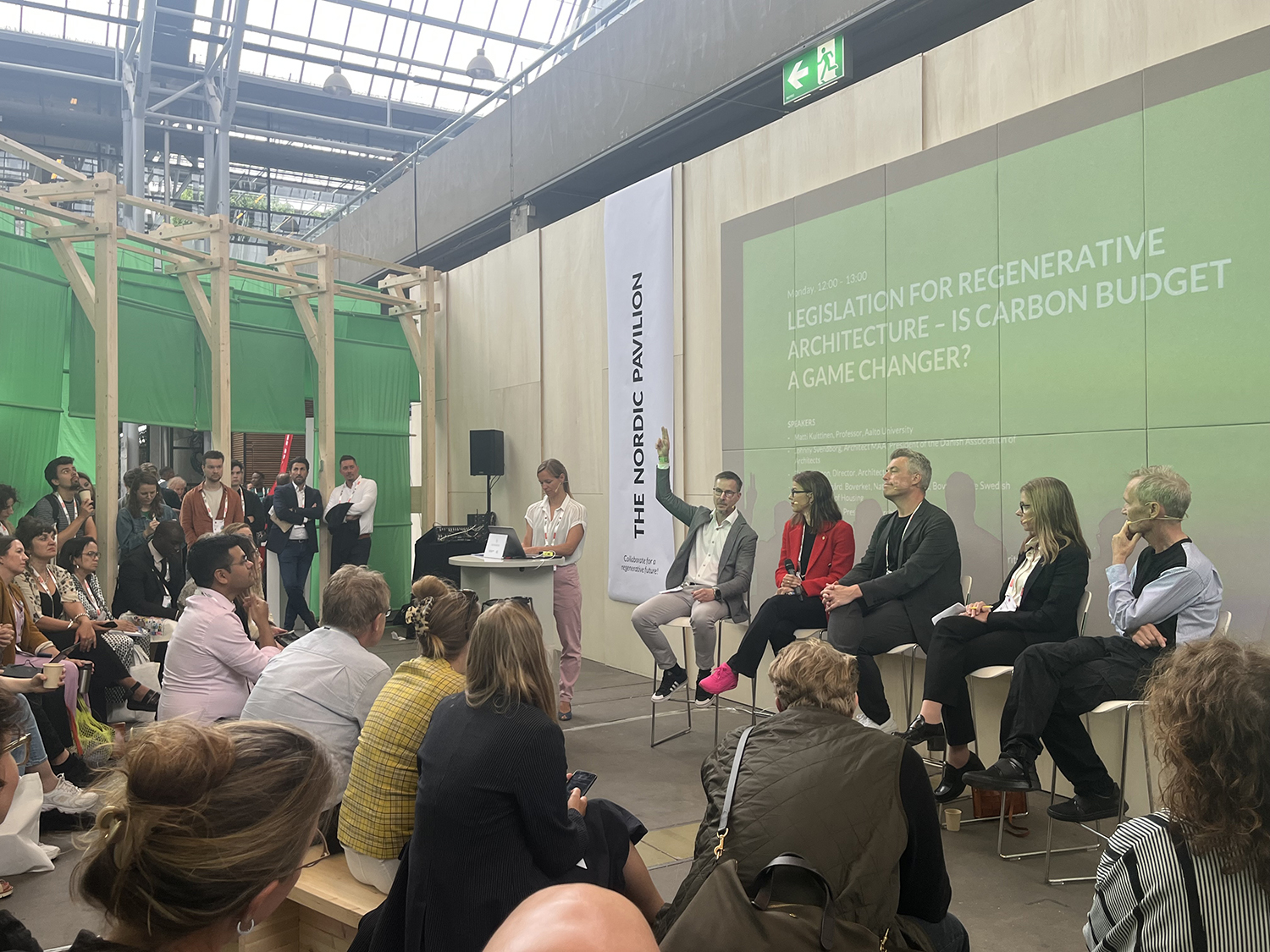
Policy Session at the Nordic Pavilion, UIA 2023: Legislation for regenerative architecture – Is carbon budget a game changer? Photo: Nordic Sustainable Construction
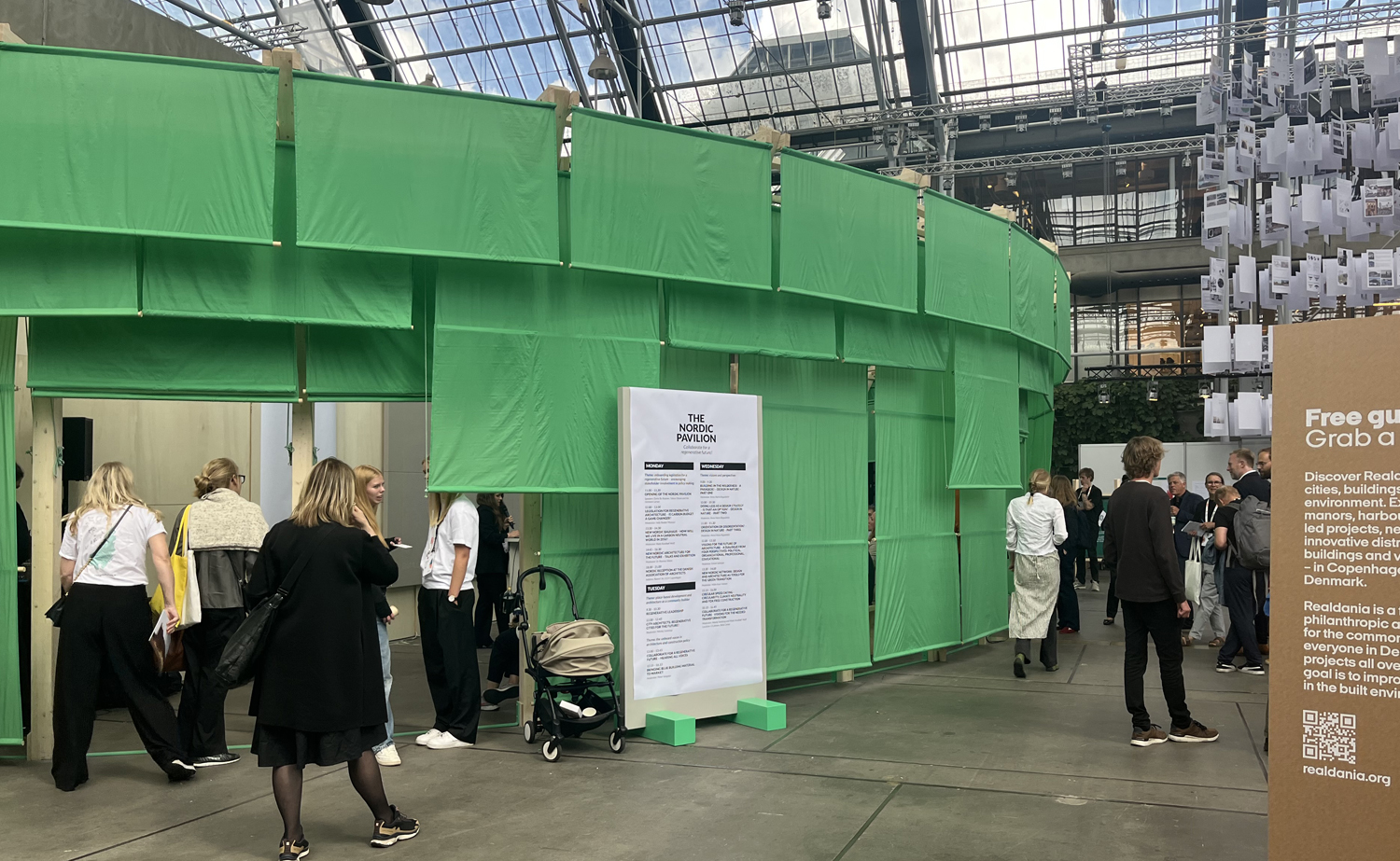
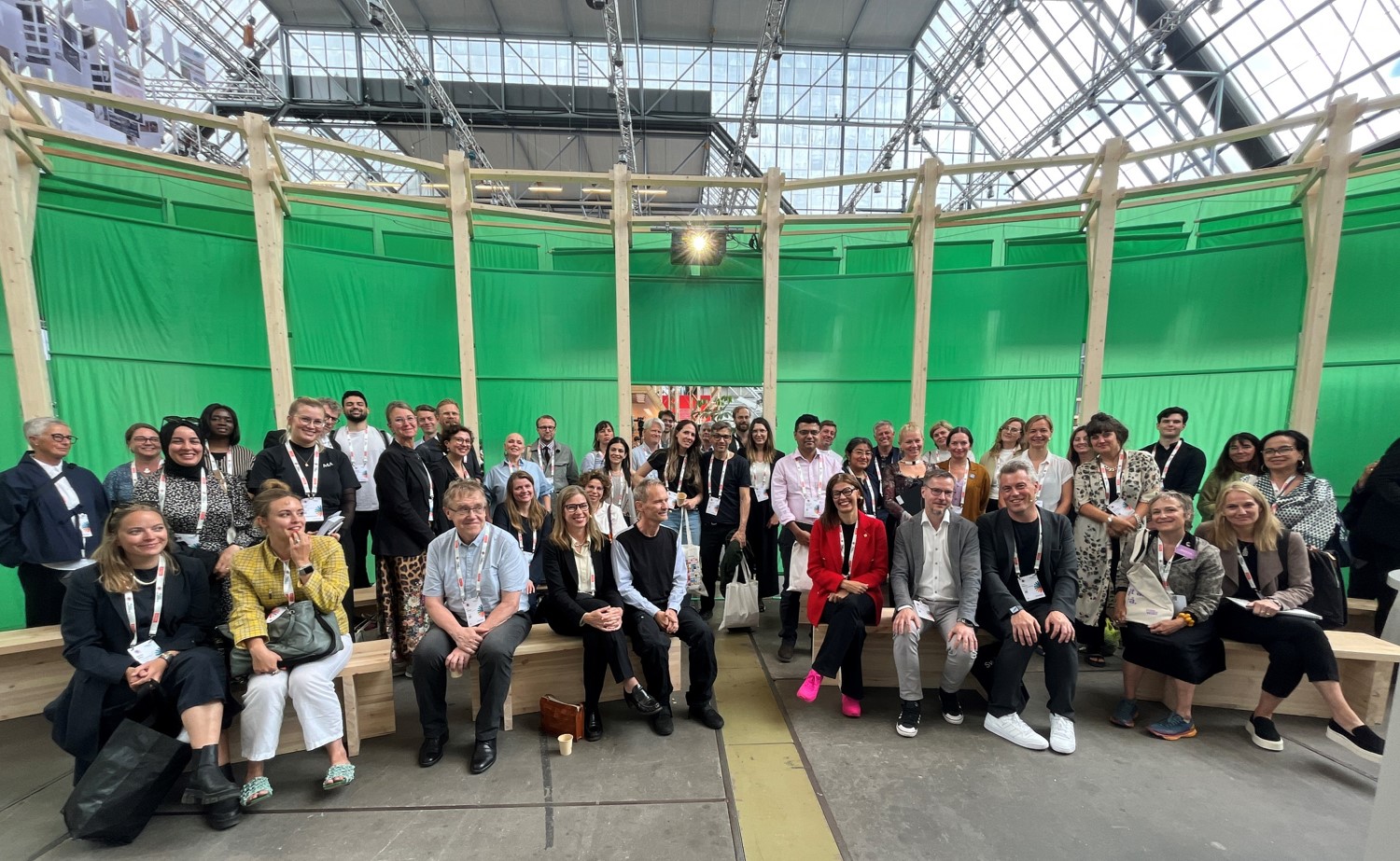
Discussions, panel sessions, and presentations at The Nordic Pavilion at UIA 2023 CPH WORLD CONGRESS OF ARCHITECTS Photo: Nordic Sustainable Construction
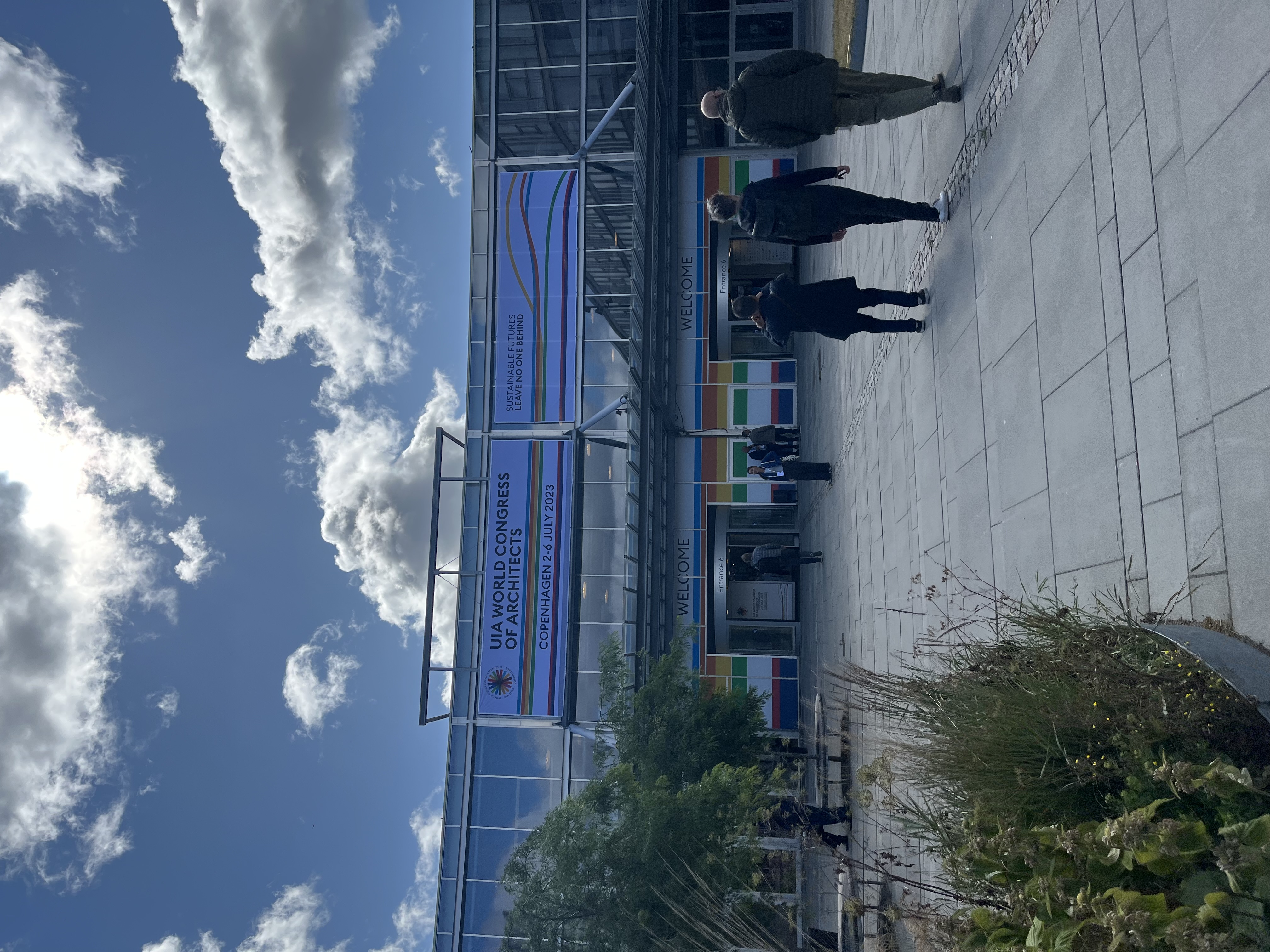
UIA 2023 CPH WORLD CONGRESS OF ARCHITECTS Photo: Nordic Sustainable Construction
Policy-Driven Change
Another significant way that Work Package 3 has contributed to and broadened the debate is through its focus on legislative reform. By leading discussions and making recommendations on how laws and regulations can better support sustainable construction practices, the work package has brought to light the crucial role that policy plays in driving industry-wide change. The emphasis on integrating sustainability principles into building codes and construction standards has added an essential dimension to the sustainability discourse, highlighting the need for legislative support in promoting circular practices and long-term environmental stewardship.
With the aim of engaging a wider audience and pushing for new agendas, this work package has worked on involving decision-makers, thought leaders, and similar actors to activate a greater shift towards a Nordic housing and construction sector with minimal environmental and climate impacts.
This involvement is based on the belief that the barriers to this shift are equally driven by mental habits and beliefs as well as by legislative, structural, and financial norms. The notion is that a balance between these internal and external factors is essential. If Nordic countries can strike this balance, they will be better equipped to meet growing climate demands - demands that, in many ways, have been driven by the electorate and the construction sector itself, through roadmaps, climate marches, and other collaborative initiatives.
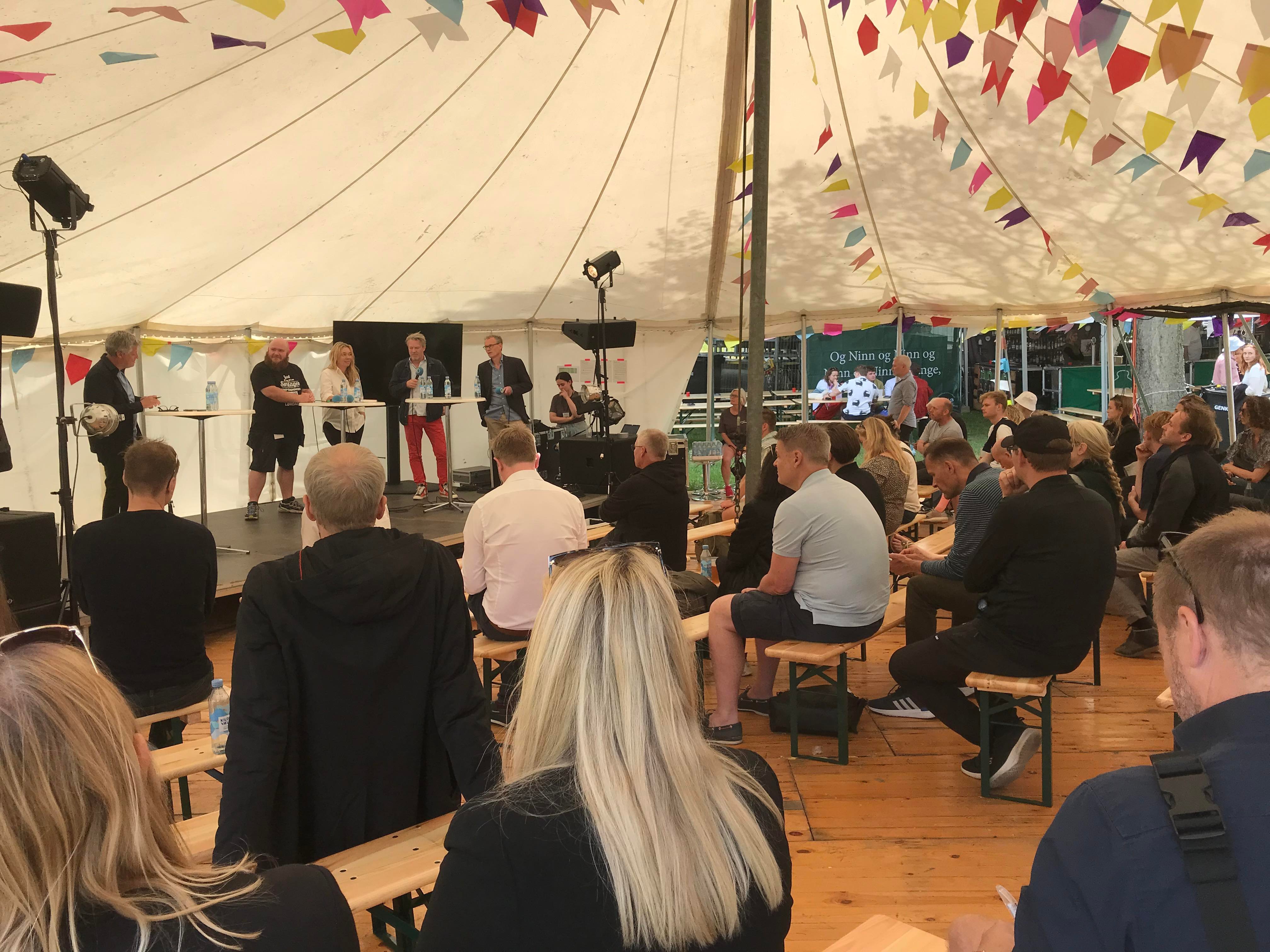
Photo: Pernille Martiny Modvig, Discussion at democracy festival tour, Folkemødet Bornholm 2022
Network – The Power of Goodwill
Through debates, roundtable discussions, interviews, and network meetings Work Package 3 has engaged with 116 experts and practitioners connected to the value chains related to construction and housing in the Nordics and beyond.
Apart from these 116 experts, over 800 participants have participated in events and debates hosted by Work Package 3.
Overview of Deliveries
Work Package 3
Democracy Festivals – Knowledge Gathering Tour
Participated in eight events
Nordic Pavilion at UIA 2023
Transformation Panel
Article
Article
Article
Article and Roundtable Discussion on the Unheard Voices in Architecture
Final Article and recommendations to the Nordic Vision 2030: Future-Proofing Nordic Construction - Policy Paths for Building within the Safe Operating Space
Who Contributed to this Work Package?
Sinus Lynge, Iines Karkulahti, Maya Færch, Louise Kjellerup Roper, Daniel Zimmer, Torben Klitgaard, Julia Okatz, Matti Kuittinen, Signe Kongebro, Morten Ryom, Lars Autrup, Poul-Erik Olsen, Rasmus Nørgaard, Peter Ullstad, Tobias Olsson, Robert Vangstad, Madeleine Nobis, Petra Jenning, Magnus Ek, Paula Lehtomäki, Harald Vaagaasar Nikolaisen, Malin Kock Hansen, Guro Hauge, Linda Monsen Merkestad, Thor Haakon Bakke, Tuuli Kaskinen, Maria Karjalainen, Kirsten Dunlop, Anna Denell, Susanne Rudenstam, Mark Hughes, Pasi Aalto, Hulda Hallgrimsdottir, Bjarke Fjeldsted, Benedicte Wildhagen, Elise Sydendal, Mme Audrey Azuley, Jan Christian Vestre, Lilja Alfreðsdóttir, Karin Svanborg-Sjövall, Asko Takala, Ida Heimann Larsen, Katarina Siltavuori, Halla Helgadóttir, Jessica Segerlund, Kika Krista Kjærside, Monica Maria Moeskær, Martin Ehn Hillberg, Tor Inge Hjemdal, Nadia Gullestrup, Jenny Grettve, Kai Reaver, Silvie Le Muzic, Kasper Benjamin Reimer Bjørkskov, Siv Helene Stangeland, Erlend Seilskjær, Finn Williams, Anne Mette Boye, Rob Adams, Helena Bjarnegård, Ruth Schagemann, Tove Sjöberg, Thais Linhares-Juvenal, Paul Fuge, Juliette Morgan, Mokena Makeka, Scott Francisco, Ulla Janson, Steffen Nielsen, Otto Wille, Marwa Dabaieh, Malin Zimm, Mads Peter Laursen, Søren Nielsen, Arne Høi, Oda Solberg, Arja Renell, Aleksi Lohtaja, Borghildur Sölvey Sturludottir, Ove Kenneth Nodland, Thomas Gerner, Ellen T. O’ Gara, Thomas Tulinius, Julius Nielsen, Frederik Koefoed, Louise Bjerregaard, Peter Kjær, Kim Lenschow, Karina Søgaard, Birte Lauridsen, Magnus Emanuel, Thomas Graabæk, Marta Bohlmark, Ulrika Stenkula, Anders Larsson, Kristiina Lång, Kristina Einarsson, Thomas Hahn, Katrina Wiberg, Harpa Birgisdottir, Nel Schipull, Dani Hill-Hansen, Signe Wenneberg, Louise Heebøll, Frida Roper, Johan Jönsson, Per Kristian Hansson
Photo: Nordic Sustainable Construction, Oslo 2024