Discussion
In general compound identification via NTS and SS methods can be influenced by i) the availability and reliability of information on compounds, ii) limitations in spectral databases which may result in identification of some compounds more often and iii) the choice of instrument method and sample preparation procedure. Building on the paradigm by Hollender et al., 2023 the final compound identification domain of an NTS/SS method can be conceived as the intersection between the individual method (i.e., sample preparation, chromatographic and mass spectrometry/ionization) and reference data domains (Figure 1).
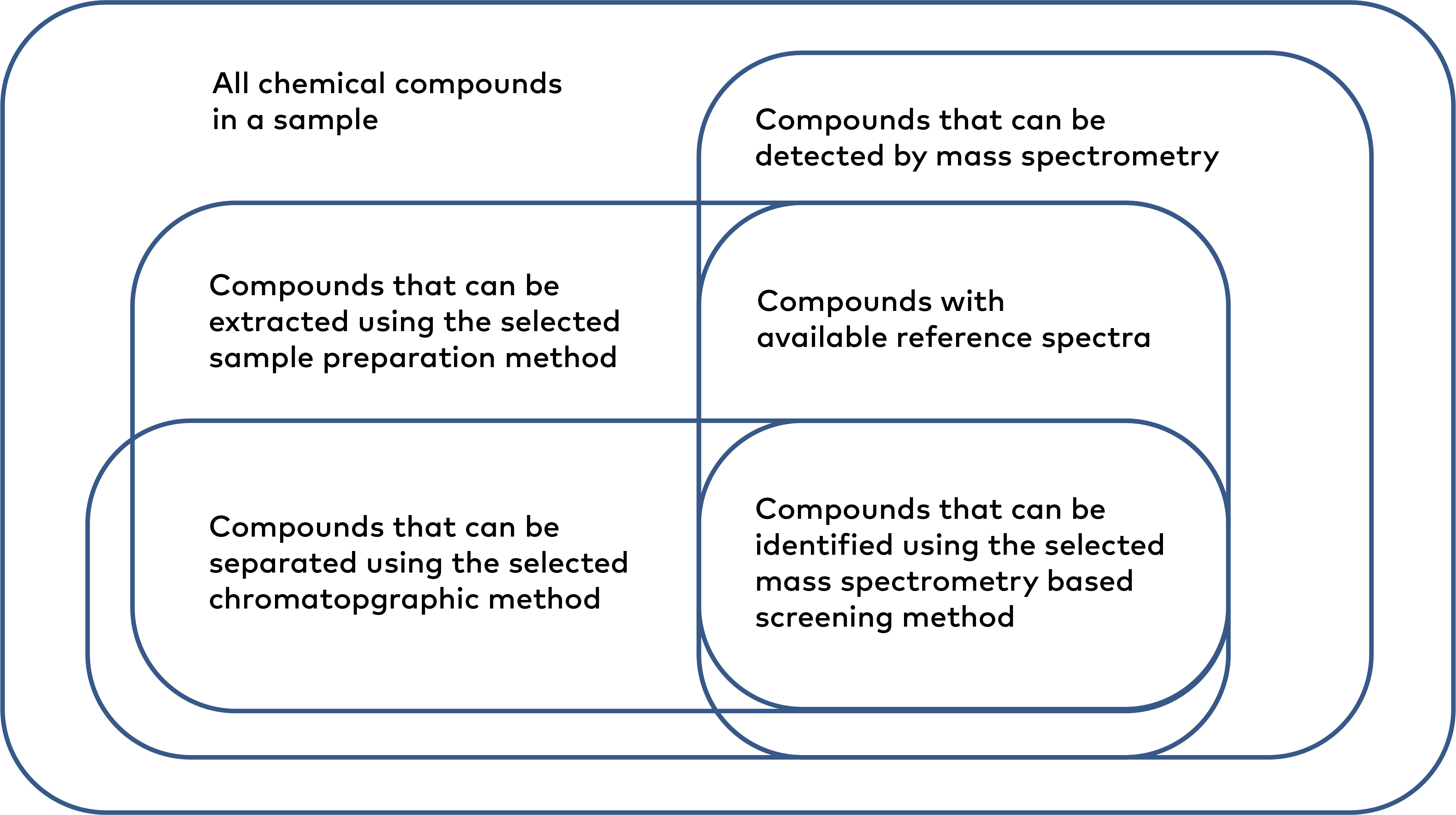
Figure 1 Compound identification domain of an NTS/SS method. Adapted from Hollender et al. 2023
To date no collaborative trials have been performed for NTS on products and materials. However, a collaborative trial on river water in conjunction with the third Joint Danube Survey has been organized by the NORMAN network (Schymanski et al., 2015). There have also been collaborative trials organized on house dust, drinking water in combination with passive sampling, and spiked fish samples within the NORMAN network (Dürig et al., 2023; Haglund et al., 2024; Rostkowski et al., 2019; Schulze et al., 2020). The drinking water study only established a database of the generated data with some fundamental quality assurance (QA) parameters being described. For household dust, two projects have been performed, of which the second is still in the evaluation phase. The US EPA initiated a collaborative trial on synthetic sample mixtures of chemicals included in the CompTox database through the Nontarget Analysis Collaborative Trial (ENTACT) project (Newton et al., 2020; Sobus et al., 2019; Ulrich et al., 2019). The ENTACT project samples contained different combinations of more than 1,200 chemical compounds.
It is difficult to draw general conclusions based on the collaborative trials since the studies have been made on different types of samples and the evaluations have been performed using different strategies, for instance evaluating the successful identification of spiked compounds or purely unknowns. The differences are very large in the number of compounds identified with proposed structures using LC-MS by the different laboratories in these studies, from 8 to 229 for river water, 12 to 457 for dust and 27 to 185 for fish. Many compounds in these studies are therefore only identified by a single, or a few laboratories. In the urban dust trials about half the identified compounds identified by GC-MS and most of the compounds identified by LC-MS were reported by only one lab for the first trial (Rostkowski et al., 2019) and 70% of all identified compounds were reported by only one lab for the second trial (Haglund et al., 2024). This shows that not sufficient progress has been made concerning this in the last decade. In addition, these studies present that there is little overlap between LC-MS and GC-MS methods, which may be explained by the differences in the chemical space in which the techniques are suitable. This pertains to both the polarity of the compounds and the ionization techniques that are used. The techniques are therefore viewed as complimentary techniques. In the NORMAN fish study, it was shown that the correct assignment of spiked compounds is greatly improved if the presence of the compound in the sample is known beforehand. It was also shown that the percentage of correctly assigned compounds vary greatly between labs, between 6-69% for LC-MS and 20-60% for GC-MS. These results show that harmonization of methodology and implementation of generally accepted quality assurance and quality control (QA/QC) measures is necessary for NTS and SS. The final results of the ENTACT collaborative trials have not been published, but recommendations on performance metrics have been presented (Fisher et al., 2022). The publications from the collaborative trials all contain recommendations concerning improvements that may lead to more reproducible results. Papers have also been published concerning QA/QC measures that are appropriate for NTS and SS (Hollender et al., 2023; Schulze et al., 2020), even though these publications are too recent to have been adopted to any greater degree by the scientific community.
Based on the information provided above it could be challenging to use the most frequently detected compounds from a number of studies as an efficient method to collect hazardous chemicals present in a specific product category or material type, even though it is a logical starting point for a literature study. The fact that different laboratories provide such a range of identified chemicals, from very few to very many, in studies of the same samples either requires that many studies are performed on the same products or materials before any consensus list starts to materialize or that more rigorus standardization must be applied to harmonize the methods between the laboratories. Similarly to what was observed here, it has been shown that GC-MS and LC-MS methods are mostly to be considered as complementary methods (Rostkowski et al., 2019) and that both the polarity and type of ionization method in LC-MS, electrospray ionization and atmospheric pressure chemical ionization, provide different results (Singh et al., 2020). For more specific product categories the studies are not extensive and may have been performed over a wider period of time, resulting in differences in the number of identified compounds arising from improvements in instrumentation or methodology. Finding a balance between i) a relatively small number of compounds detected as a result of false negative reporting from laboratories having, for instance, insufficient detection levels and ii) false positive reportings from laboratories that have implemented insufficient quality control measures is therefore difficult. An alternative approach could be to use the entire data set, and apply computational (in-silico) tools to prioritize which chemicals to lift for further investigation based on potential hazard profiles. This, however, is only possible if the structure of the compound is known (and not ambigous). The addition of retention time index standards and calculations to reduce false positives or increase the certainty of identifications are valuable (Aalizadeh et al., 2019; Hollender et al., 2023). Within the EU partnership for the assessment of risks from chemicals (PARC) programme work is being performed to test new standard mixtures that can provide information on the chemical space covered by an NTS or SS analysis. This would thereby provide useful information on false negatives.
In general, the compounds most frequently detected in each of the high level categories are compounds belonging to relevant types of compounds: antioxidants, plasticizers, pigments, long chain alkanes, etc. The similarity of the detected compounds in the categories elastomer, paper/paperboard and plastic + wood may arise from similar surface treatments, additives or modifications in itself or through a combination of prevalence and bias. To achieve a more detailed understanding, narrower categories would need to be investigated, but this would also lead to fewer publications per category. Interestingly, restricted substances were found in products and materials even among the most frequently detected ones but this may be partly due to older products being tested (i.e., before the regulation entried into force) or the specific use not being covered or being exempted from the restriction. It is also likely that despite having been restricted these substances are still used or result as contamination during the production process e.g., by the introduction of recycled materials in the manufacturing process. Even though the most frequently detected compounds in the high Schymanski level categories contain a number of chemicals with hazard properties, to identify in more detail hazardous chemicals in relevant product categories there may be a need to accept a risk for more false positive findings due to smaller data sets.