2. Method
2.1 Chemical legislations in scope
2.1.1 Reach regulation ((EC) No 1907/2006)
The REACH regulation stands for Registration, Evaluation, Authorization and Restriction of Chemicals. The REACH regulation covers requirements for chemical products and articles. Annex XVII of the REACH regulation sets out restrictions for certain substances. There are also rules restricting certain uses of substances posing an unacceptable risk.
2.1.2 POPs regulation ((EU) No 2019/1021)
The Regulation on Persistent Organic Pollutants (POPs
Regulation (EU) 2019/1021 of the European Parliament and of the Council on persistent organic pollutants
2.1.3 RoHS directive (2011/65/EU)
RoHS stands for Restriction of the use of certain hazardous substances in electrical and electronic equipment. The RoHS directive is a product-specific directive for electrical and electronic equipment that restricts the use of certain metals, flame retardants and phthalates. Among other things, the directive requires products to be labelled. The CE mark indicates that the manufacturer certifies that the requirements of specific EU legislation are met, and the contact details indicates which companies are responsible for the product.
2.1.4 Toy Safety Directive (2009/48/EC)
The EU Toy Safety Directive contains several requirements for the chemical content of toys. Among other things, there are limit values for how much certain metals may leak out, restrictions on the content of CMR substances (substances that can cause cancer, genetic mutations or damages to the reproductive system) and perfume substances. As in the RoHS Directive, the Toy Safety Directive contains labelling requirements.
2.1.5 CLP regulation ((EC) No 1272/2008)
The CLP Regulation contains rules on the classification, labelling and packaging of chemical substances and mixtures placed on the EU market. The CLP Regulation requires manufacturers, importers or downstream users of substances or mixtures to classify, label and package their hazardous chemicals appropriately before placing them on the market.
One of the main aims of the regulation is to determine whether a substance or mixture displays properties that lead to a hazardous classification. In this context, classification is the starting point for hazard communication.
The information about the hazards and how to protect oneself and the environment is communicated to users through package labelling with e.g. hazard pictograms, signal words and hazard and precautionary statements.
2.1.5.1 Article 48 - Display labeling when selling chemical products online
When advertising hazardous chemical products, customers shall be informed about the hazardous properties of the products. Selling products online is considered a form of advertising and is subject to these requirements. When selling chemical products online parts of the products hazard labeling shall be displayed on the website. The rules are in place so that customers can see what dangers are associated with the product and receive information before making a purchase.
2.1.6 Plant Protection Product Regulation (EC) No 1107/2009
Plant protection products are pesticides mainly used to protect plants and plant products in agriculture, forestry and horticulture.
The plant protection products regulation contains rules on placing plant protection products on the EU market. A requirement for placing a plant protection product on the EU market is that the product is authorised according to article 28 of the regulation. In the risk and efficacy assessments conducted within the authorisation process, national conditions such as environment, climate and occurring species are taken into consideration. Therefore, plant protection product authorisations are national. Hence, a plant protection product may be authorised in one EU member state but not in another.
2.1.1 Biocidal Products Regulation (EU) No 528/2012
The biocidal products that act in a chemical or biological way fall in the scope of the biocidal legislation. It can for example be disinfectants, a mosquito repellent, wood preservatives, rodenticides or antifouling paint for boats. Biocidal products that, on the other hand, act in a physical or mechanical way do not fall in the scope of the regulation for biocides. A mechanical mousetrap is an example of such a product. Pesticides that are not plant protection products are biocidal products.
The biocidal products regulation contains rules on making biocidal products available on the EU market. A requirement for making a biocidal product available on the EU market is that the product is authorised according to article 17 of the regulation. In the risk and efficacy assessments conducted within the authorisation process, national conditions such as environment, climate and occurring species are taken into consideration. Therefore, biocidal product authorisations are most commonly national. Hence, a biocidal product may be authorised in one EU member state but not in another.
The biocidal products regulation contains rules on transitional measures (article 89) for biocidal products which were already on the EU market before the regulation came into force but where the active substances have not yet gone through the authorisation process. The transitional rules allow for the application of national jurisdiction for such biocidal products. Therefore, Swedish regulations on biocidal products concerning the requirement of authorisation of biocidal products have also been in scope of the project. Applicable Swedish regulations are Regulation (2014:425) on pesticides and The Swedish Chemicals Agency Regulations (KIFS 2022:3) on Pesticides.
2.1.2 Precious metals (Act on Articles of Precious Metals (Finland) (1029/2000))
According to Finnish national act on precious metals an article of precious metal is made of precious metal subject to hallmarking, that are as follows: gold, silver, platinum and palladium.
Products like jewellery, silverware, cutlery and watches are considered articles of precious metals if they contain precious metal subject to hallmarking. Products made of the metals mentioned above are considered articles of precious metals. Examples of such products include jewellery, silverware, cutlery and watches.
Precious metals are alloyed with other metals in order to lend the alloy a desired colour, to enhance its ability to be worked on and to provide lower material costs. In order to be able to market a product as an article of precious metal, its fineness must be, at a minimum of:
- gold 375
- silver 800
- platinum 850 and
- palladium 500 parts per thousand for each precious metal by mass.
If the product's fineness is below the fineness levels specified above, it must not be marketed as an article of precious metal and it must not bear any marks intended for articles of precious metals.
Watches and jewellery must not contain dangerous substances. For example, cadmium and lead are substances that are prohibited in jewellery. Articles of jewellery releasing nickel are also prohibited.
2.2 Other relevant legislations
In addition to chemical legislations, there are other EU-wide legislations that are relevant to e-commerce. These are general rules for e-commerce and rules for the control of trade.
2.2.1 Digital Service Act - DSA (EU) 2022/2065)
E-commerce in the EU is regulated, among others, by the so-called Digital Service Act,
The Digital Services Act (DSA) - Regulation (EU) 2022/2065
2.2.2 Market Surveillance Regulation (EU) 2019/1020
The Market Surveillance Regulation (EU) 2019/1020 (MSR) gives harmonised rules on market surveillance.
Regulation (EU) 2019/1020 of the European Parliament and of the Council of 20 June 2019 on market surveillance and compliance of products and amending Directive 2004/42/EC and Regulations (EC) No 765/2008 and (EU) No 305/2011.
Placing on the market (article 6)
Article 6 in the Market Surveillance Regulation ((EU) 2019/1020), states:
Responsible economic operator (article 4)
The requirement that products may not be placed on the market without the existence of a responsible economic operator established in the Union (article 4) is new in the market surveillance regulation. That means that products placed on the EU market by actors outside EU/ EES needs to have so called EU-representative.
an authorised representative who has a written mandate from the manufacturer designating the authorised representative to perform the tasks set out in paragraph 3 on the manufacturer's behalf
Marketplaces can have several different roles. In cases where they only display products for the sellers, they are not covered by the new provision. If, on the other hand, they take greater responsibility for the products as defined above, they become the responsible economic operator. The European Commission has issued a Notice of Guidelines on Article 4 (EUROPEAN COMMISSION, 2021).
Powers of market surveillance authorities (article 14)
The market surveillance regulation also gives the authorities the possibility to restrict access to a web page if no other effective means are available to eliminate a serious risk from a product (article 14).
2.3 Responsibility – online actors
Below are some of the most common forms of business models when offering products online. There exist many different business models in the online world and this report will only present the most common ones. The responsibility for product safety differs between the different models and below is a summary:
Responsible for proactive chemical safety:
- “Classic” online traders that own and sell products and have their own inventory (“web shop”)
- Online traders dealing with dropshipping
- Online traders selling on online platform (sellers)
- Online platforms that sell in their own name or that the traders’ name is not clearly indicated - are then regarded as traders
- Online platforms that have fulfilment solutions (applicable for RoHS and Toys Directive).
Responsible for reactive chemical safety:
- online platforms in their role as intermediates.
Traders is a legal definition in the new framework legislation (MSR, DSA, GPSR) which can also be equated with web shop, seller, responsible operator etc.
Article 30 in DSA platforms need to give contact details of the trader (seller) of the offer on their platforms. Consumer legislation sets demands on inform consumers of who they are buying the products from – see annex 2.
2.3.1 Online trader (web shop) – classic supply chain
In the classic linear supply chain, the ownership of a product passes from one actor to another in a chain (figure 1). Ownership of the products (purchase and delivery) is transferred at each stage. Traders are all actors in the chain except the buyer.
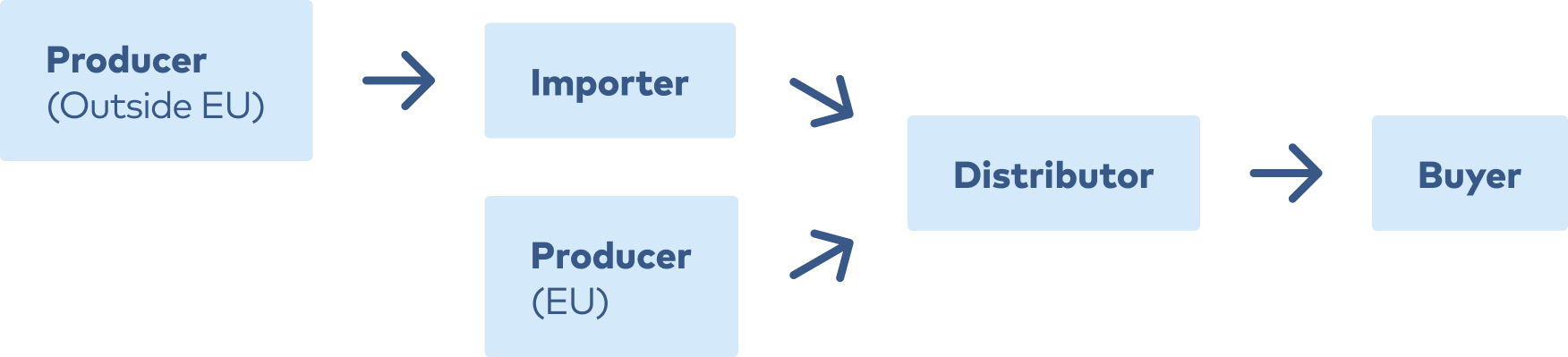
Figure 1. Traders in a classic supply chain.
2.3.2 Online trader - Dropshipping
The biggest difference for this type of a classic online trader is that they do not have their own inventory. Instead, the products are in the supplier's inventory and are sent directly to the buyer. The stock balance of a product can also be directly linked to the third-party supplier's stock status, which makes it look like the product is in the online trader’s own inventory.
There can also be more complicated structures with more actors included. Below is a common example how dropshipping models works. The buyer orders a product, which the online trader orders in the buyer’s name from the dropshipping supplier. The steps after are usually hidden from the buyer: the dropshipping supplier is often an online platform that also have traders, agents, manufacturers, importer or distributors who send the products directly to the buyer. The buyer perceives that the products are the dropshipping traders’ "own” products because information about the actual trader (seller) is not given on the product’s website online interface. The product is then sent directly to the buyer (figure 2). Prices are determined by the dropshipping online trader, unlike the online platform, where that trader sets the price.
The buyer gets the impression that it is the dropshipping trader that sells the product.
The consumer legislation also gives support for the interpretation that dropshipping traders are responsible operators.
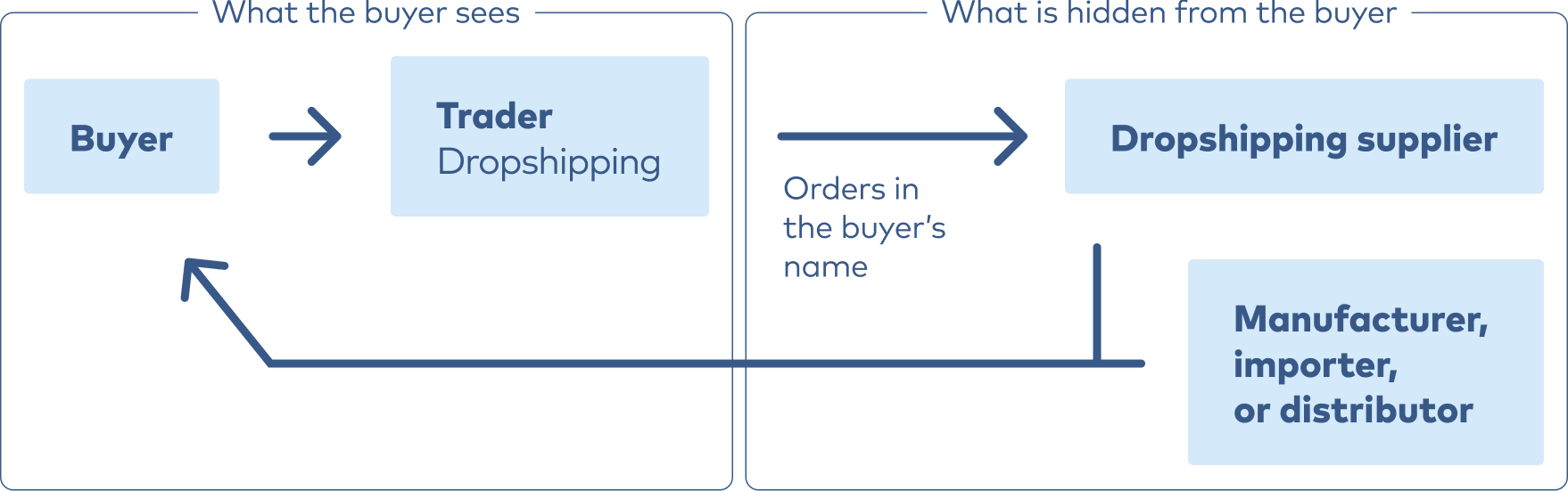
Figure 2. Common model for dropshipping. The steps after the dropshipping trader are usually hidden from the buyer
2.3.3 Online platform
A business model where the online platform acts as an intermediary between buyers and traders (figure 3). It can be similar to the online platform being equated with a shopping mall and the trader being equated with the shops in the mall. The online platform provides a platform and, for example, payment solutions (intermediaries), while the trader on the online platform is the one who sells the product to the buyer and sets the prices. As a general rule, the online platforms have no proactive responsibility regarding the compliance to chemical legislation. It is the trader that has this responsibility.
In most cases, online platforms are also working with dropshipping since the products are sent directly from a trader and not the online platform. Just note that in some cases online platforms can also be regarded as fulfilment service provider which have responsibility for the products. Some large online platforms can also sell products in their own name and then they are regarded as a trader and thereby responsible operator.
Nowadays there are rules in consumer law that state that it must be clear who the trader is. The Digital Services Act states that online platforms must clearly give information on who the trader is for each product. If such trader information is missing, the online platforms can be held responsible.
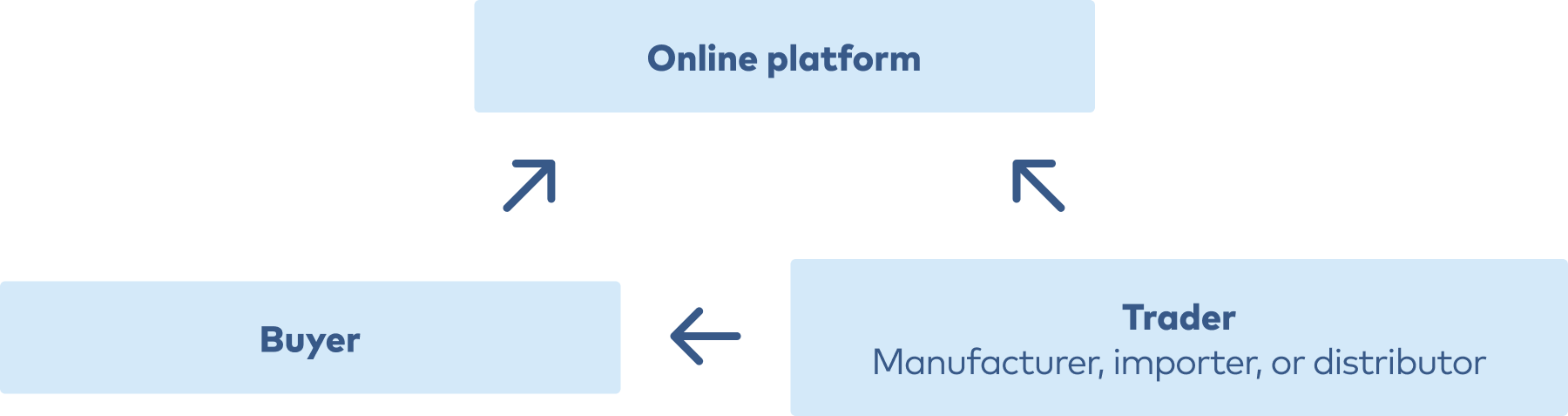
Figure 3. Model of sales using intermediary (online platform)
Examples of online platforms are Amazon (when acting as intermediate), AliExpress, Wish, eBay, Etsy, Joom and Rakuten.
2.3.4 Dropshipping suppliers
When a dropshipping store is establishing, it needs to be filled with products. Usually this is done through a dropshipping supplier. Here, the dropshipping trader gets access to different suppliers against payment and can choose which products they want to offer in their store, without having to seek out suppliers and negotiate prices, supplier terms, shipping, etc. They can also quickly exchange the products available in the dropshipping store.
With the increase of dropshipping traders, many traditional marketplaces now also operate as a dropshipping supplier, like for example Oberlo, SaleHOO, AliExpress (Alidropship), Droshi, Printful, BigBuy, DHGate, and Yakkofo.
2.3.5 Platforms specialised in helping dropshipping traders
The most common approach to setting up a dropshipping store is to use an e-commerce platform, such as Shopify, Quickbutik, Wix eCommerce, BigCommerce, SquareSpace and Volusion or WooCommerce. These platforms have ready-made concepts (domain name, appearance, design, etc.) with "click and drag function" to easily create online stores, and against payment, the dropshipping trader gets access to these concepts. The platforms also offer help with, for example, order management, payments, booking of shipping, etc., through built-in functions.
2.4 Selection of companies, products and substances
Selection of companies
The scope of the project was to inspect products sold from e-commerce actors. We chose to focus on traders (either as webs shops or dropshipping), or marketplaces, which were explained in section 2.3.
It was decided that the participating countries could choose to inspect products sold from companies located in their own country, in other EU member states and from outside the EU. Due to lack of information on the web sites, it was not always easy to know the business model of the e-commerce actor and where it was located before the product was purchased.
Selection of products
Each country decided which products to buy and control. The strategy for selecting products differed between the countries and between each national sub-project chosen to be a part of this joint project. Most of the products were chosen based on experience on where we often see deficiencies. In this project, the products were categorised in the following groups:
- Biocidal products and plant protection products
- Other chemical products
- Electrical product
- Electrical toy
- Fashion: Clothes, shoes and accessories
- Jewellery (also including precious metals)
- Sports and leisure
- Toy
- Other like: shower curtain, bathmat, thermos gloves, dishwashing gloves, package.
In appendix II, there is an overview with examples of products in each category.
In some cases, the products were only controlled regarding labelling and documentation, and there was no need for chemical analyses for these products. All products were chosen considering a risk-based approach based on experience. Some products were also selected due to the requirements in the regulations regarding labelling and documentation, mainly electronics and toys.
2.4.1 Restricted substances
Some products were first controlled with the authorities XRF screening instrument
XRF stands for X-Ray Fluorescence and is a technology based on materials being irradiated with X-rays and then fluorescent radiation bounces back and is captured by the instrument. The instrument can then read which elements the material is made of. The technology gives an indication of which elements are present in the material and which concentrations are involved.
Legislation | Substances |
REACH | Phthalates, PAHs, azocolorants, lead, cadmium and nickel |
POPs | Short chain chlorinated paraffins (SCCPs) |
Toys directive | Heavy metals * Only screened with XRF |
RoHS directive | Phthalates, lead and cadmium |
Table 1. Substances analysed for in different legislations.
2.4.2 Biocidal products and plant protection products
Biocidal products and plant protection products were controlled by the Swedish Chemicals Agency. For this group of products, the selection of companies targeted drop shipping actors. For biocidal products the selection of products was made amongst products belonging to biocidal product-types which always require authorisation according to the biocidal products regulation or Swedish regulations in applicable cases and which were found in the selection process. The selected product-types were:
- Product type 8: Wood preservatives
- Product type 14: Rodenticides
- Product type 18: Insecticides, acaricides and products to control other arthropods
- Product type 19: Repellents and attractants
- Product type 21: Antifouling products.
As the control could be conducted simultaneously with the selection process, only non-compliant products were selected for inspection.
The control focused on checking if biocidal products and plant protection products sold online to the Swedish market were authorised according to applicable regulations. Because information regarding a products identity is the only information required to check if a biocidal product or plant protection product is authorised no products in this category were purchased for the purpose of control. The control was conducted online only.
2.4.3 Labelling for toys and electrical products
Electrical products and toys are obliged according to RoHS and Toys directive to have CE-marking, contact details for manufacture and importer and ID number for the products. This was controlled in the project
Furthermore, they are required to have been tested according to certain standards applicable for the product, on basis of which a declaration of conformity is made – which again is the basis for labelling the product with the CE-marking.
The obligation to produce and provide the declaration of conformity for the product was also controlled to some extend in the project – the provision is in some cases required to be done within the supply chain – and in all cases, it should be provided to the authorities upon request.
2.4.4 Labelling of chemical products (CLP regulation)
Chemical products were controlled by the Swedish Chemicals agency. For this group of products, the selection of companies targeted dropshipping traders who sold to Swedish consumers. The types of products which were controlled were typical consumer products e.g. cleaning products, car care products and paints. The controls focused on article 48.2 and article 17 of the CLP-regulation. The products were purchased from dropshipping traders. To be able to control the products classification and labelling the trader were also asked to declare information regarding the content of the products, e.g. via safety data sheets.
2.5 Communication between member states
The enforcement authorities use the database ICSMS
The Information and Communication System on Market Surveillance (ICSMS) is an IT platform to facilitate communication between market surveillance bodies in EU and EFTA countries: Information and Communication System on Market Surveillance (europa.eu)
If the non-compliance is considered serious risk for human health and the environment, the product is also reported to Safety Gate,
Safety Gate: the EU rapid alert system for dangerous non-food products: https://ec.europa.eu/safety-gate-alerts/screen/webReport
To communicate non-compliant products to the public, there are also different national solutions. In Finland, Denmark and Norway, products with serious risk are published on https://vaarallisettuotteet.fi/etusivu, www.mst.dk/UlovligeProdukterand www.farligeprodukter.no, respectively, which are webpages operated by several agencies to communicate to the public.