2. Summary of the presentations at the conference 2nd September 2024
2.1 Setting the scene
2.1.1 Opening by the Swedish Minister for Climate and the Environment
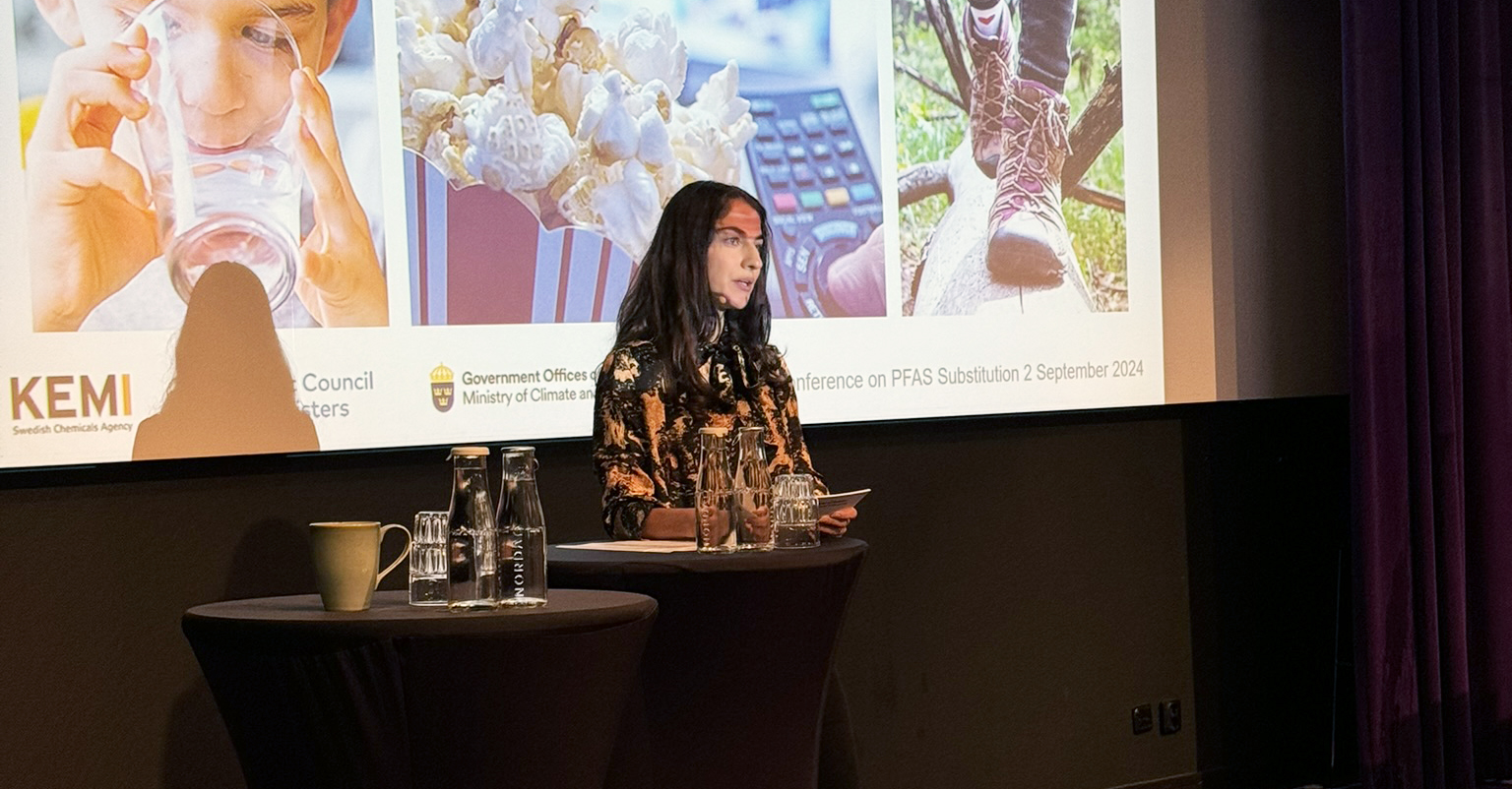
The conference was opened by the Swedish Minister for Climate and the Environment, Romina Pourmokhtari. The Minister gave a speech that highlighted that the Nordic countries lead the way towards phase-out of PFAS, for example by the active roles of the Swedish, Danish and Norwegian competent agencies in the preparation of the broad PFAS restriction under REACH. This conference was mentioned as another example of Nordic leadership.
The Minister emphasized that sharing of experiences of substitution, analytical methods and tools, which is the aim of the conference, is in line with the ambitions for the Nordic region as a pioneer in a competitive and innovation-driven transition. Furthermore, she said that efficient compliance testing, which is the focus area of the workshop, is a prerequisite for a level playing field.
Furthermore, the minister clarified that the Swedish Government fully supports the commitment to a universal phase-out of PFAS, which is in line with the EU Chemicals Strategy for Sustainability. She also highlighted that future health effects of PFAS are expected to arise and referred to a report commissioned by the Nordic council, which estimated the socio-economic cost of inaction to be between 52 and 84 billion Euros per year (Nordic Council of Ministers, 2019).
The full speech is available in Appendix 3.
“This conference will be at the core of the continuing road towards a universal phase-out. Authorities and business now need to share their knowledge and their experiences of detection, identification, and phase-out of PFAS, as you will be doing today. It is indeed encouraging to note that you will hear about the positive experiences from a wide range of sectors, ranging from textiles to consumer electronics.”
“Feasible alternatives to hazardous substances have always been developed when strong legislative pressure has been combined with innovation efforts. I am therefore totally convinced that we will find solutions for the phase-out also of PFAS.”
2.1.2 An overview of the problems with PFAS
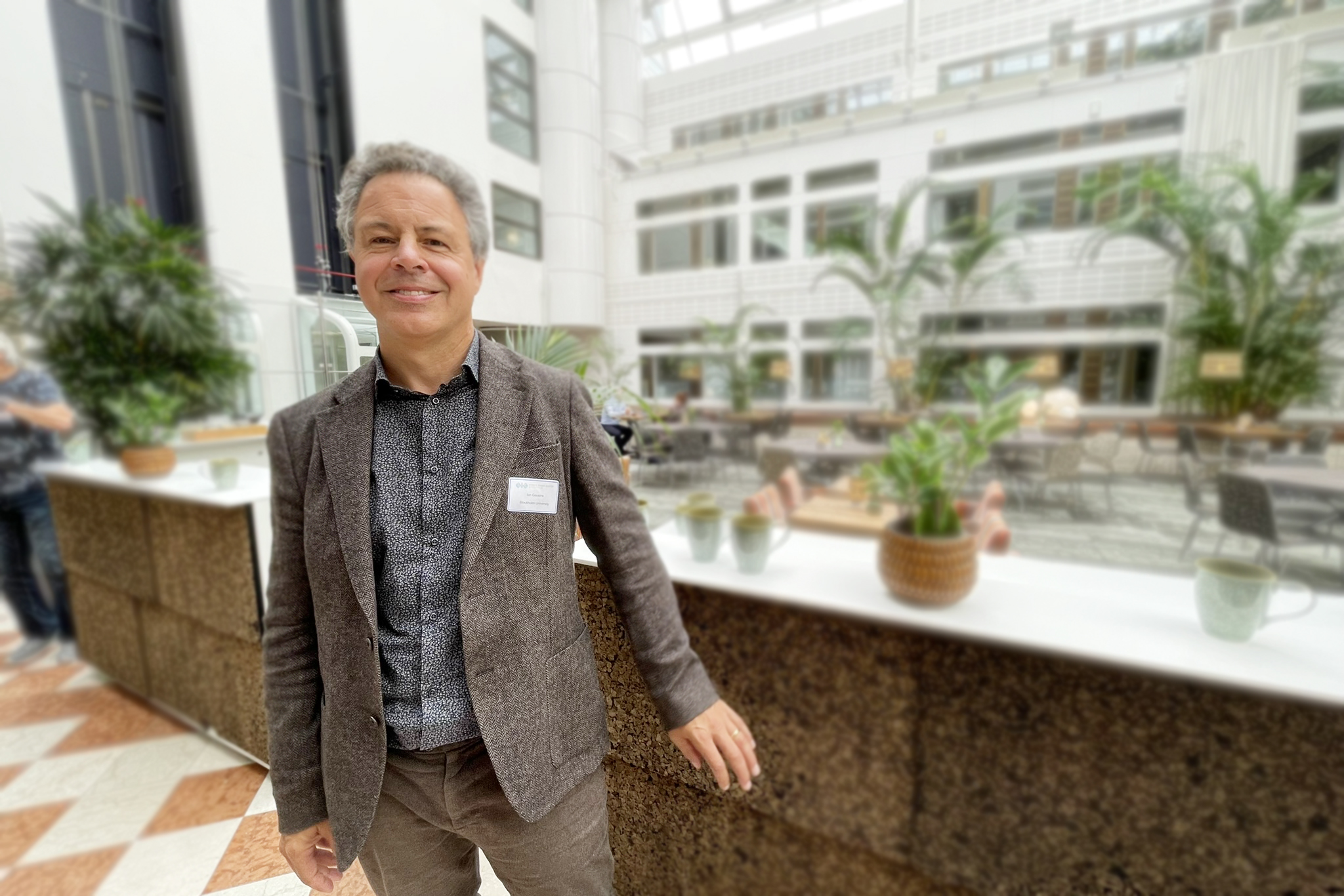
Professor Ian Cousins from Stockholm University gave an introductory presentation about the definition of PFAS, diversity of the group, properties and uses of PFAS.
Ian Cousins emphasized that the diversity of PFAS is extremely broad. All PFAS share the common property of being very persistent or transform to very persistent terminal transformation products. However, other properties vary between substances. For example, PFAS with longer perfluoroalkyl chains are bioaccumulative, whereas others with shorter perfluoroalkyl chains are mobile in the environment. Furthermore, we do not know the toxicity of most PFAS. The number of PFAS varies depending on how you count. For example, 531 PFAS are registered under REACH, approximately 10,000 PFAS are referred to in the universal PFAS restriction proposal, whereas more than 7 million are available in the PubChem database, where many are only listed in patents.
Continuous releases of PFAS result in increasing environmental levels and increased probabilities of known and unknown effects. Ian Cousins described the case of trifluoroacetic acid (TFA), which is formed from PFAS used in e.g. refrigerants, pesticides, and pharmaceuticals, as a “poster child” for the problems with high persistence. The levels of TFA in the environment have increased sharply over time and there is yet no efficient method to remove TFA from the environment. So far, TFA in the environment has largely been overlooked, but once high levels have been reached the contamination is virtually irreversible and may pose a risk to humans and the environment. In his presentation, Ian Cousins also touched on the problems with fluoropolymers from a lifecycle perspective, due to the emissions of PFAS during manufacturing and end of life (e.g. incineration).
In summary, the high persistence is the underlying driver of the PFAS problems, both in the Nordic countries and in the rest of the world. If PFAS are not restricted, the continuous release of PFAS will lead to accumulation somewhere in the environment until known or unknown effect thresholds are exceeded.
2.1.3 Current and upcoming PFAS-restrictions
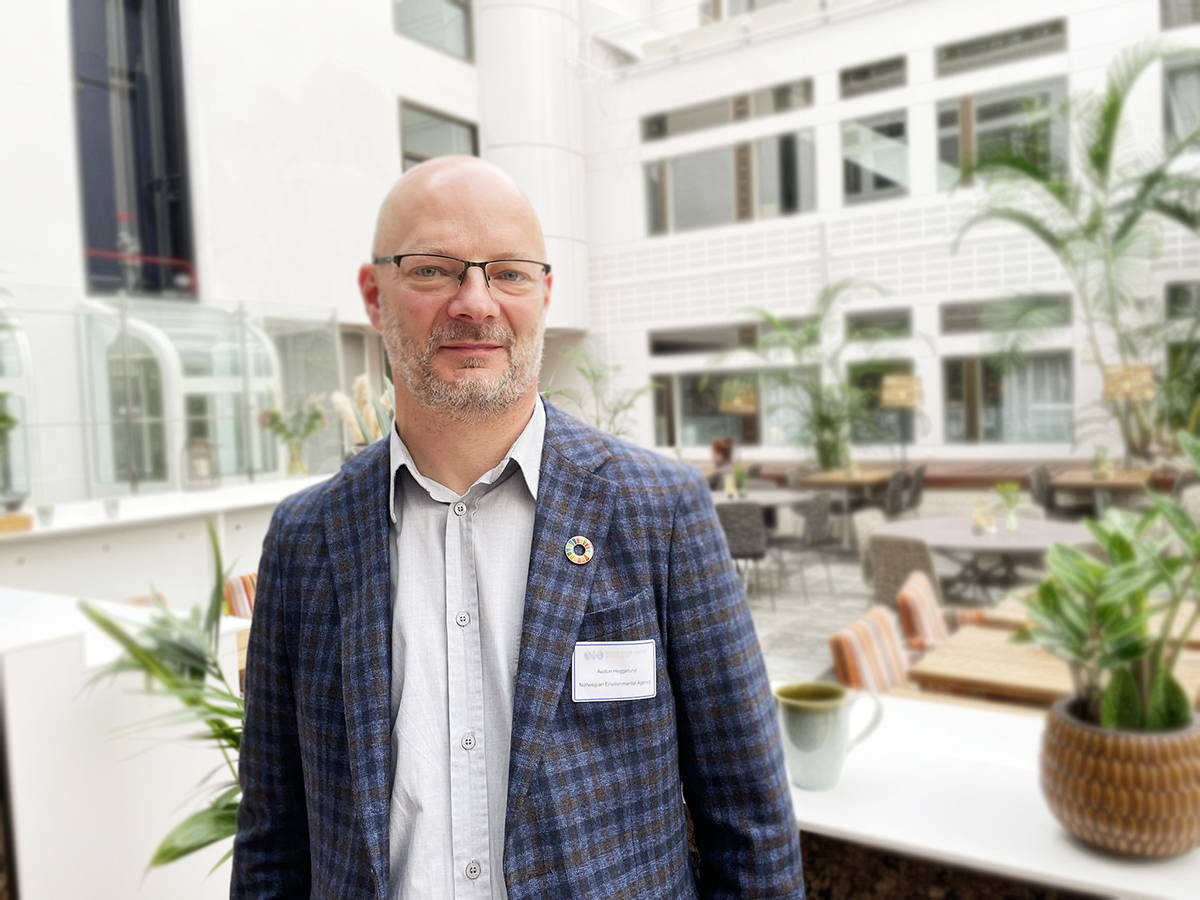
Audun Heggelund, senior advisor at the Norwegian Environmental Agency (Miljødirektoratet), held an introduction to the current and upcoming PFAS restrictions in the EU. The presentation highlighted the active legislative work on PFAS that the Nordic countries have accomplished over recent years, regarding both restrictions and identification of PFAS as Substances of Very High Concern (SVHC). Another example of Nordic action is the universal PFAS restriction that was submitted by Germany, the Netherlands, Sweden, Denmark and Norway in January 2023 and is currently under discussion in ECHAs scientific committees for risk assessment (RAC) and socio-economic analysis (SEAC). The restriction targets PFAS as a broad group and applies to all applications, with derogations for specific uses. According to the restriction proposal, applications of fluorinated gases contribute most to the total emissions (based on tonnage and likelihood for emissions) followed by TULAC (Textiles, Upholstery, Leather, Apparel, Carpets) and medical devices. The restriction proposal includes a set of limit values for PFAS in products (see box). These limit values are central in many of the presentation and discussions that followed during the conference and workshop.
Proposed limit values in the universal PFAS restriction
- 25 ppb for any PFAS (except polymeric PFASs)
- 250 ppb for the sum of PFASs, optionally with prior degradation of precursors
- 50 ppm for PFASs, including polymeric PFASs
Information requirement: If, as a part of an authority enforcement campaign, total fluorine exceeds 50 mg F/kg, the manufacturer, importer or downstream user shall upon request provide to the enforcement agencies a proof for the fluorine measured as content originating of either PFASs or non-PFASs.
2.2 Inspiration
There are companies that strive towards offering PFAS-free products on the market. These companies are progressive and even go beyond the current legislations on PFAS. At the conference, five companies gave insights from their journeys for phasing out PFAS, including the challenges and opportunities they have encountered. They also gave advice to other companies that want to embark on the same journey.
2.2.1 The outdoor company Houdini share their phase-out journey of PFAS
Malin Wetterborg, textile engineer at Houdini Sportswear, shared her experiences from the company’s active work to phase out PFAS. Malin said that the company strives away from linearity towards circularity and today 88% of their products are circular by design. She explained that circular from a chemical perspective means that the textiles are pure enough to recycle, which includes that they are PFAS-free. The company started phasing out PFAS in 2013 and all fabrics were PFAS-free by 2018.
Malin Wetterborg said that substitution and development requires time. It can be difficult to find alternatives that do not compromise with quality and performance, especially when they started looking at alternatives back in 2013. All fabrics need to be tested individually at several steps of the development process. Not all alternatives are compatible with the fabrics and when the trials fail, and have to start over, a lot of time is consumed.
Malin Wetterborg said that in traditional outdoor wear, PFAS are primarily used in membranes and in treatment and finishing to give the garments certain properties, such as water resistance. One example of a natural alternative to PFAS in outdoor wear is a shell layer made of 100% merino wool, which is inherently wind- and water resistant. However, new alternatives may entail that costumers need to take better care of their products, which requires the company to provide information and education to end users.
In addition to the known uses of PFAS, hidden sources and contamination along the whole production chain may occur, which is more difficult to identify. Malin Wetterborg said that to overcome this challenge, good communication and even education of the suppliers along the supply chain is key. Furthermore, it is important to question whether for example a treatment really is needed, or if it is, in fact, unnecessary for the purpose of the garment. Another learning from their phase out journey is that cooperation across the industry is positive as it allows to learn from each other and makes it easier to push manufacturers and suppliers towards change.
Looking ahead, the company will work on projects with industry partners and research organisations, keep communicating and educating the suppliers as well as the end users, try to find hidden sources of PFAS, and keep developing technologies and alternatives. Malin Wetterborg said that they will keep thinking outside the box and changing the mindset.
2.2.2 Successful transformation from synthetic to natural refrigerant for Cooling & Heat Pump sector, avoiding environmental impact from ozone depletion, global warming, TFA & PFAS
Fredrik Strengbohm, technical manager at Caverion Sweden AB, talked about the use of natural refrigerants for the cooling and heat pump sector, while at the same time lowering the energy consumption and climate impact. Fredrik says that he started working with natural refrigerants already 20 years ago, despite that his colleagues at the time told him that it would be too expensive.
Refrigeration, air conditioning and heating is the sector with the largest use of fluorinated gases (F-gases). F-gases have undesirable properties as they have a large impact on the global warming and may form trifluoracetic acid (TFA) or other PFAS. Alternatives to F-gases include natural refrigerants, such as propane, carbon dioxide and ammonia. Fredrik Strengbohm introduced an example of supermarkets that started using carbon dioxide already 15 years ago and together with an energy storage integrated system for heating and cooling, managed to lower their energy consumption by 70% compared to using of F-gases. According to Fredrik Strengbohm, these systems can be applicable to all sectors, such as ice skate arenas, gas stations, professional kitchens, and the transport sector.
The transition from F-gases to natural refrigerants are driven by several regulations on the EU-level. Fredrik Strengbohm concludes that natural refrigerants were introduced 200 years ago and after leaving these refrigerants behind in favour of synthetic refrigerants, we are now back with the natural again.
2.2.3 How Coop Denmark led national change on PFAS
Coop Denmark holds one third of the marked share in Denmark and therefore has the size to affect the suppliers. Louisa Raith Sørensen, team leader of non-food quality and sustainability at Coop DK, showed an example of how Coop launched a campaign to urge the Danish Parliament to ban PFAS in food contact materials. As a result, this ban came into force in 2020.
The Coop DK sustainability strategy includes several key issues, including “no one must be exposed to harmful substances”. The company has worked systematically to phase out PFAS from their assortment since 2014, when their ban of PFAS in food contact materials of paper and board was launched. At that time, Coop had to remove microwave popcorn from their shelves since the producers deemed it impossible to find PFAS-free popcorn bags. However, soon after the sales ban, the producers came up with an alternative of slightly thicker PFAS-free paper, and the microwave popcorn could return to the shelves. This is another excellent example of the potential of companies to impact product development. Since then, Coop has proceeded with bans on PFAS in textiles in 2016, cosmetics in 2019 and frying pans in 2024.
When working ahead of legislation, Louisa Raith Sørensen said that it is important to have a quality control system. At Coop DK this includes ongoing dialogues with suppliers to help them understand and comply with the requirements, a random sampling testing program and a description of their PFAS ban in trade contracts.
Learnings from Coop DK’s phase out journey include that it possible to produce packaging and goods without PFAS and that innovations happen when the industry is pressured to act. Louisa Raith Sørensen said that in a world of powerful industries and where legislation can be several of years in the making, we need responsible companies.
2.2.4 How Blåbær phased out PFAS at Norway`s largest kids wear brand
Rolf-Erik Lund, managing director at Blåbær Production Norway, told an open and honest story of how the company has worked, failed and succeeded in their journey towards phase-out of PFAS. Blåbær Production is a small design and production company within the textile sector. They work for external clients but follows all steps in the process from draft and ideas to final delivery.
The journey started when the Norwegian Miljødirektoratet found PFAS in their client’s kids wear brand. At that time, the company had poor knowledge of chemicals. However, the exposure in media created a motivation to avoid similar cases in the future. In 2015–16, they started communicating about chemicals with their suppliers and a “contract of environmental concern” was distributed to the suppliers. The company also became a member of the Swedish Chemical Group at RISE. According to Rolf-Erik Lund, the tools from the Chemical Group were very helpful.
In 2017–18, they extended the focus from only C8 PFAS to also include C6 PFAS chemistry. They started visiting 2nd and 3rd tier suppliers and updated the chemical contracts with the suppliers. They also increased focus on unauthorized subcontracting and started to perform systematic random testing.
In 2019–22, the company set up clear internal policies and commitments and created a vision “to be a greener partner through innovative and solution-oriented design, production and logistics”. Furthermore, they started performing risk assessments to identify risks and nominated 2nd and 3rd tier suppliers to be used for several factories and products. They also joined the “no to PFAS” movement by ChemSec and broaden the focus from only C6 and C8 to all PFAS in the supply chain.
However, the company’s new PFAS policy has brought some drawbacks. The company has faced increased material costs and challenges to reach sufficient functionality. In addition, it has been difficult to find suppliers with good knowledge on PFAS and approximately 1/3 of their suppliers finds Blåbær’s chemical requirements “very challenging”.
Finally, Rolf-Erik Lund said that the legislations should be stricter and come into force much quicker and that agencies should control the restrictions by testing products more frequently. He also advises other companies to seek knowledge and advise from external sources, decide on clear internal policies, and take one step at the time.
2.2.5 PFAS in Marshall consumer electronics - challenges and opportunities on the road to circularity
Anna Forsgren, product compliance and sustainability manager at Marshall Group, gave her perspective of PFAS substitution in consumer electronics, specifically headphones and speakers. PFAS are used in these products mainly as flame retardants in plastic housing, but also in printed circuit boards and their coatings, plastics of cables and wires, Li-ion batteries, microphones and semi-conductor production. In addition, PFAS can be found in e.g. sensor protection film, switch tape, switch gears, vents, and lubrication oil. In consumer electronics, fluoropolymers are the most frequently used PFAS.
Anna Forsgren said that if we want to phase out PFAS in electronics, we need to understand all the different functions they have. Substitution can be done at several levels, including changing a chemical product, the material, the design or technology. She says that all applications they have identified in consumer electronics so far have a PFAS-free option technically possible, although some applications may need compromises and time for development. At Marshall, flame retardants have been avoided by designing around the flammability requirements and fluoropolymers have been shifted to polyethylene. Furthermore, the lubricant oils could be shifted to silicone or wax-based ones, and adhesives could be changed to acrylates. Development is still ongoing for batteries, cables and plastic additives. For other widely used components, such as semiconductors, switches and gears, more actors are needed to raise similar requirements to change the production methods.
Anna Forsgren considers that it does not cost much to phase out PFAS. In fact, plastics that are not flame resistant are cheaper. Furthermore, increased knowledge of materials results in more design and component improvement which saves costs. Regarding costs of chemical analyses, the company uses a simple and cheap halogen test to screen for fluorine and identify components that should be investigated further together with the suppliers. She admits that some applications cost more initially due to e.g. developmental costs and lower quantities but says that this difference should decrease over time when other companies start demanding PFAS-free components.
Anna Forsgren highlighted that the electrical safety standards, which she thinks is outdated, hampers the development to PFAS-free electronics. She suggests that the standards should be developed with coming regulations, global acceptance and the high innovation speed of the sector in mind.
Lastly, Anna Forsgren said that companies need to shift focus from lobbying for derogations in the universal PFAS restriction to accelerating the work on finding alternatives. Furthermore, she says, there is a need for more brands to have the courage to compromise.
2.2.6 Panel discussion
Erik Mattsson moderated a panel with Fredrik Strengbohm (Caverion), Malin Wetterborg (Houdini), Rolf-Erik Lund (Blåbær) and Anna Forsgren (Marshall). They shared their experiences and insights on a number of questions posed by the moderator and the audience, some of which are summarised below.
To the question of what the panelists consider were the main reason for phasing out PFAS, several examples were given. Malin Wetterborg said that one reason was that her company strives for recyclability and therefore does not want to promote chemicals that harm people and the environment. For Rolf-Erik Lund and his company, the phase-out journey started when the Norwegian Miljødirektoratet found PFAS in the products and the brand got exposed in the media. Fredrik Strengbohm reflected that when bad things are discovered, a window of opportunity opens to do things differently. Science and technology are not the big issue, since we can solve anything, as long as we have demands and regulations in place.
The panelists were asked about the most important thing when they started the substitution process. It was emphasized that internal policies and commitments need to be in place. Another learning was that it is good to start by mapping out the materials that are most likely to contain PFAS, instead of looking at the complete product line at once, which can be overwhelming. One panelist said that it’s important to try to increase your knowledge as it is difficult to communicate with suppliers about something you know nothing about. Furthermore, the panelists agreed that it is recommended to take help from external experts.
The panelists were also asked to say something to companies that have not started to phase out PFAS. It was stressed that although legislation is an important driver, companies should not wait for the change. Anyone who wants to be in the forefront, just start somewhere and sometimes you go sideways, but you will not go backwards. One reason for all companies to start working with PFAS substitution is that there are worrying health effects that come slowly before we understand the impact. Lastly, it was said on a humoristic note that substitution of PFAS is a nice trip. Bumpy, but nice.
2.3 Experiences
Several Nordic reports have recognised that efficient and reliable analytical methods for PFAS in articles and chemical products are crucial for compliance and enforcement of current and upcoming regulations (Nordic Council of Ministers 2022, 2024a, 2024b). However, there is currently a lack of standardised and validated methods as well as an established workflow for PFAS analyses in articles and chemical products. This section of the conference aimed to give a brief overview of different types of analytical methods, introduce a potential workflow for PFAS analyses and present several examples of PFAS analyses in different products categories.
2.3.1 Challenges and opportunities related to compliance testing of PFAS in chemical products and articles
Robin Vestergren, scientific officer at the Swedish Chemicals Agency, gave an overview of the most important analytical techniques for PFAS, pointed out the challenges for compliance testing of chemical products and articles, and presented a suggestion for a systematic workflow for compliance testing.
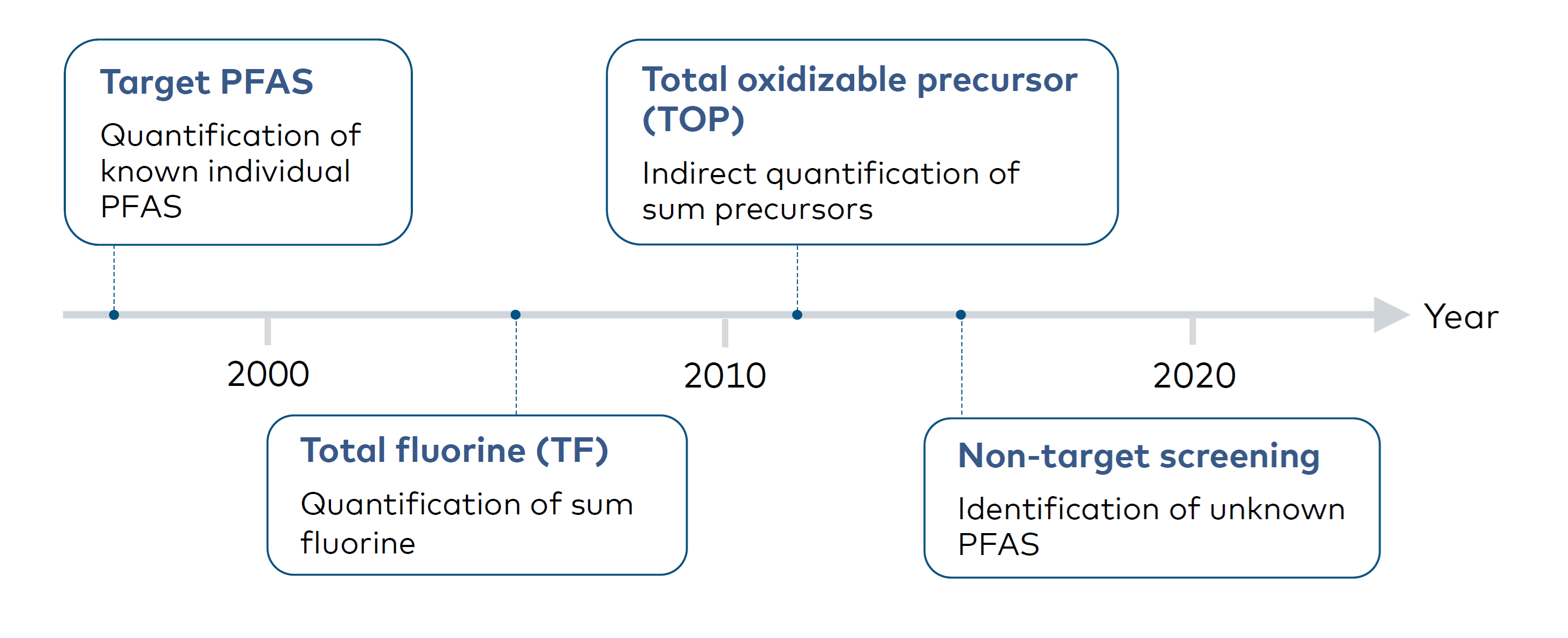
Figure 1 Timeline over the introduction of important analytical methods for PFAS analysis.
The analytical techniques for PFAS have evolved from targeted analysis of a limited number of known individual PFAS, to broader methods that can measure total fluorine, precursors to known PFAS, and so far unknown PFAS (Figure 1).
There are still many challenges for PFAS analysis of products, both for companies that want to know if PFAS are present in their products and for enforcement agencies. For example, advanced non-target methods are currently expensive and time-consuming, and the array of available analytical techniques makes interpretation and communication of results challenging. The limit value for individual PFAS (25 ppb) is relatively low, which requires low limit of quantification (LOQ). Furthermore, the large number of matrices makes standardization challenging. Thus, the ideal method should be a fast, cheap and able to identify and quantify all restricted substances, with sufficiently low LOQ. Furthermore, the method should be standardized and accredited for all matrices of interest.
Robin Vestergren presented a suggestion for a three-step systematic workflow for compliance testing of PFAS, which has been developed together with colleagues from Sweden, Norway, Finland, Germany, Czech Republic, Netherlands, Canada, and the US (Vestergren et al. 2024) (Figure 2).
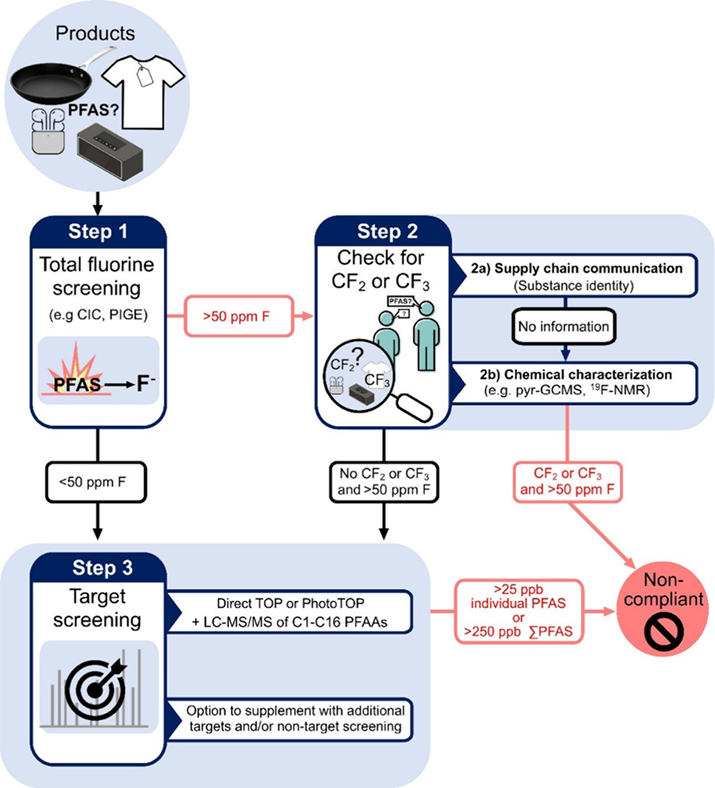
Figure 2 Three-step workflow that companies or agencies could implement to assess noncompliance with the proposed broad restriction of PFAS under REACH (Vestergren et al. 2024). Abbreviations: CIC, combustion ion chromatography; PIGE, particle-induce
Step 1. Screening for total fluorine (TF) provides a relatively fast and inexpensive way to assess whether PFAS may be present in a sample, without requiring sample extraction. There are several techniques available for TF measurement. However, one drawback is that these methods cannot distinguish between PFAS and inorganic or non-PFAS organic fluorine.
Step 2. Confirmation of PFAS. The content of PFAS, inorganic fluorine or non-PFAS organic fluorine can either be ascertained by obtaining information from the supplier. However, if reliable information is not available, the presence or absence of CF2 or CF3 groups may be determined analytically, for example by pyrolysis-gas chromatography-mass spectrometry (pyr-GC/MS) or 19F nuclear magnetic resonance (19F NMR). However, However, while pyr-GC/MS is a more advanced tool than 19F NMR for analysis of PFAS in articles and chemical products, considerable work is still required to validate these approaches for application in a regulatory context.
Step 3. Quantifying individual PFAS or the sum of PFAS. The restrictions include limit values for individual PFAS or the sum of PFAS at much lower levels than the detection limits of TF methods. LC-MS/MS target analysis can be used to test non-compliance with 25 ppb limit values for individual PFAS in the proposed universal PFAS restriction. In addition, TOP analysis together with LC-MS/MS can test non-compliance with 250 ppb limit values for sum PFAS, including precursors. Furthermore, non-target analysis could be used to detect hitherto unknown substances.
According to Robin Vestergren, the way forward involves further testing and development of specific methods and application to different categories of chemical products and articles. Also, work towards accreditation, standardization and validation is crucial. Furthermore, to help the agencies, formal guidance documents for enforcement are needed. Robin said that different actors need to work together to achieve this, both national and European agencies, academic researchers, commercial laboratories and companies.
2.3.2 Screening and identification of PFAS in electronics, textiles and food contact materials
Lisa Skedung, senior researcher and project manager at the Research Institutes of Sweden (RISE), shared learnings from PFAS analyses of different consumer products. The primary methods in these projects were combustion ion chromatography (CIC) and pyrolysis-gas chromatography-mass spectrometry (pyr-GC/MS), which are both methods that use direct thermal breakdown to capture polymeric PFAS. These methods are described by Skedung et al. 2024. However, whereas CIC measures total fluorine, pyr-GC/MS detects CF2 and CF3 fragments, which are indications of the presence of PFAS. Lisa Skedung refers to the three-step workflow that was presented by Robin Vestergren (section 2.3.1) and she presented several case studies were TF was measured in the first step, and presence of PFAS (CF2 and CF3) by pyr-GC/MS was verified in the second step.
Lisa Skedung presented results showing TF levels in textile articles in the range 65–1500 ppm. With pyr-GC/MS, the presence of PFAS-chemistry is confirmed, and it is possible to get information about the target PFAS-chemistry in the side-chain fluorinated polymers that are used for water, dirt and stain repellence. In a project on PPE, PFAS was found in 57% of the analysed articles.
In a project on PFAS in food contact materials (FCM), TF at levels above 50 ppm were detected in 8 out of 37 products. By verification with pyr-GC/MS, PFAS (C6 fluorinated carbons) could be detected in 2 products. In the remaining 6 samples with high TF levels, the presence of PFAS could not be verified by pyr-GC/MS. These samples are believed to contain an inorganic source of fluorine. Based on results from the pyr-GC/MS it was concluded that in these types of articles, silicone chemistry has to a large extent replaced PFAS. The FCM samples were also analysed by target analysis of individual PFAS, but these levels did not exceed the proposed limit value for the sum of PFAS. However, when the samples were oxidized (TOPA) prior to the targeted analysis, 2 samples exceeded the limit value for the sum of PFAS (the same two samples where PFAS-chemistry had been verified by pyr-GC/MS). Thus, application of TOPA increases the chance of detecting precursor PFAS, and is therefore suggested as step 3 in the proposed workflow instead of LC-MS/MS target analysis
Lisa Skedung also presented several examples of analyses of consumer electronics. Electronics are generally more complicated than many other consumer products as they often contain several heterogenous components. Thus, one must think about the probable function of PFAS in the products to predict where PFAS are most likely to be found. In one of the projects, high levels of TF were measured in the plastics of head-phones cases, loudspeakers and computer power cables. In these products, subsequent pyr-GC/MS could verify the presence of the fluoropolymer PTFE. In another project on selected components in outdoor electronics (i.e. headlamps, beacons, battery packs and led vests), PTFE was found in the outside battery or battery case and another fluoropolymer (ETFE) was found in 1 out of 9 analysed cables. In another example on consumer electronics, a coffee maker was disassembled and TF levels exceeding 50 ppm were found in wired glass fibre cables, and two coated parts near the heat plate. However, the presence of PFAS could not be confirmed with pyr-GC/MS. A hypothesis is that MICA (inorganic fluorine) have been used in these components as fire protection or insulation.
Throughout her presentation, Lisa Skedung emphasised two key messages:
- there are analytical methods that capture polymeric PFAS!
- it is possible to enforce a universal PFAS restriction!
2.3.3 A practical and pragmatic approach for detection of PFAS during ski competitions
Anders Nilsson, application and sales specialist at Bruker Nordic AB, shared a success story of compliance testing of fluor in ski waxes. The background was a decision by the International Ski and Snowboard Federation (FIS) to ban fluorinated ski waxes in competitions by 2023–24. Fluor in ski wax at a concentration of more than 1% provides a competitive time advantage of approximately 4–10%. Therefore, compliance with the ban is crucial not only for environmental and health reasons, but also for competitive reasons.
When the ban was decided, there was no suitable technique for compliance testing. The ideal analytical method needed to be none-disruptive, reliable, accurate, and cheap. Furthermore, it had to work in cold outdoor conditions, and in non-laboratory settings (sometimes in tent next to the ski tracks). It should also be operated by non-experts and had to be easily transported between sites. Specifically, the analysis should not take longer than 10 seconds per ski and have capability to measure 100 skis before a competition.
Anders Nilsson said that to meet all these requirements, a method based on FTIR (Fourier Transformed Infrared) spectroscopy was developed. He says that the method fulfils the requirements of speed, cost, accuracy and reliability. The FTIR method works without touching the skies, and the instrumentation can be fitted into a couple of suitcases for transportation. Furthermore, a detailed standard operational procedure ensures that method can be operated by non-experts and the results are indicated by a simple green-yellow-red alarm system.
During the first season since the implementation of the ban, approximately 100,000 spots in skis were tested and more than 50 athletes had skies with PFAS levels that exceeded the limit value. Most of these athletes claimed that the noncompliance was due to dirty tools or dirty old skis.
2.3.4 PFAS in cosmetics and personal care products from the European Market
Jonathan Benskin, professor at Stockholm University, shared the results from a project on PFAS in cosmetics, conducted by Stockholm University and IVL Swedish Environmental Research Institute. The project used a three-step approach, which included 1) to develop an inventory of PFAS in cosmetics using European cosmetic databases, 2) to analyse a selection of cosmetics using a multiple analytical approach, and 3) to estimate annual emission of PFAS into European wastewater and solid waste from cosmetics (Swedish Chemicals Agency 2021).
In the first step, the CosIng database (European Commission database for information on cosmetic substances and ingredients) was used to search for INCI (International Nomenclature of Cosmetic Ingredients) names containing “fluoro”. The search retrieved approximately 170 unique INCI names containing at least a -CF2- or -CF3 moity.
These 170 INCI names were then cross referenced against the CosmEthics database to identify PFAS-containing products. The search yielded 1658 products, corresponding to 1.4% of all products in the database. The product types with PFAS were mainly make up, facial care, male grooming and hair care. The most frequently listed PFAS were PTFE and C9-15 fluoroalcohol phosphate.
In the second step, 43 cosmetic products with PFAS in the ingredient lists were purchased and analysed for total fluorine (TF). A subset was also analysed for extractable organofluorine (EOF) and individual PFAS. The levels of TF ranged between <LOD to 13,800 µg F/g and varied considerably across all product types. The results from the multiapproach setup highlighted that a combination of measurements of TF, EOF, and target PFAS is necessary to obtain a full picture of the occurrence of fluorine containing substances in products, including inorganic fluorine and fluoropolymers.
In the third step, the annual PFAS emissions from cosmetics in Europe to wastewater and solid waste were estimated to be 0–0.015 tonnes of C4-C18 PFCAs, 0.04–5.1 tonnes of EOF and 0.02–38 tonnes of TF (Pütz et al. 2022).
Taken together, Jonthan Benskin leaves the audience with a few take-home messages. Firstly, combining total fluorine with targeted analyses is key to obtain upper and lower bounds estimates of PFAS in consumer products. Secondly, inorganic fluorine is prevalent and may confound total fluorine data. And finally, extraction can remove inorganic fluorine but may also remove some PFAS and therefore the extraction procedures should be aligned with the listed PFAS ingredients.
2.3.5 Panel discussion – experiences
The moderator Erik Mattsson led a panel discussion with the speakers Robin Vestergren (Swedish Chemicals Agency), Lisa Skedung (RISE), Jonathan Benskin (Stockholm University) and Anders Nilsson (Bruker Nordic AB).
Erik started off by asking the panel about their relation to PFAS. Robin Vestergren said that he has been working with PFAS for 15 years in different positions, starting with his PhD. Jonathan Benskin similarly said that he has been working with PFAS since 2005, starting in his homeland Canada. He added that it says something about the global aspect of the issue. Lisa Skedung, who has been the project manager of the last POPFREE project, said that she enjoys helping companies in their PFAS substitution work that includes screening products for PFAS-chemistry. She started working with PFAS in 2016 in POPFREE, when they developed and tested PFAS-free ski wax, and together with stakeholders from the ski sport drafted a road map towards a phase-out of PFAS in competitive skiing.
Erik Mattsson asked the panellists how their work can be of help for companies and agencies in the room. Lisa Skedung said that she and her colleagues have a lot of dialogues with companies and help out with PFAS analysis and interpretation of the analytical results and also look into alternatives to PFAS. Jonathan Benskin mentioned that his research aims to develop new methods for testing, and that he would like to collaborate with industry partners. Robin Vestergren explained that the Swedish Chemicals Agency works a lot with communication about PFAS, for example through their web site and the PRIO tool. Anders Nilsson honestly said that his contribution to companies is by selling analytical instruments. He advises companies to contact RISE or other experts from the research area if they want to work with substitution as it can be complicated.
The panellists were asked what has surprised them the most. Jonathan Benskin said that the growing range and variety of compounds in the PFAS group has surprised him. Robin Vestergren agreed and added that the researchers thought that they had an understanding of PFAS in early 2000s, but as it turned out, that was only the tip of the iceberg. In fact, we find new PFAS chemistry every day. Lisa Skedung thought that it is positive that many companies have substituted PFAS and that we do not find PFAS in everything today.
Erik Mattsson wondered if nuclear magnetic resonance (NMR) could that be the solution. Anders Nilsson said that it is probably not the solution as it is expensive and trained staff are needed. However, NMR is favourable in medical production where high-level analysis is needed. Lisa Skedung said that GC-MS is more advanced than NMR right now. However, the combination of methods is the beauty.
Can the FTIR, that is used for testing of PFAS on skis, be applicable to other sectors? Lisa Skedung said that in her experience from testing different methods for PFAS, FTIR performs well on kitchenware but is less suitable for samples like textile or paper where the coating that may contain PFAS is very thin and the instrument measures pass the coating layer into the bulk of the material. Pyr-GC/MS is better for the latter and is more versatile for different types of articles and chemical products.
Is there a risk of compliance failure when PFAS are present at low levels? Robin Vestergren said that the relatively high limit value for TF (50 ppm) only captures the intentionally added PFAS. On the other hand, the limit value for targeted PFAS is low enough to catch contamination or active ingredients in for examples cosmetics. Thus, a combination of the methods is ideal. Jonathan Benskin said that for cosmetics, fluorinated compounds were not seen in products where PFAS was not listed in the ingredients list.
2.4 Tools
The group of PFAS is broad and includes substances that degrade into other PFAS. At the same time, the current regulations each cover a large number of PFAS, which cannot all be measured by target analyses. Thus, it is very challenging to identify all PFAS in chemical products and articles and figure out which ones that are restricted or not. Nonetheless, this is the reality for both companies and enforcement agencies. This section of the conference aims to present different tools for identifying PFAS and learning more about these substances in chemical products and articles.
2.4.1 PRIO – a tool for substitution. How to identify more than 10,000 PFAS
Olof Johansson, scientific officer at the Swedish Chemicals Agency, introduced the PRIO tool and explained how it can help companies and other actors to substitute hazardous substances in chemical products and articles.
PRIO consists of two parts. The first part is a substitution guide with a workflow on how stakeholders can work proactively with substitution. The second part is a database that supports stakeholders to identify and prioritise hazardous substances for substitution. The database consists of a large set of substances that fulfil the PRIO criteria. These substances are divided into two priority levels. The first level, phase out substances, have the most severe hazardous properties for human health and the environment and consequently should be prioritised for substitution. For the other level, priority-risk reduction substances, the risk should be assessed for the potential need for substitution.
The PRIO database consists of more than 16,600 substances of which nearly 11,000 are PFAS that fulfil the OECD definition (which is also used in the proposal for the universal PFAS restriction). All PFAS in the database are considered as phase out substances. The PRIO databased can be searched by standard search, batch search (several chemicals at once), or advanced search (combination of various dropdown variables). In his presentation, Olof Johansson gave hands-on examples of how to use the database.
2.4.2 What support can the Swedish Substitution Centre provide?
The Swedish Centre for Chemical Substitution, located at the Research Institutes of Sweden (RISE), is partly financed by the Swedish Government. The centre was funded in 2018 and currently consists of 5 employees. Their mission is to guide companies, organisations and the public sector in their efforts to identify hazardous chemicals and find better alternatives, in everything from products to processes. Tonie Wickman who is a senior advisor at the centre gave an overview of their activities related to substitution of chemicals in general and PFAS in particular.
The webpage for the Centre for Chemical Substitution offers a substitution guide, support material and inspiring examples from companies. The material is generally in Swedish, except for excel-sheets for risk assessments, mapping of chemical content and supply chains and templates that can be used in communication with suppliers. The Centre for Chemical Substitution do not provide any own tools for substitution but refers the reader to tools and databases available from other organisations. They also offer training courses, and education films on for example alternatives assessments (AoA) and safe- and sustainable by design (SSbD). Regarding PFAS, there is material from several webinars, for example on PTFE in bike chain lubricating oils and PFAS-free kitchenware. The centre also collaborates in research and networking, such as PARC and POPFREE.
Tonie Wickman also gave examples of several relevant networks that are hosted by RISE and in which support in substitution is a part. These networks include Normpack (Food contact and packaging), the Chemical group (textiles and electronics) and the National centre for sustainable plastics.
2.4.3 How can ChemSec tools support companies?
The International Chemical Secretariat (ChemSec), founded in 2002, aims to speed up the transition to a world free of hazardous chemicals. They work through policy, business and investors and tools. Jonathan Kleimark, who is a senior chemicals and business advisor at ChemSec, gave an introduction to their tools for substitution. The overarching aims of ChemSec’s tools are to support companies in substitution, be relevant and ahead of regulation, and provide insight to future-proofing businesses.
The SIN (Substitute It Now) list is a database of substances that have been identified by ChemSec as being Substances of Very High Concern, based on the criteria defined within the EU chemicals legislation REACH. The SIN list is used by companies in all parts of the supply chain and consultants as well as academia, governments, ecolabels, and other stakeholders. The list was launched in 2008 and has developed over the years. The SIN list currently includes 416 PFAS that are registered for production or import to the EU and/or the US.
The second tool – Marketplace – is an online platform that connects providers of safer alternatives to potential buyers all over the world. The alternatives can be drop-in substitutes, technological solutions and new processes or materials. Marketplace contains more than 700 alternatives to different (groups of) chemicals. For PFAS, there is a special section that currently includes approximately 100 alternatives to PFAS.
ChemSec also offers an online PFAS guide that aims to facilitate the first steps toward phase out of PFAS. It can be used by companies to understand if, where, and why PFAS are used in their organisation. The guide includes an information part with facts about typical PFAS uses, substitution and alternatives, hazards, and regulations, as well as links to sector-specific reports. The second part of the PFAS guide consists of a database which incorporates information from scientific publications, reports and information from individual companies and links to the SIN list and Marketplace.
2.4.4 Ecolabels, frontrunners in the green transition
The Nordic Swan Ecolabel, which is the official Nordic ecolabel, was funded by the Nordic Council of Ministers in 1989 and today there are around 40,000 ecolabelled products. Ecolabelling Sweden, which is the Swedish part of the Nordic Ecolabelling, is responsible both for the Nordic Swan Ecolabel and the EU Ecolabel in Sweden. Both ecolabels are Type 1 labels and follow the standard ISO 14024 and are among the world’s toughest and most ambitious environmental certifications.
Anna Linusson who is the CEO at Ecolabelling Sweden talked about how the Nordic Swan ecolabel makes it easier for consumers to make sustainable choices. She said that more than 80% of Nordic consumers think that it is difficult to know if products contain hazardous chemicals but trust that a product does not contain hazardous chemicals if it is labelled with the Nordic Swan Ecolabel. Furthermore, she said that 97% of the Nordic consumers recognises the Nordic Swan Ecolabel.
Companies can use the ecolabel criteria as part of their product development at the same time as it enables them to use the “environment” as a competitive advantage and thereby contribute to sustainable society. Furthermore, the ecolabel facilitates sustainable purchases and procurements in the public sector. Anna Linusson specifically urges the public procurers to ask for officially recognized Type 1 ecolabels. She also argued that demands on PFAS-free products in public procurements gives companies incentives to phase out PFAS from their products.
Since 2003 PFAS have been banned in Nordic Swan ecolabelled products where there is knowledge or risk that these substances are used. Example of such product groups are baking paper, personal care products and cosmetics, toys, clothes and other textiles, furniture, paint, construction products, flooring, cleaning products, dishwashing detergents, car care products, ski wax, and packaging for liquid foods.
2.4.5 Panel discussion - tools
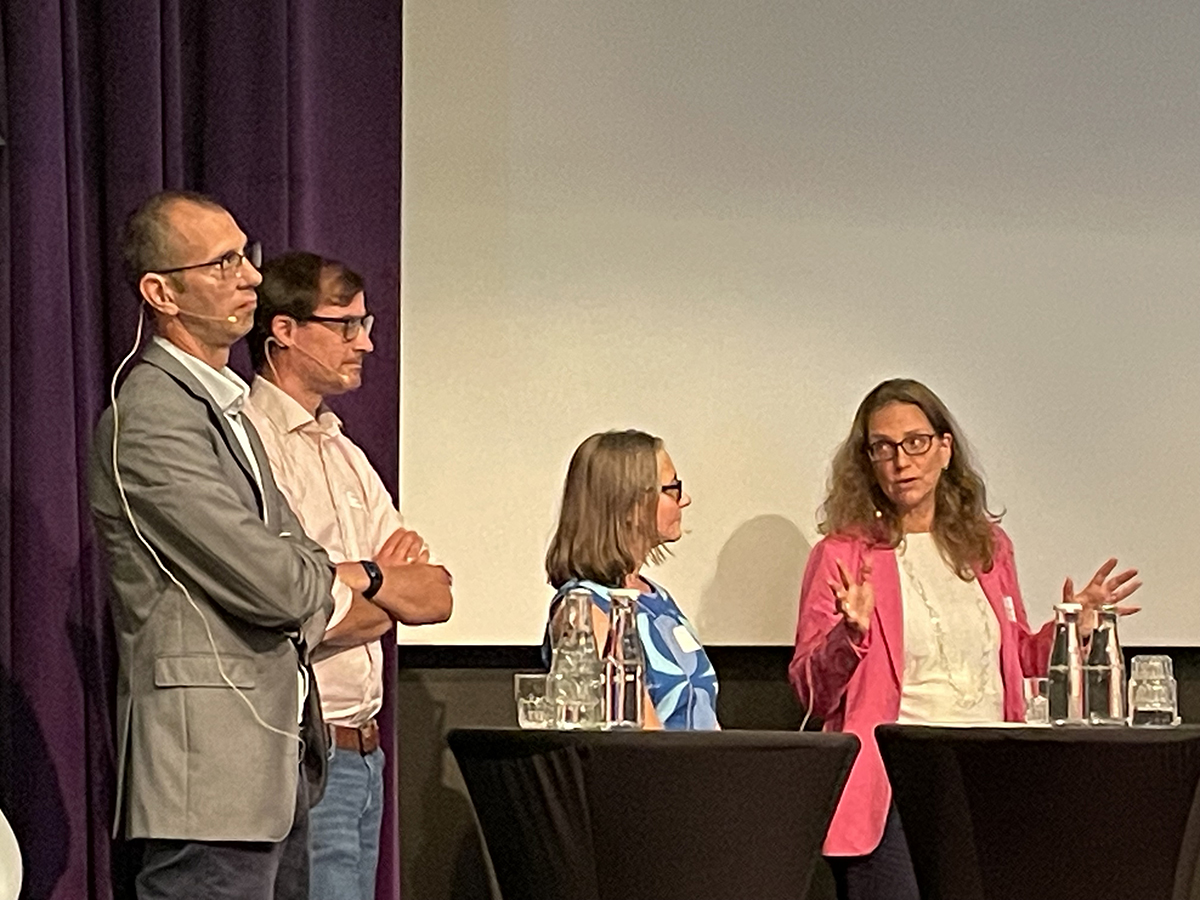
Erik Mattsson moderated a panel discussion about tools for PFAS substitution, with Olof Johansson (Swedish Chemical Agency), Tonie Wickman (Swedish Center for Chemical Substitution), Jonthan Kleimark (ChemSec) and Anna Linusson (Ecolabelling Sweden). Erik started by asking all panellists about their relation to PFAS. Jonathan Kleimark highlighted that PFAS is important and engaging to people. Furthermore, the PFAS issue is an area where they can make a difference right now. Tonie Wickman agreed and said that there is extremely high interest from companies right now due to the upcoming universal PFAS restriction. Olof Johansson said that the PRIO tool at the Swedish Chemicals Agency has evolved in line with the ever-increasing focus and knowledge about PFAS at the agency.
Erik Mattson continued with asking the panelists about what their tools do best and whom they are suitable for? Jonathan Kleimark pointed out that ChemSec offers several complementary tools. They aim to give companies an overview that can make it easier for them to start working with substitution and actually do something. For example, the SIN list is fairly broad, and suitable for both companies with low chemical knowledge and companies that work actively with chemical issues. Olof Johansson emphasized that the PRIO database is easy for anyone to use, and that the possibility of batch searches of chemicals can be helpful for the users. Anna Linusson said that ecolabels are for everyone, both those with no knowledge about chemicals as well as for the best companies. Companies should use it to make it profitable to be the best on the market. Also, Anna pointed out, with the ecolabel system, the work on chemical assessment is done by someone else so you don’t have to care about it. Tonie Wickman said that the Center for Chemical Substitution works a lot with communication as they try to reach out to small and medium-sized enterprises (SMEs) in Sweden and help them in their substitution work. For example, they use trade and industry associations to reach relevant companies.
Erik Mattsson then turned the question around to asked what the panelists thought were the best features of the other panelists’ tools? All panelists agreed that the different tools complement each other and that all tools are needed as they offer different perspectives. For example, the Centre for Chemical Substitution can be a good first place to look when a company starts working with substitution. ChemSec have information for example about which chemical groups to focus on and available alternatives, whereas PRIO has a set of substance criteria complemented with a database with can be used by companies to identify and prioritise substances in their substitution work. Ecolabels are more hands on, but the other tools are used for input to the criteria.
How should the companies start when they want to begin a substitution process? Generally, the first crucial step is an inventory of which chemicals you have in your products. Also, ambition, goals and acceptance in the organization is important as a starting point. Then, the tools can be used to reach the goals of the company. Tonie Wickman mentioned that you can start by contacting the Centre for Chemical Substitution and they can direct you further. Anna Linusson stressed that ecolabeling is not cost-free but neither very expensive. Actually, the internal work and changing of the process is what costs the most, especially the first time you do it.
Finally, Erik Mattsson asked what the panelists would say if someone asks: “it is impossible to substitute”? Jonathan Kleimark said that this is the most common question, especially regarding the universal PFAS restriction. He claimed that there are alternatives for the vast majority of uses. Anna Linusson pointed out that if one company deems that it is impossible to substitute PFAS, another company will make it possible and succeed on the market. Tonie Wickman mentioned that substitution often takes time, and this is something we must accept. Therefore, it’s important to have a clear goal and work consistently towards it. There are several good examples, for example from the textile sector. Olof Johansson agreed that substitution can be a long process but encourages companies to seek inspiration from what other companies have done.
2.5 Closing of the conference
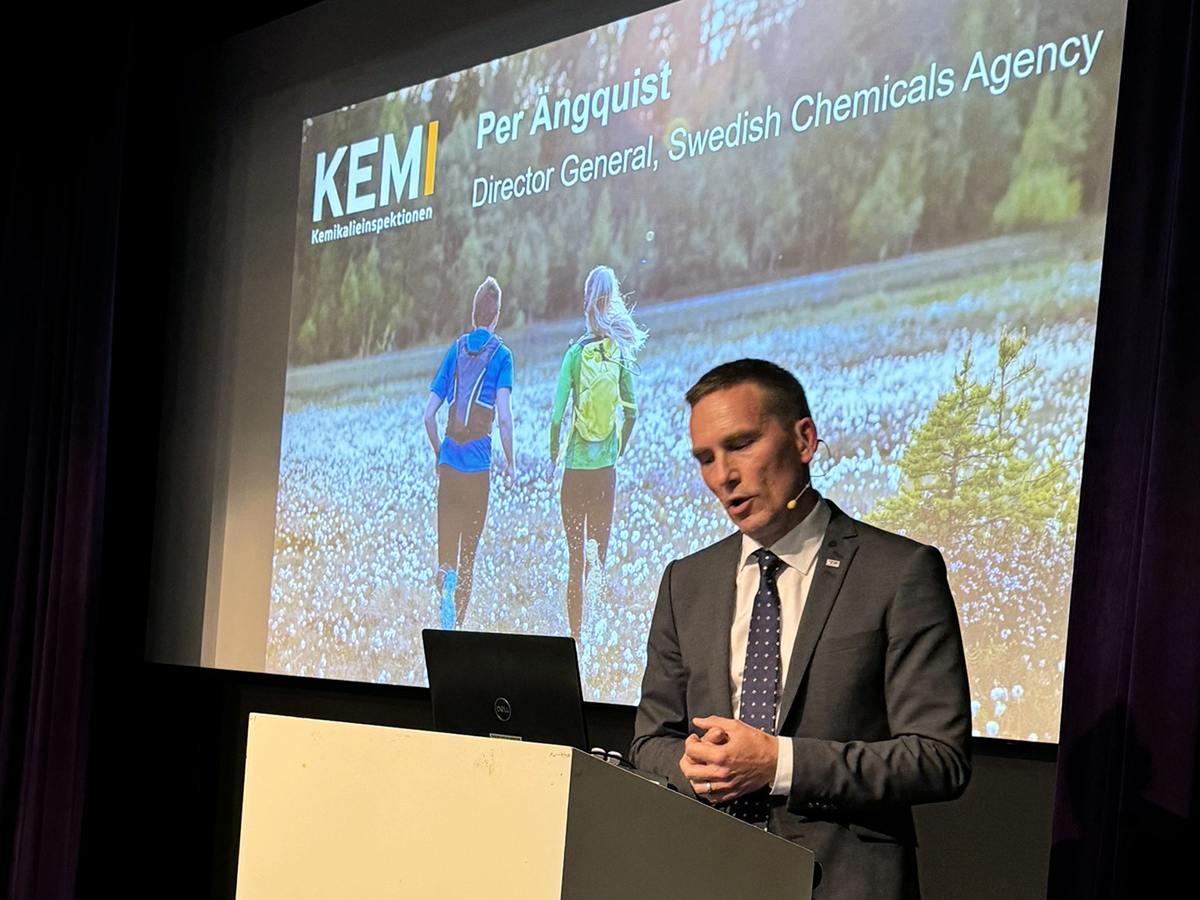
The Director-General of the Swedish Chemicals Agency, Per Ängquist, wrapped up the conference with some closing remarks.
First, he stressed that we should be proud that the Nordic countries are leading the way forward and working towards an EU-wide universal restriction of PFAS. He pointed out that legislation is the driver for substitution and innovation and is a prerequisite for a level playing field.
While waiting for the universal PFAS restriction, he said, companies can be proactive when designing products, choosing suppliers, and setting chemical requirements in procurements, which has been demonstrated in several presentations during the day. Substitution of PFAS can be challenging, but in the end, it is the responsibility of the companies to comply with legislation.
Efficient enforcement is needed to check compliance and ensure a level playing field. A comprehensive strategy for testing different products, together with validated and standardized analytical methods, is urgently needed. However, as we have seen here today, he said, there is rapid development of methods and strategies for PFAS analysis that can be applied already.
Finally, Per Ängquist expressed that he feels hopeful and truly inspired by all the examples from companies working hard to replace PFAS with better solutions. He hopes that everyone will go home from the conference with the insight that we will succeed in reaching our goal – a toxic-free environment!