In recruitment: Discrimination
Several studies highlighted in the Nordic knowledge review ‘Trans People’s Working Life Conditions in the Nordic Region’ indicate that unemployment is about twice as high among trans people as in the rest of the population. The review also shows that trans people often do not work in their field of education. Insecure employment is also more common than for cis people, i.e. people whose gender identity corresponds to the sex assigned to them at birth.
Discrimination against trans people is prohibited in all Nordic countries, but it still persists. This is shown, for example, in a study presented at the conference in Stockholm: ‘Hiring Discrimination Against Transgender People: Evidence from a Field Experiment’. In the study, the researchers conducted an experiment in which they responded to job adverts with identical CVs, except that some of the CVs indicated that the applicants were cisgender and others that they were transgender. The results showed that the trans applicants were less likely to be contacted for an interview.
Several of the conference speakers emphasised the need for action in the Nordic countries to ensure compliance with discrimination laws. For example, the need for training for recruiters on how to avoid discrimination was highlighted.
At the same time, the conference stressed that access to gender-affirming treatment and the possibility to change one’s correct legal gender are important for facilitating trans people’s access to the labour market. Several participants emphasised that this must also apply to non-binary people, i.e. people who do not perceive themselves as either women or men.

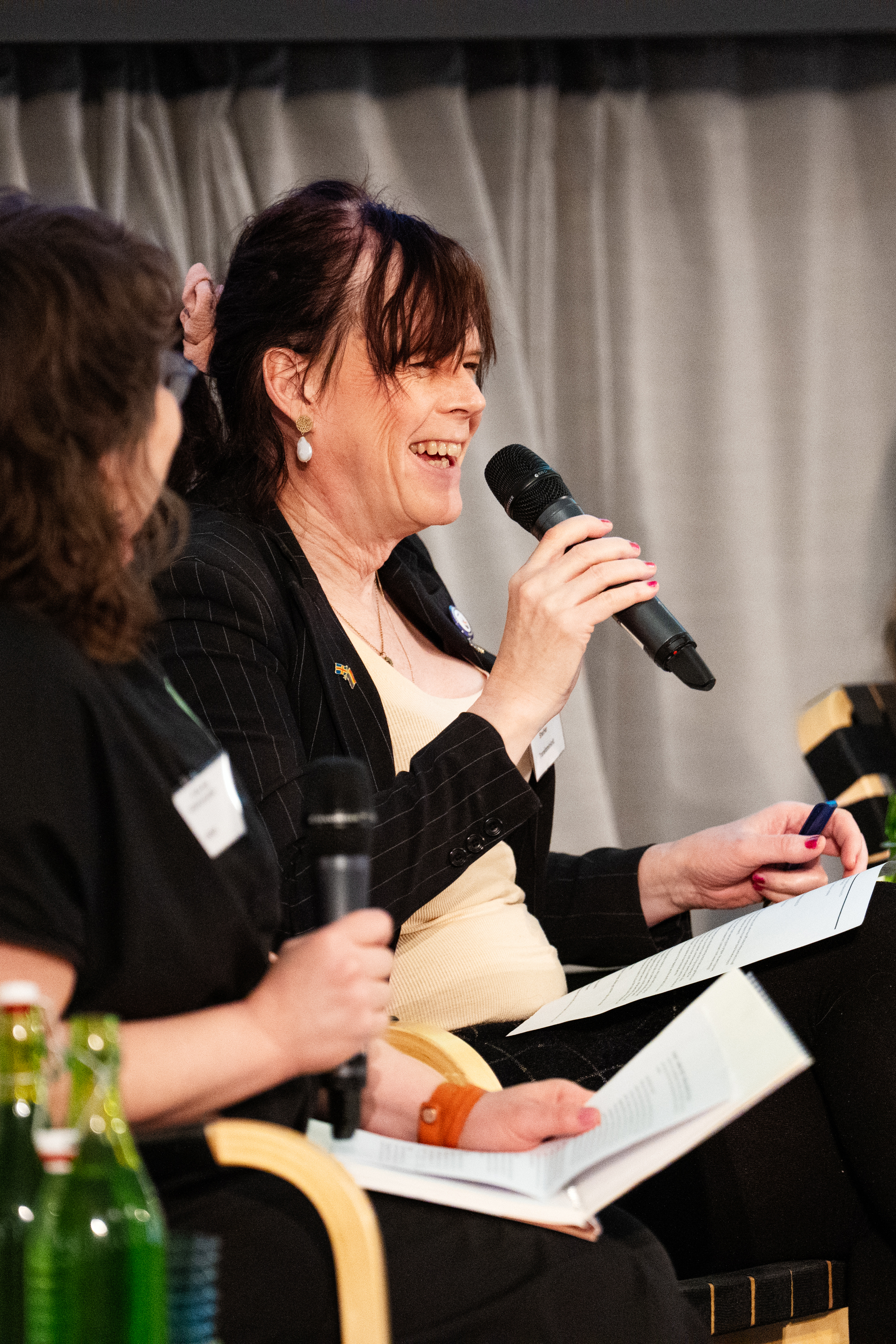
Edward Summanen (SE), expert at the organisation Transammans.
The conference also highlighted the importance of targeted support measures for trans people outside the labour market. In particular, there was a call for more measures for young people. According to the knowledge review ‘Trans People’s Working Life Conditions in the Nordic Region,’ many trans people are excluded from the labour market from an early age. Some drop out of education due to discrimination and narrow gender norms. During the conference, experiences were shared from the TransDuuni! project, which aims to empower young, job-seeking transgender people in Tampere.
Tanja von Knorring (FI), Executive Director of the organisation Transfeminines, which runs the TransDuuni! project.