PART 1:
NEXT PRACTICE FOR UNESCO BIOSPHERE RESERVES TO SUPPORT THE GBF
Being designated as a UNESCO Biosphere Reserve does not signify that everything is perfect or that the ultimate goal has been achieved. Rather, it represents a continuous journey toward improvement. The designation highlights a commitment to progress, with a focus on striving for better outcomes in the relationship between humanity and nature.
It is important to recognize that there is no fixed "best practice" waiting to be discovered and replicated universally. The journey involves an ongoing search for inspiration and innovation, constantly exploring ways to strike a better balance. What works well in one context may not necessarily be suitable in another, as it depends on a variety of factors such as local context, resources, culture, and people.
To truly understand why a specific practice is successful in one place, a deeper exploration is needed. This understanding then becomes the foundation for adapting and evolving that practice to become a successful "next practice" in a different location.
UNESCO Biosphere Reserves serve as model areas for place-based sustainable development, offering valuable examples of good practices that can inspire other communities.
To facilitate the dissemination and adaptation of these practices, we have created a short 7-step guide to help transition from good practices to next practices. These steps do not constitute a rigid, linear framework, and the process does not necessarily unfold sequentially. Instead, they serve as a flexible guide to navigate the process.

Next practice
The work with next practices has the following overall objectives:
- To strengthen the implementation of the GBF through locally anchored and place-based efforts for sustainable development.
- To inspire a joint Nordic effort that leverages the position of individual municipalities and Biosphere Reserves to develop new approaches and methods for implementation.
- To inspire ways to strengthen municipal and local competencies in working with biodiversity strategically and purposefully, based on local conditions.
- To support processes that recognize that global challenges must be met with local solutions.
- To emphasize the importance of cooperation between the actors involved, particularly in the exchange of experiences, competence development, and actions that lead to new and better solutions at the local level.
The method can be used by any local community, Biosphere Reserve, UNESCO site, municipality, or similar entity aiming to enhance their capacity and competence in addressing local solutions to global challenges. It is also a valuable tool for fostering cross-community cooperation and supporting collaborative development initiatives.
The 7 steps method
A methodological process for transitioning from good practices to next practices in local actions for the GBF within UNESCO Biosphere Reserves involves a structured, iterative approach designed to improve biodiversity conservation and sustainable development outcomes.
This process focuses on building upon existing successful strategies (good practices) and evolving them into innovative, future focused solutions (next practices) that align with the global biodiversity targets.
By focusing on these detailed actions, Biosphere Reserves can turn the 7-step guide into a practical roadmap for innovation, collaboration, and sustainable development.
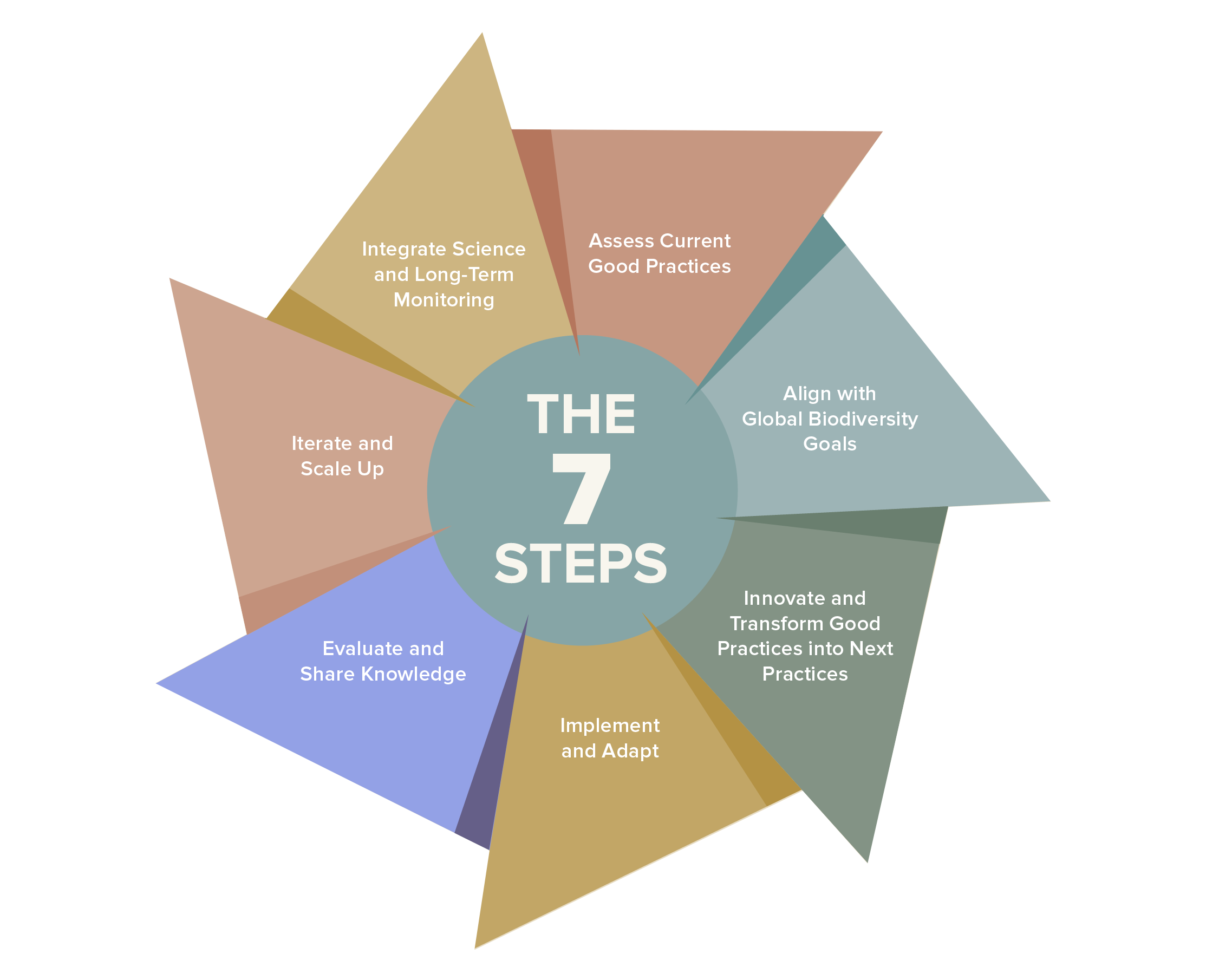
Figure: 7-Step Guide to transition from good practices to next practices. These steps are not necessarily sequential but rather serve as a flexible framework to guide the process.
The 7 steps to help transition from good practices to next practices
Assess current good practices
What to do:
- Inventory existing practices: Create a detailed catalog of local initiatives, such as wildlife conservation efforts, eco-friendly farming, or educational programs. Include descriptions, goals, successes, and lessons learned.
- Engage stakeholders: Hold community meetings, interviews, and surveys to gather input from local residents, scientists, businesses, and policymakers about which practices they value and why they work.
- Conduct a gap analysis: Use tools like SWOT (Strengths, Weaknesses, Opportunities, Threats) analysis to identify what’s working well, where there are shortcomings, and what opportunities exist for improvement or scaling up.
- Document and share: Create case studies or reports on successful practices and share them with other Biosphere Reserves and communities for inspiration.
Local example:
A Biosphere Reserve could inventory sustainable forestry practices used by local communities. By analyzing successes and challenges, they might identify techniques to reduce carbon emissions or enhance biodiversity, which could then be adapted elsewhere.
A Biosphere Reserve could inventory sustainable forestry practices used by local communities. By analyzing successes and challenges, they might identify techniques to reduce carbon emissions or enhance biodiversity, which could then be adapted elsewhere.
Align with Global Biodiversity Goals
What to do:
- Map practices to GBF targets: Match local activities with the 23 targets of the GBF, such as habitat restoration, reducing pollution, or ensuring the sustainable use of natural resources.
- Review policies: Ensure local actions align with UNESCO’s Man and the Biosphere Programme and national biodiversity strategies. Adjust policies and plans if needed.
- Organize training workshops: Educate local stakeholders on how their efforts contribute to global biodiversity goals. Use visual tools like charts and maps to make the connections clear.
- Leverage partnerships: Collaborate with national and international organizations to align local practices with broader goals and secure additional resources or expertise.
Local example:
A Biosphere Reserve could organize workshops to educate stakeholders on how preserving wetlands supports global biodiversity targets, such as maintaining freshwater ecosystems and enhancing climate resilience.
A Biosphere Reserve could organize workshops to educate stakeholders on how preserving wetlands supports global biodiversity targets, such as maintaining freshwater ecosystems and enhancing climate resilience.
Innovate and transform good practices into next practices
What to do:
- Foster innovation: Create innovation hubs where locals, researchers, and policymakers can collaborate to brainstorm new solutions. For example, explore integrating technology such as drones for forest monitoring.
- Pilot new ideas: Test novel approaches on a small scale before expanding. For instance, trial agroforestry techniques to increase biodiversity and improve local food security.
- Encourage co-creation: Partner with community members to design projects that incorporate their traditional knowledge alongside modern science.
- Build capacity: Offer workshops, training programs, or access to resources that help communities adopt and adapt innovative solutions.
Local example:
A Biosphere Reserve might pilot a program to use beavers in wetland restoration, testing how their natural dam-building improves biodiversity and water management.
A Biosphere Reserve might pilot a program to use beavers in wetland restoration, testing how their natural dam-building improves biodiversity and water management.
Implement and adapt
What to do:
- Start small: Launch small-scale initiatives that allow for learning and adjustment. For example, implement a tree-planting program in one part of the reserve before expanding.
- Monitor progress: Develop systems for real-time data collection, such as biodiversity surveys or citizen science programs, to track the success of initiatives.
- Engage the community: Host regular meetings or forums to update locals on progress and gather feedback to refine actions.
- Adapt strategies: Use the feedback and monitoring data to make changes as needed, ensuring projects stay relevant and effective.
Local example:
A Biosphere Reserve could introduce a trial program for organic farming methods in a small area, monitor the impact on soil health and crop yields, and refine the approach based on results.
A Biosphere Reserve could introduce a trial program for organic farming methods in a small area, monitor the impact on soil health and crop yields, and refine the approach based on results.
Evaluate and share knowledge
What to do:
- Conduct impact assessments: Evaluate how initiatives affect biodiversity, ecosystems, and the well-being of local communities. Use standardized methods to make results comparable across reserves.
- Create knowledge products: Develop reports, infographics, videos, or presentations that explain the outcomes of initiatives.
- Establish peer-learning networks: Set up regular exchanges with other Biosphere Reserves to discuss successes, challenges, and lessons learned.
- Use technology: Develop online platforms or databases to share findings and allow other reserves to access resources.
Local example:
A Biosphere Reserve might evaluate the success of a wildflower planting initiative for pollinator conservation, share the results in a report, and host a webinar to inspire similar projects in other reserves.
A Biosphere Reserve might evaluate the success of a wildflower planting initiative for pollinator conservation, share the results in a report, and host a webinar to inspire similar projects in other reserves.
Iterate and scale up
What to do:
- Analyze evaluation results: Identify which aspects of a practice worked well and which need refinement. For example, adjust planting methods based on which native species thrived best.
- Develop replication trategies: Create guidelines for scaling up practices, ensuring they can be adapted to new contexts.
- Collaborate with partners: Work with regional or national organizations to expand successful practices to a broader area.
- Secure funding: Use evidence of success to apply for grants or government support to scale initiatives.
Local example:
A successful pilot program to reduce fertilizer use in farming might be scaled up to other regions, with adjustments made for local soil types and crops.
A successful pilot program to reduce fertilizer use in farming might be scaled up to other regions, with adjustments made for local soil types and crops.

Integrate science and long-term monitoring
What to do:
- Partner with universities: Engage researchers to study the long-term impacts of local initiatives and provide data to guide policies.
- Set up monitoring systems: Use tools like remote sensing, biodiversity surveys, or citizen science apps to collect continuous data.
- Engage the community: Involve schools and local groups in monitoring projects to foster environmental stewardship.
- Adapt over time: Use monitoring data to respond to new challenges, such as climate change impacts or changes in species populations.
Local example:
A Biosphere Reserve could establish a long-term bird monitoring program, involving schoolchildren in data collection. This would provide valuable data while building local awareness of biodiversity.
A Biosphere Reserve could establish a long-term bird monitoring program, involving schoolchildren in data collection. This would provide valuable data while building local awareness of biodiversity.